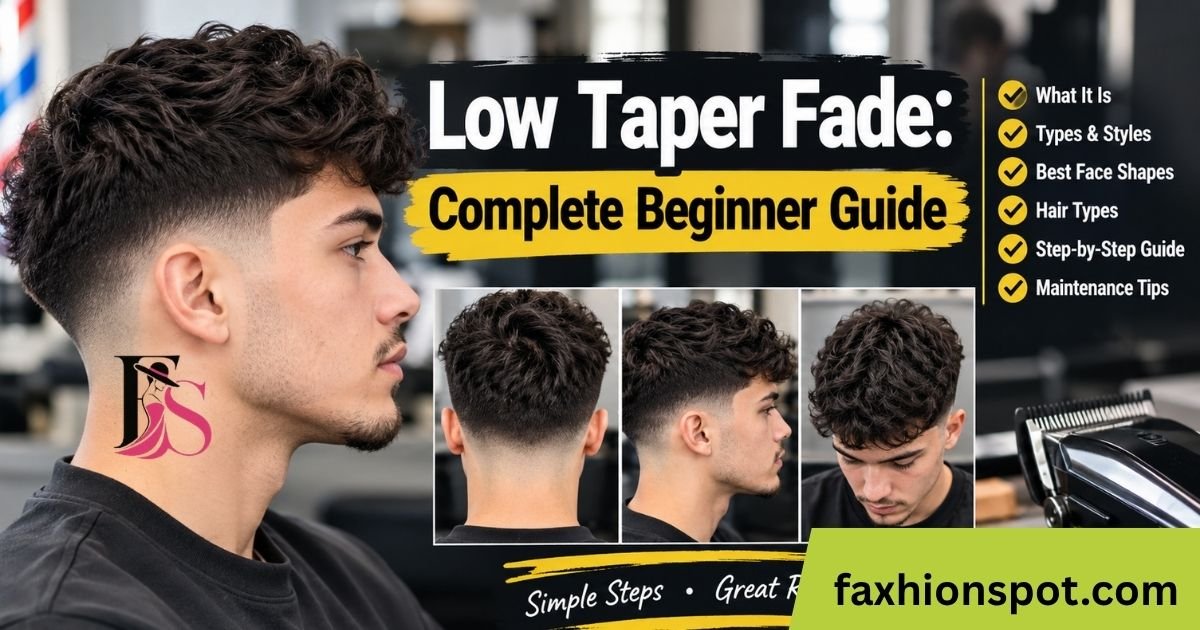
Getting your first modern haircut can feel confusing when your barber starts talking about tapers, fades, guards, skin finishes, and neckline shapes.
The Low Taper Fade is one of the easiest styles to understand because its main idea is simple: keep most of your hair intact while gradually shortening the hair around the sideburns and neckline.
This guide explains what the haircut means, how it compares with similar styles, who it suits, what to ask your barber, how to style it, and how to maintain it. Whether you have straight, wavy, curly, or coily hair, you can use these tips to make your first visit much easier.
What Is a Low Taper Fade?
A Low Taper Fade is a haircut where the hair gradually becomes shorter around the lowest parts of the sides, especially near the sideburns and neckline. The transition stays relatively low instead of climbing high up the sides of the head.
The result is a clean but subtle appearance. Most of the natural weight remains around the sides, while the edges receive a controlled blend. Depending on your preference, the shortest area can finish at skin, a zero, half guard, or a slightly longer clipper length.
One reason beginners like this haircut is its flexibility. You can combine the taper with a textured crop, curls, waves, fringe, side part, buzz-style top, or longer hair.
What Does “Taper” Mean?
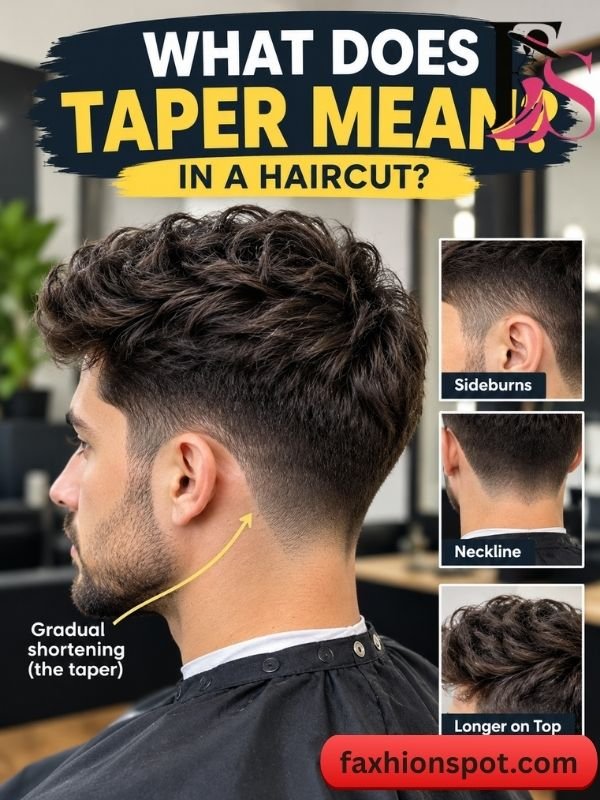
In barbering, a taper means gradually reducing hair length as it approaches an edge, usually around the sideburns and neckline.
Instead of creating one sudden change in length, the barber blends several lengths together. This creates a smoother transition between longer hair and shorter hair.
Think of a taper as a gradual narrowing of the hair toward an edge. A fade uses a similar blending principle, but it can cover a larger area of the sides and back.
For beginners, remember this simple rule:
- Taper: focuses mainly on the edges.
- Fade: generally removes or blends more hair across the sides.
- Low: tells the barber that the transition should remain close to the lower part of the head.
Difference Between Low Taper Fade, Low Fade, and Taper Fade
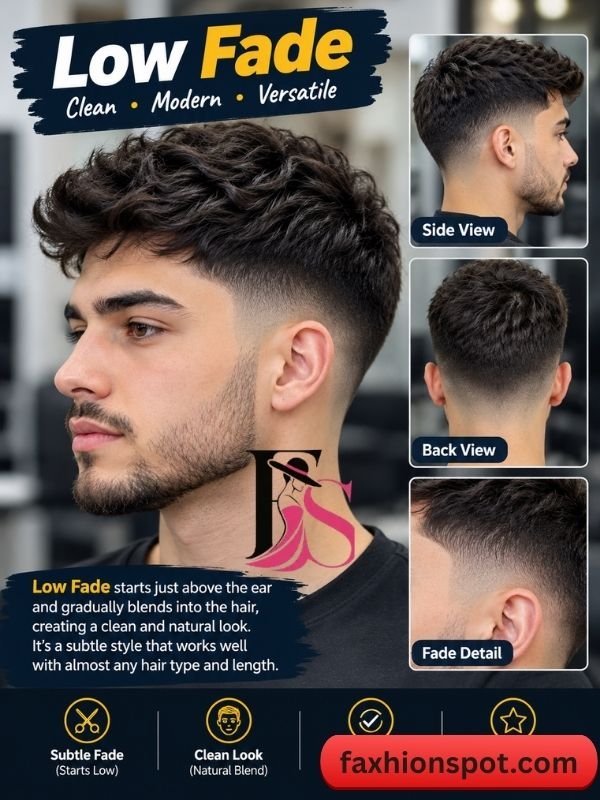
These names sound similar, but the finished haircut can look noticeably different. The biggest differences are where the blend starts, how much side hair is removed, and how visible the transition becomes.
| Haircut | Main Area | Overall Appearance | Best For |
| Low Taper Fade | Sideburns and neckline | Subtle and natural | Beginners and versatile styling |
| Low Fade | Lower sides and back | More noticeable | Stronger contrast |
| Taper Fade | Usually edges and neckline | Clean and controlled | Classic styling |
Low Taper Fade
The Low Taper Fade keeps the blend concentrated around the sideburns and neckline. The hair above those areas generally remains fuller, giving the haircut a natural shape.
It is a particularly useful option if you want cleaner edges without making the sides look dramatically shorter.
Low Fade
A low fade usually extends farther across the lower sides and back. It can create a stronger contrast between the longer upper hair and the shorter lower section.
Because more of the side is blended, a low fade often looks more visibly faded than a taper.
Taper Fade
A taper fade focuses on gradually shortening the hair toward specific edges. Depending on the barber and the request, the taper can be low, medium, or high.
The important thing is to explain exactly where you want the blend and how much length you want to preserve.
Why the Low Taper Fade Is a Smart Choice
For someone getting a first modern haircut, the Low Taper Fade is a practical choice because it combines a clean outline with relatively conservative side length.
It can also adapt easily as your personal style changes. You can keep the top short, grow it longer, add texture, or change your styling routine without completely changing the sides.
Clean Appearance:
A properly blended taper makes the area around the ears and neckline look neat without removing excessive hair.
This gives you a freshly groomed appearance while preserving the natural shape of your haircut.
Professional Look
One of the biggest advantages is versatility. The understated blend can work with casual clothing, school environments, and many professional settings.
If your workplace has conservative grooming expectations, ask your barber for a natural finish rather than an extremely sharp skin contrast.
Easy to Maintain
The Low Taper Fade does not require an elaborate daily routine. Most of the styling work happens on top, while the tapered areas simply need regular trimming to stay crisp.
A light styling product and basic washing routine are usually enough for many hair types.
Grows Out Nicely
Because the transition stays low and the sides retain more weight, the haircut can become less noticeable as it grows.
Current barber guides commonly recommend refreshing the cut around every two to four weeks depending on how quickly your hair grows and how sharp you want the edges to remain.
Who Should Get a Low Taper Fade?
The Low Taper Fade is suitable for many people because it can be adjusted according to hair texture, face shape, hairline, and preferred top length.
It can work particularly well for:
- Straight hair
- Wavy hair
- Curly hair
- Coily hair
- Thick hair
- Fine-to-medium hair
- Short or medium-length tops
- Textured hairstyles
A barber can also adjust the placement according to your growth pattern and head shape. For example, adding height on top may help balance a rounder face, while keeping the top controlled can complement naturally angular features.
Best Low Taper Fade Styles for Beginners
If you are unsure what to request, start with a simple version rather than choosing an extremely complicated design.
Here are beginner-friendly options:
- Classic Taper – Keep the top natural and clean up the edges.
- Textured Top – Add texture with a matte product for a relaxed finish.
- Curly Top – Preserve the curls while cleaning the sideburns and neckline.
- Wavy Top – Keep the natural wave and use a lightweight styling product.
- Short Crop – Pair the clean taper with a short, easy-to-style top.
- Fringe Style – Leave a controlled fringe while keeping the perimeter neat.
- Longer Top – Maintain additional length for brushed-back or messy styling.
The safest beginner approach is to choose one reference photo that resembles your natural hair rather than showing a picture with completely different texture.
How to Ask Your Barber
Knowing what to say can make a major difference. Current barber guides consistently recommend specifying the taper placement, shortest length, top length, and neckline instead of relying on the haircut name alone.
Try this simple script:
“I want a Low Taper Fade around the sideburns and neckline. Keep the sides mostly full, keep the transition low, and leave the top longer. I want a natural blend without taking the fade too high.”
Then tell your barber:
- How short you want the bottom.
- Whether you want skin, zero, half, or a longer guard.
- How much length you want on top.
- Whether you want texture, curls, fringe, or a clean finish.
- Whether you prefer a natural, rounded, or more defined neckline.
Bring a reference photo, especially one showing the side and back. This can prevent misunderstandings because haircut terminology can vary between barbers.
Click Here To Read Another Topic
How to Style a Low Taper Fade
Styling depends mostly on what you do with the hair on top. The tapered edges require little daily styling.
For a simple routine:
- Wash and towel-dry your hair.
- Apply a small amount of styling product.
- Work the product through the top.
- Use your fingers or a comb to create your preferred shape.
- Allow the hair to air-dry or use a blow dryer if additional volume is needed.
For textured styles, use your fingers instead of brushing everything flat. For a cleaner appearance, a comb can create a more controlled finish.
Product Guide:
Choosing the right product depends on your hair type and desired finish.
| Product | Best For | Finish |
| Matte clay | Thick or textured hair | Natural/matte |
| Matte paste | Short-to-medium hair | Flexible |
| Pomade | Sleek styles | Medium to shiny |
| Styling cream | Wavy or curly hair | Soft |
| Texture spray | Fine or flat hair | Volume and texture |
| Light gel | Stronger control | Firm |
For beginners, start with a small amount. Heavy product can make the top greasy or flatten naturally textured hair.
A light-hold clay, paste, cream, or texture product is often enough for everyday styling.
How to Maintain a Low Taper Fade Properly
A Low Taper Fade looks best when the edges are kept clean while the top is maintained according to your preferred length.
A simple maintenance routine includes:
- Wash according to your hair type.
- Keep the neckline clean.
- Avoid excessive product buildup.
- Brush or style the top regularly.
- Schedule a barber visit when the taper loses its shape.
- Avoid trying to recreate the blend yourself unless you have proper clipper skills.
If you want a consistently sharp appearance, many people refresh the cut every two to four weeks. Those who prefer a softer, more natural look can often wait longer.
Common Beginner Mistakes
The first haircut can go wrong when the request is too vague. Avoid these common mistakes:
1. Saying only “make it low.”
Tell the barber where you want the blend and how much length should remain.
2. Not showing a photo.
A visual reference makes your expectations much clearer.
3. Choosing the shortest possible finish immediately.
If you are nervous, start with a softer guard instead of going straight to skin.
4. Ignoring your hair texture.
A style that works on straight hair may behave differently on tight curls or thick waves.
5. Taking the fade too high.
If you want a subtle look, specifically say that you want the transition kept low.
6. Forgetting the neckline.
Ask whether you want a natural, tapered, rounded, or blocked finish.
Cost of a Low Taper Fade
The price varies widely depending on your location, the barber’s experience, the shop, and whether additional services are included.
A basic haircut may cost less at a neighborhood barbershop, while premium barbershops and major cities can charge significantly more.
Before booking, ask whether the quoted price includes services such as:
- Hair washing
- Beard trimming
- Styling
- Line-up
- Hot towel treatment
- Neck cleanup
The haircut itself is usually straightforward, but detailed designs, beard work, or premium grooming services can increase the total price.
Final Thoughts
The Low Taper Fade is a strong beginner haircut because it is clean, flexible, and relatively easy to maintain. It gives you sharper edges without forcing you into an aggressive high-contrast fade.
Whether you have straight, wavy, curly, or coily hair, the cut can be customized to fit your natural texture and personal style. Start simple, learn what works for your hair, and adjust the details at your next appointment.
Frequently Asked Questions
Is low taper fade good for first haircut?
Yes. A Low Taper Fade is beginner-friendly because it keeps much of the natural side length while cleaning up the sideburns and neckline.
Does it work for curly hair?
Yes. The Low Taper Fade works well with curly hair because the barber can clean the edges while leaving the natural curl pattern on top.
Is it allowed in schools?
Usually, a neat Low Taper Fade can fit school grooming rules, but policies vary, so check your school’s specific haircut requirements.
How long does it stay fresh?
Most people can expect the sharpest appearance for roughly two to four weeks, depending on hair growth, taper height, and how clean they want the edges.
1 thought on “Low Taper Fade: Complete Beginner Guide”