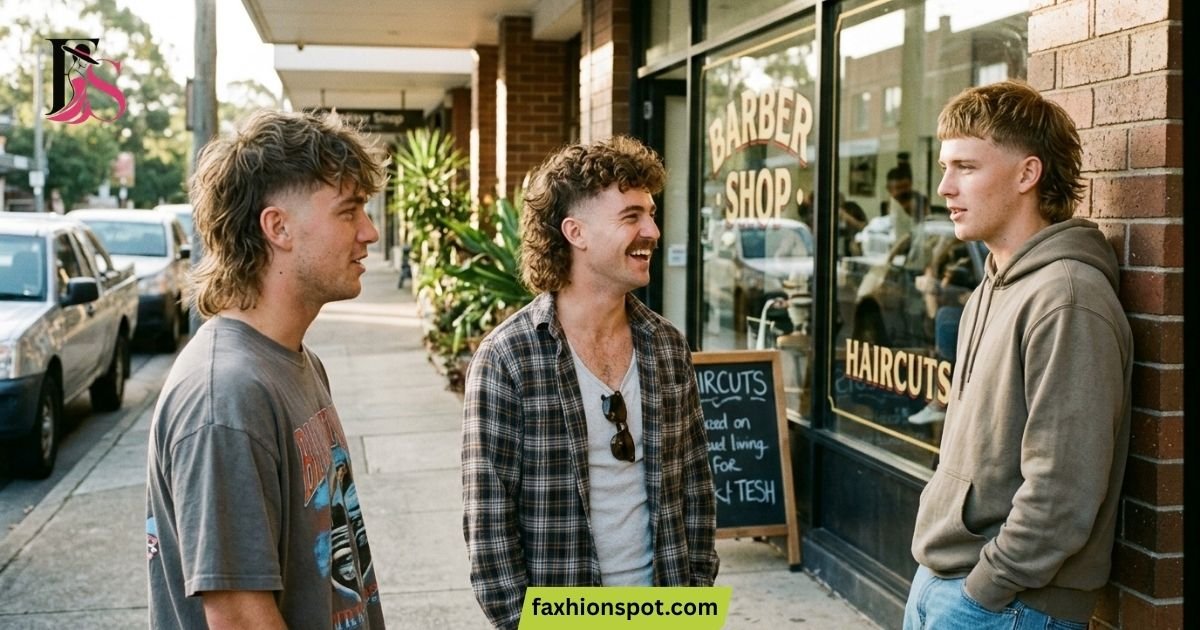
The Australian mullet has become a standout choice for men who want a haircut that feels relaxed, confident, and modern.
In this guide, you’ll discover 20 Australian-inspired mullet styles, learn how to choose the right cut for your face shape and hair type, and find practical styling and maintenance tips to keep your look sharp.
Why Is the Australian Mullet Haircuts So Popular?
The Australian mullet has earned a place in modern men’s grooming because it combines individuality with practical styling. Its shorter sides keep the haircut defined, while the longer back creates a recognisable silhouette. It can look sporty, rebellious, casual, or surprisingly polished depending on the length, texture, and fade.
Australian sporting culture has also helped keep the look visible. Football players, musicians, and everyday trendsetters have made the mullet a familiar feature of contemporary Australian style. Australian news coverage has documented its continuing cultural appeal and its evolution beyond its traditional retro image.
Another reason for its popularity is versatility. Men can choose a subtle taper for everyday wear or a dramatic burst fade for a stronger statement. Natural curls, loose waves, straight hair, and thick textures can all work with the right cutting technique.
Key Benefits of an Australian Mullet
- Versatile appearance: Choose anything from understated layers to a dramatic, edgy silhouette.
- Customisable shape: Adjust the fringe, crown, side length, and back to suit your preferences.
- Works with natural texture: Waves and curls add movement, while straight hair creates a cleaner outline.
- Easy everyday styling: Many versions need only a small amount of product and a few minutes of shaping.
- Distinctive personality: The haircut stands out without requiring bright colour or elaborate designs.
- Pairs well with facial hair: A carefully blended beard or moustache can complement the longer back.
Remember that low maintenance does not mean maintenance-free. The sides may need regular trimming, and the back needs occasional shaping to retain its intended outline.
How to Choose the Right Australian Mullet
Before choosing a reference photo, consider your face shape, hair density, natural texture, lifestyle, and preferred level of contrast. A haircut that looks excellent on thick, wavy hair may require a different approach on fine, straight hair.
Face Shape
| Face shape | Recommended approach | Why it works |
| Oval | Classic, textured, or tapered mullet | Offers flexibility in top and back length |
| Round | Higher volume on top with controlled sides | Creates a more elongated appearance |
| Square | Soft layers, waves, or a textured fringe | Balances strong facial angles |
| Oblong | Moderate top height and fuller sides | Avoids making the face appear unnecessarily long |
| Diamond | Layered back with a soft fringe | Can balance prominent cheekbones |
| Heart-shaped | Textured fringe and moderate back length | Helps balance a broader forehead and narrower chin |
These are starting points rather than strict rules. Your preferred proportions and natural hair growth matter just as much as your face shape.
Hair Type
- Straight hair: Try a textured crop on top with point-cut layers through the back to prevent a flat appearance.
- Wavy hair: Choose a layered shape that allows natural movement without creating excessive bulk.
- Curly hair: Leave enough length for curls to form properly, and ask for shaping that respects your curl pattern.
- Thick hair: Use controlled layering and selective weight removal to reduce heaviness.
- Fine hair: Keep the back proportionate and use lightweight products to create texture without weighing down the hair.
If you are unsure which direction to take, start with a soft taper and moderate back length. You can always make the next appointment more adventurous.
20 Australian Mullet Haircuts
The following 20 styles cover traditional, sporty, textured, and contemporary options. Choose a cut based on its overall silhouette rather than its name alone, because different barbers may use slightly different terminology.
1. Classic Australian Mullet Haircuts
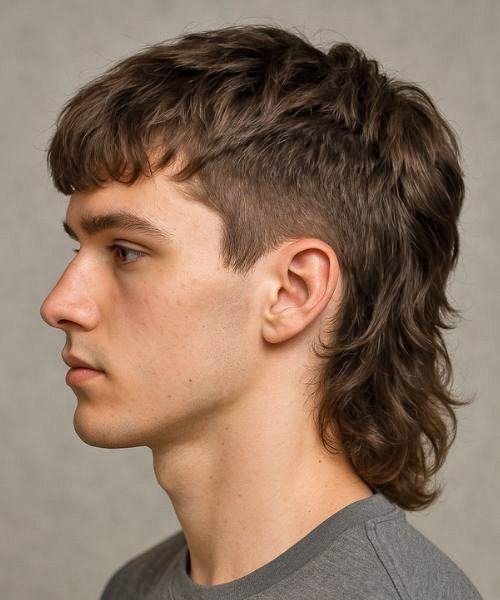
The classic Australian mullet features relatively short sides, a simple top, and a longer back that extends toward the neckline. It keeps the traditional shape without relying on a dramatic skin fade.
This is an excellent option for men who appreciate retro style and want a straightforward haircut with a recognisable profile.
Ask your barber: Keep the sides short but natural, blend the crown into the back, and preserve enough nape length to create a clear mullet shape.
2. Modern Australian Mullet Haircuts
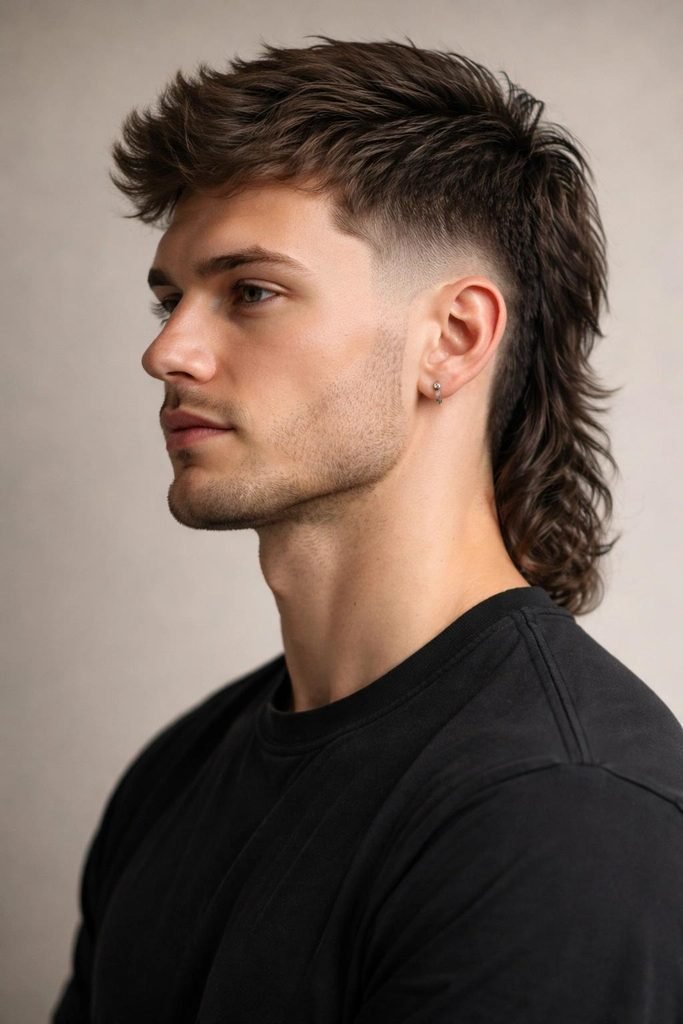
The modern version updates the traditional shape with textured layers, a softer transition, and a more carefully designed finish. The back remains noticeable, but the haircut looks intentional from every angle.
It suits men who want something fashionable without committing to an exaggerated retro silhouette. A matte styling product helps maintain separation while keeping the finish natural.
3. Taper Fade Australian Mullet
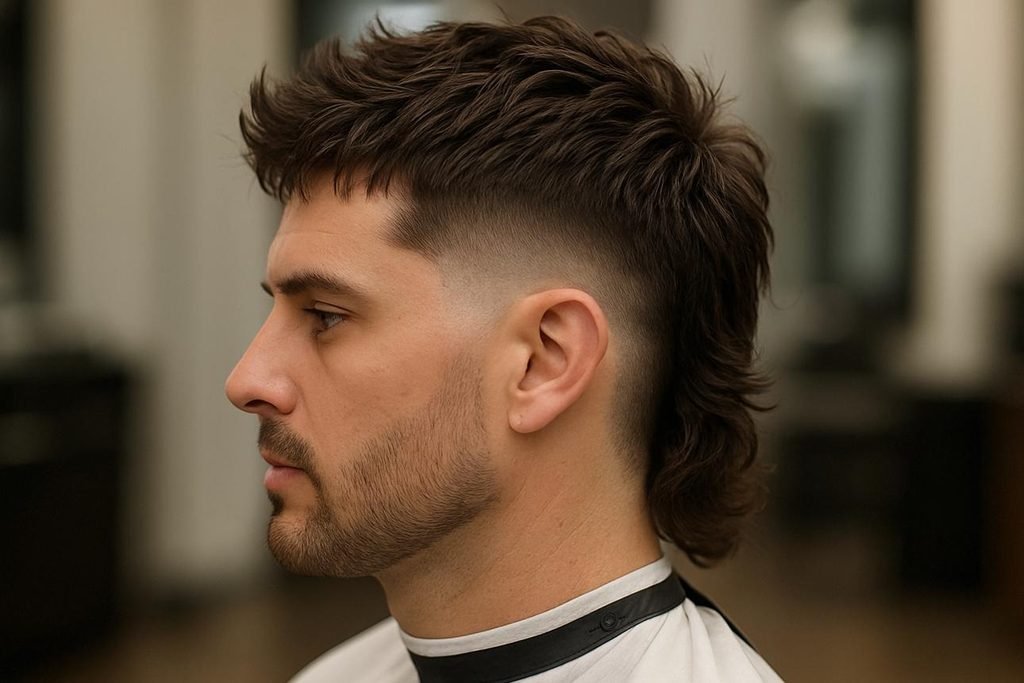
A taper fade cleans up the temples and neckline while preserving more hair around the sides than a high or full skin fade. The longer back gives the haircut its signature shape.
It is a practical starting point for first-time mullet wearers because the contrast can remain subtle. Pair it with a textured top for an everyday look that works with casual outfits and smart-casual clothing.
4. Burst Fade Australian Mullet
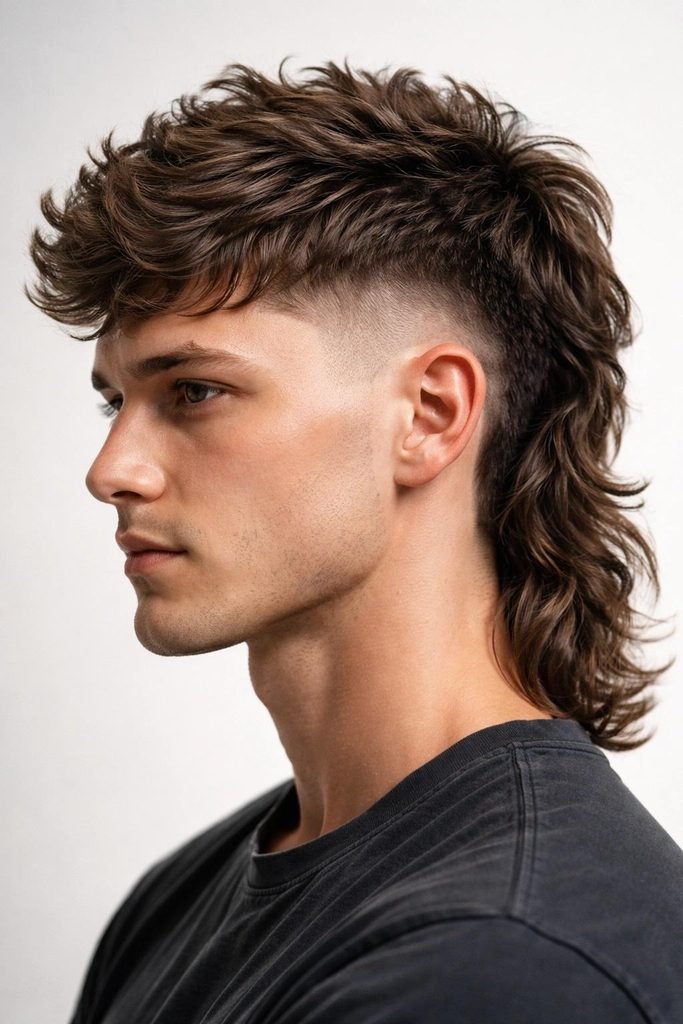
The burst fade curves around the ears, leaving length behind them and through the nape. This creates a rounded fade pattern that highlights the rear section of the haircut.
It works especially well with a curly top, a textured crown, or a slightly spiky finish. Because the contrast is noticeable, ask your barber how high the fade should rise before cutting begins.
5. Low Fade Australian Mullet
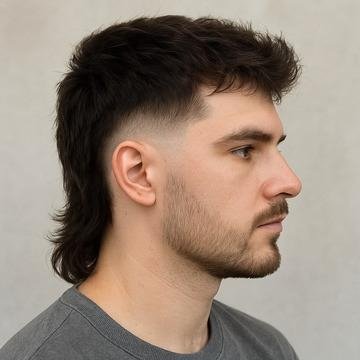
A low fade keeps the shortest section close to the bottom of the sides, creating a restrained and balanced finish. It offers a cleaner appearance without removing too much visual weight around the temples.
Choose this option if you like a defined haircut but do not want the sides to dominate the longer back. It also pairs well with a short fringe or softly textured crown.
6. High Fade Australian Mullet
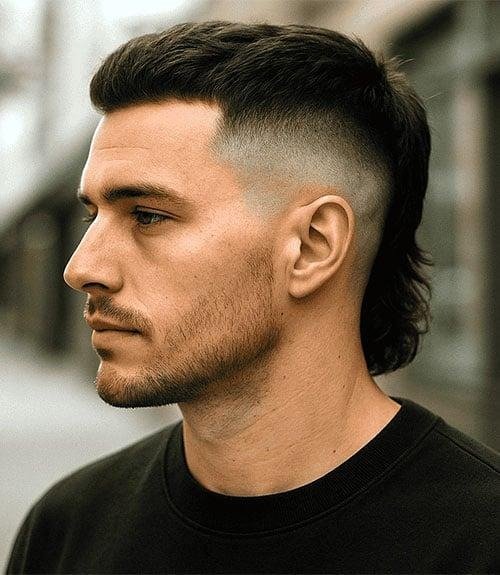
A high fade removes more bulk from the upper sides, producing a stronger contrast between the short sides and the top and back. The result feels bold, youthful, and deliberately sharp.
This variation suits men who prefer statement hairstyles and clear definition. Keep enough length at the rear to prevent the fade from overwhelming the mullet’s shape.
7. Textured Australian Mullet
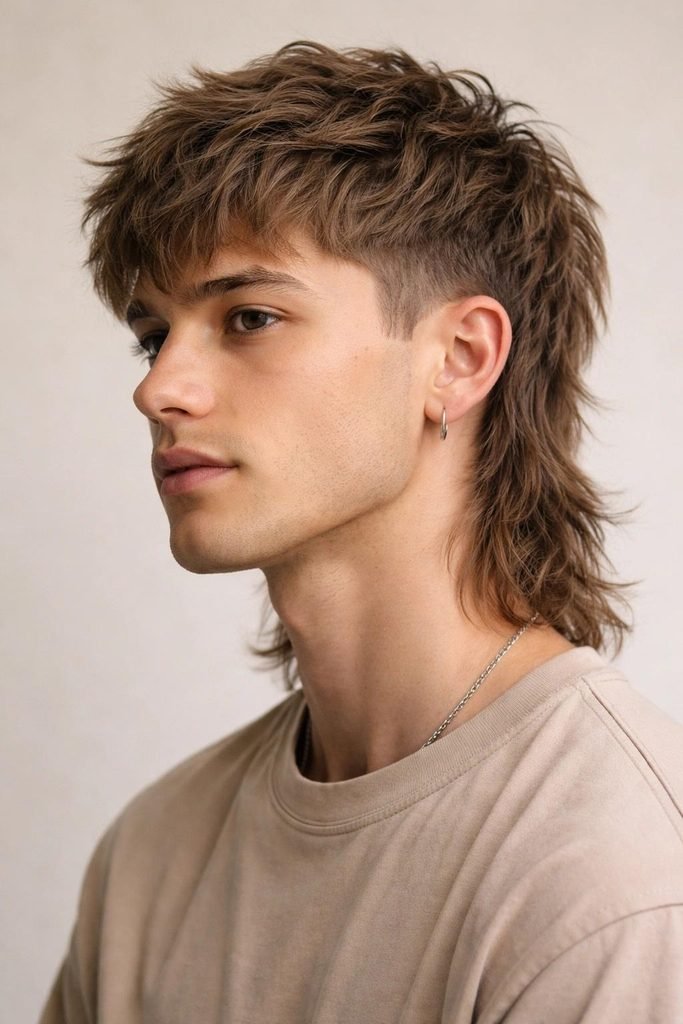
Textured layers give this haircut depth and movement instead of a smooth, uniform surface. Point cutting can help create separation through the top and back, especially on straight or thick hair.
Use a small amount of matte clay to define individual sections without making them stiff. This is a versatile choice for men who want an intentionally relaxed appearance.
8. Curly Australian Mullet
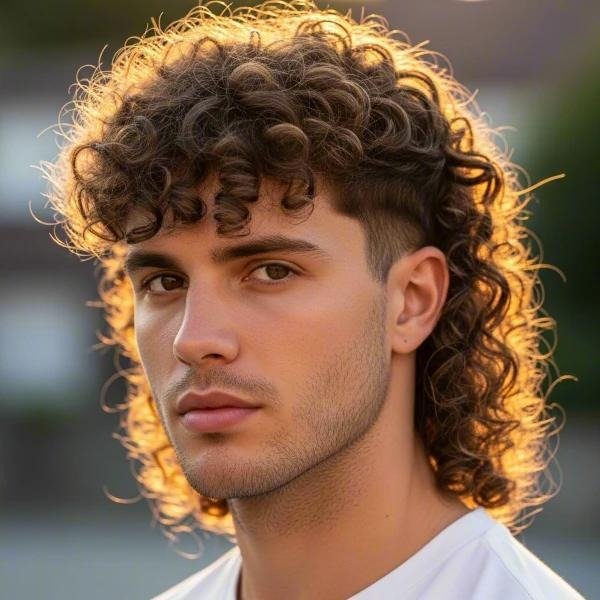
A curly mullet allows natural coils or curls to create volume through the crown and rear. The shorter sides keep the shape balanced while the back adds length and movement.
Ask your barber to cut with your natural curl pattern in mind. Avoid removing too much length before checking how the curls spring upward after drying.
9. Wavy Australian Mullet
Loose waves add a soft, flowing appearance that works beautifully with layered lengths. This variation looks particularly good when the top blends gradually into the rear instead of forming a hard shelf.
A lightweight sea salt spray can enhance natural movement. Scrunch the hair gently while drying to encourage definition without creating a stiff or overly styled finish.
10. Shaggy Australian Mullet
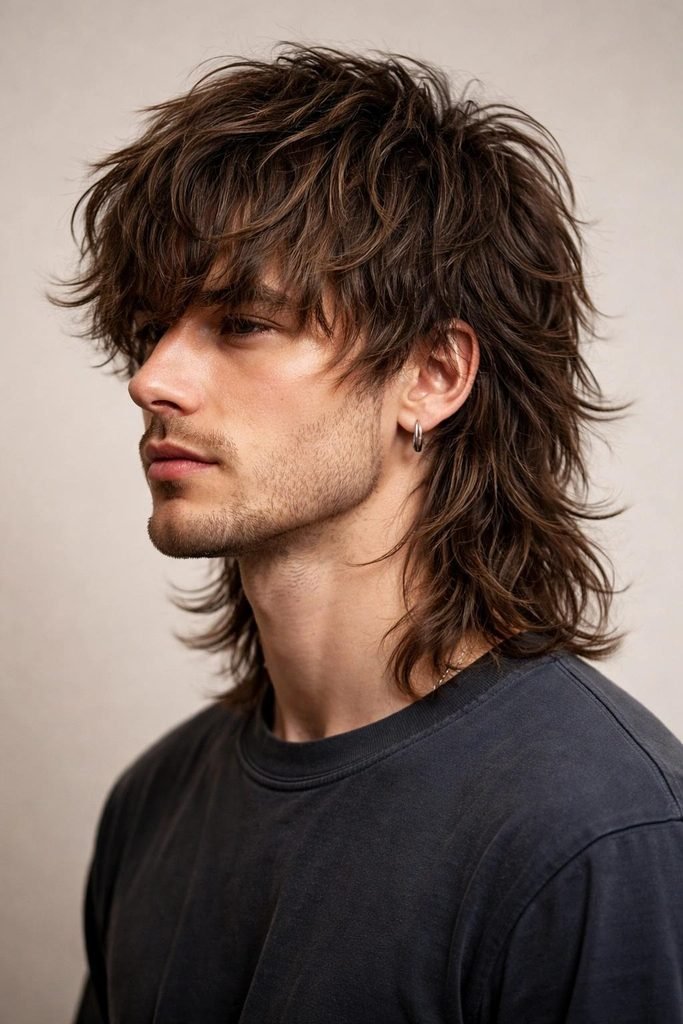
The shaggy mullet features irregular layers, a relaxed fringe, and a fuller back. It borrows from shag haircuts to create a loose, slightly rebellious appearance.
This style works particularly well with medium-length hair and natural waves. Ask for soft, feathered layers rather than blunt sections if you want the haircut to move naturally.
11. Short Australian Mullet
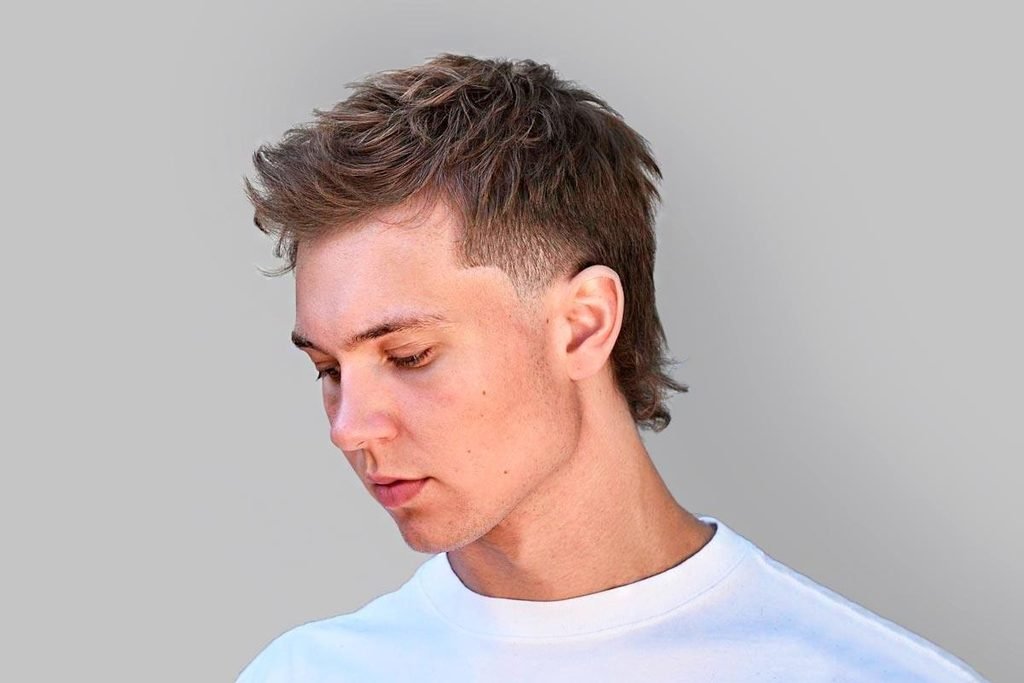
A short mullet keeps the back relatively close to the neckline while maintaining enough length to distinguish it from a regular short haircut. The top can be cropped, spiky, or lightly textured.
It is a sensible choice for men who want to try the trend without growing their hair significantly. A taper or low fade keeps the edges clean while the back develops.
12. Long Australian Mullet
The long variation makes the rear section the main feature, with layered hair extending farther down the neck. The top and sides can remain relatively controlled to prevent the haircut from appearing shapeless.
This option requires patience during the growing phase and more attention to split ends. Regular shaping helps preserve movement while allowing the back to gain length.
13. Aussie Mullet with Beard
Combining a mullet with a beard creates a strong, balanced appearance. The hairstyle provides length at the back, while neatly shaped facial hair adds definition around the jaw.
A low taper often creates a smoother transition between the temples and beard. Keep the beard outline intentional so the overall look feels coordinated rather than overly bulky.
14. Razor Cut Australian Mullet
A razor-cut finish uses suitable razor techniques to create softer, feathered ends and visible movement. It can make a layered mullet feel lighter and less structured.
This approach is best discussed with an experienced barber, especially if your hair is fine, fragile, or prone to frizz. Razor work is not necessary for every hair type, and scissors may deliver a better result for some textures.
15. Modern Sporting Australian Mullet
The sporting variation combines a practical top with clean sides and a distinct rear section. Its inspiration comes from the relaxed, energetic appearance often associated with Australian sporting culture.
Choose a manageable top length if you train frequently or wear caps and helmets. A taper or low fade can make the cut easier to keep tidy between appointments.
16. Undercut Australian Mullet
An undercut creates a more noticeable separation between the sides and the longer hair above and behind them. Unlike a gradual fade, it can preserve a stronger line of contrast.
This option suits men who want an alternative, high-impact appearance. Tell your barber whether you prefer a deliberate disconnected line or a slightly softened transition.
17. Messy Australian Mullet
A messy mullet is designed to look loose rather than perfectly arranged. Choppy layers and a slightly tousled crown create movement, making it especially suitable for naturally wavy or textured hair.
Work a small amount of styling paste through dry or nearly dry hair, then separate a few sections with your fingers. Avoid applying too much product, which can make the hair look greasy instead of relaxed.
18. Fringe Australian Mullet
A fringe changes the appearance of the front while the longer back maintains the traditional mullet structure. Depending on your preference, the fringe can be short and choppy, softly swept, or worn slightly forward.
This option can be useful for balancing facial proportions and adding interest to a simple top. Discuss fringe length with your barber because even a small change can alter the overall shape.
19. Wolf Cut Australian Mullet
The wolf cut mullet combines the layered volume of a shag with the distinctive length of a mullet. It typically features a fuller crown, textured fringe, and feathered sections through the back.
It works particularly well for men who like movement rather than a tightly sculpted finish. Medium-length hair gives the layers enough room to develop, especially when the natural texture is wavy.
20. Retro Australian Mullet
The retro version embraces the traditional silhouette with a fuller crown, noticeable side volume, and a longer rear section. Compared with a modern fade mullet, it relies more on length and layering than exposed skin.
It is a strong choice for anyone who enjoys vintage fashion or wants a more authentic throwback. Keep the layers balanced and use a blow-dryer to create lift without making the top excessively stiff.
Styling Tips for an Australian Mullet Haircuts
The best styling routine depends on the haircut’s texture and length. The goal is to enhance the shape without making the top look stiff or the back appear heavy.
Recommended Styling Products
| Product | Best for | How to use it |
| Matte clay | Textured and messy styles | Work a small amount through dry hair |
| Sea salt spray | Wavy and shaggy styles | Apply to damp hair before drying |
| Lightweight mousse | Fine hair and added volume | Distribute through damp roots |
| Curl cream | Curly and coily hair | Apply evenly to damp curls |
| Leave-in conditioner | Dry or longer hair | Use a small amount on the lengths |
| Heat protectant | Blow-dried styles | Apply before using heat |
| Flexible-hold hairspray | Fringe and defined shapes | Mist lightly after styling |
You do not need every product listed. Choose one or two that address your main styling needs, and avoid heavy formulas if your hair becomes oily quickly.
Daily Styling Advice
Follow these five steps for a simple everyday routine:
- Start with clean, towel-dried hair. Gently squeeze out excess water instead of rubbing vigorously.
- Apply a suitable styling product. Use sea salt spray for movement, mousse for volume, or curl cream for definition.
- Shape the top and fringe. Use your fingers or a brush to create your preferred direction.
- Dry with control. Use a blow-dryer on a moderate setting if you need extra volume, directing the airflow along the hair’s natural growth.
- Finish the back. Separate the longer layers with your fingers and apply a small amount of product if needed.
For curly hair, avoid excessive brushing when dry because it can disrupt curl definition. For straight hair, a little root lift can help prevent the top from appearing flat.
Australian Mullet Haircuts Maintenance Guide
Keeping the shape balanced is essential. As the sides grow, a fade loses its definition, and the back can become bulky or uneven. Regular trimming helps preserve the contrast between these sections.
Maintenance Schedule
| Maintenance task | Suggested frequency | Purpose |
| Taper or fade cleanup | Every 2–3 weeks | Keeps the sides and edges sharp |
| Full haircut reshaping | Every 4–6 weeks | Maintains the overall silhouette |
| Back and neckline trim | Every 4–6 weeks, as needed | Prevents uneven growth |
| Shampooing | According to scalp and hair needs | Removes excess oil and product |
| Conditioning | As needed, often after washing | Helps manage dryness and tangles |
| At-home styling | Daily or whenever needed | Maintains the intended finish |
These are starting estimates, not strict rules. A skin fade may need more frequent attention than a scissor-cut style, while a longer shaggy cut can often grow out more naturally.
Barber tip: Bring front, side, and back reference photos to your appointment. Explain how much length you want to preserve at the nape, whether you prefer a visible fade, and how much time you spend styling your hair. These details help your barber reproduce the look more accurately.
Who Should Try an Australian Mullet?
This haircut can suit men of different ages, professions, and hair types when its proportions are chosen carefully. It is particularly appealing to men who want a recognisable style that can be customised rather than a standard short haircut.
Consider trying it if you:
- Enjoy textured, layered, or alternative hairstyles.
- Want to keep the sides neat while preserving length at the back.
- Have natural waves or curls that benefit from layering.
- Prefer a sporty, casual, retro, or contemporary appearance.
- Are willing to schedule occasional trims and basic styling.
If your workplace has a conservative dress code, choose a subtle taper, shorter back, and controlled fringe. If you prefer a more expressive look, consider a burst fade, shaggy layers, or a longer rear section.
Hair density and growth patterns matter more than following a trend exactly. A good barber can adjust the cut to your natural hair rather than forcing you to copy a style that may not suit you.
FAQs: Australian Mullet Haircuts
Is an Australian mullet suitable for professional settings?
Yes. A subtle taper, moderate back length, and neat styling can make the haircut appropriate for many professional environments, although workplace dress codes vary.
Which fade works best with an Australian mullet?
A low fade or taper is a versatile starting point for a restrained look, while a burst fade creates stronger contrast around the ears and back.
Does a mullet work with curly hair?
Yes. Natural curls add volume and movement, but the barber should account for shrinkage and shape the hair according to its natural curl pattern.
How often should I trim my Australian mullet?
Most people benefit from a cleanup every two to three weeks for a sharp fade or every four to six weeks for an overall reshaping, depending on the style and growth rate.
Conclusion
The Australian mullet offers a versatile way to combine classic character with modern barbering.
From a clean taper and low fade to a curly, shaggy, or retro-inspired cut, the right style depends on your natural texture, face shape, preferred length, and daily routine.
Before your next barber appointment, save two or three reference photos and explain exactly how you want the sides, crown, and back to look.