Standing in the barber chair and hearing “taper or fade?” is a moment in the taper vs fade haircut journey that trips up more guys than you’d expect. Both cuts sound similar, both show up on every barbershop menu, and both can transform your look completely.
Yet the taper vs fade haircut debate comes down to one simple thing: how dramatically your hair changes length as it moves down your head. This taper vs fade haircut guide breaks down everything you need to know before your next appointment.
You’ll learn what separates a taper from a fade, the popular variations of each, and how to pick the right one based on your hair type, face shape, and how much upkeep you’re willing to handle.
What Is A Taper?
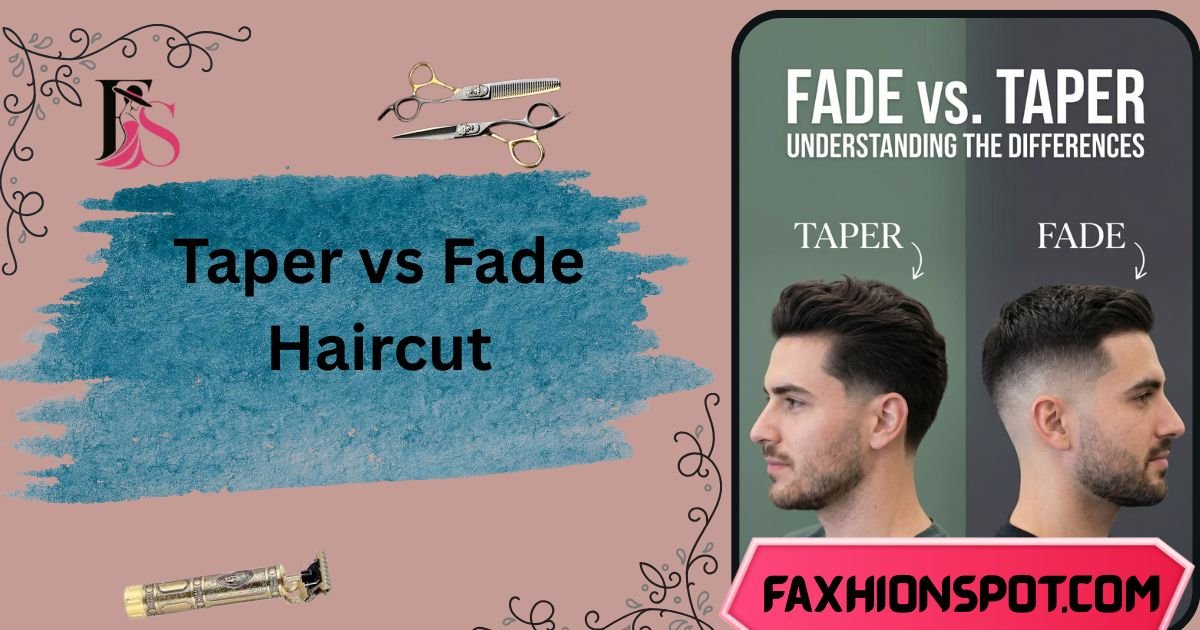
A taper haircut is a classic style where hair gradually shortens as it moves down the sides and back of the head. The change happens slowly and smoothly, with no harsh lines or sudden drop-offs. Most tapers end around the sideburns or neckline rather than fading all the way to bare skin.
Because the transition is so subtle, a taper works well with almost any hair type, including straight, wavy, and curly hair. It’s a favorite among men who want a sharp, professional look without going too bold. Tapers pair nicely with side parts, slick-back styles, textured crops, and longer hair on top. In any taper vs fade haircut discussion, the taper is usually described as the more conservative, everyday-friendly option.
Key traits of a taper haircut:
- Hair shortens gradually with no abrupt edges
- Rarely cuts all the way down to the skin
- Keeps more length on the sides compared to a fade
- Offers a polished, low-key finish suited for offices and formal settings
- Grows out naturally, so it needs fewer touch-ups
What Is A Fade?
A fade haircut blends the hair from longer on top to very short, or completely bare, near the skin on the sides and back. Unlike a taper, the transition in a fade is sharp and clearly defined, creating a high-contrast look where the hair almost disappears into the scalp.
Fades wrap around the entire head for a clean, uniform finish. This makes them a popular base for creative styles like mohawks, comb-overs, and textured crops on top. You’ll spot fades on athletes, musicians, and trendsetters because the bold contrast photographs well and always looks fresh out of the chair. When people search for a taper vs fade haircut side by side, the fade is almost always the bolder-looking option in photos.
Key traits of a fade haircut:
- Hair blends down to near-bare skin
- Creates a sharp, dramatic contrast between top and sides
- Works around the entire head for an even, uniform look
- Pairs well with modern, edgy hairstyles
- Needs more frequent barber visits to stay sharp
What’s The Difference Between A Taper and Fade?
The core difference in the taper vs fade haircut comparison is contrast. A taper is a gradual reduction in hair length, almost like a dimmer switch slowly turning down. A fade is a much sharper cutoff, where the hair visibly thins out and disappears near the skin.
Here’s a side-by-side look at how the taper vs fade haircut styles compare:
| Feature | Taper | Fade |
| Transition style | Slow and gradual | Sharp and dramatic |
| Ends near skin? | Rarely | Usually yes |
| Contrast level | Low to moderate | High |
| Best for | Professional, classic looks | Bold, modern looks |
| Maintenance | Every 4-6 weeks | Every 2-3 weeks |
| Hair type suitability | All hair types | Best with thicker hair |
A helpful way to remember it: every fade is a fast transition, but not every taper is a fade. In fact, many haircuts labeled “taper fade” combine both techniques, using a fade near the neckline with a softer taper blend higher up the head. This is exactly why the taper vs fade haircut question trips people up at the barbershop so often.
Types of Tapers and Fades
Both sides of the taper vs fade haircut family come in several variations, and knowing the terminology helps you communicate clearly with your barber.
Popular taper styles in the taper vs fade haircut lineup:
- Low taper – Keeps the taper close to the hairline for a subtle, natural look
- Mid taper – Starts around the temple area for a balanced, versatile finish
- High taper – Begins higher up the sides for a bolder statement
- Skin taper – Pushes the gradual blend closer to the scalp for extra sharpness
Popular fade styles:
- Low fade – Starts just above the ear, similar in placement to a low taper
- Mid fade – Begins around the temple for a versatile, everyday look
- High fade – Starts higher on the head for maximum contrast
- Skin fade – Fades all the way down to bare skin for the sharpest finish
- Drop fade – Curves down behind the ear, following the natural shape of the head
- Temple fade – Focuses the fade around the temple area, often paired with longer hair on top
- Burst fade – Fades in a circular pattern around the ear
Some barbershops also offer a taper fade, which blends the gradual softness of a taper with the crisp lines of a fade. This hybrid style gives you short, clean sides with a smooth transition and longer hair left on top, and it’s often the answer for guys who can’t fully commit to one side of the taper vs fade haircut debate.
How To Choose Between A Taper and Fade Haircut
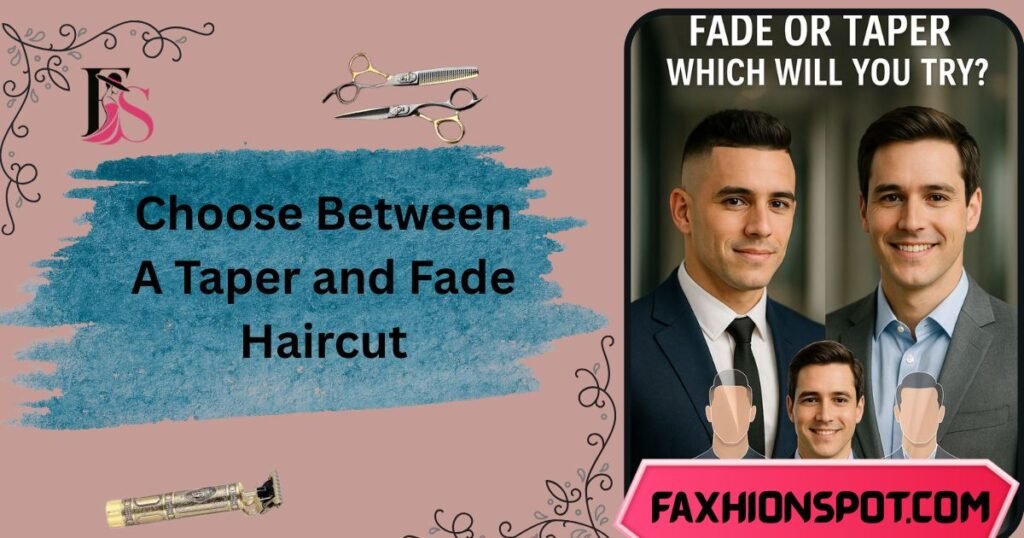
Choosing between a taper and fade haircut comes down to four main factors: your face shape, your hair type, your lifestyle, and how often you’re willing to sit in the barber’s chair. If you keep these in mind, the taper vs fade haircut decision gets a lot easier. Here’s how to think through each one.
Consider your face shape.
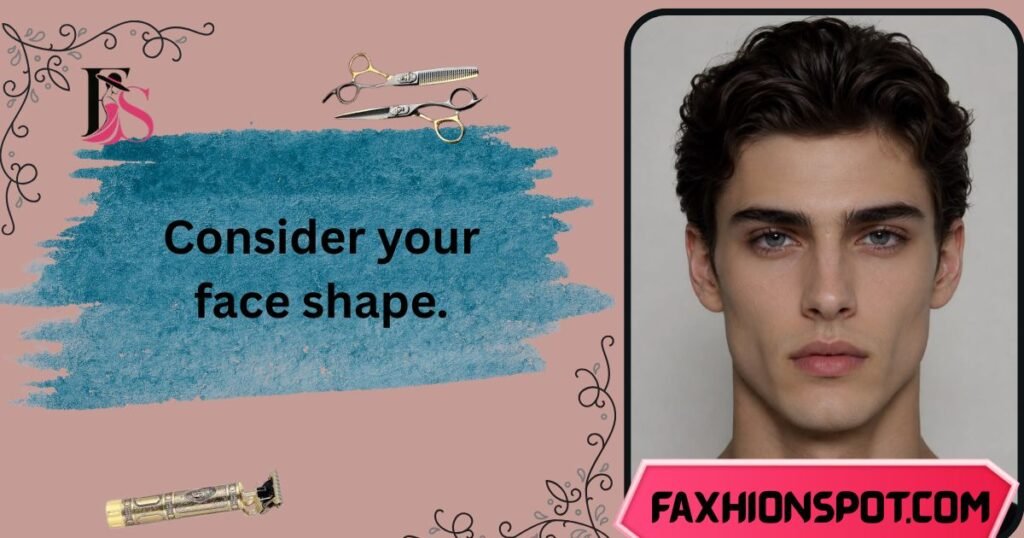
A skin fade tends to sharpen angular jawlines and adds a high-fashion edge, while a taper softens edges for a more understated, dapper look. Round faces often benefit from the added height and contrast a fade provides, while oval and square faces can pull off either style in this taper vs fade haircut comparison comfortably.
Think about your daily environment.
If you work in a formal or corporate setting, a taper usually complements a tailored, buttoned-up look more naturally. If your style leans toward streetwear or you simply want a haircut that turns heads, a fade delivers that bolder impact. This is another angle worth weighing in your taper vs fade haircut decision.
Factor in how much change you want.
A fade is the better pick if you’re after a dramatic transformation. A taper is ideal if you want something that still looks sharp but feels more familiar and low-maintenance. This single factor alone settles the taper vs fade haircut question for a lot of guys.
Factor Your Hair Type and Texture
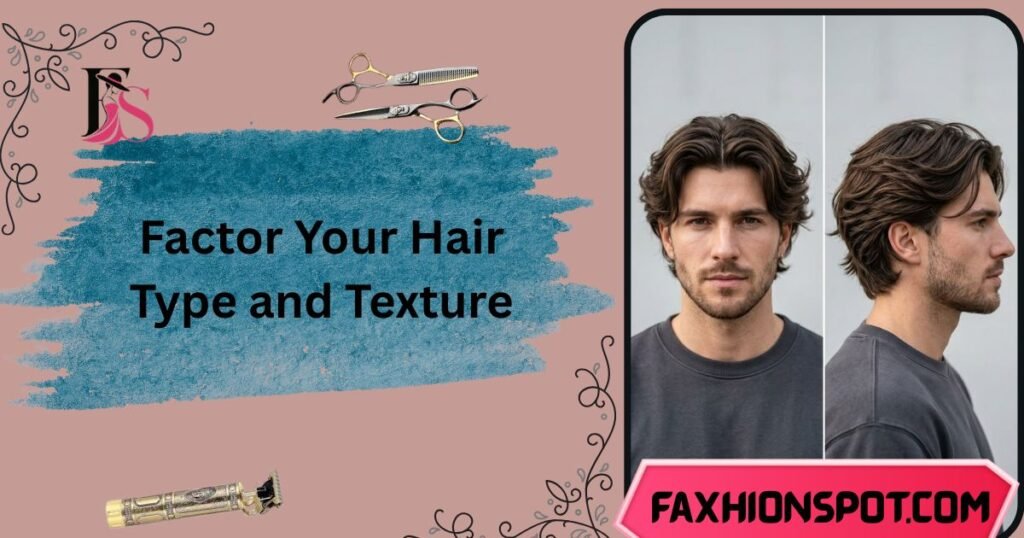
Hair type plays a bigger role in the taper vs fade haircut decision than most people realize.
- Straight hair works well with both cuts, though tapers tend to show off natural shine and movement more clearly.
- Wavy hair blends nicely into either style, and a taper often lets the natural texture stand out on top.
- Curly and coily hair can handle both cuts, but a skin fade tends to create sharper, more defined contrast against tighter curl patterns.
- Thick hair often suits a fade better in the taper vs fade haircut comparison, since there’s plenty of volume to keep the top full while the sides stay clean.
- Fine or thin hair usually looks best with a taper, since it avoids overly harsh lines that can draw attention to sparse areas.
If your hair is thinning, a longer taper on top combined with a subtle fade on the sides can add the illusion of extra density, which is a common workaround in the taper vs fade haircut world.
Contrast and Hairstyle
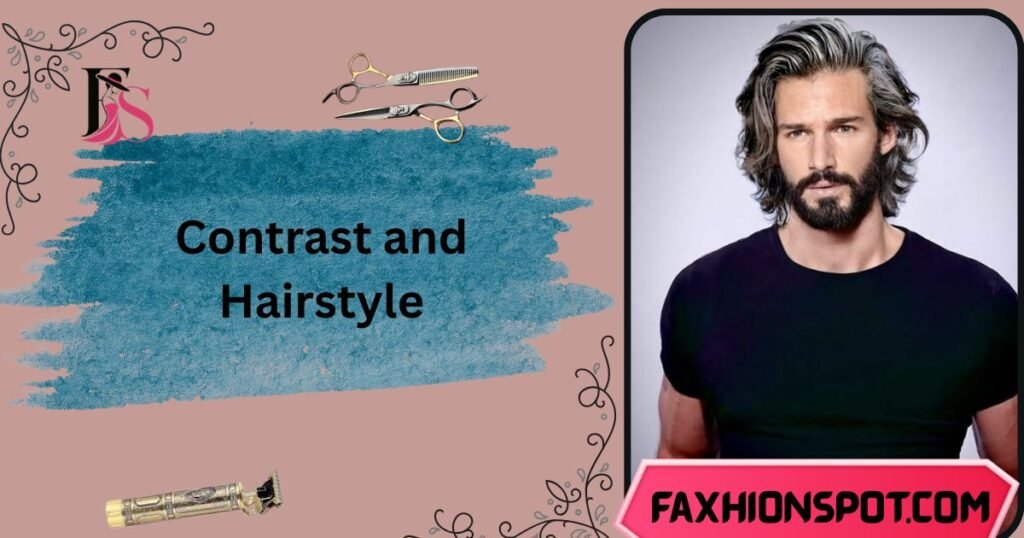
The amount of contrast you want directly affects which side of the taper vs fade haircut spectrum suits your personal style. A fade creates a bold, high-contrast look that pairs beautifully with modern styles like textured crops, mohawks, and slicked-back pompadours. It’s the go-to choice for anyone who wants their haircut to make a statement.
A taper, on the other hand, offers a softer, more blended look that works with classic styles like side parts, brush-backs, and combovers. It’s a safer bet if you’re not ready to commit to a dramatic change or if you switch up your hairstyle often, since the subtle blend adapts easily to different lengths on top.
If you can’t decide on a taper vs fade haircut, a taper fade offers a middle ground, giving you the crisp definition of a fade with the smoother, more forgiving blend of a taper.
Time and Money For Maintenance
Maintenance is where many people make the wrong call in the taper vs fade haircut decision. They choose a cut based purely on looks without considering how often they can realistically visit the barber.
- Tapers grow out gracefully and typically only need a touch-up every four to six weeks, making them the better option for anyone with a busy schedule or a tighter grooming budget.
- Fades, especially skin fades, start looking overgrown within two to three weeks. The sharp contrast that makes fades look so clean is also what makes them fade (pun intended) the fastest.
If you’re not willing to book regular barber appointments, a taper will save you both time and money in the long run. If a crisp, sharp look is non-negotiable for you, budget for more frequent visits with a fade. Maintenance alone can be the deciding factor in your taper vs fade haircut choice.
Our Thoughts on Taper Haircut
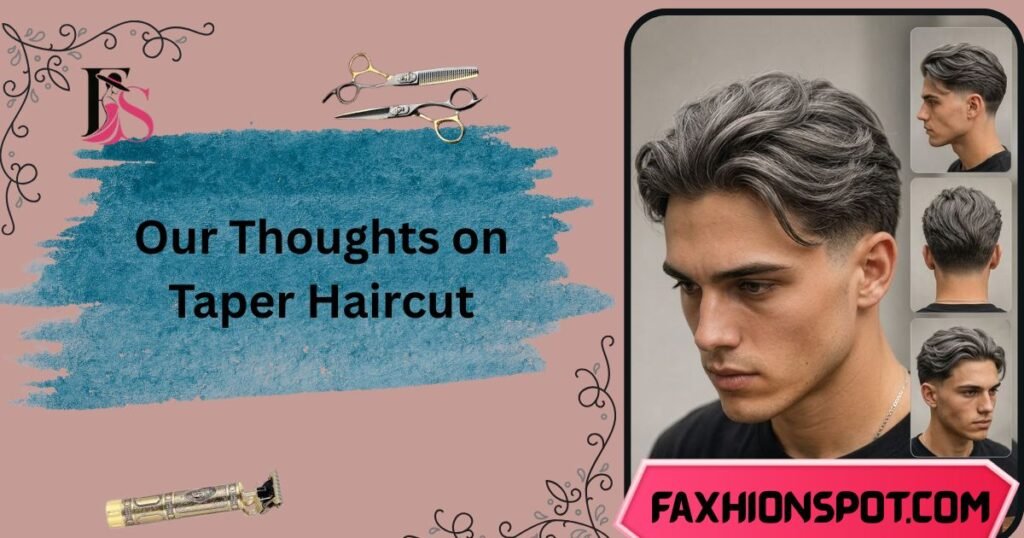
A taper haircut is a smart, low-maintenance choice for men who want a clean, professional finish without committing to dramatic upkeep. It suits nearly every hair type, blends well with longer or shorter styles on top, and grows out without looking messy.
If you value versatility and don’t want to think about your haircut every couple of weeks, the taper is a reliable, timeless pick that never really goes out of style. In our experience testing this taper vs fade haircut debate, the taper wins for anyone prioritizing convenience.
Our Thoughts on Fade Haircut
A fade haircut is the better option for anyone who wants their hair to make a statement. The sharp contrast gives an instantly polished, modern look that pairs well with bold styling choices.
It does require more frequent trips to the barber to keep the fade looking crisp, but for many guys, that trade-off is worth it for the sharper, more defined result. If you enjoy switching up your style and don’t mind the extra maintenance, a fade is hard to beat.
Conclusion
There’s no universally “better” option in the taper vs fade haircut debate. It genuinely comes down to your hair type, your face shape, your daily style, and how much time you want to spend in the barber chair.
A taper offers a subtle, classic, low-maintenance look, while a fade delivers a bold, high-contrast style that demands more frequent care. Revisit this taper vs fade haircut breakdown any time you’re unsure before your next trim.