Walk into any barbershop and ask for a “crew cut” or an “ivy league,” and you’ll often get the same confused look from the guy in the chair next to you.
That’s because these two haircuts look almost identical in photos — short sides, neat top, clean finish. But they’re not the same style, and asking for the wrong one can leave you with a cut that doesn’t match what you actually pictured.
What Is a Crew Cut?
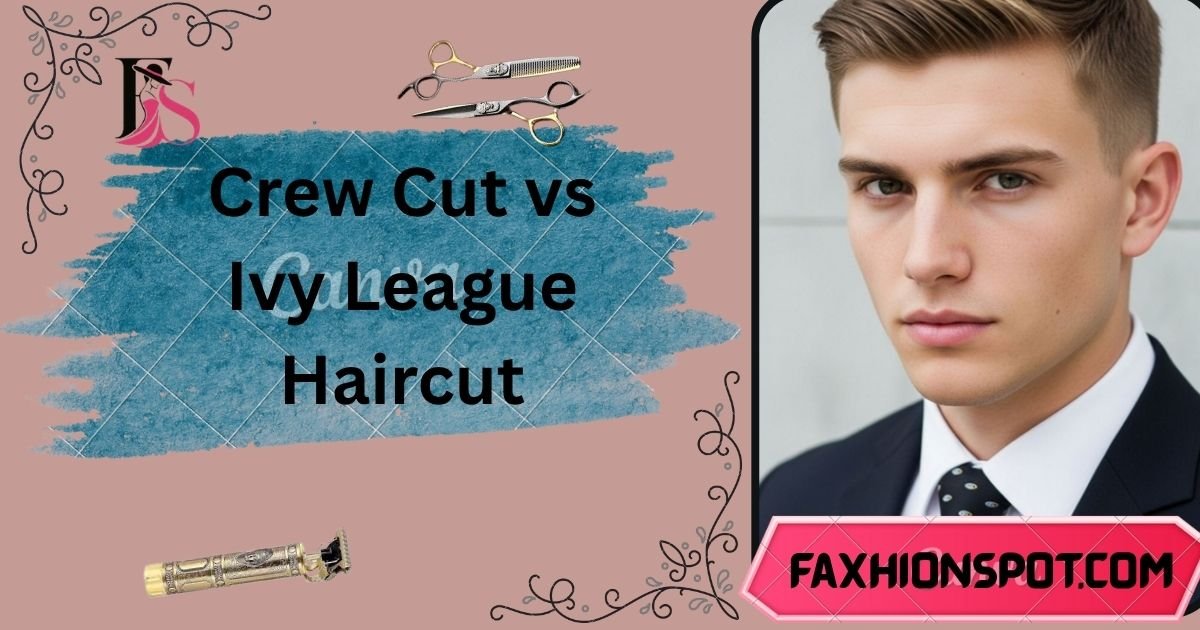
A crew cut is a short men’s hairstyle where the top hair is trimmed close and even, usually under an inch in length, with the sides and back tapered or faded down to the skin. There’s no length left for parting or sweeping — the hair on top often stands up slightly on its own, especially with thicker hair types.
The style dates back to military grooming standards, where practicality mattered more than looks. It was quick to cut, easy to keep clean, and required no product or daily upkeep. That no-fuss reputation has stuck around, which is why the crew cut remains a go-to choice for athletes, students, and anyone who wants a wash-and-go routine.
Key traits of a classic crew cut:
- Top length: typically 0.5–1 inch
- Sides and back: tapered or faded close to the skin
- Styling required: none — no comb, no product
- Texture: slightly upright or brushed forward, not parted
- Best for: low-maintenance guys, thicker hair, active lifestyles
What Is an Ivy League Haircut?
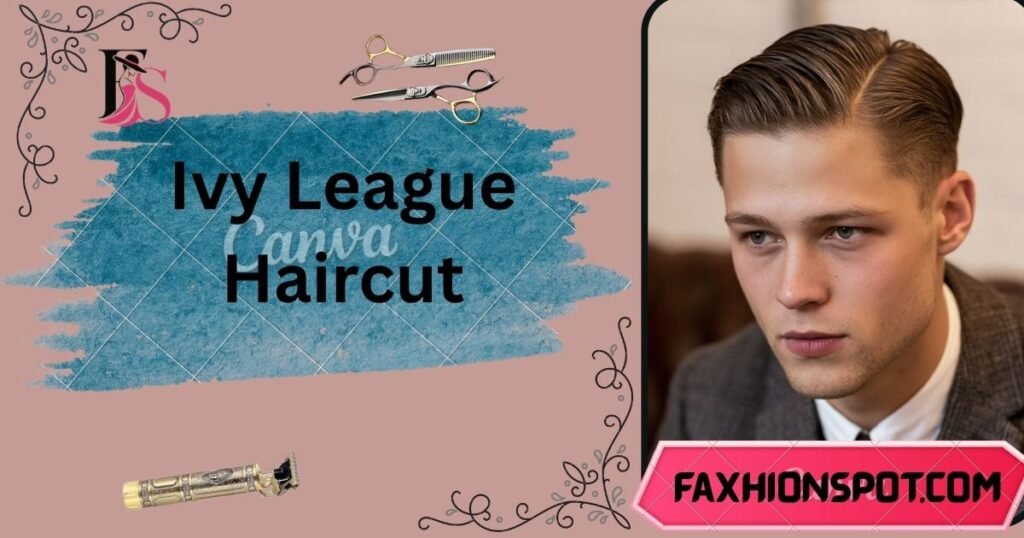
An ivy league haircut is a slightly longer, styling-friendly version of the crew cut. The sides and back are still short — often tapered or faded — but the top is left long enough to comb into a side part or brush forward with a bit of texture. Top length usually runs between 1.5 and 2.5 inches, tapering down gradually toward the crown.
This cut also goes by the names Harvard clip and Princeton cut, a nod to its roots on American university campuses in the mid-20th century, where it became the go-to look for students who wanted to appear polished without seeming overly formal. That “smart but not stiff” quality is exactly why it’s stayed popular for decades.
Key traits of an ivy league haircut:
- Top length: typically 1.5–2.5 inches
- Sides and back: tapered or faded, similar to a crew cut
- Styling required: light — comb, wax, or a small amount of pomade
- Texture: parted or swept to the side, more shape and movement
- Best for: guys who want options — sharp for work, relaxed on weekends
Crew Cut vs Ivy League: Side-by-Side Comparison
Here’s a direct comparison to make the differences easy to scan.
| Feature | Crew Cut | Ivy League Haircut |
| Top length | Under 1 inch | 1.5–2.5 inches |
| Sides/back | Tapered or faded | Tapered or faded |
| Styling needed | None | Light styling with comb or product |
| Can be parted? | No | Yes |
| Maintenance frequency | Every 3–4 weeks | Every 4–6 weeks |
| Effort level | Very low | Low to moderate |
| Best hair type | Straight or thick hair | Most hair types |
| Vibe | Sharp, athletic | Polished, refined |
| Origin | Military | Ivy League universities |
The core distinction comes down to one thing: length on top. That single difference changes how much styling you can do, how the cut ages between trims, and how formal or casual it looks.
Which One Suits Your Face Shape?
Both cuts flatter a range of face shapes, but the extra length on an ivy league gives it a bit more flexibility for balancing proportions.
Crew Cut
- Oval and square faces: The crew cut works especially well here, since the short, even top doesn’t add extra height or width.
- Round faces: Works, but keep the top slightly higher to add visual length and avoid making the face look wider.
- Long faces: Not the strongest match — the short top can make a long face look even longer.
Ivy League Haircut
- Round faces: A side part or swept-forward top adds height and breaks up roundness, making this a strong pick.
- Square and oval faces: The versatility here means you can go for a soft side sweep or a sharper part depending on your features.
- Long or narrow faces: The extra volume on top, styled with some width, helps balance out the face rather than stretching it further.
If you’re not sure which category you fall into, a quick rule of thumb helps: shorter, tighter cuts suit rounder faces less, while longer-on-top styles like the ivy league give you more room to adjust the shape with styling.
Which One Is Easier to Maintain?
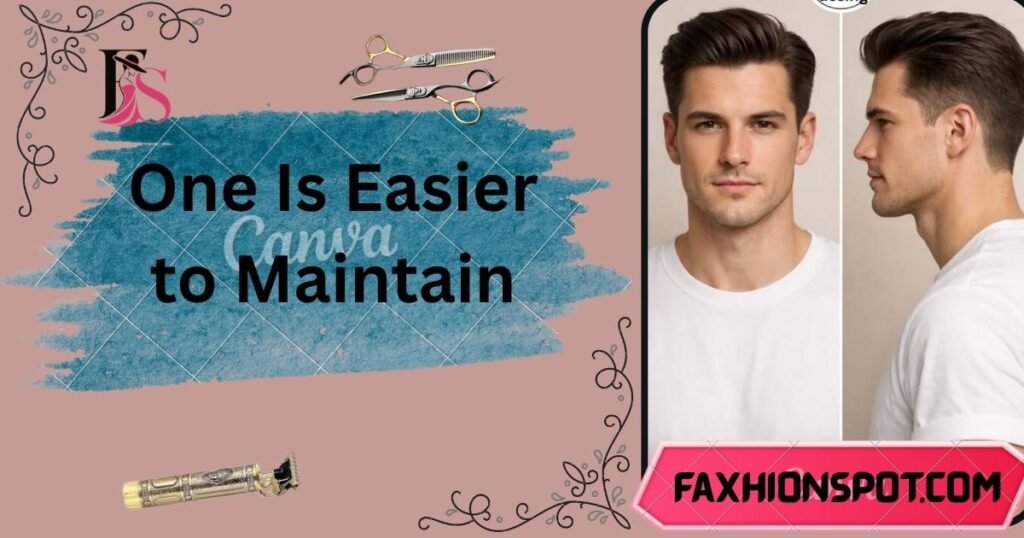
This is where the crew cut wins outright. There’s no product, no comb work, and no daily styling routine — you towel-dry it and you’re done. It does need trims more often, though, since the short top starts looking uneven or scruffy within three to four weeks.
The ivy league needs a little more effort day to day. You’ll likely reach for a comb and a small amount of pomade or wax to keep the part or sweep in place. The upside is that it holds its shape longer between barber visits — usually four to six weeks — because the extra length hides growth better than a crew cut does.
| Maintenance Factor | Crew Cut | Ivy League |
| Daily styling time | 0 minutes | 2–5 minutes |
| Product needed | None | Optional (wax/pomade) |
| Trim frequency | 3–4 weeks | 4–6 weeks |
| Grows out gracefully? | No | Yes, more forgiving |
If your mornings are rushed and you’d rather not think about your hair, the crew cut is the practical choice. If you don’t mind a few minutes with a comb for a more finished look, the ivy league pays that time back with more style options.
Which One Looks More Professional?
Both cuts read as clean and put-together, but they send slightly different signals. The crew cut has an athletic, no-nonsense edge — it works well in active or casual environments but can feel a touch too utilitarian for certain formal settings.
The ivy league haircut leans more polished. The side part and defined top give it a “boardroom ready” quality that’s hard to replicate with a cut that has zero length to shape. It’s why the style has long been associated with law firms, finance offices, and other buttoned-up workplaces — it looks deliberate, not just short.
That said, plenty of professional environments are casual enough that a sharp crew cut works just fine, especially when paired with a clean fade. The choice often comes down to your industry and personal style rather than a hard rule.
Click Here To Read Another Topic
Crew Cut vs Ivy League: Which Should You Choose?
Use this quick checklist to decide:
Choose the crew cut if you:
- Want the lowest possible maintenance
- Have an active lifestyle or play sports regularly
- Prefer a sharp, no-styling look
- Have an oval or square face shape
Choose the ivy league haircut if you:
- Want the option to style your hair differently day to day
- Work in a more formal or client-facing environment
- Have a round or long face shape and want more balance
- Don’t mind spending a couple of minutes styling in the morning
There’s no wrong answer here — it depends on how much time you want to spend on your hair and the image you’re going for. Still torn between short styles? It’s also worth comparing fade heights, since the difference between a low and mid fade can change the whole look of either cut. Ask your barber for a light taper if you’re unsure how short you want the sides.
Final Thoughts
The crew cut and ivy league haircut share the same DNA — short, tapered sides and a clean overall shape — but they solve different problems. The crew cut is about speed and simplicity: no product, minimal upkeep, always ready. The ivy league is about flexibility: a little more length that opens the door to styling, a sharper professional look, and better face-shape balance.
Neither cut is objectively better. The right choice comes down to your daily routine, your workplace, and how much time you’re willing to spend in front of a mirror. Bring this comparison to your next barber appointment, point to the length and styling details you want, and you’ll walk out with exactly the cut you asked for — no confusion, no guesswork.
FAQs
Is an ivy league haircut just a longer crew cut?
Yes, essentially. It keeps the same short sides but adds length on top for styling.
How much length do I need on top for an ivy league cut?
Around 1.5 to 2.5 inches is standard for a side part or sweep.
Which cut is better for thick hair?
Both work, but the ivy league gives thick hair more room to lie flat and be styled.
Do I need product for a crew cut?
No, the crew cut is designed to be styled with zero product.
Which haircut lasts longer between trims?
The ivy league holds its shape longer, typically 4 to 6 weeks versus 3 to 4 for a crew cut.
Can I switch from a crew cut to an ivy league easily?
Yes, just ask your barber to leave more length on top at your next appointment and let it grow in gradually.