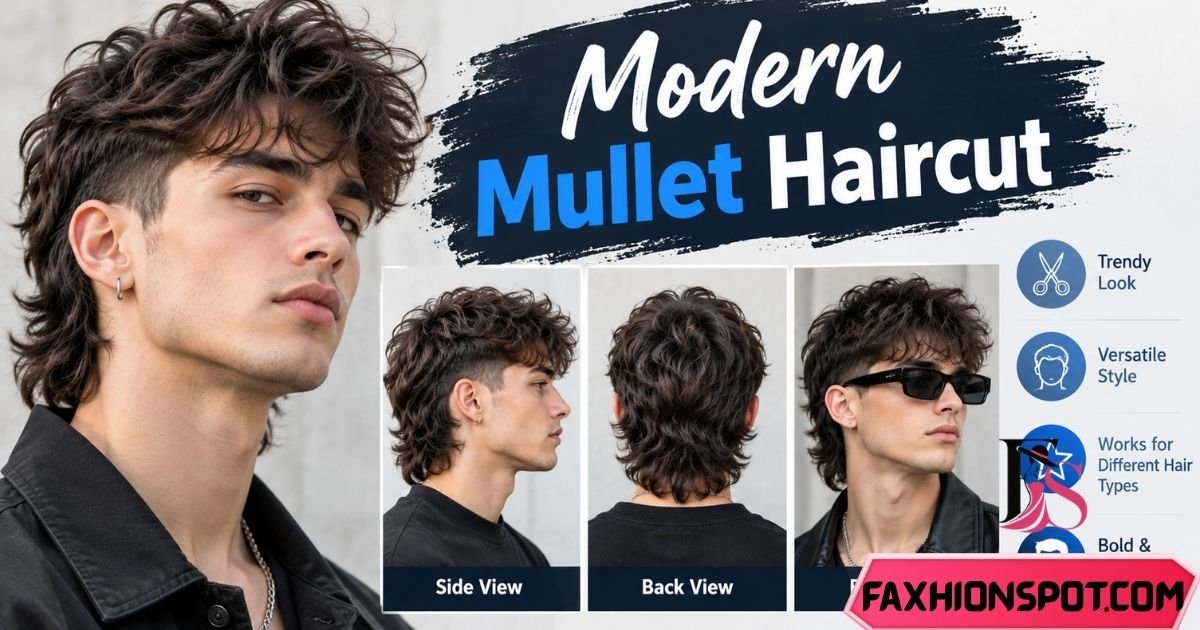
The modern mullet has evolved far beyond its famous retro reputation. In 2026, the look is cleaner, more textured, and easier to customize for different hair types and lifestyles.
Instead of simply leaving the back long, barbers now combine layered length with tapers, fades, curls, fringes, waves, and controlled texture.
Below, we explore the most popular styles, explain what makes each one different, and show you how to style and maintain the look.
Trending Types of Mullet Hairstyles (Modern Mullet)
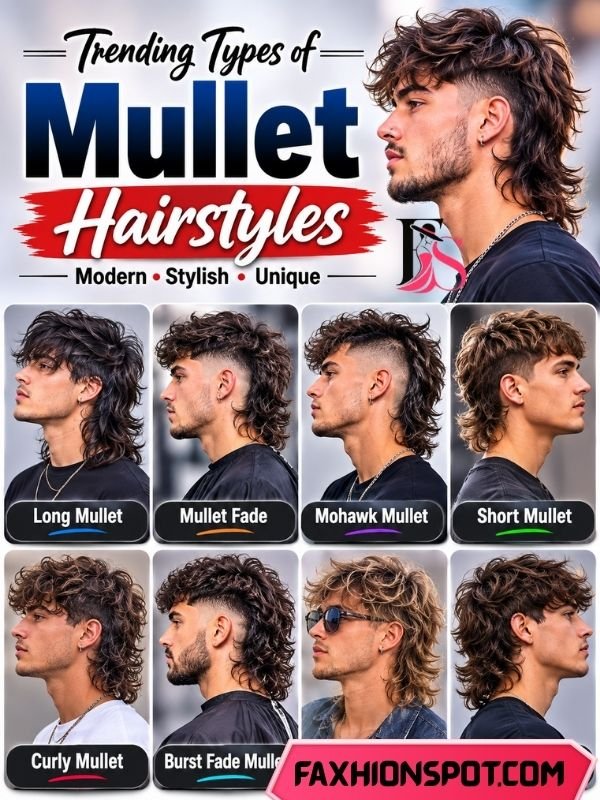
Today’s modern mullet is defined by contrast: shorter hair around the front and sides with deliberate length at the back. Fades, tapers, layers, and texture make the transition look intentional rather than dated.
Long Mullet
A long mullet keeps substantial length through the nape and back while maintaining shorter sides and a textured top. It creates noticeable movement and works particularly well with thick, wavy, or naturally flowing hair.
Ask your barber for layered ends rather than one blunt length. This keeps the back light and prevents the haircut from looking heavy.
Mullet Taper Fade
A taper fade creates a cleaner, more conservative version by gradually shortening the hair around the temples and neckline. The longer back provides the signature shape without overwhelming the face.
This is a strong option for someone trying the style for the first time because the taper makes the overall haircut easier to wear.
Mohawk Mullet
The mohawk mullet combines the narrow, lifted shape of a mohawk with length through the back. The sides are usually clipped very short, creating strong contrast.
It suits men who want an expressive, edgy haircut and are comfortable with noticeable styling.
Short Mullet
A short mullet keeps the back relatively close to the neckline while preserving the characteristic difference between front and back. It is practical, lightweight, and easier to maintain than longer versions.
Textured layers on top can add volume without requiring a large amount of product.
Burst Fade Mullet
The burst fade curves around the ear while leaving more length toward the back. Combined with a mullet shape, it produces a distinctive side profile.
It is especially popular with curly and wavy hair because the fade emphasizes the natural texture above and behind the ears.
Curly Mullet
A curly mullet allows natural curls to become part of the design instead of fighting them. The sides can be tapered while the crown and back retain enough length for the curls to form properly.
Moisture and curl definition are important. A lightweight curl cream or leave-in conditioner can help reduce frizz while keeping movement.
Mullet Fade
A traditional fade gives the sides a progressively shorter finish, creating a sharp contrast with the longer back. The fade can be low, medium, or high depending on how dramatic you want the result.
For a wearable everyday look, a low or medium fade is usually easier to balance with the length at the back.
Shaggy Mullet
The shaggy mullet focuses on layers, movement, and a deliberately undone finish. Instead of crisp lines everywhere, the haircut uses choppy sections and natural volume.
It is a great match for wavy hair and anyone who prefers a relaxed, rock-inspired appearance.
Two Block Mullet
The two block mullet borrows the recognizable separation of Korean-inspired two-block cuts and combines it with longer length at the nape.
The result can look youthful and fashion-forward, particularly when the top is left fuller and the sides are softly tapered.
Trendy Short Mullet with Low Taper Fade
A low taper gives a short mullet a polished appearance without exposing too much scalp. The longer back remains visible, but the overall silhouette stays controlled.
This combination works well for men who want personality without an extremely dramatic haircut.
Mullet Faux Hawk
The faux hawk version builds height through the center of the top while keeping the back longer. Texture powder or matte clay can help create separation.
It is particularly effective on medium-to-thick hair that naturally holds volume.
Temp Fade Mullet
A temp fade focuses on the temple area, giving the sides a clean, precise finish while preserving fullness farther back.
This version can sharpen the appearance around the forehead and temples without requiring a full high fade.
Faded Mullet with Fringe
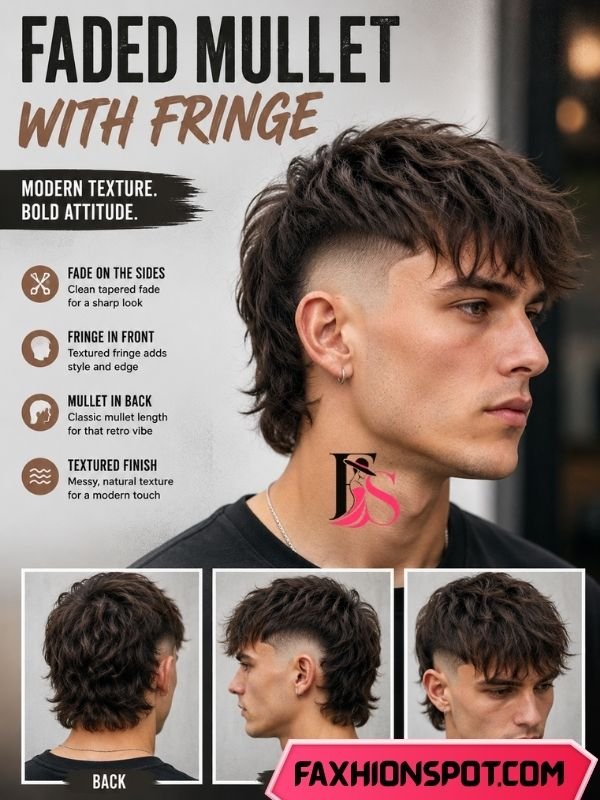
Adding a fringe gives the haircut more structure at the front. The fringe may be straight, choppy, textured, or slightly curved depending on your face shape.
A faded side finish balances the fringe and keeps the back from becoming visually too heavy.
Fluffy Mullet
A fluffy mullet emphasizes volume rather than sharp definition. Blow-drying the crown upward and using lightweight styling products can create a soft, airy finish.
This is a strong choice for thick or naturally voluminous hair.
Sexy, Modern Mullet From The Back
From behind, the defining feature is the shape of the nape. A well-cut back should have movement and controlled layers rather than looking like untrimmed growth.
Ask your barber to shape the neckline and remove unnecessary weight from the ends.
Messy Mullet with Texture
A messy version uses piecey layers and irregular separation to create a casual finish. It works especially well when you want a hairstyle that does not look overly styled.
Sea salt spray, texture powder, or matte paste can provide enough grip without making the hair stiff.
Edgy Mullet with Beard
Combining a mullet with a beard creates a stronger, more masculine silhouette. A faded beard can echo the taper or fade on the head, creating visual consistency.
Keep the beard shape intentional so the overall look feels coordinated rather than overly busy.
Classy Mullet
The classy version tones down the rebellious elements. A low taper, medium back length, controlled layers, and subtle styling make it suitable for more polished environments.
It is proof that the haircut does not have to be extreme to be distinctive.
Quiff Mullet Fade
A quiff adds height and volume to the front while the back retains its longer shape. The sides are usually faded to emphasize the contrast.
This variation suits men who enjoy classic styling but want something less conventional than a standard fade.
Permed Mullet Taper
A perm can give straight hair the movement needed for a more textured silhouette. Pairing the curls with a taper prevents the sides from becoming too bulky.
The result has a strong retro influence while still feeling contemporary.
Medium Mullet
A medium mullet sits between the short and long versions. The back has enough length to create visible movement without reaching an especially dramatic length.
It is one of the easiest versions to customize because the barber can adjust the proportions gradually.
Spiky Mullet
A spiky variation uses short, separated sections across the top and crown. Matte wax or clay can emphasize individual spikes without producing excessive shine.
This is best for men who want an energetic, youthful finish.
Choppy Mullet Taper Fade
Choppy layers create irregular movement through the top and back, while a taper fade cleans up the perimeter.
The contrast between rough texture and neat sides makes this style particularly contemporary.
Flowing Mullet
A flowing mullet prioritizes movement. The back is allowed to sweep naturally while the sides remain controlled.
Wavy and thick hair can make this variation especially effective because natural movement does much of the styling work.
Thick Mullet
Thick hair provides plenty of volume, but too much density can make the back look bulky. Strategic layering and texturizing help distribute the weight.
Your barber should remove weight internally rather than simply shortening the outside length.
Wavy Mullet
Waves naturally create the separation and movement associated with a layered haircut. A wavy version can therefore look effortless with minimal product.
Let the hair dry naturally or use a diffuser on low heat to preserve the wave pattern.
Wolf Cut Mullet
A wolf cut mullet combines the layered volume of a wolf cut with the more obvious length contrast of a mullet.
The wolf-inspired layers spread volume around the crown, while the longer nape keeps the silhouette recognizable.
Mullet Pompadour
The pompadour version brings substantial volume to the front and crown before transitioning into a longer back.
It works best when the hair has enough density to support height. A blow dryer and medium-hold styling product are useful here.
Mullet Blowout
A blowout creates maximum movement and volume through the top while allowing the longer back to flow naturally.
Use a round brush or your fingers while blow-drying, then finish with a lightweight texture product.
How To Style A Mullet
Styling a modern mullet is mainly about controlling the front and sides while allowing the back to retain movement. The goal is texture rather than a stiff, overly polished finish.
Style the Front and Sides First
Start with clean, towel-dried hair. Apply a small amount of sea salt spray or lightweight styling cream.
Then:
- Blow-dry the front in the direction you want it to sit.
- Lift the crown slightly for additional volume.
- Use your fingers to separate textured sections.
- Apply matte clay or paste sparingly if extra hold is needed.
- Avoid applying too much product near the roots.
Straight hair generally benefits from texture spray and root lift. Curly hair needs moisture and definition, while thick hair may need a lightweight product that controls bulk without flattening it.
Finish the Back with Texture or Flow
Once the front and sides are shaped, move to the longer back.
Use your fingers to separate the ends and encourage the natural direction of the hair. For waves and curls, scrunch rather than brushing through the finished shape.
The back should move when you walk. Avoid making it too stiff because movement is one of the most attractive features of the style.
What Is A Mullet Haircut?
A modern mullet is a haircut where the front and sides are shorter than the hair at the back. What makes the contemporary version different is how the transition is handled.
Traditional versions often had a dramatic jump between short and long sections. Today’s approach commonly uses fades, tapers, layers, texturizing, and controlled length.
A simple comparison helps:
| Feature | Traditional Mullet | Modern Version |
| Sides | Often longer | Tapered or faded |
| Top | Short or full | Textured and layered |
| Back | Very long | Controlled length |
| Transition | More obvious | Softer and blended |
| Finish | Retro and bold | Textured and versatile |
| Hair types | Mostly straight | Straight, wavy, curly, thick |
The key is intentional shape. The longer back should look designed, not accidentally grown out.
The Evolution of the Mullet Haircut
The history of the mullet reaches much further back than the exaggerated styles associated with the 1980s. However, its modern cultural identity became strongly connected with music, sports, entertainment, and rebellious fashion.
The classic version became especially recognizable for its short front and sides paired with substantial length at the back. Over time, the look became associated with different subcultures and generations.
The current revival took the recognizable silhouette and made it more adaptable. Modern barbers introduced fades, low tapers, textured crops, curly variations, shag-inspired layers, and shorter backs.
That evolution explains why the haircut now appears in so many different forms. It can be subtle enough for everyday wear or bold enough to become the centerpiece of an outfit.
Current hairstyle guides also emphasize natural texture, customization, and wearable proportions rather than simply recreating an old-school cut.
Click Here To Read Another Topic
Modern Mullet Haircut Tutorial
Before sitting in the barber’s chair, decide how much contrast you actually want.
For a first attempt, a low taper with a short-to-medium back is a safe starting point. You can always increase the length or make the sides more dramatic at a later appointment.
Tell your barber:
- How long you want the back.
- Whether you prefer a taper or fade.
- How much volume you want on top.
- Whether you want a fringe.
- Whether your natural texture should remain visible.
- How sharp or soft you want the neckline.
Bring two or three reference photographs from different angles. A side profile is particularly helpful because it shows the relationship between the top, sides, crown, and back.
For home styling, begin with damp hair and use a lightweight product. Build volume at the crown, shape the front, and then finish the back with your fingers. A diffuser can help preserve curls and waves.
Maintenance also matters. Short faded sides may need refreshing every few weeks, while longer layered versions can be maintained less frequently. Regular trims keep the neckline, ends, and overall proportions intentional.
Most importantly, choose the haircut around your natural hair rather than trying to force your hair into an unsuitable shape. Straight, wavy, curly, and thick hair can all work, but the cutting technique should be adjusted accordingly.
Conclusion
The modern mullet is no longer limited to the exaggerated image associated with previous decades.
In 2026, it is a flexible haircut that can be short, long, curly, wavy, shaggy, faded, tapered, polished, or deliberately messy.