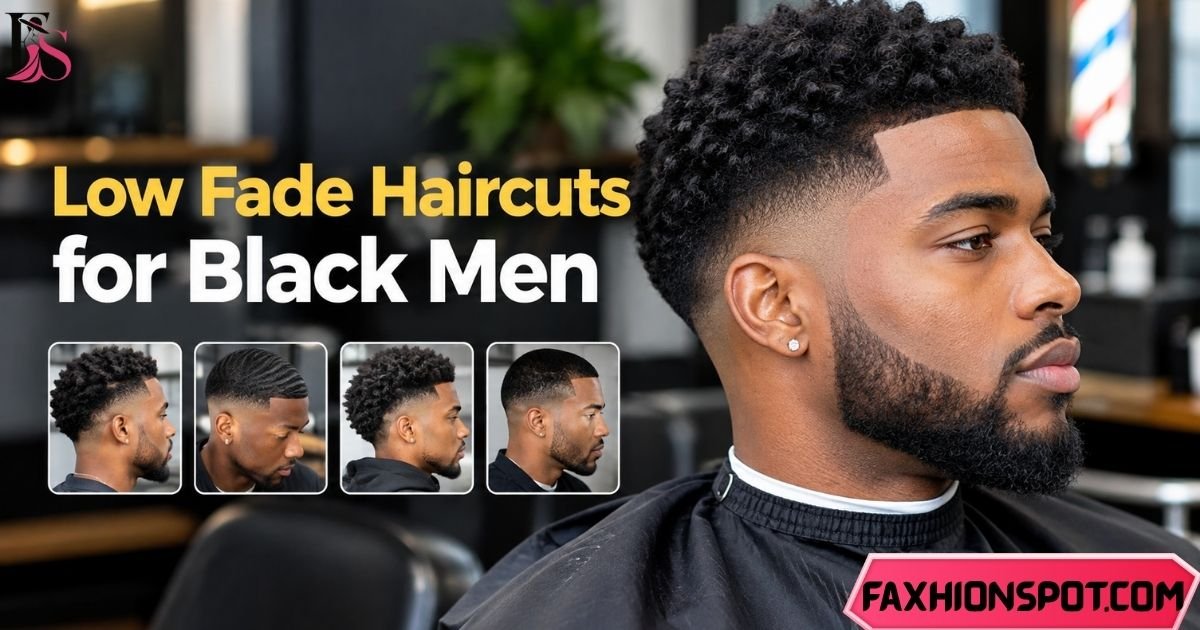
Low fade haircuts for Black men offer a clean, versatile way to sharpen natural texture without taking too much attention away from the hair on top.
Whether you wear waves, curls, an afro, twists, locs, or a short natural style, the right fade can create a balanced shape while keeping your overall look fresh.
Modern barber guides also focus heavily on fade height, hair texture, face shape, lineups, beard connections, and maintenance when choosing a cut.
What Is a Low Fade Haircut?
A low fade gradually reduces the hair around the lower sides and back of the head, usually beginning close to the ears and sideburns. The shortest portion may reach the skin or remain slightly above it, depending on the desired finish.
Unlike a high fade, the transition does not travel far toward the temples or upper sides. This leaves more hair around the upper sides and creates a natural connection between the textured top and shorter perimeter.
For Black hair, this placement can work especially well because curls, coils, waves, and other natural textures remain visually prominent.
A barber may use several clipper guards to create a smooth transition from the shortest section into the longer hair. The exact technique depends on hair density, texture, desired contrast, and whether you want a skin finish.
Low Fade vs Taper (Simple Difference)
The terms are sometimes used interchangeably, but they describe different amounts of hair removal.
| Feature | Low Fade | Low Taper |
| Main area | Lower sides and back | Temples, sideburns and neckline |
| Amount removed | More hair around the lower sides | Less overall hair removed |
| Skin finish | Often possible | Usually more subtle |
| Contrast | More noticeable | Softer |
| Top and sides | More disconnected visually | More natural and full |
| Overall feel | Sharp and defined | Conservative and understated |
A low taper generally preserves more of the side hair, while a low fade creates a broader blended area. If you want a dramatic skin-to-hair transition, tell your barber you want a fade rather than only a taper.
Why Low Fade Haircuts Are Perfect for Black Men
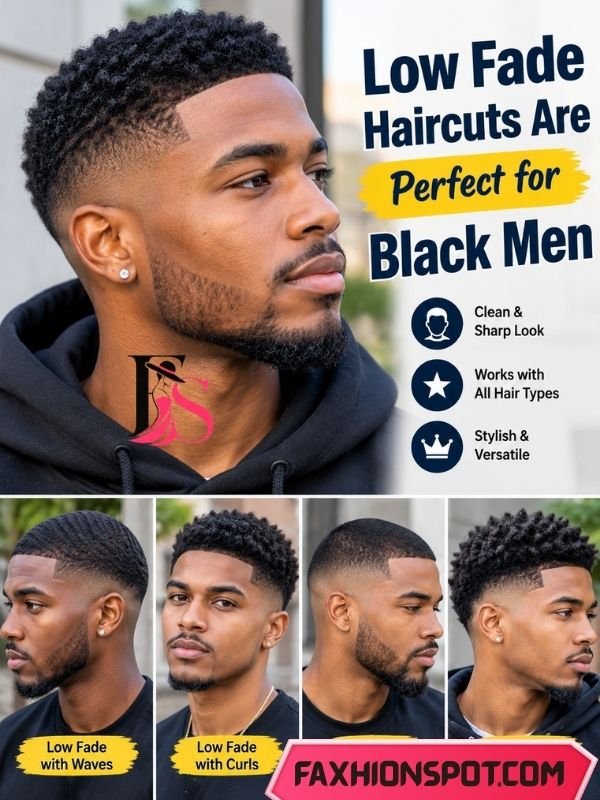
Natural Black hair offers an impressive range of textures, from loose curls to tightly coiled 4C hair. A low fade gives that texture a clean frame without requiring you to remove much length from the top.
One major advantage is versatility. The same basic fade can support:
- 360 waves
- Short curls
- Sponge coils
- Natural afros
- Two-strand twists
- Braids
- Locs
- Short textured crops
- Beard combinations
- Sharp lineups
Current hairstyle guides repeatedly highlight this ability to pair the fade with different textures and top styles.
Another advantage is balance. Keeping the fade low can preserve fullness around the upper sides, which is useful when you want your hairstyle to look substantial rather than heavily shaved.
It can also be customized around your hairline. A natural lineup, temple shape, or beard connection can make the final result look more personalized.
Popular Low Fade Haircuts for Black Men
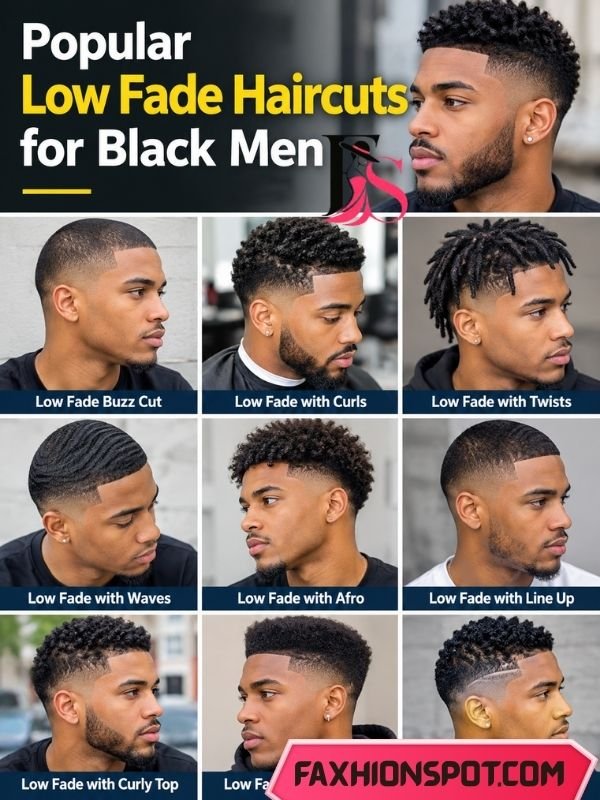
The best style depends on what you want to keep on top. Instead of treating the fade as the entire haircut, think of it as the foundation that frames your preferred texture.
Low Fade with Short Hair
For a simple everyday look, pair the fade with a short textured top. A #1, #2, #3, or similarly short length can create a clean silhouette with very little styling.
This option works particularly well for men who want a haircut that is quick to maintain. Add a subtle lineup if you prefer sharper edges.
Low Fade with Afro
A natural afro creates strong contrast against closely faded sides. Keeping the top rounded, picked out, or slightly shaped gives the haircut height and personality.
The key is preserving enough density to maintain the afro’s natural silhouette. A barber should shape the top according to how your hair naturally grows rather than forcing it into an unnatural outline.
Low Fade with Curls
Curly hair can make the transition between the fade and top especially noticeable. Short, defined curls create texture while the lower sides remain clean.
For a stronger result, keep the curls moisturized and avoid excessive manipulation. Your barber can also leave more length on top if you want a fuller curly finish.
Low Fade with Waves
A wave hairstyle paired with a clean fade creates a classic barbershop combination. The short sides emphasize the directional pattern across the top.
If you wear 360 waves, tell your barber how you brush and where your wave pattern sits. This helps the barber avoid cutting away too much of the length needed for your pattern.
Low Fade with Twists
Two-strand twists, sponge twists, and twist-outs can all work with a low fade. The contrast between textured twists and closely blended sides gives the haircut definition.
Keep the fade low if you want the twists to remain the main visual feature. A crisp temple and neckline can complete the style without making the sides overpower the top.
Low Fade with Dreads
Locs offer another strong pairing. A low fade can clean up the perimeter while leaving the locs intact on top.
For shorter locs, a compact fade can create a neat silhouette. Longer locs may benefit from a low fade combined with a pulled-back or tied style.
Because locs vary significantly in thickness and length, show your barber a reference image before cutting.
Low Fade with Beard
A beard can make a low fade look more connected and intentional. The barber can gradually blend the sideburn area into the beard instead of creating an abrupt gap.
A clean beard shape does not have to be extremely sharp. A natural beard line can produce a softer appearance, while a defined cheek and neckline create a more polished finish.
Modern barber guides frequently identify beard blending and lineups as important details when customizing a fade.
Low Fade vs Mid Fade vs High Fade (Quick Guide)
The biggest difference is where the blend begins.
| Fade Type | Starting Point | Visual Effect | Best For |
| Low fade | Near the ears | Subtle and balanced | Natural textures, professional styles |
| Mid fade | Around the middle of the sides | More contrast | Modern textured styles |
| High fade | Higher on the sides | Bold and dramatic | Strong contrast and short tops |
A low fade preserves more hair around the upper sides. A mid fade creates a more noticeable transition, while a high fade removes significantly more side volume.
If you are unsure, start with a lower fade. It is easier to raise the fade later than to immediately replace hair that has already been cut away.
How to Explain a Low Fade to Your Barber
A good barber request should be specific. Instead of saying only, “Give me a low fade,” explain the height, top length, finish, and lineup.
Try this:
“I want a low fade that stays close to the ears and sideburns. Keep the top length and natural texture. Blend the sides smoothly and give me a natural or sharp lineup.”
Then clarify these details:
- Fade height: Tell the barber that you want the blend to remain low.
- Skin or shadow: Decide whether you want the shortest section completely bald or slightly darker.
- Top length: Explain whether you want waves, curls, an afro, twists, locs, or another style.
- Lineup: Choose between a natural hairline and a sharper edge.
- Beard: If you have facial hair, ask for a connected beard blend.
- Reference photo: Bring a picture showing the exact shape you want.
Current barber-focused pages strongly recommend communicating the desired fade height and top length rather than relying on a style name alone.
Common Mistakes to Avoid
One of the biggest mistakes is asking for a fade without specifying how low you want it. “Low” can be interpreted differently depending on the barber.
Another mistake is choosing a style based only on a photograph. Your hair density, curl pattern, hairline, face shape, and growth pattern may differ from the person in the picture.
Avoid cutting too much from the top if your goal is waves, an afro, curls, twists, or locs. The top needs enough length to support the finished style.
Also avoid overdoing the lineup. A very aggressive hairline can change the natural shape of your forehead and may be harder to maintain as it grows out.
How to Maintain a Low Fade (Black Hair Care)
A fresh fade depends on more than the barber visit. Proper hair care helps the top retain its texture while regular trimming keeps the perimeter clean.
Trim Frequency
Most people can maintain the sharp appearance of a fade by visiting the barber approximately every two to three weeks. Exact timing depends on how quickly your hair grows and how precise you want the blend to remain.
Some style guides recommend roughly two-week maintenance for particularly crisp fades, while longer intervals can work for people who prefer a softer grow-out.
If your main concern is the lineup rather than the entire fade, you may only need a light edge cleanup between full haircuts.
Daily Care
Your daily routine should match your hairstyle.
For waves, brush consistently and use lightweight moisturizing products when needed. For curls and coils, prioritize moisture and avoid excessive handling. Afros may need gentle picking and regular conditioning.
For twists and locs, keep the scalp clean and avoid excessive product buildup. Choose products based on your hair’s needs rather than simply following trends.
Night Care
Nighttime protection can help reduce friction and preserve texture.
A satin or silk durag can help protect waves, while a satin bonnet or pillowcase can be useful for curls, twists, afros, and locs.
Avoid going to bed with heavily wet hair. Let your hair dry properly after washing or moisturizing.
Edge Maintenance
The hairline can make a fresh haircut look older quickly. If you clean your edges at home, use a light touch.
Avoid repeatedly pushing the hairline backward. Over-shaping the front can gradually change the appearance of your natural hairline.
For the cleanest result, let your barber handle major lineup adjustments.
Click Here To Read Another Topic
Best Face Shapes for Low Fades
A low fade can be adapted to many face shapes, but the top length and silhouette can change the overall balance.
| Face Shape | Useful Styling Approach |
| Oval | Most top styles can work |
| Round | Add controlled height on top |
| Square | Textured or rounded tops can soften strong angles |
| Oblong | Avoid excessive height |
| Diamond | Keep balanced volume around the top |
| Heart | Medium texture and controlled fullness can work well |
Face shape should be treated as a starting point rather than a strict rule. Hair texture, density, hairline, beard shape, and personal preference are equally important.
Common Low Fade Mistakes to Avoid
Watch for these problems:
- Setting the fade higher than requested
- Removing too much top length
- Choosing the wrong skin level
- Over-shaping the natural hairline
- Ignoring the beard connection
- Failing to account for hair shrinkage
- Using too much styling product
- Waiting too long between trims when a crisp finish is desired
- Showing a photo without explaining what you like about it
A useful barber conversation can prevent most of these issues.
Final Thoughts
Low fade haircuts for Black men remain versatile because they work with natural texture rather than trying to hide it. Waves, curls, coils, afros, twists, locs, and short cuts can all be paired with a carefully placed low blend.
For the best result, communicate the fade height clearly and show a reference photo. A small difference in placement can completely change the final silhouette.
With the right barber, proper maintenance, and a top style that fits your natural texture, a low fade can remain clean, adaptable, and easy to personalize.
Frequently Asked Questions
Is a low fade good for Black men?
Yes. It works particularly well with natural textures such as curls, coils, waves, afros, twists, and locs while keeping the lower sides neat.
How long does a low fade last?
A sharp finish commonly lasts around two to three weeks, although growth rate and personal preference can change the ideal trimming schedule.
Low fade vs low taper – which is better?
Neither is universally better: a low fade removes more side hair for stronger contrast, while a low taper keeps more natural fullness around the sides.
Is a low fade professional?
Yes. A clean, conservative version can suit many workplaces, especially when the fade, lineup, top, and beard are kept neat.