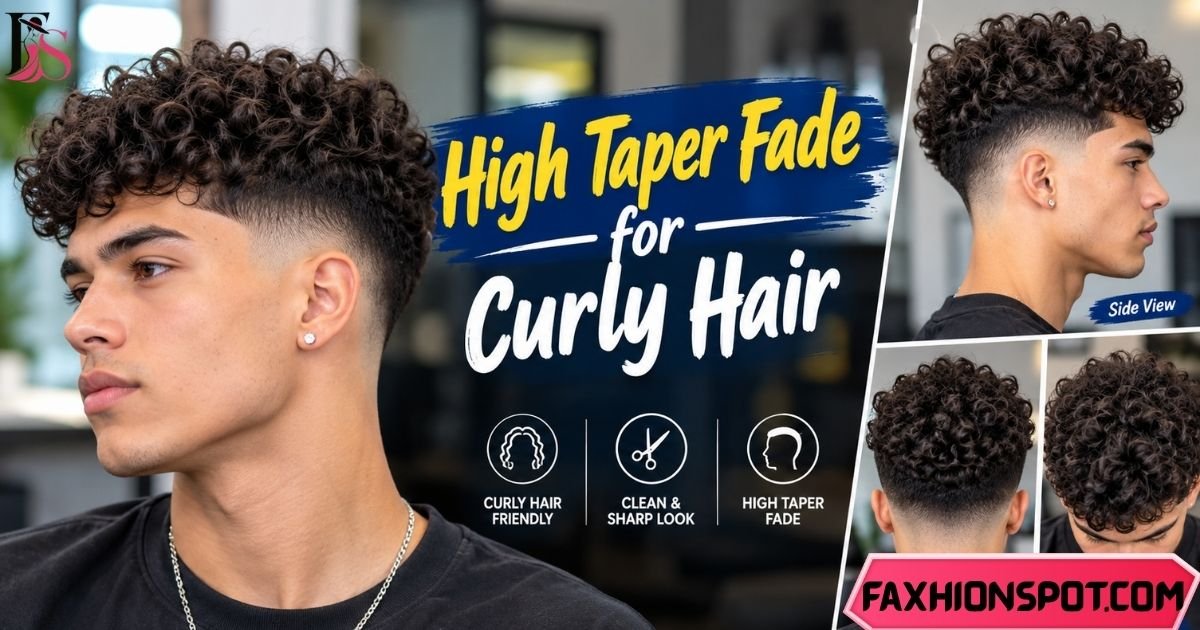
A high taper fade for curly hair combines clean, tapered sides with natural curls left longer on top.
It gives curly hair a sharp outline without removing the texture that makes it unique. This guide explains how a high taper works, which styles suit different face shapes, how to style the curls, what to tell your barber, and how to maintain the cut between appointments.
Quick Bio Table
Because this article covers a hairstyle rather than a person, personal biography details do not apply.
| Detail | Information |
| Full Name | N/A — Hairstyle topic |
| Age | N/A |
| Birthplace | N/A |
| Nationality | N/A |
| Profession | Hairstyle / Barbering Topic |
| Height | N/A |
| Weight | N/A |
| Net Worth | N/A |
What is a high taper fade for curly hair?
A high taper fade for curly hair is a haircut where the hair around the temples and neckline is gradually shortened, while the curls on top remain fuller. The taper creates a clean transition instead of cutting the entire side down to one uniform length. This makes the natural curl pattern the main feature of the haircut.
The word high describes where the taper begins. Compared with a low taper, the transition moves higher around the temple area. The top can be short, medium, or long depending on the curl pattern and desired shape. A barber may use clippers, trimmers, shears, and sometimes a curl-specific finishing technique to create the final look.
What Is a High Taper Fade?
A high taper fade removes more hair from the upper sides than a low or mid taper. The shortest section is usually concentrated around the temple and sideburn area, then gradually blends into longer hair. The neckline is also tapered to keep the back looking clean.
For curly hair, the technique requires attention to shrinkage. Curls can appear significantly shorter when dry than when wet, so an experienced barber usually considers the customer’s natural curl pattern before deciding how much length to remove. The goal is a controlled shape rather than simply making the sides as short as possible.
A high taper is also different from a traditional high skin fade. A skin fade can take the sides down to the skin across a larger area. A taper generally focuses the transition around specific areas, allowing more hair to remain on the sides and back.
Does a High Taper Fade Work on Curly Hair?
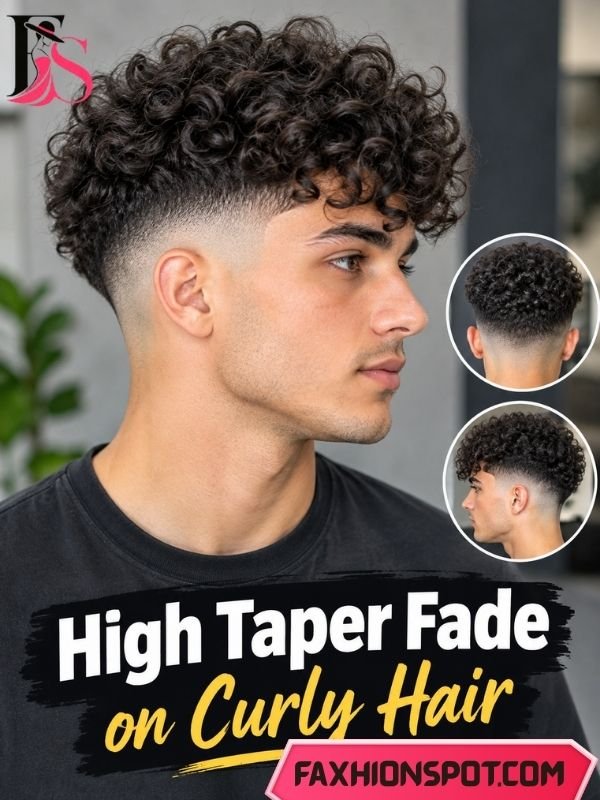
Yes. Curly hair can work especially well with a high taper because the clean sides create contrast with the texture on top. Tight coils, defined curls, loose curls, and some wavy-curly patterns can all be adapted to this haircut.
The most important factor is the natural curl pattern. Type 3 curls often create a rounded, textured top, while type 4 hair can produce tighter coils and stronger volume. Instead of forcing every curl into the same shape, the barber should work with the hair’s natural direction and density.
Hair thickness also matters. Dense curls can support a larger top, while finer curls may look better with a controlled shape. A professional barber can adjust the taper height and top length to balance the sides with the amount of natural volume.
Will a High Taper Fade Suit My Face Shape?
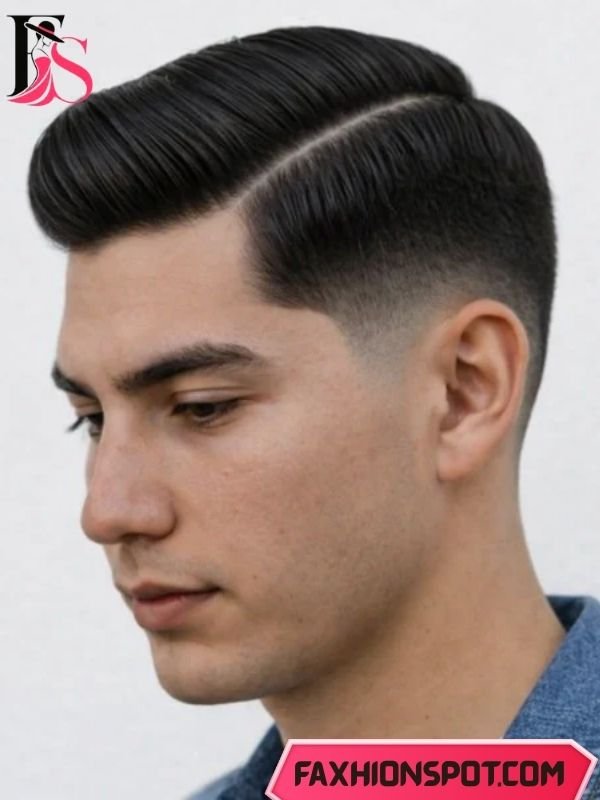
Face shape can help determine how high the taper should go and how much volume should remain on top. For oval faces, most high-taper variations can work because the proportions are relatively balanced. A textured curly top can add personality without needing major adjustments.
For round faces, extra height on top can visually lengthen the face. Keeping the sides neat while avoiding excessive width near the temples may create a more balanced outline. For square faces, a strong taper with defined curls can complement the naturally angular jaw and cheek structure.
Long or rectangular faces may benefit from moderate height rather than an extremely tall curly top. Heart-shaped faces can work with a fuller top and controlled sides. These are styling guidelines rather than strict rules, because curl density, forehead width, hairline shape, and personal preference also affect the final result.
20 High Taper Fade Styles for Curly Hair
- Classic Curly High Taper — Keep medium-length curls on top with a clean temple and neckline taper.
- High Taper With Short Curls — A shorter curly top creates a simple, low-maintenance appearance.
- High Taper With Curly Fringe — Let the front curls fall slightly forward for a textured fringe.
- High Taper Curly Crop — Combine a compact curly crop with sharply cleaned edges.
- High Taper With Defined Curls — Use curl cream or gel to separate individual curls and create definition.
- High Taper With Curly Top — Leave several inches of length on top for stronger texture and volume.
- High Taper With Line-Up — Add a precise front hairline for a more structured finish.
- High Taper With Hard Part — A shaved part can visually separate the curly top from the tapered side.
- High Taper With Curly Mohawk — Keep more length through the center while tapering the sides aggressively.
- High Taper With Sponge Curls — Short-to-medium curls can be shaped with a curl sponge for extra texture.
- High Taper With Coils — Tight coils on top paired with a clean taper create a strong contrast.
- High Taper With Curly Quiff — Push the front curls upward for additional height and movement.
- High Taper With Beard — A matching beard taper can connect the haircut and facial hair smoothly.
- High Taper With Temple Design — A subtle shaved design around the temple can personalize the cut.
- High Taper With Long Curls — Keep substantial length on top for a fuller, more dramatic silhouette.
- High Taper With Curly Caesar — A short forward-facing curly top offers a compact alternative.
- High Taper With Messy Curls — Allow the curls to remain slightly irregular for a relaxed appearance.
- High Taper With Blonde Curls — Color can emphasize individual curls, although maintenance becomes more demanding.
- High Taper With Curly Undercut Effect — Keep the upper section fuller while making the taper visually sharper.
- High Taper With Natural Curls — Skip heavy styling products and let the natural curl pattern define the finish.
How Do You Style a High Taper Fade with Curly Hair?
Start with clean, damp hair rather than soaking-wet hair. Apply a small amount of leave-in conditioner or curl cream through the top. Distribute the product with your fingers, then gently scrunch the curls upward. Avoid aggressively brushing dry curls because this can disrupt definition and increase frizz.
For more definition, use a light-to-medium hold styling product. A diffuser attached to a blow dryer can speed up drying while helping preserve the curl pattern. Use low or moderate heat and avoid constantly touching the hair while it dries.
The final style depends on the desired finish. For a natural appearance, allow the curls to form their own shape. For a sharper look, separate selected curls with your fingers after applying the product. The tapered sides usually require much less styling than the top.
What Products Work Best for This Cut?
A lightweight leave-in conditioner can help curly hair stay manageable without making it feel heavy. Curl cream is useful when the goal is soft definition and controlled texture. For stronger hold, a curl gel can help maintain the shape throughout the day.
People with very dry or tightly coiled hair may also use a moisturizing cream or curl-defining product. However, too much product can flatten the curls and leave buildup near the roots. Start with a small amount and add more only when necessary.
A wide-tooth comb is useful for detangling wet curls without pulling them apart. A diffuser can also help dry the hair while maintaining its natural pattern. Product choice should depend on curl type, porosity, density, and the desired level of hold rather than simply following a trend.
What Should You Tell Your Barber?
Be specific about the taper height. Instead of saying only, “Give me a high taper,” explain that you want the taper concentrated around the temples and neckline while keeping the curly top intact. Show your barber a reference photo taken from the front, side, and back whenever possible.
Also explain how much length you want on top. If you like your natural curls, tell the barber whether you want them defined, rounded, layered, or left relatively long. Mention whether you want a line-up, beard taper, hard part, or shaved design.
A useful barber script is: “I want a high taper around the temples and neckline, but keep the curls on top full and natural. Please blend the sides without taking too much weight from the curly top.” Then discuss the desired top length before the clippers come out.
How Is a High-Taper Fade Different from a Mid- or Low-Taper Fade?
The main difference is the location of the taper. A low taper keeps the transition closer to the ears and lower neckline. A mid taper moves the transition higher around the sides. A high taper places the transition higher still, creating more visible contrast between the tapered area and the curly top.
For curly hair, this difference can significantly change the overall silhouette. A low taper generally preserves more side volume, while a high taper creates a cleaner and more noticeable separation. A mid taper sits between these approaches.
Your choice should depend on the amount of side volume you want and how dramatic you want the contrast to appear. Hair density and face shape can also influence which taper height creates the most balanced shape.
How Do You Maintain a High Taper Fade with Curly Hair?
A high taper looks sharpest when the short areas remain clean. Many people refresh the taper and neckline roughly every two to three weeks, although growth speed varies. The curly top usually needs less frequent cutting because preserving length is part of the style.
Wash and condition according to your hair’s needs rather than using a rigid schedule. Curly hair can become dry when cleansed too aggressively, so many people benefit from a moisturizing routine and gentle detangling. Sleeping on a satin or silk surface can also help reduce friction and preserve curl definition.
Between barber visits, avoid attempting to recreate the taper with home clippers unless you have the skill to blend the transition correctly. A small mistake near the temple can change the entire shape. Professional cleanup is usually the safer way to maintain a consistent taper.
Does a High Taper Fade Reduce Bulk?
A high taper can reduce bulk around the temples, sideburns, and lower sides. However, it does not necessarily remove bulk from the curly top. In fact, the top is often intentionally left full to emphasize natural texture.
This makes the haircut useful for people who want their curls to remain the main feature while keeping the perimeter cleaner. The barber can also remove some internal weight from the top with scissors if the curls are extremely dense.
The key is balance. Removing too much weight can make curly hair appear thin or uneven, while leaving too much weight around the sides can reduce the contrast of the taper. A skilled barber should assess the hair while considering both its dry shape and natural shrinkage.
Click Here To Read Another Topic
Common Mistakes to Avoid
One common mistake is choosing a taper height without considering how the curls sit naturally. A high taper can expose more of the head’s shape, so the transition should follow the individual’s hairline and density rather than copying another person’s haircut exactly.
Another mistake is cutting too much from the curly top. Curly hair often shrinks as it dries, meaning a seemingly small trim can create a noticeable reduction in visible length. It is better to communicate the desired finished length clearly and allow the barber to account for shrinkage.
Using too much styling product is another issue. Heavy creams, oils, or gels can weigh down curls and create buildup. Finally, avoid judging the haircut only when the hair is wet. Curly hair should be assessed in its natural dry state because that is how the finished texture and volume will actually appear.
FAQs
Is a high taper fade good for curly hair?
Yes. A high taper can create a clean contrast while allowing natural curls to remain full and visible on top.
How long does a high taper fade last on curly hair?
The tapered areas commonly need a refresh every two to three weeks, depending on individual hair growth and how sharp you want the edges to look.
Can I get a high taper fade with short curly hair?
Yes. Short curls can work with a high taper. The barber can adjust the transition and top length to match the available curl length.
Is a high taper better than a low taper for curly hair?
Neither is universally better. A high taper creates more contrast and removes more side bulk, while a low taper preserves more volume around the lower sides.
What should I ask for when getting a high taper with curls?
Tell your barber where you want the taper to begin, how much curly length you want to keep, and whether you want a line-up, beard taper, part, or natural hairline.
Conclusion
A high taper fade for curly hair offers a strong balance between clean edges and natural texture. The high transition keeps the temples and neckline controlled while allowing the curls to remain the focus. Your curl pattern, density, face shape, and preferred maintenance routine should all influence the final design. Whether you choose short curls, coils, a curly fringe, a defined top, or a longer textured style, clear communication with your barber is essential. Bring reference photos, explain your desired length, and remember that curly hair should be judged in its natural dry shape.
1 thought on “High Taper Fade for Curly Hair: 20 Styles, Face-Shape Guide, and Barber Tips”