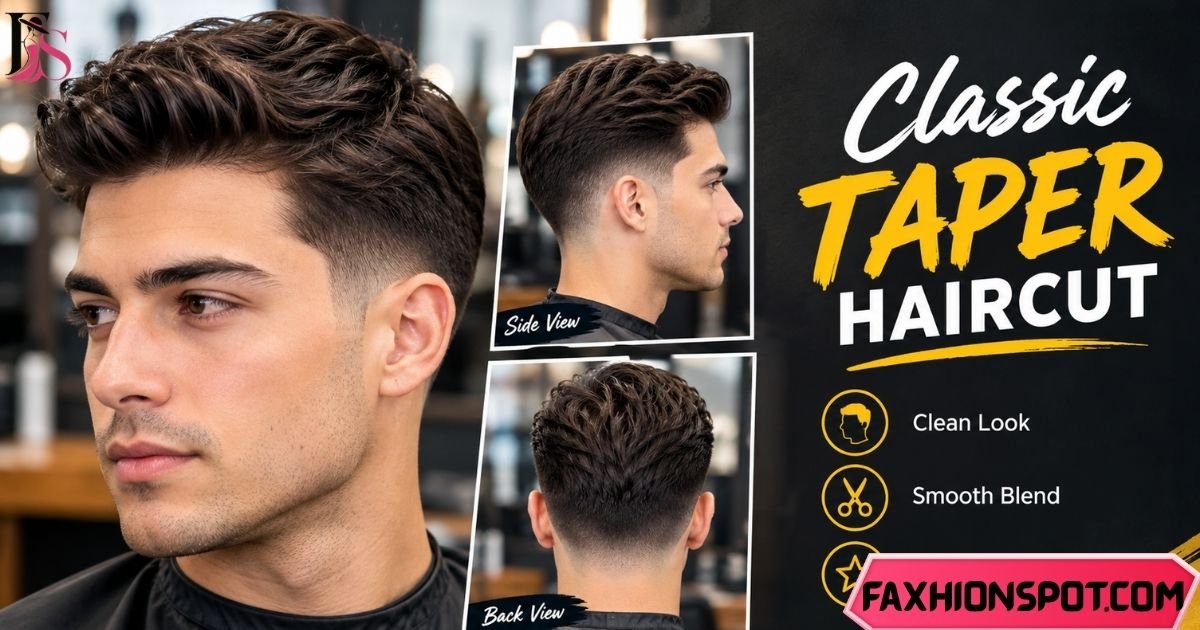
A classic taper haircut remains one of the most dependable men’s hairstyles in 2026. It keeps the sides and neckline neat without removing too much hair from the head.
The result is clean, balanced, and easy to style. This guide explains classic taper types, face-shape matches, hair textures, maintenance, barber instructions, styling products, and more than 60 ideas to help you choose the right version.
Classic Taper Style Profile
| Detail | Information |
| Style | Classic taper haircut |
| Category | Men’s haircut |
| Main feature | Gradual shortening around the sides and neckline |
| Top length | Short to long |
| Best for | Straight, wavy, curly, thick, and fine hair |
| Overall look | Clean, natural, professional |
| Maintenance | Moderate; usually refreshed every 2–4 weeks |
What Is a Classic Taper Haircut and Is It Still Worth Getting in 2026?
A classic taper is a haircut where the hair gradually becomes shorter around the temples, sideburns, and neckline while most of the head keeps a natural shape. Unlike a strong skin fade, it does not normally create a dramatic bare-skin transition high on the sides.
It remains relevant in 2026 because men’s grooming is moving toward cuts that look polished but grow out naturally. Recent barber guidance also highlights interest in softer, more natural-looking blends that require fewer touch-ups.
What is a classic taper haircut?
The classic taper starts with length on top and gradually reduces the hair around the lower sides and back. The taper is usually concentrated near the ears, sideburns, and nape.
The top can be styled as a side part, comb-over, slick back, textured crop, quiff, or natural sweep. That flexibility is a major reason the haircut works for both traditional and modern men’s grooming.
What does “classic” mean in the classic taper?
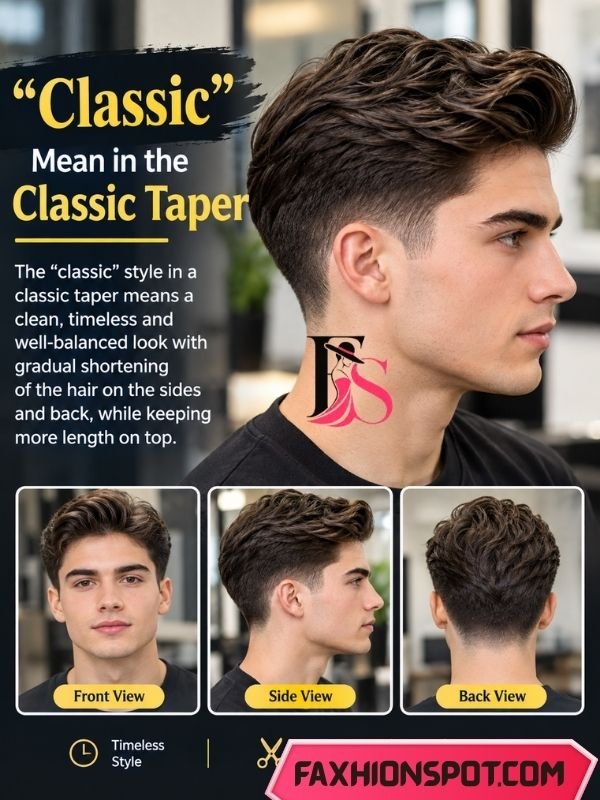
“Classic” generally means the haircut keeps a balanced silhouette instead of pushing the taper extremely high or exposing large areas of skin. The finish is controlled, but it still looks like natural hair rather than a highly sculpted fade.
A classic taper also leaves enough length to change the top from day to day. You can wear it neatly for work and loosen the texture for weekends.
Is a regular taper the same as a classic taper?
The terms overlap, but they are not always used identically. “Taper” describes the gradual reduction in length, while “classic taper” usually signals a traditional, conservative version.
Barbers may use different terminology depending on the shop. The safest approach is to show a reference photo and explain how low or high you want the taper.
Classic taper vs. fade vs. taper fade: Key differences explained
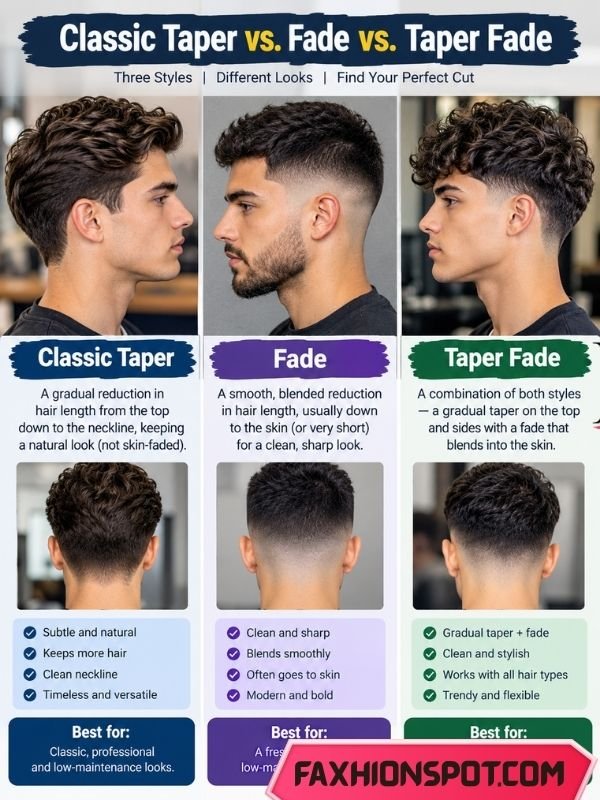
The core difference
A taper usually concentrates the shortening around the temples and neckline. A fade creates a more extensive gradient through the sides and back, often becoming very short or reaching the skin. A taper fade combines a taper’s controlled placement with a more visible fading effect.
Modern barber terminology can vary, so describing the desired length and transition is more reliable than naming only the style. GQ’s barber guidance similarly notes that a taper can create a gradient while preserving more of the haircut’s overall silhouette.
What is a classic taper fade?
A classic taper fade is a hybrid. The sides and neckline receive a more noticeable fade, while the top remains relatively traditional. It can be subtle or close to the skin depending on the barber’s technique.
This option suits men who want the familiar shape of a classic haircut with a cleaner modern finish. Ask your barber how high the fade will travel before the clippers come out.
The history of the classic taper haircut: Why it has lasted over 100 years
Tapered men’s cuts have deep roots in traditional barbering, military grooming, and the short-back-and-sides tradition of the 20th century. The exact origin of the modern “classic taper” is difficult to assign to one year or barber, so claims of a single invention should be treated cautiously.
Its longevity comes from practicality. Shorter edges stay tidy, while the longer top allows personal styling. The same basic principle can be adapted to business haircuts, side parts, textured styles, and contemporary fades.
60+ classic taper haircut styles for men
Here are more than 60 variations to discuss with your barber:
Low classic taper haircut styles
- Low classic taper
- Low taper side part
- Low taper comb-over
- Low taper with textured top
- Low taper Ivy League
- Low taper crew cut
- Low taper pompadour
- Low taper with natural part
- Low taper with fringe
- Low taper with brushed-back hair
Mid classic taper haircut styles (Medium taper)
- Mid classic taper
- Medium taper side part
- Medium taper slick back
- Medium taper quiff
- Medium taper pompadour
- Medium taper with texture
- Medium taper comb-over
- Medium taper with hard part
- Medium taper with messy top
- Medium taper with waves
High classic taper haircut styles
- High classic taper
- High taper side part
- High taper textured top
- High taper slick back
- High taper quiff
- High taper with curly top
- High taper with beard
Short classic taper haircut
- Short classic taper
- Tapered crew cut
- Tapered buzz cut
- Short side part taper
- Short Caesar taper
- Short textured taper
- Short business taper
Long classic taper haircut
- Long classic taper
- Long side-swept taper
- Long slick-back taper
- Long pompadour taper
- Long textured taper
- Long wavy taper
Classic taper fade styles
- Classic taper fade
- Low taper fade
- Mid taper fade
- Taper fade with side part
- Taper fade with quiff
- Taper fade with textured crop
- Taper fade with slick back
Classic taper haircut with beard
- Classic taper with short beard
- Classic taper with boxed beard
- Classic taper with full beard
- Classic taper with stubble
- Classic taper with faded beard
Classic taper for Black men
- Classic taper with curls
- Classic taper with sponge twists
- Classic taper with short afro
- Classic taper with waves
- Classic taper with line-up
- Classic taper with coils
Additional classic taper variations
- Classic taper with gray hair
- Classic taper with textured fringe
- Classic taper with natural curls
- Classic taper with disconnected beard
- Classic taper with sideburn design
- Classic taper with clean neckline
- Classic taper with brushed-up top
Classic taper haircut for every face shape: Which style is right for you?
Face shape matters because the top and sides can change the visual proportions of the head. However, hair density, texture, forehead size, and personal preference matter too.
Classic taper for a round face
Keep some height on top and avoid excessive width at the sides. A textured quiff or side part can create a more elongated appearance.
Classic taper for square face
A square face already has strong angles. A traditional taper with a textured or slightly swept top can maintain that structure without making the haircut look overly severe.
Classic taper for oval face
Oval faces offer considerable flexibility. Low, medium, or higher tapers can work, depending on hair texture and preferred top length.
Classic taper for diamond face
Keep enough weight around the sides while controlling excessive height. A textured top with a low taper can provide a balanced profile.
Classic taper for a heart-shaped face
A medium-length top with moderate side volume can balance a wider forehead and narrower chin. Avoid taking too much weight from the upper sides.
Classic taper for oblong/long face
Avoid excessive height. A low taper with a fuller, textured top can keep the overall shape proportionate.
Classic taper haircut for every hair type
Classic taper for straight hair
Straight hair makes the taper easy to see and style. Side parts, slick backs, comb-overs, and textured tops are particularly straightforward.
Classic taper for wavy hair
Waves add natural movement. Keep enough length on top to show the texture, then use a low or medium taper for contrast.
Classic taper for curly hair
Curly hair benefits from controlled edges while preserving curl volume. A taper around the temples and neckline keeps the cut clean without removing the character of the curls.
Classic taper for thick hair
A taper can remove visual bulk around the edges while leaving the top full. Ask your barber whether internal texturizing is needed.
Classic taper for fine/thin hair
Avoid removing too much density from the sides. A shorter textured top can create structure, while a moderate taper keeps the haircut from looking overly sparse.
Business classic taper haircut: The professional man’s guide
Why the classic taper is the ultimate business haircut
The classic taper works well in professional settings because it looks controlled without requiring an extreme fade. It pairs naturally with suits, dress shirts, polos, and smart-casual clothing.
Business classic taper vs. business casual taper
A business classic taper is usually neater, more conservative, and easier to comb into a defined shape. A business-casual taper can leave more texture and movement on top.
How to style the business classic taper for a job interview
Use a small amount of matte paste or light pomade. Comb the sides neatly and keep the top controlled rather than heavily slicked. The goal is clean grooming, not an exaggerated hairstyle.
Why the classic taper is the best low-maintenance haircut for men
A classic taper is often easier to maintain than a high skin fade because the transition is less aggressive. As the hair grows, the shape can remain presentable for longer.
Maintenance comparison table
| Style | Typical upkeep | Grow-out visibility |
| Classic taper | 2–4 weeks | Low to moderate |
| Taper fade | 1–3 weeks | Moderate |
| Skin fade | 1–2 weeks | High |
| Buzz cut | 2–4 weeks | Moderate |
| Long layered cut | 6–10 weeks | Lower |
How long does a classic taper last?
Most men can keep a fresh appearance for roughly two to four weeks. Hair growth rate, taper height, neckline shape, and personal standards all affect the timing.
At-home maintenance between barbershop visits
Wash according to your hair type, brush or comb the top into place, and avoid repeatedly cutting the neckline yourself. A small styling product can also help the haircut maintain its shape.
How to make your classic taper last longer
Choose a lower taper, avoid an ultra-short skin finish, and ask your barber to preserve enough weight around the sides. Natural transitions generally become less obvious as they grow.
How to ask your barber for a classic taper haircut
Step-by-step: How to ask for a classic taper
Tell your barber: “I want a classic taper around the temples and neckline. Keep the taper low and natural, leave length on top, and don’t take the fade too high.”
Then specify your preferred top length, part, texture, neckline, and sideburn finish. Bring a photo whenever possible because “classic taper” can mean slightly different things between barbershops.
Classic taper clipper guard reference table
| Guard | Approximate use |
| 0 / trimmer | Very short outline or skin-adjacent work |
| #1 | Short taper foundation |
| #2 | Blending and short sides |
| #3 | Medium-short transition |
| #4 | Longer blended sides |
| #5+ | Maintaining more natural length |
Guard lengths vary slightly between clipper brands, so use these numbers as a reference rather than an exact measurement.
How to style a classic taper haircut: Step-by-step
Step-by-step styling guide
Start with clean, towel-dried hair. Apply a small amount of product, distribute it through the top, and shape the hair with your fingers or a comb. For a side part, create the part before the product fully sets.
For extra volume, blow-dry the front upward while directing the hair into its final position. Finish with a light spray if needed. Avoid using excessive product, especially on fine hair.
Best styling products for a classic taper (by finish type)
| Finish | Product type |
| Natural | Styling cream |
| Matte | Clay or matte paste |
| Medium shine | Pomade |
| High shine | Traditional pomade |
| Light hold | Styling cream |
| Strong hold | Firm paste or pomade |
Classic taper haircut: Celebrity inspiration and reference guide
Celebrity grooming can provide useful visual references, but a celebrity’s exact haircut can change between appearances, and photographs do not always reveal the barber’s technique.
Ryan Gosling: Classic low taper + side part
Gosling has frequently worn short, structured hairstyles with softer parts and controlled sides. GQ has also documented his preference for defined or natural-looking parts depending on the occasion.
David Beckham: Classic mid taper + slick back
Beckham has worn many variations of tapered, faded, slicked-back, and longer styles throughout his career. His grooming history shows how the same basic short-side framework can be adapted over time.
Chris Evans: Classic low taper + textured matte top
For a Chris Evans-inspired look, focus on clean sides and a natural textured top rather than copying a specific photograph. The result works particularly well with straight or lightly wavy hair.
Click Here To Read Another Topic
Brad Pitt: Classic mid taper + natural texture
Pitt has worn numerous short and medium hairstyles. A mid taper with natural texture captures the understated quality often associated with classic men’s grooming.
George Clooney: Classic low taper (silver hair)
Clooney has long been associated with traditional short-back-and-sides styling. GQ has noted the enduring influence of his classic haircut in men’s grooming.
FAQs
Is a classic taper haircut good for men in 2026?
Yes. Its natural shape and flexible styling make it suitable for both traditional and modern grooming preferences.
What is the difference between a classic taper and a fade?
A classic taper usually concentrates the shortening around the temples and neckline, while a fade generally creates a broader, more visible gradient through the sides and back.
How often should you get a classic taper haircut?
A refresh every two to four weeks is common, although men who prefer a softer grown-out look can wait longer.
Is a classic taper good for thin hair?
Yes. A moderate taper can keep the sides neat without removing too much density. Keeping texture and appropriate length on top is important.
What should I tell my barber for a classic taper?
Ask for a low or medium classic taper around the temples and neckline, specify your desired top length, and show a reference photo to avoid misunderstandings.
Conclusion
The classic taper haircut remains a practical choice for men who want clean edges without an overly dramatic fade. It works across straight, wavy, curly, thick, and fine hair, while different top lengths make it suitable for casual and professional settings.
Low, medium, high, short, long, beard, and taper-fade variations provide plenty of room for personalization. For the best result, discuss your face shape, hair texture, desired maintenance level, and top length with your barber. A good reference photo can then turn the classic idea into a cut that fits you.
1 thought on “Classic Taper Haircut: 60+ Styles, Types, Barber Tips & Expert Guide”