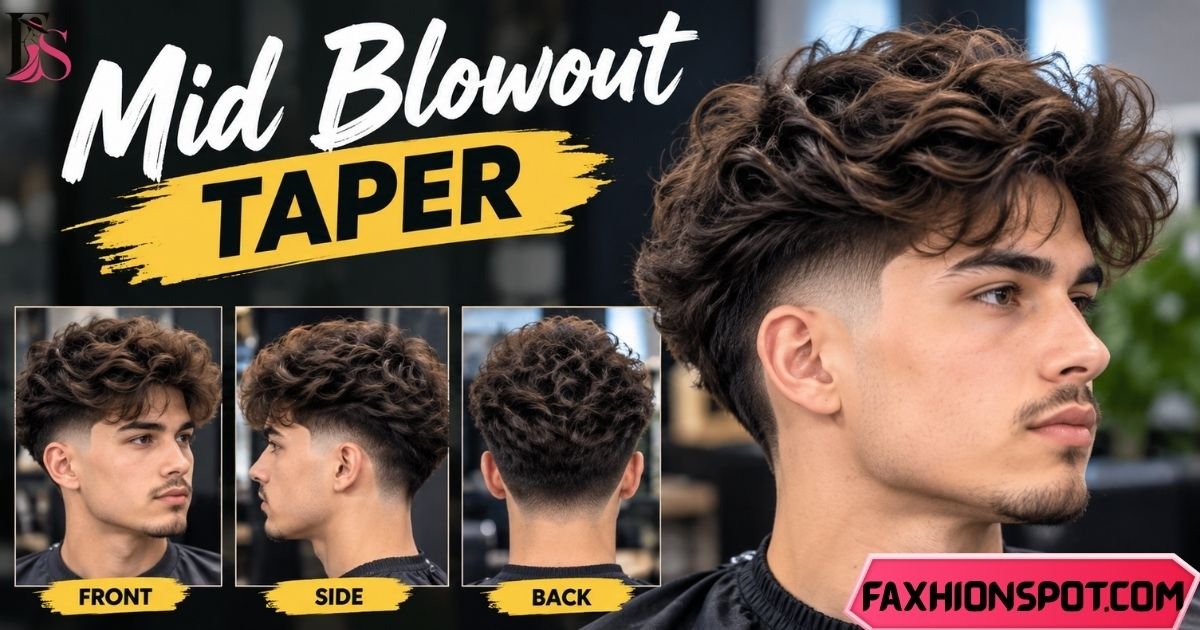
A Mid Blowout Taper combines a clean mid taper with volume that expands around the sides and back.
It keeps the edges neat while allowing the top and rear hair to look fuller and more natural.
This guide explains exactly what the cut looks like, where the taper starts, which variations work with different hair types, how to describe it to a barber, and how to maintain the style at home.
Quick Bio Table
Because this article is about a hairstyle rather than a person, personal biography details such as age, birthplace, nationality, height, weight, salary, or net worth do not apply. Adding invented statistics would reduce the accuracy and trustworthiness of the article.
| Detail | Information |
| Subject | Mid Blowout Taper |
| Category | Men’s haircut |
| Profession | Not applicable |
| Age | Not applicable |
| Birthplace | Not applicable |
| Nationality | Not applicable |
| Height | Not applicable |
| Weight | Not applicable |
| Net Worth | Not applicable |
What Is a Mid Blowout Taper?
A Mid Blowout Taper is a men’s haircut that combines two ideas: a mid taper around the edges and a blowout shape through the sides and back. The taper gradually reduces hair around the sideburns and neckline, while the remaining hair is styled outward to create volume. The result is cleaner than a full, unstructured blowout but fuller than a traditional taper.
The key feature is the balance between the tapered perimeter and the longer hair above it. A barber normally keeps more weight around the upper sides and back instead of taking the fade extremely high. This creates the characteristic outward shape. The exact finish can vary depending on hair texture, density, length, and styling technique.
Where Does the Taper Actually Start?
A mid taper generally begins around the middle area of the sideburn and continues toward the area behind the ear and lower neckline. Unlike a low taper, it does not stay entirely close to the bottom edge. Unlike a high taper, it does not climb aggressively toward the temples.
The starting point is important because even a small change can alter the appearance of the entire haircut. Your barber should blend the taper gradually into the longer hair rather than creating a hard horizontal line. Showing a reference photo is useful because terminology can vary between barbers and shops.
What Does a Mid Blowout Taper Look Like?
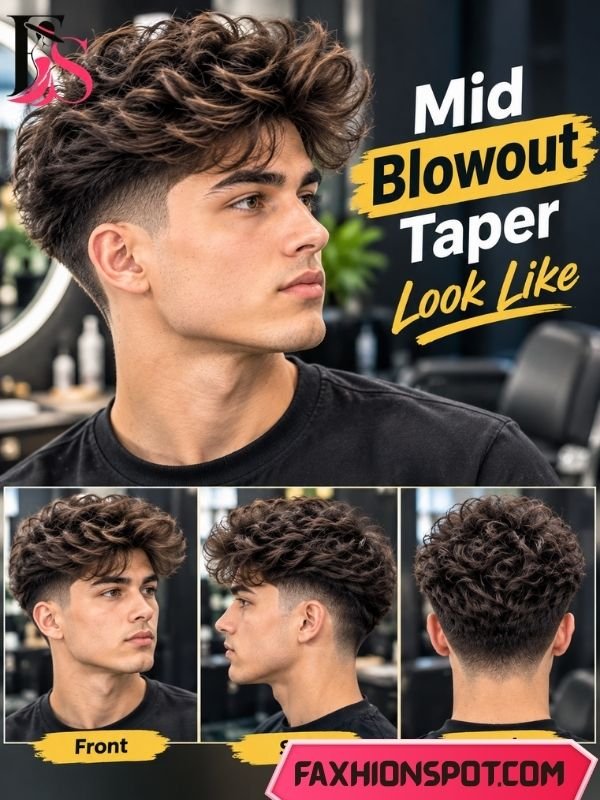
From the front, the haircut usually has a fuller top with tapered sides that keep the outline controlled. From the side, the hair begins to expand above the tapered section. From the back, the blowout effect is often more noticeable because the longer hair is directed outward and slightly upward.
The style can be neat or dramatic depending on the amount of length left behind. A shorter version gives a subtle silhouette that works well for everyday wear. A longer version creates more visible volume and movement. The haircut can also be paired with a line-up, natural hairline, fringe, middle part, or slicked-back top.
For a balanced result, the barber needs to preserve enough length above the taper. Removing too much hair from the sides can eliminate the blowout effect. Keeping too much weight, however, can make the haircut look bulky rather than intentionally voluminous.
What Are the Mid Blowout Taper Variations?
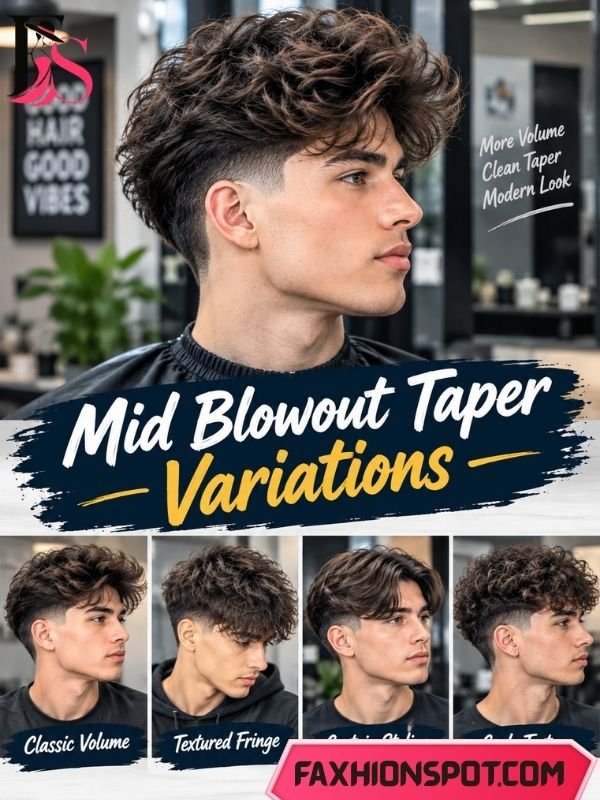
There is no single way to wear a Mid Blowout Taper. The main structure stays similar, but the top can be shaped in different ways. Your hair texture and daily styling routine should guide the variation you choose.
The most common changes involve the fringe, parting, direction of the hair, and taper design. These details can make the same basic haircut look modern, relaxed, sharp, or more textured. A good barber can adjust the shape without losing the defining mid-tapered perimeter.
Adding a Textured Fringe
A textured fringe brings shorter pieces toward the forehead instead of pushing all the hair backward. It works especially well when the top already has natural movement. Point-cutting or texturizing can help prevent the fringe from appearing too heavy.
For straight hair, a matte styling product can create separation between individual pieces. Wavy and curly hair can usually rely more on natural texture. Tell your barber whether you want the fringe straight across, slightly uneven, or softly broken up.
Adding a Middle Part
A middle part changes the direction of the top while keeping the tapered sides and blowout shape. The part can be subtle rather than perfectly defined. Longer hair on top gives you more flexibility when creating the center split.
This version is useful if you like a hairstyle that can move between casual and polished looks. A lightweight cream or styling mousse can encourage the hair to separate without making it stiff. The mid taper keeps the sides controlled while the center remains longer.
The Slicked-Back Version
The slicked-back variation directs the top toward the rear instead of allowing it to fall forward. It usually requires more length on top and enough density to maintain the shape. A blow dryer can help establish the direction before applying product.
Avoid using excessive heavy pomade if you want to preserve the blowout effect. A medium-hold cream or lightweight pomade can provide control while leaving some movement. The result should look deliberately styled rather than completely flattened.
The Burst Taper Variation
A burst taper places more emphasis on the area around the ear. The taper curves around the ear while preserving additional length farther toward the back. This can create a rounded silhouette that works particularly well with textured or curly hair.
The burst approach is different from simply asking for a standard mid taper. Be specific about the curved shape around the ear. If you want a true burst effect, bring a reference image and explain how much hair you want retained behind the ear.
How Do You Ask Your Barber for This Cut?
The easiest barber script is:
“I want a mid blowout taper. Keep the taper around the middle of the sideburns and neckline, but don’t take it too high. I want enough length and weight on the sides and back to create a blowout shape. Keep the top long enough for volume and texture, and blend everything smoothly.”
Then specify the finish you want. For example, say, “Keep the hairline natural” if you do not want a sharp edge-up. If you prefer a crisp outline, ask for a clean line-up. Also tell the barber how much length you want removed from the top instead of simply saying “short.”
Natural Edge or Sharp Edge-Up?
A natural edge leaves the original hairline softer and generally requires less aggressive detailing. It can make the haircut appear more relaxed, especially when combined with textured hair. This option also allows your natural hairline to remain part of the overall shape.
A sharp edge-up creates a more defined outline around the forehead and temples. It can make the haircut look cleaner immediately after the appointment. However, the contrast becomes more noticeable as the hair grows. Choose based on the finish you normally maintain rather than the first-day appearance alone.
Consultation or Walk-In?
A quick consultation is worthwhile if you have thick, curly, coily, or unusually fine hair. Tell the barber how you normally wear your hair, how much time you spend styling it, and how often you can return for maintenance.
A walk-in can work when you already know exactly what you want and your barber is familiar with taper techniques. Still, terminology is not universal. A photo plus a clear explanation of the taper height is usually more reliable than the haircut name alone.
Does This Haircut Work With Your Hair Type?
The Mid Blowout Taper can work across several hair textures, but the final shape will not look identical on every head. Hair density, curl pattern, length, and natural growth direction all affect the silhouette.
A skilled barber should adapt the cutting technique to your texture instead of trying to force every client into the same shape. The top may need more length for straight hair, while curly or coily hair may create significant volume with less length.
Straight Hair
Straight hair often needs styling assistance to produce a noticeable blowout shape. A blow dryer, round brush, or vent brush can help direct the hair outward and upward.
Texturizing the top can also create movement. Avoid removing too much density if your goal is a fuller silhouette.
Wavy Hair
Wavy hair is naturally suited to a textured blowout because its bends create movement without requiring extreme styling. A lightweight cream or mousse can enhance the waves while reducing unwanted frizz.
Ask your barber to preserve enough length to show your natural pattern. Cutting the top excessively short may remove the texture that gives the style its character.
Curly Hair
Curly hair can produce a strong blowout shape with relatively little effort. The taper provides definition around the edges while the curls create volume above and behind it.
Moisture matters more than heavy styling in many curly-hair routines. A curl cream or leave-in product can help maintain definition without making the curls stiff.
Coily Hair
Coily hair can create a bold, structured silhouette when the length is maintained properly. The taper can sharpen the perimeter while the top retains natural volume.
Your barber should account for shrinkage. Hair can appear significantly shorter after it dries, so discuss the desired finished length before cutting.
Fine or Thin Hair
Fine hair can still support the style, but excessive tapering or aggressive thinning may make the overall haircut appear less dense. Keeping appropriate length on top can help create visual fullness.
A lightweight volumizing product and blow-drying technique can add lift. Avoid loading fine hair with heavy products because they can flatten the top and reduce the blowout effect.
How Do You Style This Cut at Home?
Start with clean, damp hair rather than soaking-wet hair. Apply a small amount of product suited to your texture, then use a blow dryer to direct the top and sides outward. A brush can create extra lift, while your fingers create a more relaxed finish.
Work from the roots toward the desired direction. Keep the airflow controlled instead of constantly moving the hair in different directions. Once the shape is established, use a small amount of finishing product to control flyaways. The goal is volume with definition, not a stiff helmet-like finish.
Match Your Product to Your Hair Type
Straight or fine hair usually benefits from lightweight mousse, texture spray, or volumizing cream. Wavy hair can work with mousse or a light styling cream. Curly and coily textures may benefit from curl cream or leave-in products that provide moisture and definition.
Product quantity matters. Start with a small amount and add more only when necessary. Too much product can weigh down the top, especially when the haircut depends on visible volume.
How Long Between Touch-Ups?
Most people can expect the tapered edges to look noticeably different as they grow out. A practical maintenance window is roughly 2–4 weeks, depending on how sharp you want the taper to remain and how quickly your hair grows.
The top usually does not need trimming as frequently as the perimeter. If you want a consistently crisp taper, schedule regular edge and taper maintenance. If you prefer a softer, more grown-in appearance, you can extend the time between appointments.
Mid vs. Low vs. High Taper: Which Wins?
Rather than treating one taper height as universally better, consider how each placement changes the haircut’s proportions. A low taper keeps the transition close to the lower edge of the hairline. A mid taper begins higher and creates a more visible transition around the sides. A high taper removes more hair higher on the head.
For a blowout, the amount of preserved hair matters as much as the taper itself. A mid taper offers a middle ground between a subtle low transition and a more exposed high transition. Your head shape, hair density, and preferred amount of volume should determine the final placement.
| Taper | Transition | Overall Effect | Blowout Potential |
| Low Taper | Lower around the edges | Subtle | Soft |
| Mid Taper | Middle of the sides | Balanced | Noticeable |
| High Taper | Higher on the sides | More exposed | More dramatic |
Click Here To Read Another Topic
Common Mid Blowout Taper Mistakes to Avoid
One common mistake is asking for a taper that is too high while also expecting a large blowout shape. The more hair removed from the sides and rear, the less material remains to create that outward silhouette. Another mistake is removing too much length from the top before checking how the hair naturally falls.
Using the wrong product can also change the result. Heavy wax or pomade may flatten fine hair, while insufficient moisture can make curly or coily hair appear dry. Finally, do not rely on the haircut name alone. Explain the taper height, desired length, edge-up preference, and styling direction.
FAQs
What is a Mid Blowout Taper haircut?
A Mid Blowout Taper combines a mid-level taper around the edges with longer, fuller hair that expands outward through the sides and back.
How do I ask my barber for a Mid Blowout Taper?
Say that you want a mid taper around the sideburns and neckline while keeping enough length on top, sides, and back to create a visible blowout shape.
Is a Mid Blowout Taper good for curly hair?
Yes. Curly hair can create natural volume and movement, while the taper keeps the perimeter clean and defined.
How often should I get a Mid Blowout Taper?
A touch-up every 2–4 weeks is a practical range for maintaining a clean taper. The exact timing depends on growth speed and your preferred level of sharpness.
What is the difference between a Mid Blowout Taper and a burst taper?
A mid blowout taper focuses on the overall mid-level transition, while a burst taper specifically creates a curved taper around the ear and leaves more length behind it.
Conclusion
A Mid Blowout Taper gives you a useful balance between clean edges and noticeable volume.
The defining elements are the mid-level taper, preserved length, and outward shape around the sides and back.
You can customize it with a textured fringe, middle part, slicked-back top, or burst taper detail.
1 thought on “Mid Blowout Taper: Definition, Variations & the Exact Barber Script to Get It Right”