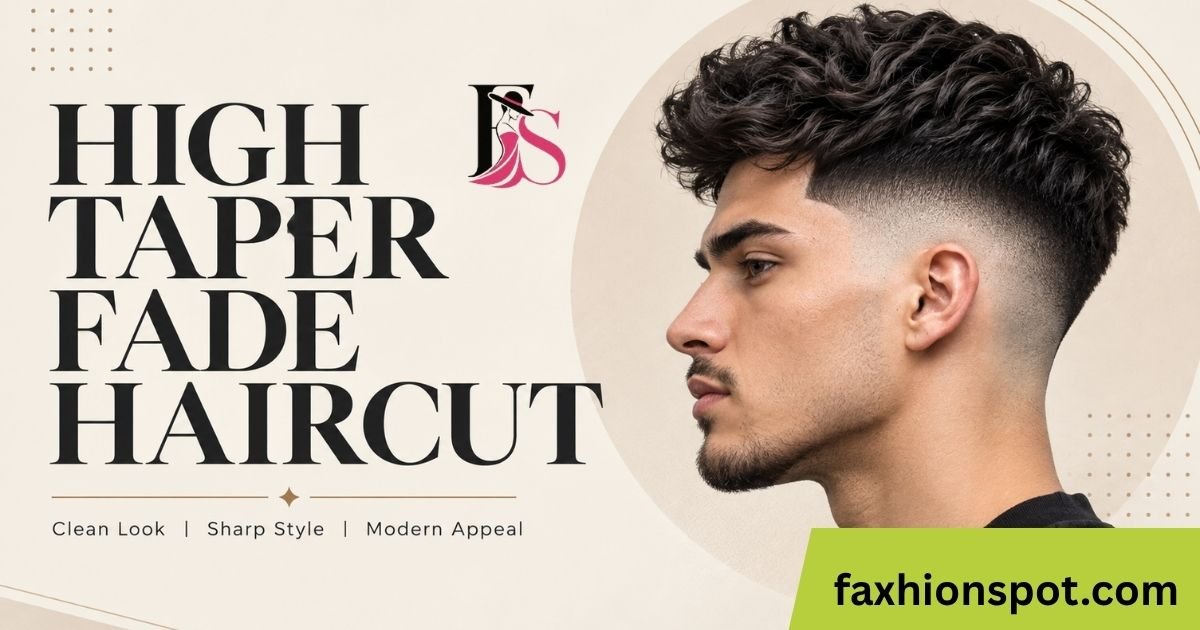
A High Taper Fade is a modern men’s haircut that creates a noticeable transition from longer hair into shorter hair around the temples, sideburns, and neckline.
The taper starts higher than a low or mid taper, creating stronger contrast while allowing the barber to preserve useful length through much of the sides and top.
For anyone considering this haircut, the most important decision is not simply asking for a “high taper.” You should also explain how short you want the tapered area, how much side weight you want to keep, and how you plan to style the top.
All Posts on High Taper Fade
A complete haircut guide is easier to understand when the major topics are separated into practical sections. These are the areas most useful to someone researching a new cut:
Viral Fade Styles: The Coolest Haircuts Right Now
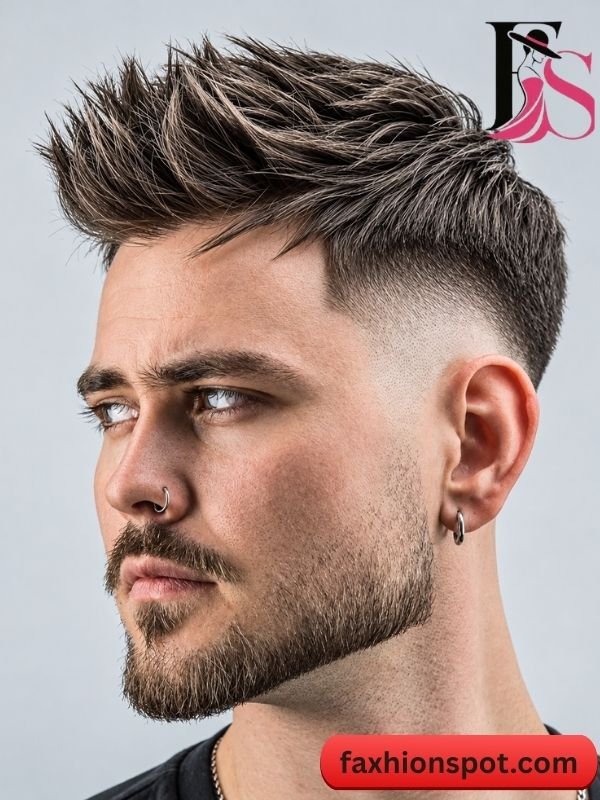
Modern fade trends often combine clean taper work with a distinctive top. Popular combinations include textured crops, curly tops, Edgar-inspired cuts, twists, sponge curls, slick-backs, fringe styles, blowouts, and longer layered tops.
The strongest trend is customization. Instead of copying one haircut exactly, barbers increasingly adjust the taper height, top length, texture, and outline to suit the individual client.
Low vs Mid vs High Taper Fade: Which One Should You Choose?
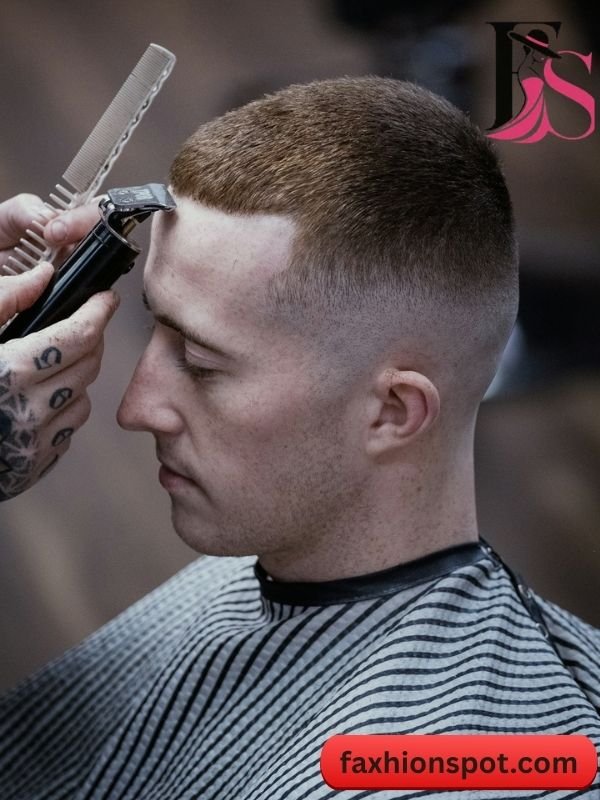
The main difference is placement.
| Type | Taper Position | Visual Effect | Typical Upkeep |
| Low taper | Near ears and neckline | Subtle | About 3–4 weeks |
| Mid taper | Around temple area | Balanced | About 2–3 weeks |
| High taper | Higher around temple region | Strong contrast | Often about 2 weeks |
These intervals are general guidelines rather than fixed rules. Growth speed, hair density, desired sharpness, and how close the finish is can change the ideal schedule. Current haircut guides consistently emphasize that the height of the taper changes the overall silhouette even when the top remains identical.
Hispanic Low Taper Fade Styles (Clean & Modern Guide)
Although a low taper is different from a high taper, the same principle of customization applies to Hispanic and Latino men’s hairstyles. Clean low tapers are frequently paired with textured crops, curls, waves, slick-backs, fringes, and modern short cuts.
Hair density and natural growth patterns should guide the blend. A barber should also consider cowlicks, temple recession, curl direction, and the client’s preferred amount of side weight.
High Taper Fade Haircut Guide: Styles, Pairings & Barber Tips
The defining feature of this haircut is the height of the transition. A high version places the taper farther upward around the temple area than a low taper. However, terminology is not completely standardized between barbershops, so showing a reference photo is often safer than relying on the name alone.
Several combinations work particularly well:
- High taper with textured crop
- High taper with curly top
- High taper with short fringe
- High taper with quiff
- High taper with slick-back
- High taper with twists
- High taper with afro texture
- High taper with blowout
- High taper with longer back
- High taper with a clean line-up
A barber can also choose between a shadow finish and a closer skin finish. The shorter the bottom of the blend, the stronger the contrast tends to appear.
Historical Evolution and Cultural Context
The modern taper fade developed through several overlapping grooming traditions rather than coming from one single moment or community.
Military haircuts helped establish the broader idea of short, controlled sides and clean outlines. Later, barbers and style communities adapted these principles into more expressive shapes. Black and Latino barbering cultures played major roles in developing detailed fades, line-ups, texture-focused cuts, and highly personalized finishing techniques. Historical accounts of the taper fade describe its movement from practical short haircuts into a major cultural and fashion style.
The digital era accelerated this evolution. Instagram, YouTube, TikTok, and hairstyle websites made detailed barber work visible to global audiences. Today, clients can arrive with reference photographs showing exact combinations of taper height, texture, edge shape, and top length.
Key Styles, Cut Anatomy, and Variations
Understanding the anatomy makes it easier to request the haircut accurately.
Temple Taper
The temple area receives the most visible transition. A higher starting point creates a stronger separation between the top and shorter side area.
Shadow Taper
A shadow finish leaves a little more darkness at the shortest point. It produces a softer appearance and can grow out more naturally.
Skin Finish
A skin finish takes the shortest portion very close to the scalp. This creates maximum contrast but can also make regrowth more noticeable.
Line-Up Combination
A line-up can sharpen the forehead, temples, and sideburns. It should follow the natural hairline rather than artificially changing its shape.
Curly or Coily Combination
Curly and coily hair can create excellent visual contrast because texture remains prominent above the clean transition. The barber should avoid removing excessive bulk unless the client specifically wants a tighter silhouette.
Textured Crop Combination
A textured crop keeps the haircut relatively easy to style. The top can be cut with point-cutting or other texturizing techniques to create movement.
Face Shape and Hair Texture Compatibility Matrix
There is no universal face-shape rule, but proportions can help guide the decision.
| Face Shape | Useful Approach | Top Styling Idea |
| Oval | Most variations can work | Texture, crop, quiff |
| Round | Add visual height | Quiff, curls, textured top |
| Square | Preserve strong structure | Short crop, curls, slick-back |
| Oblong | Avoid excessive height | Fringe, controlled texture |
| Heart | Balance forehead and chin | Medium textured top |
| Diamond | Keep proportions balanced | Fringe, curls, layered texture |
Hair texture also changes the finished appearance.
| Hair Type | Recommended Approach |
| Straight | Textured crop, quiff, slick-back |
| Wavy | Loose quiff, natural texture |
| Curly | Curly top, fringe, defined curls |
| Coily | Afro, twists, shaped top |
| Thick | Strong contrast and controlled bulk |
| Fine | Moderate top texture and lightweight products |
The haircut is especially flexible because the taper controls the edges while the top can be customized independently.
Step-by-Step Styling and Barber Execution Protocol
A professional barber generally begins by identifying the desired taper height and the client’s existing head shape.
A simplified workflow is:
- Consultation: Establish the taper height, shortest length, top length, and neckline preference.
- Sectioning: Identify the areas that will be reduced and the weight that should remain.
- Guideline creation: Establish the initial transition area.
- Graduation: Work through progressively longer clipper settings.
- Detailing: Remove visible dark spots and uneven transitions.
- Top refinement: Shape the upper hair according to the chosen style.
- Edge work: Clean the hairline without overcutting it.
- Styling: Dry and finish the top so the client can see the intended shape.
Professional fade tutorials commonly emphasize guideline control, lever positioning, identifying dark areas, edge-up work, and final polishing.
Essential Products, Formulations, and Styling Tools
The right product depends more on hair texture and desired finish than on the taper itself.
Matte Clay
Useful for textured, controlled hairstyles that need separation without a glossy appearance.
Styling Cream
A cream can provide softer control for wavy or medium-length hair.
Pomade
A pomade works well when the goal is a more defined, slick appearance.
Sea Salt Spray
This can create lightweight texture before blow-drying, particularly on straight or wavy hair.
Hair Dryer
A dryer is one of the most useful tools for directing volume and establishing the final shape.
Comb and Brush
A comb provides precision, while a brush can distribute product and shape movement through longer hair.
Professional Barbershop Secrets and Edge Precision
The difference between an average cut and a polished cut often comes down to small details.
Barbers pay attention to:
- Natural temple shape
- Hairline density
- Sideburn symmetry
- Growth direction
- Head curvature
- Transition darkness
- Neckline shape
- Product buildup
- Top-to-side proportions
A useful professional principle is to avoid chasing absolute symmetry when the client’s natural hair growth is asymmetrical. The goal is visual balance rather than forcing both sides into an unnatural shape.
The outline should also remain proportional. An aggressively pushed-back hairline may look sharp immediately but can become difficult to maintain as it grows.
Common Haircut Mistakes and How to Avoid Them
Several mistakes can change the appearance dramatically.
Starting the taper too high: This can remove more side weight than expected.
Using the wrong fade terminology: A taper and a full fade do not necessarily remove hair from the same areas. A taper generally concentrates the shortest transition around specific edges, while a broader fade affects more of the side and back panel.
Ignoring the top: The taper may be excellent, but an unsuitable top shape can make the overall haircut look unbalanced.
Overusing enhancements: Temporary fibers or darkening products can make edges appear sharper, but they should not replace accurate cutting.
Creating a hard line: A visible guideline usually means the transition needs additional blending.
Ignoring texture: Curly, coily, wavy, and straight hair react differently to the same cutting technique.
Seasonal Care and Maintenance Cadences
Hair and scalp routines can change throughout the year.
During hot weather, lighter styling products may feel more comfortable. Sweat can also increase the need for regular cleansing, particularly when heavy products are used.
During colder months, dry air can make the hair feel rougher. A moisturizing shampoo and conditioner routine may help maintain softness.
For a consistently sharp haircut, many clients refresh a high taper around every two weeks. Those who prefer a softer, grown-in appearance can wait longer. Current style guides commonly place high-taper maintenance around the two-week mark, although individual growth rates vary considerably.
Barbershop Communication, Terminology, and Consultation Guide for High Taper Fade
A clear consultation prevents most haircut misunderstandings.
Instead of saying only “Give me a high taper,” try explaining four things:
- Height: “I want the taper to sit high around the temples.”
- Shortest point: “Keep it as a shadow” or “Take the bottom close to skin.”
- Top: Explain whether you want a crop, curls, fringe, quiff, or another style.
- Side weight: Tell the barber whether you want the sides tight or want to preserve some fullness.
A reference photograph is especially helpful. Current barber guides repeatedly recommend showing the desired result because terminology can vary from shop to shop.
Click Here To Read Another Topic
Blow-Drying Mechanics, Directional Airflow, and Pre-Styling Chemistry
Blow-drying is not simply about making hair dry. It controls direction, volume, separation, and shape.
Start with towel-dried hair rather than soaking-wet hair. Apply a suitable pre-styler according to the desired finish. A lightweight spray can add texture, while a cream can improve control.
For volume, direct airflow against the natural fall while lifting the roots with a brush or fingers. For a slick-back, direct airflow backward and slightly downward.
Keep the dryer moving rather than concentrating high heat on one spot. Finish with a cooler airflow when appropriate to help the styled shape settle.
Scalp Health, Follicular Longevity, and Trimming Schedules
A sharp haircut should still be accompanied by a sensible scalp routine.
Regular cleansing helps remove sweat, excess oil, dead skin, and styling residue. Avoid scratching aggressively or repeatedly applying heavy products without cleansing them out.
Trimming frequency should depend on growth rate and preferred appearance rather than a universal rule. A client wanting a crisp outline may return sooner, while someone comfortable with a softer grow-out can extend the interval.
Remember that the haircut itself does not determine hair growth speed. Genetics, age, overall health, and individual growth patterns influence how quickly visible regrowth appears.
Summary and Personal Aesthetic Philosophy
The appeal of this haircut comes from its balance between strong contrast and creative freedom. The higher taper creates a noticeable visual transition, while the preserved hair on top gives you room to express your personal style.
A good haircut should work with your natural texture rather than fight it. Straight hair may benefit from controlled volume, curls can be shaped for definition, and coily textures can retain their natural character while receiving a clean perimeter.
The best consultation is therefore not about finding one universal version. It is about choosing the right height, shortest length, top shape, outline, and maintenance schedule for your own hair and routine.
Frequently Asked Questions
What is a high taper fade?
A high taper fade is a haircut where the short-to-long transition begins relatively high around the temple area while the top and selected side areas retain more length.
What is the difference between a high taper and a high fade?
A high taper concentrates the transition around areas such as the temples, sideburns, and neckline, while a high fade generally carries the fading process farther across the sides and back.
What hairstyles look best with a high taper fade?
Popular pairings include textured crops, curls, twists, quiffs, slick-backs, fringes, afros, blowouts, and longer textured tops.
How often should I get a high taper fade cut?
About two weeks is a common refresh point when you want a very crisp appearance, but the ideal schedule depends on hair growth, fade closeness, and personal preference.
1 thought on “High Taper Fade”