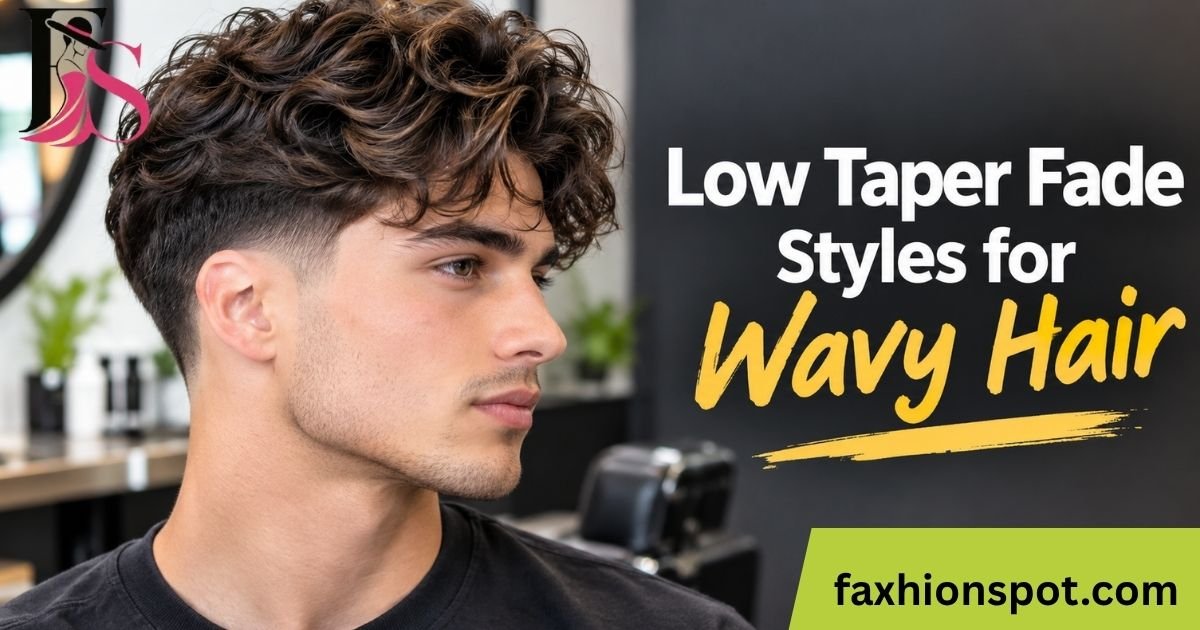
Natural waves already give men’s hair texture, movement, and personality. The right haircut simply gives that texture a cleaner frame.
Low Taper Fade Styles for Wavy Hair are popular because they combine a neat outline around the ears and neckline with enough length on top to let the natural wave pattern stand out.
In this guide, you’ll find 12 practical variations, advice for different wave types, barber instructions, styling tips, maintenance guidance, common mistakes, and answers to frequently asked questions.
What Is a Low Taper Fade?
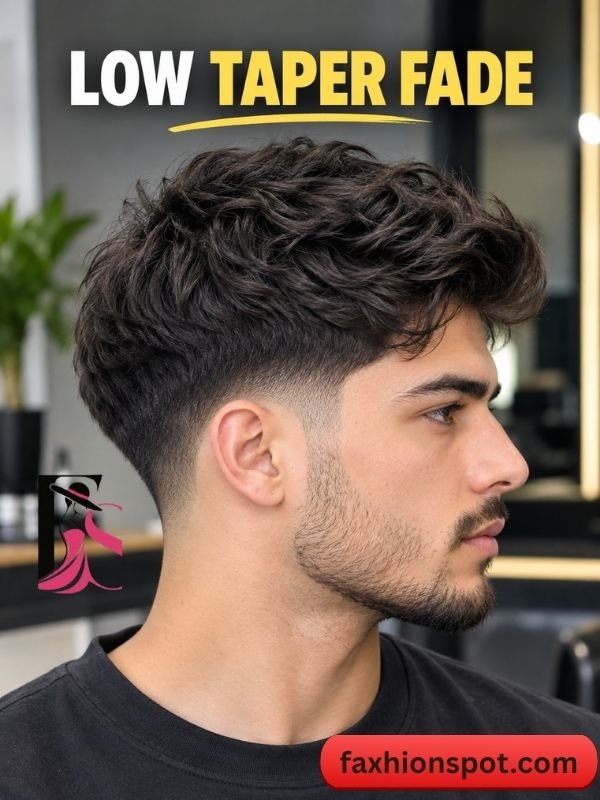
A low taper fade gradually reduces hair around the sideburns, temples, and neckline while keeping more length through the upper sides and top. The taper begins low, creating a subtle transition rather than a dramatic change high on the head.
The key difference is where the taper starts. A low taper remains close to the natural hairline, while a mid or high fade moves farther upward toward the temples and sides.
For wavy hair, that lower starting point can be particularly useful because it leaves more of the natural texture intact. Instead of removing large sections of the sides, the barber concentrates on cleaning up the edges.
A typical low taper can be customized with:
- A natural or sharper neckline
- Short, medium, or long wavy hair on top
- A textured or layered finish
- A fringe
- A side or middle part
- A beard connection
- A subtle lineup
- A softer shadow taper or tighter finish
The result is a haircut that can look casual, modern, polished, or completely natural depending on how the top is cut and styled.
Why Wavy Hair and This Cut Go Together
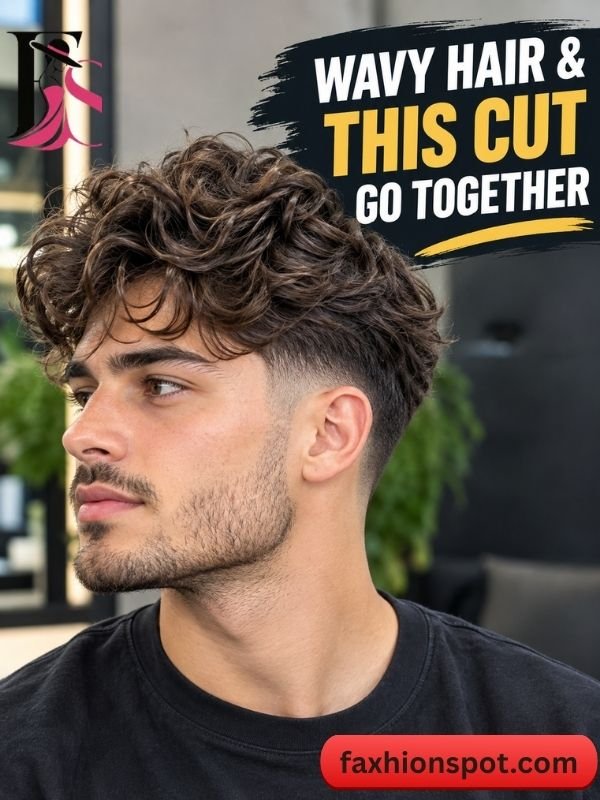
Wavy hair naturally creates movement and dimension. However, the same texture that makes waves attractive can also create unwanted bulk around the ears and sides as the hair grows.
Low Taper Fade Styles for Wavy Hair solve this by controlling the lower edges without taking away the main feature: the waves.
The combination works for several reasons.
Natural Texture Remains Visible
The top can stay long enough for the wave pattern to develop. This means you do not need excessive styling to create texture.
The Sides Look Cleaner
Wavy hair can expand outward around the ears. A low taper removes some of that extra weight and gives the haircut a more intentional outline.
The Transition Looks Subtle
Because the taper stays low, there is less visual contrast between the longer top and shorter sides. This creates a softer appearance.
It Can Suit Different Wave Types
Type 2A hair usually has loose, relaxed waves. Type 2B has a more noticeable S-shaped pattern, while Type 2C tends to have stronger, thicker waves approaching a curly texture.
The haircut can be adjusted for all three.
| Wave type | Typical texture | Useful approach |
| 2A | Loose waves | Keep enough top length for movement |
| 2B | Defined S-shaped waves | Add texture and controlled layering |
| 2C | Strong, dense waves | Preserve length and manage bulk |
| Thick wavy | High density | Remove weight carefully |
| Fine wavy | Lower density | Avoid excessive thinning |
12 Best Low Taper Fade Styles for Wavy Hair
The best variation depends on how much length you want, how strong your waves are, and how much time you want to spend styling. Here are 12 versatile options.
Classic Wavy Low Taper Fade
The classic version is a great starting point if you want a clean haircut without an overly dramatic appearance.
The sides and neckline are gradually tapered, while the top stays around medium length. The natural waves provide most of the texture, so styling can remain simple.
This option works particularly well for people who want one haircut that can move between work, school, social events, and casual weekends.
Best for: 2A, 2B, and 2C waves
Styling: Light cream or mousse
Overall look: Clean and versatile
Textured Wavy Low Taper Fade
A textured top adds separation and movement to wavy hair. Instead of leaving the top as one heavy block, the barber can use point cutting or other texturizing techniques to reduce excess weight.
This is particularly useful for thick hair that tends to become bulky.
The goal is not to destroy the wave pattern. It is to give each wave more room to move naturally.
Messy Wavy Low Taper Fade
If you prefer an effortless hairstyle, the messy version is an excellent choice. The top is kept long enough to move freely and can be styled with your fingers.
A small amount of lightweight matte cream can provide control without making the waves look overly polished.
This style is especially suitable for casual outfits and people who dislike spending a lot of time in front of the mirror.
Short Wavy Low Taper Fade
Short wavy hair can still show plenty of texture when cut correctly. The important point is leaving enough length on top for the waves to remain visible.
A shorter top also reduces styling time and makes the haircut easier to maintain.
For men who want a practical everyday hairstyle, this version provides a neat appearance without requiring complicated products or techniques.
Long Wavy Low Taper Fade
Longer hair creates more movement and gives you additional styling options. You can brush the waves backward, create a loose middle part, push them forward, or allow them to fall naturally.
The taper remains low around the edges, so the top retains most of its length.
This is one of the better choices if you are growing your hair but still want clean sideburns and a controlled neckline.
Wavy Fringe Low Taper Fade
A wavy fringe brings the texture toward the forehead. It can be worn naturally forward or separated slightly for a more relaxed finish.
The length of the fringe should depend on your wave pattern. Stronger waves may visually shorten as they curl or bend, so cutting too much at once can make the finished fringe appear shorter than expected.
Side Part Wavy Low Taper Fade
A side part adds structure to naturally textured hair. It creates a clear direction while allowing the waves to remain visible.
For a professional appearance, keep the part relatively neat and use a lightweight styling product. For a casual look, loosen the part and allow a few waves to fall naturally.
This variation is especially useful when you want one hairstyle that can be styled differently for different occasions.
Middle Part Wavy Low Taper Fade
A middle part works beautifully with medium and long waves. The hair naturally falls toward both sides, producing a balanced silhouette.
The low taper keeps the lower edges clean without competing with the center-parted top.
For best results, ask your barber to preserve enough length around the front so the waves have room to fall naturally.
Fluffy Wavy Low Taper Fade
The fluffy version focuses on volume rather than tight definition. The top is allowed to remain full, while the low taper prevents the lower sides from becoming too wide.
A diffuser can help increase volume while preserving the wave pattern. You can also lift the roots gently while blow-drying on a low or moderate setting.
Avoid heavy waxes or gels if your goal is a soft, airy finish.
Professional Wavy Low Taper Fade
Not every wavy hairstyle needs to look messy or heavily textured. A professional version keeps the taper neat and the top controlled.
The waves can be brushed slightly backward or to the side. Keep the neckline clean and avoid excessive volume if your workplace has conservative grooming expectations.
The result is polished without completely removing your natural texture.
Thick Wavy Low Taper Fade
Thick wavy hair can create significant volume around the sides. If too much hair is removed, however, the top can lose its shape.
The solution is controlled weight removal rather than aggressive thinning.
Tell your barber that you want the sides cleaned up while preserving the density and natural movement on top. This helps maintain a balanced silhouette.
Natural Wavy Flow with Low Taper Fade
This is the most relaxed version of Low Taper Fade Styles for Wavy Hair.
Instead of forcing the hair into a specific direction, the barber works with its natural growth pattern. The edges are cleaned, unnecessary bulk is reduced, and the top is allowed to flow.
It is ideal for people who want their haircut to look good without appearing heavily styled.
Which One Is Right for You?
Choosing between Low Taper Fade Styles for Wavy Hair becomes easier when you consider four things: wave type, hair density, face shape, and daily routine.
Use this quick guide:
| Your preference | Style to consider |
| Simple everyday haircut | Classic |
| More texture | Textured |
| Relaxed appearance | Messy |
| Minimal styling | Short |
| Maximum movement | Long |
| Hair falling forward | Fringe |
| Traditional structure | Side part |
| Flowing appearance | Middle part |
| More volume | Fluffy |
| Office-friendly look | Professional |
| Very thick hair | Thick wavy |
| Natural appearance | Wavy flow |
Face shape can also influence the final result. Longer or higher-volume tops may visually add height to rounder faces, while balanced styles can work well with oval and rectangular face shapes.
However, your actual hair growth pattern matters more than following a rigid face-shape rule.
Talking to Your Barber
One of the biggest reasons a haircut turns out differently from a reference photo is vague communication.
Instead of simply saying, “Give me a low taper,” explain what you want to preserve.
A useful barber request is:
“Keep my natural wavy texture and most of the length on top. Start the taper low around the sideburns and neckline, blend it smoothly, and don’t take the taper too high.”
You can also mention:
- How much top length you want.
- Whether you want a fringe, side part, or middle part.
- Whether you want a natural or sharper neckline.
- Whether you want the sideburns connected to your beard.
- How much bulk you want removed.
- Whether you normally style your hair or let it air-dry.
Bring two or three reference photos if possible. Choose pictures that show the side, front, and back rather than relying on a single front-facing image.
For Low Taper Fade Styles for Wavy Hair, communication about the top is just as important as communication about the taper.
Keeping It Looking Good
A good haircut is only part of the equation. Your daily routine determines how the waves behave between barber visits.
Wash According to Your Hair
Avoid automatically shampooing every day if your hair becomes dry or frizzy. Your washing schedule should depend on your scalp, activity level, product use, and hair condition.
Use Lightweight Products
Good options for wavy hair can include:
- Lightweight mousse
- Wave cream
- Leave-in conditioner
- Light styling cream
- Sea-salt spray when appropriate
The goal is definition without excessive weight.
Dry Carefully
Rough towel drying can disrupt the wave pattern and increase frizz. Gently squeeze excess water from the hair and allow it to air-dry, or use a diffuser when you want additional volume.
Protect the Shape at Night
If your waves become flattened while sleeping, experiment with a suitable pillowcase or a loose nighttime routine that does not crush the top.
Maintain the Taper
Even when the top still looks good, the neckline and sideburns can become noticeably overgrown. Regular edge maintenance keeps the overall haircut looking intentional.
Click Here To Read Another Topic
Mistakes Worth Avoiding
The most common mistakes with Low Taper Fade Styles for Wavy Hair are usually related to taking away too much or using too much product.
Taking the Taper Too High
A taper that climbs higher than expected can change the entire appearance of the haircut. If you want a genuinely low transition, tell your barber clearly.
Cutting the Top Too Short
Waves need sufficient length to bend and show their natural pattern. Cutting too aggressively can make the texture disappear.
Over-Thinning Thick Waves
Removing too much internal weight can make thick wavy hair lose its balance. Ask your barber to preserve the overall shape.
Using Heavy Gel
Strong gel can make waves look stiff, crunchy, or overly shiny. A lightweight product usually provides a softer result.
Copying a Style Without Considering Your Hair
A reference photo shows an outcome, not necessarily the exact formula for your hair. Density, wave strength, growth direction, and head shape can all change the result.
Ignoring the Back
Many people focus only on the front and sides. Ask your barber to show you how the neckline and back transition into the longer top.
Conclusion
The appeal of Low Taper Fade Styles for Wavy Hair comes from balance. The taper provides structure around the edges, while the longer top preserves natural movement, texture, and personality.
Whether you prefer a classic, textured, messy, short, long, fringe, side-parted, middle-parted, fluffy, professional, thick, or completely natural look, the same principle applies: work with your wave pattern rather than fighting it.
The best haircut is not necessarily the one with the most dramatic fade. It is the one that fits your natural texture, face shape, lifestyle, styling routine, and personal preference.
For the best result, bring clear reference photos, explain how much length you want to keep, and tell your barber that the natural waves are an important part of the finished style.
Frequently Asked Questions
Is a low taper fade good for wavy hair?
Yes. Low Taper Fade Styles for Wavy Hair clean up the sideburns and neckline while leaving enough length for natural waves to remain visible.
How long should the top be?
There is no universal length, but around 2 to 4 inches is a useful starting range for many wavy styles; your wave strength and desired finish matter more than a fixed measurement.
Does it work with thick wavy hair?
Yes. A low taper can reduce unwanted bulk around the edges while preserving useful density and movement through the top.
Is this haircut professional?
Yes. A conservative taper with controlled length and natural styling can easily be adapted to many professional environments.
How often should I get a trim?
Many people refresh the taper every 2 to 4 weeks, depending on hair growth speed and how sharp they want the neckline and sideburns.
Can I get this with long wavy hair?
Absolutely. The taper can remain low while the top stays substantially longer, allowing the waves to flow naturally.
Low Taper Fade for Summer: Stay Cool and Look Sharp
Summer can make thick, wavy hair feel heavier and harder to manage. That does not mean you need to sacrifice your natural texture.
A low taper can clean up the areas around the ears, temples, and neckline while allowing the top to remain long enough for waves to show.
For hot weather, consider a slightly shorter variation if you want faster drying and easier styling. If you prefer longer waves, keep the top length but use lighter products.
Good summer habits include:
- Use lightweight styling products.
- Avoid applying excessive product to wet hair.
- Let hair dry completely after washing.
- Use a diffuser when additional volume is needed.
- Keep the neckline and sideburns maintained.
- Avoid over-brushing dry waves.
The goal is a haircut that feels comfortable without losing the natural movement that makes wavy hair attractive.
Low Taper Fade with Beard for Black Men: Best Styles and Grooming Tips
Low Taper Fade Styles for Wavy Hair can also be adapted for Black men with naturally textured hair, including wavy, curly, coily, or trained wave patterns.
It is important to distinguish naturally wavy hair from trained 180 or 360 waves. Natural waves come from the hair’s existing texture, while trained waves are developed through brushing, compression, grooming, and a consistent maintenance routine.
If you wear a beard, the sideburn area becomes especially important. Ask your barber to create a clean transition between the taper and beard instead of leaving an abrupt visual gap.
For a balanced appearance, consider:
- Keeping the beard proportionate to the hairstyle.
- Maintaining clean cheek and neckline areas.
- Asking for a gradual sideburn transition.
- Explaining whether your waves are natural or trained.
- Telling the barber which areas of a trained wave pattern should not be disturbed.
- Using appropriate moisturizer and beard-care products.
A beard can make the haircut look more defined, but it does not need to be extremely sharp. A natural finish can complement textured hair particularly well.
Ultimately, Low Taper Fade Styles for Wavy Hair are flexible because the haircut does not force you into one specific top style. You can keep the waves short, let them grow longer, add a fringe, create a part, build volume, or allow the hair to flow naturally.
The key is simple: keep the taper low, preserve the texture you like, and choose a top length that works with your actual hair rather than someone else’s.