
Finding the right haircut for curls is not always simple. Curly hair has natural volume, shrinkage, texture, and different curl patterns, so a fade that looks great on straight hair may not produce the same result on curls.
The good news is that the Best Fades for Curly Hair can make natural texture look cleaner while keeping the top full and defined.
Among the most versatile options are the low fade and low taper fade. Both clean up the sides and back, but they create different levels of contrast.
Why a Fade Works Well for Curly Hair
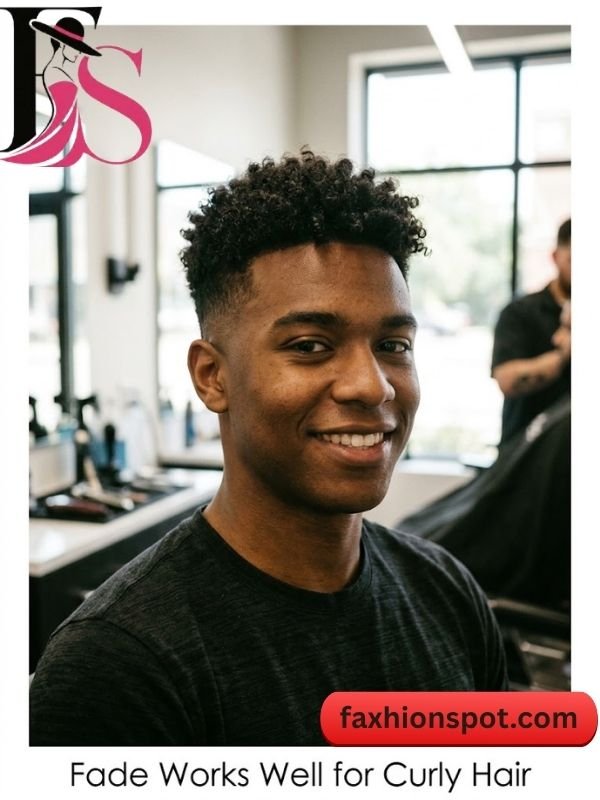
The Best Fades for Curly Hair work because they create a clean perimeter without necessarily removing the natural character of the curls. Instead of cutting the entire head short, a fade reduces bulk around selected areas while allowing the top to retain texture and movement.
Curly hair naturally creates volume. A controlled fade can make that volume look more intentional by creating contrast between the shorter sides and fuller top.
A good fade can also:
- Reduce excess bulk around the ears and neckline
- Make curls on top appear more defined
- Create a cleaner facial outline
- Make thick curly hair easier to manage
- Complement short, medium, or longer curls
- Work with different face shapes
- Give a professional appearance without eliminating texture
Current hairstyle guides also emphasize adapting the fade to curl pattern rather than simply copying a guard number from another haircut.
What Is a Low Fade for Curly Hair?
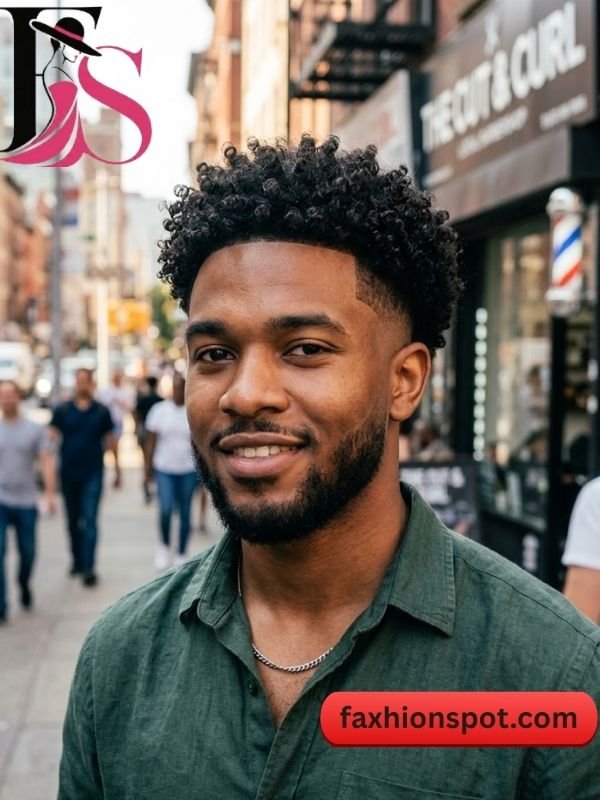
A low fade for curly hair starts low on the sides and gradually becomes shorter toward the lower portion of the head. Depending on the barber and desired result, the shortest area can be very short or reach the skin.
The key feature is the location of the blend. It stays relatively low, allowing more of the natural curly shape to remain above the fade.
For many people, a low fade is one of the Best Fades for Curly Hair because it provides noticeable cleanup without making the haircut look overly aggressive.
Why Choose a Low Fade?
A curly low fade is especially useful if you want:
- More contrast than a taper
- Clean sides and neckline
- A sharper overall appearance
- Defined curls on top
- A modern haircut that works with casual or professional clothing
However, a skin-level low fade usually requires more frequent touch-ups because new growth becomes visible quickly.
What Is a Low Taper Fade for Curly Hair?
A low taper fade gradually reduces hair around specific areas such as the sideburns, temples, and neckline while leaving more of the surrounding hair intact.
Instead of dramatically reducing the entire side, the barber keeps more weight around the upper sides. This makes the result softer and more natural.
The low taper is frequently recommended for curly hair because it preserves the shape and density of the curls while cleaning up the edges. Recent hairstyle guides describe it as particularly versatile across different curl patterns.
For someone trying the Best Fades for Curly Hair for the first time, a low taper can be a safer starting point because less hair is removed.
Low Fade vs Low Taper – Simple Difference
The easiest way to understand the difference is to look at how much hair is removed.
| Feature | Low Fade | Low Taper Fade |
| Fade location | Low sides and back | Mainly temples, sideburns and neckline |
| Contrast | Medium to high | Low to medium |
| Top curls | Preserved | Preserved |
| Side weight | Less | More |
| Appearance | Sharper | Softer |
| Grow-out | More noticeable | Usually more forgiving |
| Maintenance | Moderate to high | Low to moderate |
| Best for | Defined, clean contrast | Natural everyday styling |
If you want a stronger transformation, choose a low fade. If you want to clean up your haircut while keeping its natural shape, a low taper is often the better starting point.
That difference is important when comparing the Best Fades for Curly Hair because curly texture can make a small change in side weight look much larger once the hair dries.
Best Low Fade Styles for Curly Hair
There are several ways to combine a low fade with curls. The right option depends on your curl pattern and the amount of length you want to maintain.
1. Classic Curly Low Fade
Keep the curls medium length on top and create a smooth low fade on the sides. This is an easy everyday style that works particularly well when the curls already have good definition.
2. Curly Low Fade With Line-Up
A clean line-up around the forehead and temples adds extra definition. This style works well for people who prefer a sharper finish.
3. Low Skin Fade With Curls
The sides transition down toward the skin while the top remains curly. The contrast is stronger, so it suits people who want their curls to stand out.
4. Low Fade With Curly Fringe
Leave extra length toward the front and allow the curls to fall forward. This can soften angular facial features and create a modern textured appearance.
5. Low Fade With Short Curls
Short curls paired with a low fade are practical and relatively easy to style. A small amount of lightweight curl product can help maintain definition.
6. Low Fade With Curly Top
Keep additional volume on top while reducing the sides. This creates a taller silhouette and can work especially well for rounder face shapes.
These variations demonstrate why the Best Fades for Curly Hair are not one single haircut. The fade height, top length, curl definition, and finishing details can completely change the result.
Best Low Taper Fade Styles for Curly Hair
If you prefer a softer appearance, these low taper variations are worth considering.
Classic Low Taper With Natural Curls
The barber cleans around the ears and neckline while leaving the top largely natural. It is one of the easiest versions to maintain.
Low Taper With Defined Curls
Use a curl cream or lightweight styling product to separate the curls on top. The clean perimeter contrasts nicely with defined texture.
Low Taper With Curly Fringe
Keep the front longer and allow the curls to fall forward. This creates a relaxed but styled appearance.
Low Taper With Curly Quiff
The front is lifted upward to create height while the low taper keeps the sides controlled. This works particularly well for medium-length curls.
Low Taper With Afro Top
For thicker or coily textures, keep significant volume on top and taper only the perimeter. This maintains the natural shape while creating cleaner edges.
Curly Blowout Low Taper
The top is styled outward and upward for extra volume. The low taper provides structure without competing with the larger curly silhouette.
Current hairstyle guides commonly recommend versions such as the classic curly taper, curly fringe, afro taper, textured curls, and blowout taper.
Low Taper for 3C / Coily Hair:
A low taper can work extremely well with 3C and coily hair because these textures already provide substantial volume and shape.
The goal should not be to remove too much density. Instead, the barber can concentrate the taper around the temples, sideburns, and neckline while maintaining enough fullness above the ears.
For 3C or coily hair:
- Keep the natural curl pattern visible
- Avoid excessive thinning on the top
- Keep the taper low
- Pay attention to shrinkage
- Moisturize regularly
- Define curls according to their natural direction
The Best Fades for Curly Hair should work with the curl pattern rather than forcing the hair into an unnatural shape.
Choosing the Best Fade by Hair Type
Your curl pattern should influence the fade you choose.
| Hair Type | Recommended Option | Why |
| 2A–2B waves | Low fade or low taper | Adds structure without removing too much texture |
| 2C curls | Low taper or low fade | Maintains movement and controls the sides |
| 3A curls | Low fade or low taper | Provides clean contrast around defined curls |
| 3B curls | Low taper or low fade | Controls density while preserving curl volume |
| 3C curls | Low taper | Keeps strong curl volume and reduces perimeter bulk |
| 4A coils | Low taper | Preserves the natural shape |
| 4B–4C coils | Low taper or carefully placed fade | Allows controlled cleanup without excessive removal |
Hair type is only one factor. Density, porosity, shrinkage, head shape, hairline, and styling habits also matter. Hair-type guides generally classify Type 3 as curly and Type 4 as coily, with tighter patterns requiring more attention to moisture and breakage.
Best Fade for Daily Life
For school, work, college, or a busy schedule, a low taper is usually among the Best Fades for Curly Hair.
Why? It does not require the same level of precision across the entire side of the head as a dramatic skin fade. When the taper begins growing out, the transition can remain relatively subtle.
Choose a low taper if you:
- Want a natural appearance
- Do not visit the barber every week
- Want to preserve curl volume
- Prefer less contrast
- Need a haircut that works in professional environments
Choose a low fade if you prefer stronger contrast and do not mind more frequent maintenance.
How to Tell Your Barber:
The biggest mistake is simply saying, “Give me a fade,” without explaining the placement and top length.
A better request is:
“I want a low fade around the sides and back. Keep the fade low, preserve the curls on top, and do not take too much weight from the sides.”
For a taper:
“I want a low taper around the temples and neckline. Keep my natural curl volume on top and leave enough weight around the sides.”
You can also explain:
- How short you want the sides.
- Where you want the fade to start.
- How much length you want on top.
- Whether you want a line-up.
- Whether you want the neckline natural or cleaned up.
- How much maintenance you are willing to do.
This type of communication is more useful than relying on a generic haircut name. Modern curly-hair guides also recommend discussing placement, top length, retained weight, texture, and neckline with the barber.
Avoid:
Avoid asking for an extremely high fade when your main goal is to preserve a large curly silhouette.
Also avoid:
- Removing too much weight from the top
- Over-thinning dense curls
- Choosing a style only because it looks good on someone else
- Giving your barber only one vague instruction
- Ignoring how your curls shrink after drying
- Using excessive heavy styling products
Tip:
If you are unsure between a low fade and low taper, start conservatively. You can always go shorter at your next appointment, but you cannot immediately put removed hair back.
Show a picture to make it clear.
One of the easiest ways to avoid a misunderstanding is to bring a clear reference photo.
Ideally, show:
- Front view
- Side view
- Back view
- Top view when available
Do not only show the haircut. Tell your barber what you like about it. For example, you may like the low fade placement but want more length on top.
That approach is especially useful for curly hair because the same haircut can look different depending on density, curl pattern, shrinkage, and styling.
Click Here To Read Another Topic
Maintenance Tips:
A great haircut still needs a good routine. Maintaining curls while keeping the sides clean will make the style look better between appointments.
Keep Curls Moisturized
Curly and coily hair can become dry because natural oils do not always travel easily down the bends of the hair. Use a suitable conditioner and a lightweight moisturizing product when needed.
Avoid Excessive Shampooing
Washing too aggressively or too frequently can leave curls feeling dry. Choose a routine that works with your scalp and hair needs.
Refresh the Fade
The sharper the fade, the more obvious new growth can become. A low taper generally offers a more forgiving grow-out, while a skin-level fade may need more frequent touch-ups.
Protect Your Curl Pattern
Avoid excessive heat and rough towel drying. Gently squeeze out water and allow curls to dry naturally when possible.
Use Lightweight Styling Products
Curl cream, leave-in conditioner, or a lightweight gel can help define curls. Avoid using too much product because buildup can make curls heavy and dull.
Sleep Carefully
A satin or silk pillowcase can help reduce friction and may make it easier to preserve curl definition overnight.
Final Summary:
The Best Fades for Curly Hair depend on your curl pattern, density, preferred length, face shape, lifestyle, and maintenance routine. A low fade creates more visible contrast, while a low taper keeps the transition softer and preserves more weight around the sides.
Most importantly, communicate the fade height, top length, side weight, and desired finish to your barber. Bring a reference photo and ask for adjustments based on your actual curl pattern.
When chosen correctly, the Best Fades for Curly Hair can make natural texture look cleaner, fuller, and easier to manage without sacrificing its character.
Frequently Asked Questions
Is a low fade good for curly hair?
Yes. A low fade can clean up the sides while keeping the natural curl volume on top, making it a versatile option for many curl patterns.
Is low taper better for beginners?
Often, yes. A low taper removes less hair and creates a softer transition, making it easier to adjust your style later.
Does low taper work on 3C hair?
Yes. A low taper works particularly well with 3C hair when the barber preserves enough density and focuses the taper around the temples, ears, and neckline.
Which grows out better?
A low taper generally grows out more naturally because it leaves more surrounding hair and creates a softer transition than a very short fade.
1 thought on “Best Fades for Curly Hair – Easy & Complete Guide”