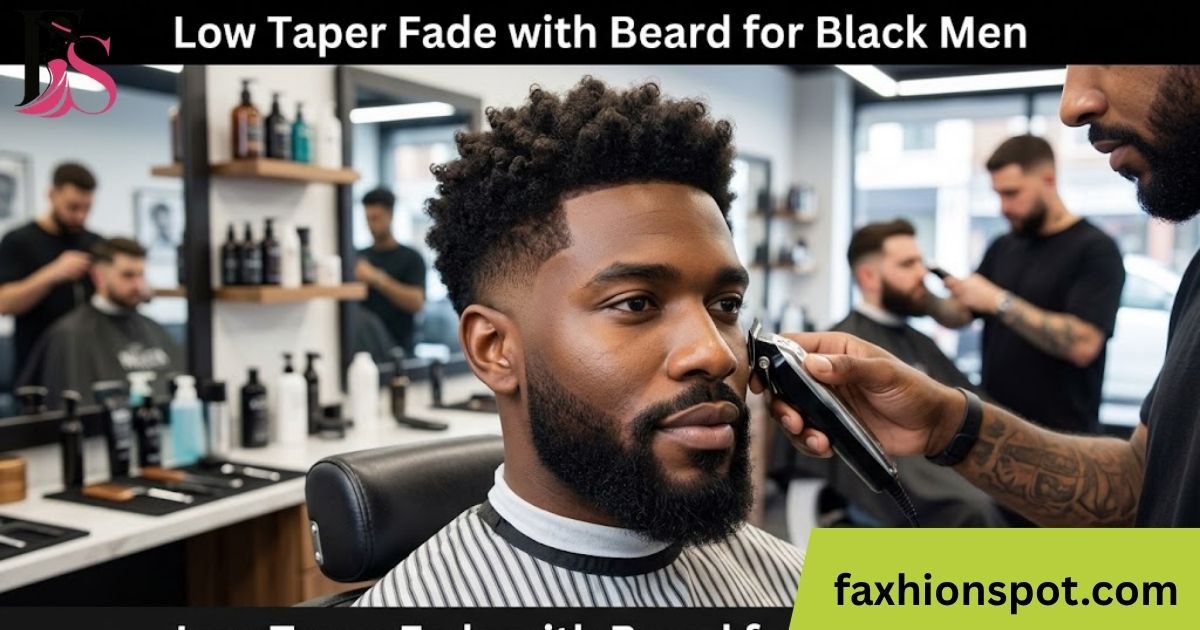
A low taper fade with beard gives Black men a clean way to frame natural hair texture while keeping facial hair structured.
The taper stays low around the temples, sideburns, ears, and neckline, so curls, coils, waves, twists, or a short afro can keep their character.
The beard then becomes part of the overall shape instead of looking like a separate grooming choice.
What Is a Low Taper Fade with Beard?
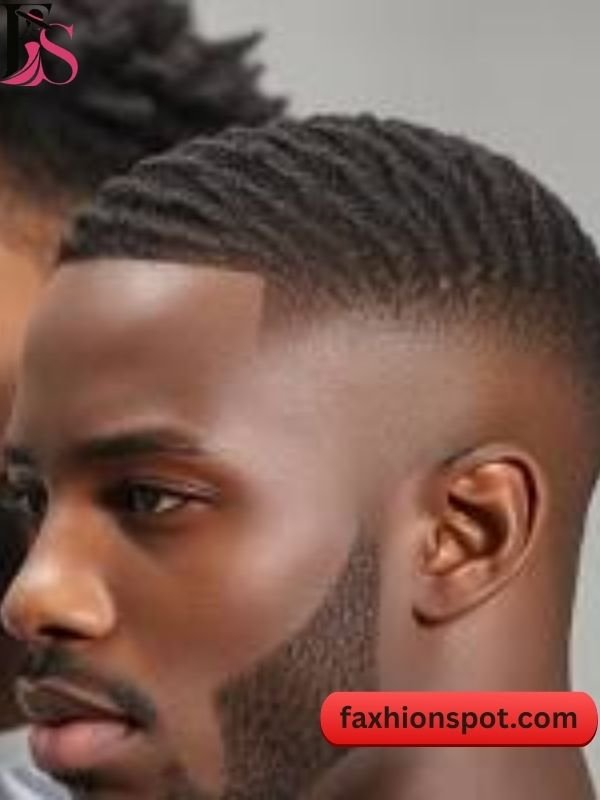
A low taper fade with beard is built around a gradual reduction of hair near the lower temples, sideburns, ears, and nape. Unlike a high fade, the transition stays close to the natural perimeter of the head. This leaves more density on the sides and preserves the shape and texture of the hair on top.
For a low taper fade with beard, the beard connection is equally important. Instead of creating a hard break between the haircut and facial hair, the barber can taper the sideburn into the beard. A smooth transition makes the haircut and beard read as one continuous design. The exact finish can range from a subtle shadow taper to a tighter skin-close edge.
For Black men, a low taper fade with beard works especially well with natural textures such as coils, curls, waves, sponge curls, twists, and short afro shapes. The low placement gives texture room to remain visible while the edges provide definition.
Why It Works So Well
The appeal of a low taper fade with beard comes from balance. The haircut controls bulk around the perimeter while the beard adds visual weight around the jaw. That creates a defined outline without requiring an aggressive fade.
Another advantage is flexibility. You can change the top without changing the basic taper. A short crop, waves, curls, twists, or a fuller textured top can all work with the same low perimeter. Grooming sites commonly highlight this adaptability, along with the importance of the sideburn-to-beard transition and manageable grow-out.
Key benefits include:
- Keeps natural texture visible on top
- Creates a cleaner temple and neckline
- Gives the beard a more intentional shape
- Works with casual and professional outfits
- Can be customized for different face shapes
- Usually grows out more subtly than a higher fade
Best Styles to Consider
The best low taper fade with beard style depends on beard density, hair texture, face shape, and how much daily grooming you enjoy. Use the options below as a starting point rather than a strict rule.
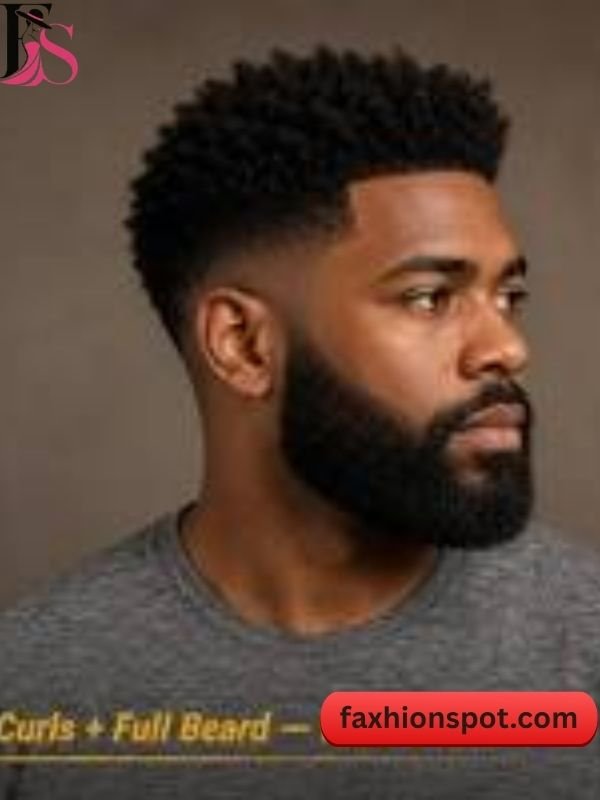
Low Taper Fade with Full Beard
A low taper fade with beard paired with a full beard creates strong visual weight around the lower face. Keeping the taper low prevents the haircut from taking too much away from the sides, while a controlled beard line gives the jaw a clean frame.
This option is especially useful for men with dense, even growth. Ask for the sideburns to be blended gradually into the beard rather than sharply disconnected. Keep the cheek line natural or lightly defined and make the neckline clean.
Best for: Dense beard growth and oval, square, or diamond face shapes.
Low Taper Fade with Short Beard
A low taper fade with beard and a short beard is easier to maintain and gives the haircut a lighter appearance. It works well if you want facial hair without the daily shaping required by a longer beard.
Keep the beard length consistent and ask the barber to fade the sideburn area into it. A crisp line-up can add definition, but a softer edge may be better if you want an easy grow-out.
Best for: Busy schedules, professional settings, and first-time beard wearers.
Low Taper Fade with Boxed Beard
A low taper fade with beard and a boxed beard uses controlled cheek and neckline edges to create a more geometric shape. Paired with a low taper, it gives the face a neat, deliberate outline.
The key is proportion. If the beard is very wide or tall, the haircut should retain enough top volume to keep the overall silhouette balanced. If your face is naturally narrow, avoid making the beard too narrow as well.
Best for: Men who like precise line-ups and structured grooming.
Low Taper Fade with Goatee
A low taper fade with beard and a goatee changes the visual focus from the sides of the face toward the chin. That can be useful when you prefer less facial hair or your cheek growth is uneven.
The taper can remain subtle around the sideburns, while the mustache and chin area receive the main attention. Keep the edges clean and make sure the goatee shape matches your natural chin.
Best for: Patchier cheek growth or men who prefer lighter facial coverage.
Low Taper Fade with Thick Beard
A low taper fade with beard and a thick beard already creates plenty of volume, so the haircut should provide clean contrast without competing with it. A controlled taper around the temples and sideburns helps the face look organized.
Do not remove too much beard density simply to make the fade appear stronger. Instead, use gradual blending and maintain the beard with regular trimming, brushing, and conditioning.
Best for: Dense facial hair and fuller hairstyles.
Low Taper Fade with Curly Hair and Beard
A low taper fade with beard with curly or coily hair brings texture and volume to the top, while the beard supplies structure below. The low taper helps clean up the perimeter without flattening the natural curl pattern.
For a low taper fade with beard on curly hair, tell your barber to preserve the curl length you want and keep the taper below the main volume. A curl cream or lightweight leave-in can help maintain definition without making the hair look heavy.
Best for: Natural curls, coils, sponge curls, and textured tops.
Low Taper Fade with Waves and Beard
A low taper fade with beard and waves looks more defined when the sides are controlled and the top retains enough length for the pattern to show. A shorter beard keeps attention on the wave pattern while still adding facial structure.
For a low taper fade with beard and waves, the most important details are a clean temple transition, consistent wave maintenance, and an even beard length. Regular brushing and nighttime protection can help preserve the pattern.
Best for: 360 waves, short wave styles, and men who enjoy a consistent grooming routine.
Face Shape Considerations
A low taper fade with beard can be adjusted rather than treated as a one-shape haircut. The beard length, cheek line, neckline, and top volume all affect how the face appears.
| Face Shape | Helpful Approach |
| Oval | Most beard lengths and top styles can work; keep proportions balanced. |
| Round | Add controlled height on top and avoid excessive width in the beard. |
| Square | A short or full beard can complement the natural jaw; keep edges clean. |
| Diamond | Preserve some top texture and avoid making the cheek area look overly narrow. |
| Long | Moderate top height and a fuller beard can help balance vertical length. |
| Heart | Keep some beard weight around the chin while avoiding an overly narrow top. |
With a low taper fade with beard, the goal is not to hide your face shape. It is to create proportion between the hair, temples, jaw, and chin. Current haircut guides also emphasize matching the blend and beard outline to individual face shape rather than using one universal formula.
What to Tell Your Barber
For a low taper fade with beard, a clear barber request can prevent most misunderstandings. Do not rely only on the haircut name because “low taper” can mean slightly different things from one shop to another.
Use this simple script:
- “Keep the taper low around the temples, ears, and nape.”
- “Preserve the length and natural texture on top.”
- “Blend the sideburn smoothly into my beard.”
- “Keep the beard at approximately this length.” Show a reference photo or guard length.
- “Keep the cheek line natural or define it lightly.”
- “Clean the neckline, but do not take it too high.”
- “Give me a line-up that matches my natural hairline.”
If you want skin showing at the shortest point, say so. If you prefer a shadow finish, explain that before the clippers come out. Recent barber guides similarly recommend specifying taper height, shortest point, top length, beard shape, and sideburn connection rather than giving only the style name.
Keeping It Looking Good
A low taper fade with beard looks best when both the haircut and facial hair receive regular attention. You do not need an elaborate routine, but consistency matters.
Hair Routine
- Moisturize textured hair according to its needs.
- Use a suitable curl cream or styling product when definition is needed.
- Brush waves consistently if you wear a wave style.
- Avoid excessive heat and harsh products that leave hair dry.
- Sleep with appropriate hair protection when it helps preserve your style.
Beard Routine
- Wash the beard gently rather than over-cleansing it.
- Use beard oil or balm when your facial hair feels dry.
- Brush or comb the beard to distribute natural oils.
- Keep the cheek line and neckline tidy.
- Trim stray hairs before they change the overall shape.
For a low taper fade with beard, many men will want a haircut refresh every two to three weeks, while beard edges may need attention sooner. Exact timing depends on growth speed, how sharp you like the finish, and whether you maintain the beard yourself. Several current style guides separate barber refreshes, beard shaping, and daily skin care as distinct parts of maintenance.
Click Here To Read Another Topic
Mistakes That Are Easy to Make
Even a low taper fade with beard can lose its shape when small details are overlooked.
Taking the taper too high: This can remove the low-profile character and reduce the amount of natural texture left around the sides.
Forcing a beard connection: If growth is patchy near the sideburn, an aggressive blend can make thin areas more noticeable.
Over-sharpening the hairline: A very hard line may look fresh on day one but can make regrowth more obvious.
Ignoring beard proportions: A very large beard with a tiny top or an extremely narrow beard with heavy side volume can make the overall shape feel unbalanced.
Neglecting the neckline: An uncontrolled neckline can make an otherwise clean haircut look unfinished.
Using too much product: Heavy oils, waxes, or styling products can weigh down textured hair and leave facial hair greasy.
A strong low taper fade with beard should look intentional from the front, side, and back. The sideburn transition is especially important because it visually connects the haircut to the facial hair.
Final Thoughts
A low taper fade with beard is a flexible grooming choice for Black men because it works with natural texture rather than forcing the hair into one shape. Curls, coils, waves, twists, and short textured cuts can all be paired with different beard lengths.
The best result comes from proportion and communication. Keep the taper genuinely low, preserve the texture you like on top, and make the beard transition smooth. Then maintain the edges, beard shape, and moisture routine consistently.
If you are unsure which variation to choose, start with a short or medium beard and a conservative taper. You can always grow the beard longer or adjust the blend at your next appointment.
Frequently Asked Questions
Is a low taper fade with a beard good for Black men?
Yes. It works particularly well with curls, coils, waves, twists, and other natural textures while keeping the perimeter clean and defined.
How often should I get a touch-up?
A two-to-three-week haircut refresh is a useful starting point, but faster-growing hair or very sharp line-ups may need earlier touch-ups.
Which beard style works best?
There is no single answer. Full, short, boxed, goatee, and thick beard styles can all work when the beard length and shape complement your face.
Can I wear this to work?
Yes. A conservative taper, controlled beard, and natural line-up can look polished enough for many professional workplaces.
1 thought on “Low Taper Fade with Beard for Black Men: Best Styles and Grooming Tips”