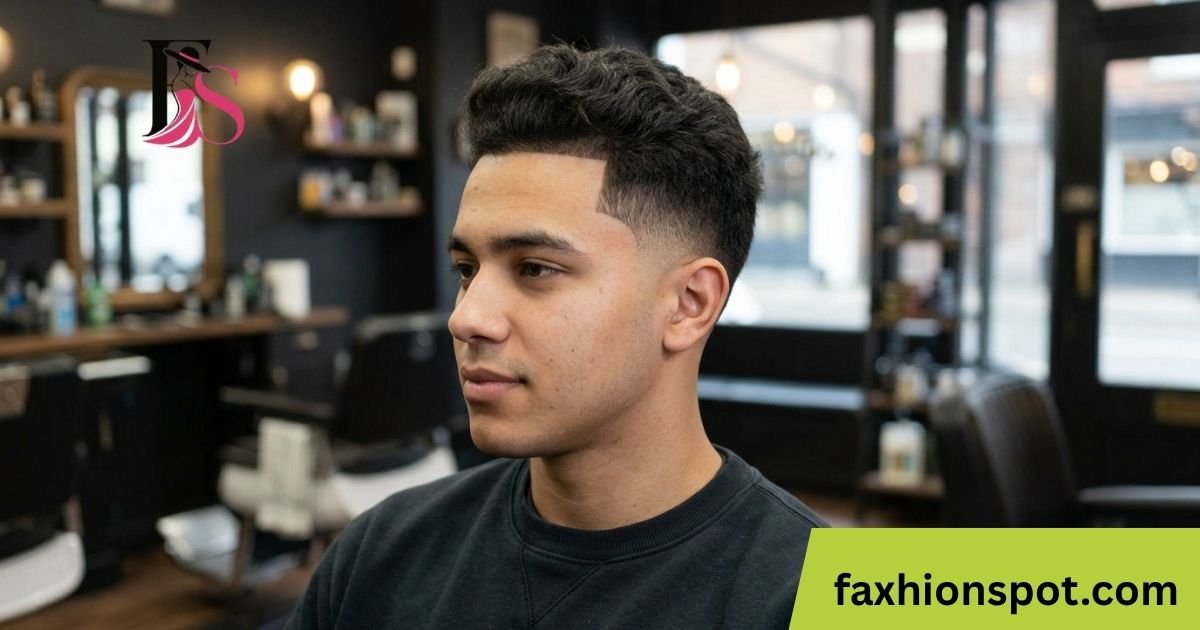
The Mid Taper Fade is a modern men’s haircut that combines clean edges, a gradual transition around the temples and neckline, and enough length on top to create a personalized look.
One reason this haircut remains popular is its flexibility. It can complement straight, wavy, curly, and coily hair, while the top can be styled into a textured crop, quiff, comb-over, middle part, or natural curls..
This complete guide explains the haircut’s structure, popular styles, historical background, styling techniques, barber instructions, products, and maintenance routine so you can choose a version that suits you.
All Posts on Mid Taper Fade
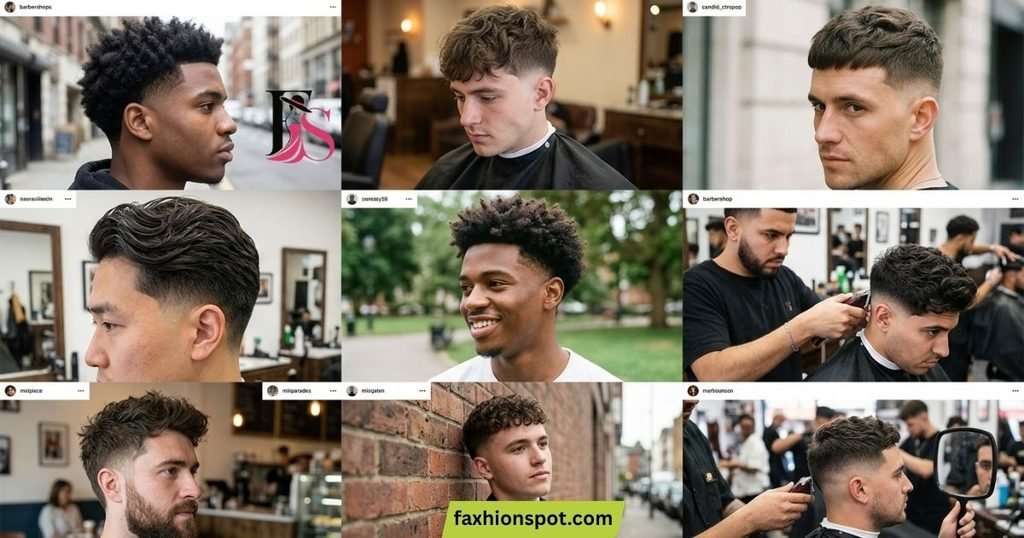
Explore these related hairstyle guides to find the right cut for different occasions and personal preferences.
Low Taper Fade for Wedding: The Best Groom Hairstyles to Try
A low taper fade is an excellent choice for grooms who prefer a subtle, polished appearance. It pairs well with a side part, textured quiff, brushed-back hair, or neatly shaped curls. For weddings, coordinate the haircut with your beard, outfit, and ceremony date, and schedule your final trim a few days before the event.
The Best Complete Guide to Taper Fade Haircut
A complete taper fade guide helps you compare low, medium, and high placements, understand clipper guard numbers, and choose a style based on your hair type. It also explains the difference between a traditional taper and a skin fade, helping you communicate your preferred length and finish to a barber.
Mid Taper Fade Haircut Guide: The Balanced Modern Cut
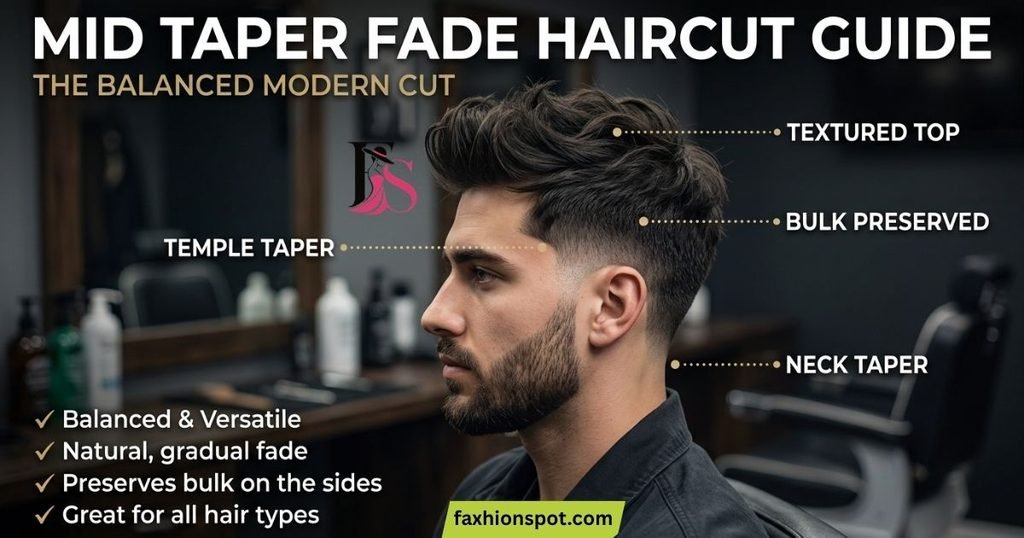
A Mid Taper Fade gradually shortens the hair around the temple area, sideburns, and neckline while retaining more length through the upper sides and top. Depending on the barber’s technique, the shortest section can finish at the skin or leave a small amount of visible hair.
The important distinction is that a taper concentrates the transition around specific areas rather than removing the same amount of bulk across the entire side of the head. This creates a clean outline without necessarily making the whole haircut look extremely short.
Low vs. Mid vs. High Taper
| Haircut | Where the transition begins | Overall appearance |
| Low taper | Close to the ears and lower neckline | Subtle and understated |
| Mid taper | Around the middle temple area | Balanced and versatile |
| High taper | Higher around the temples | Sharper and more dramatic |
The exact placement varies between barbers, so a reference photograph is more reliable than the haircut’s name alone.
Historical Evolution and Cultural Context
Tapering techniques have long been part of traditional barbering, where gradual changes in hair length help create clean silhouettes and natural-looking finishes. Modern clipper technology, adjustable guards, and precision trimmers have made these transitions more consistent and easier to customize.
During the twentieth century, short men’s cuts became associated with military grooming, professional dress, and practical everyday styling. Later, barbershop culture, hip-hop, sports, streetwear, and social media helped popularize more detailed fades, sharp line-ups, and personalized combinations.
Today, the medium-height taper fits comfortably between traditional grooming and contemporary styling. It can look conservative with a side part or expressive with curls, a textured fringe, waves, or a longer top. Its appeal comes from customization rather than a single fixed design.
Key Styles, Cut Anatomy, and Variations
A successful Mid Taper Fade depends on three main elements: the placement of the transition, the amount of hair retained on the upper sides, and the shape of the top.
Popular variations to consider
- Classic mid taper: A clean, balanced cut with a natural top and softly tapered edges.
- Textured crop: Short, uneven texture on top creates movement and a relaxed finish.
- Curly top: Natural curls remain prominent while the temple and neckline are neatly tapered.
- Wavy flow: Medium-length waves create a softer silhouette with movement.
- Comb-over: Hair is directed to one side for a structured, versatile appearance.
- Middle part: Longer hair is divided near the center for a contemporary curtain style.
- Quiff: The front is lifted to add height and definition.
- Buzz cut: A short top keeps daily styling simple while the edges remain defined.
- Taper with beard blend: The sideburn transition connects the haircut to a carefully shaped beard.
- Textured fringe: Hair falls forward, creating a youthful appearance that can soften a prominent forehead.
Understanding the cut anatomy
- Temple area: Establishes the height and visual character of the taper.
- Sideburns: Connect the haircut to the beard or facial hair.
- Upper sides: Retain enough weight to prevent the cut from looking excessively hollow.
- Crown and top: Determine the hairstyle’s overall shape and volume.
- Neckline: Finishes the haircut with a natural, tapered, or more defined outline.
A good barber blends these areas without leaving visible steps, harsh patches, or an unintended line between different lengths.
Face Shape and Hair Texture Compatibility Matrix
A medium-height taper can be adapted to many face shapes and hair textures. The goal is to create balanced proportions while working with the hair’s natural growth pattern.
| Face shape or hair type | Recommended variation | Styling advice |
| Oval face | Classic taper, crop, or comb-over | Experiment with different top lengths |
| Round face | Textured quiff or elevated top | Add moderate height for a longer appearance |
| Square face | Textured crop or natural curls | Soften strong angles with texture |
| Oblong face | Side-swept style or moderate-length top | Avoid excessive height |
| Heart-shaped face | Textured fringe or balanced side volume | Keep the top proportionate to the chin |
| Diamond face | Side-swept fringe or textured layers | Balance cheekbone width with controlled volume |
| Straight hair | Comb-over, crop, or slicked-back style | Use lightweight products for separation |
| Wavy hair | Wavy flow or textured fringe | Enhance natural movement without flattening it |
| Curly hair | Curly top or short rounded shape | Use curl cream to define individual curls |
| Coily hair | Short afro, waves, or defined natural texture | Prioritize moisture and precise blending |
These recommendations are starting points, not strict rules. Hair density, head shape, cowlicks, hairline, and personal taste can influence the final result more than face shape alone.
Step-by-Step Styling and Barber Execution Protocol
How a barber creates the haircut
A professional cut should follow a controlled process rather than relying on clipper work alone.
- Consultation: Discuss the desired taper height, top length, shortest guard, and neckline finish.
- Sectioning: Separate the top from the sides if necessary to protect the desired length.
- Initial taper: Establish the transition around the temples and sideburns.
- Clipper blending: Gradually connect shorter lengths to the upper sides, adjusting the guards as needed.
- Scissor work: Shape the top to suit the chosen style and remove unnecessary bulk.
- Detailing: Clean the neckline, refine the edges, and check both sides for balance.
- Final styling: Dry and style the hair to assess the shape from the front, sides, and back.
Guard numbers depend on the desired finish and the barber’s system. A lower guard generally removes more hair, but the same number does not guarantee an identical result across all clippers and techniques.
How to style it at home
For everyday grooming:
- Wash your hair when needed and remove excess water with a towel.
- Apply a suitable leave-in conditioner or pre-styling product if your hair needs it.
- Blow-dry or air-dry according to your texture and desired shape.
- Work a small amount of styling product between your palms.
- Distribute it evenly, concentrating on the top rather than the faded areas.
- Finish with your fingers, a comb, or a brush depending on the style.
Start with less product than you think you need. You can always add more, but removing excess styling product often requires washing your hair.
Essential Products, Formulations, and Styling Tools
The right grooming products should support your hair’s natural texture without leaving it greasy, stiff, or weighed down.
| Product or tool | Best use | Practical tip |
| Matte clay | Textured crops and short styles | Use a small amount for a natural finish |
| Styling paste | Flexible, everyday shaping | Choose a light or medium hold |
| Pomade | Comb-overs and slicked-back styles | Select matte or shiny according to preference |
| Curl cream | Curly and coily hair | Apply evenly to damp hair |
| Sea salt or texture spray | Wavy hair and loose volume | Avoid excessive use if your hair feels dry |
| Lightweight conditioner | Softness and manageability | Apply mainly to the hair, following product directions |
| Hair dryer | Volume and directional styling | Use moderate heat and keep the dryer moving |
| Comb or brush | Parting and shaping | Match the tool to your hair length and texture |
| Detail trimmer | Edge maintenance | Use cautiously to avoid pushing back the hairline |
Avoid assuming that an expensive product will automatically produce a better result. A lightweight product that suits your hair type is often more useful than a heavy formula that creates buildup.
Professional Barbershop Secrets and Edge Precision
The difference between an ordinary cut and a polished one often lies in the details. Professional barbers consider the direction of hair growth, head shape, density, and the way the haircut will look after several weeks of growth.
Useful details to discuss include:
- Blend consistency: Both sides should transition smoothly without obvious dark or light patches.
- Natural hairline: Preserve the hairline rather than pushing it backward for an artificially sharp outline.
- Temple balance: Match the taper to the head’s natural proportions.
- Neckline selection: A tapered neckline generally grows out softly, while a squared finish looks more defined.
- Beard integration: Blend the sideburns into facial hair when a connected appearance is desired.
- Dry-hair inspection: Check the finished shape after the hair has been styled, especially with curls and waves.
For textured hair, a barber should also consider shrinkage and the way curls sit when dry. Cutting too much length from the top before checking its natural shape can produce an uneven result.
Common Haircut Mistakes and How to Avoid Them
Even a versatile haircut can disappoint when the placement or proportions do not match the client’s preferences.
Mistake 1: Asking for a fade without specifying its height. Explain that you want a medium-height taper and show the preferred starting point.
Mistake 2: Confusing a taper with a full fade. A taper usually focuses on the temples and neckline, whereas a full fade removes more bulk across the sides and back.
Mistake 3: Removing too much length from the top. Tell the barber how much length you want to retain before cutting begins.
Mistake 4: Choosing a style without considering hair texture. Fine, straight hair may need a different approach from dense curls or tightly coiled hair.
Mistake 5: Overusing styling products. Heavy formulas can flatten the hair and leave unwanted residue.
Mistake 6: Cutting the hairline too aggressively. A sharp line-up should complement the natural hairline, not change its position.
Mistake 7: Waiting until the shape is completely lost before booking again. Schedule maintenance according to how quickly your hair grows and how precise you want the edges to remain.
Seasonal Care and Maintenance Cadences
Changes in humidity, temperature, sweating, and daily routines can affect how a hairstyle behaves. Adjust your grooming habits to your environment instead of following one rigid routine throughout the year.
- Spring: Use a lightweight conditioner and remove product buildup when necessary.
- Summer: Wash after heavy sweating, keep the scalp clean, and avoid excessive styling product.
- Autumn: Reassess your hair’s moisture needs as the weather becomes cooler or drier.
- Winter: Use gentle cleansing and conditioning if cold weather or indoor heating leaves the hair dry.
For most people, a haircut refresh every two to four weeks is a reasonable starting point. A very sharp, short finish may need attention sooner, while a softer taper can remain presentable for longer.
Barbershop Communication, Terminology, and Consultation Guide for Mid Taper Fade
Clear communication prevents misunderstandings and helps the barber customize the cut to your preferences.
Before your appointment, prepare a reference photo showing the front, side, and back. Ideally, choose a person with a similar hair texture and density.
Use this consultation checklist:
- Height: Explain where you want the transition to begin.
- Shortest length: Specify whether you prefer a visible guard length or a skin-close finish.
- Upper sides: State whether you want to retain fullness above the ears.
- Top: Describe the length, shape, and styling direction.
- Neckline: Choose a natural taper, rounded finish, or squared outline.
- Hairline: Explain whether you prefer a natural edge or a defined line-up.
- Facial hair: Ask for a connected beard blend if desired.
A useful barber request is: “I’d like a medium-height taper around the temples and neckline, with the upper sides kept fairly full. Leave the top long enough for my preferred style, and blend everything naturally.”
Confirm the shortest length before the barber begins. You can always request a shorter finish after seeing the initial blend, but hair that has already been cut cannot immediately be restored.
Blow-Drying Mechanics, Directional Airflow, and Pre-Styling Chemistry
Blow-drying can make a substantial difference to the finished shape, especially when the top is longer than the sides.
For straight or wavy hair, use your fingers or a brush to guide the roots in the direction you want them to sit. To create height, lift the front while directing airflow toward the roots. For a side part, follow the intended parting rather than drying every section forward.
Curly hair often benefits from lower heat and a diffuser, which helps preserve curl definition and reduce disruption. Applying a suitable heat protectant before blow-drying can help limit heat-related damage.
Pre-styling products have different purposes. A lightweight lotion can improve manageability, while a texture spray may add grip and a volumizing product can support lift. Choose products according to the finish you want, and follow the manufacturer’s directions.
Keep the dryer moving, avoid holding high heat against one section, and finish with a cool setting if it helps the style settle. You do not need intense heat to achieve a clean, controlled look.
Click Here To Read Another Topic
Scalp Health, Follicular Longevity, and Trimming Schedules
A good haircut should work alongside a sensible scalp-care routine. Cleanse your scalp as often as your activity level, oiliness, and hair type require. Rinse thoroughly, avoid excessive scratching, and use conditioner when appropriate for your hair.
A taper does not make hair follicles grow faster or prevent genetic hair loss. Hair growth is influenced by biological and health-related factors, not simply by how frequently the sides are trimmed.
For routine maintenance, use the following schedule as a guide:
| Task | Suggested frequency |
| Shampoo | As needed for scalp oil, sweat, and product buildup |
| Condition | According to hair texture and dryness |
| Style and detangle | Daily or whenever needed |
| Inspect edges and overall shape | Weekly |
| Professional haircut | Usually every 2–4 weeks |
| Clean personal grooming tools | After use, following product instructions |
Avoid aggressive home line-ups, particularly around the temples. Repeatedly pushing the hairline backward can change the appearance of the haircut and make regrowth look uneven. If you experience persistent itching, redness, scaling, or unusual hair loss, seek advice from a qualified healthcare professional.
Summary and Personal Aesthetic Philosophy
The best haircut is one that suits your hair, face, routine, and personal style. A medium-height taper offers flexibility because it can appear understated with a natural top or more expressive with curls, waves, a textured fringe, or a carefully styled quiff.
Rather than copying every current trend, focus on the details that matter most to you: the amount of side volume, the top’s length, the finish around the ears, and how often you are willing to visit the barber.
Bring a reference image, explain your preferences clearly, and ask for adjustments that work with your natural growth pattern. A well-planned cut should look good immediately after the appointment and remain manageable as it grows.
Frequently Asked Questions
What is a mid taper fade?
It is a men’s haircut that gradually shortens the hair around the temples, sideburns, and neckline, starting at a medium height while retaining more length on the upper sides and top.
Why choose a mid taper over a low or high taper?
It offers a balance between subtlety and contrast, making it suitable for many hair textures, top styles, and occasions without the stronger visual effect of a high taper.
How often does a mid taper fade need maintenance?
Most people benefit from a refresh every two to four weeks, although very short finishes may need more frequent touch-ups and softer styles can last longer.