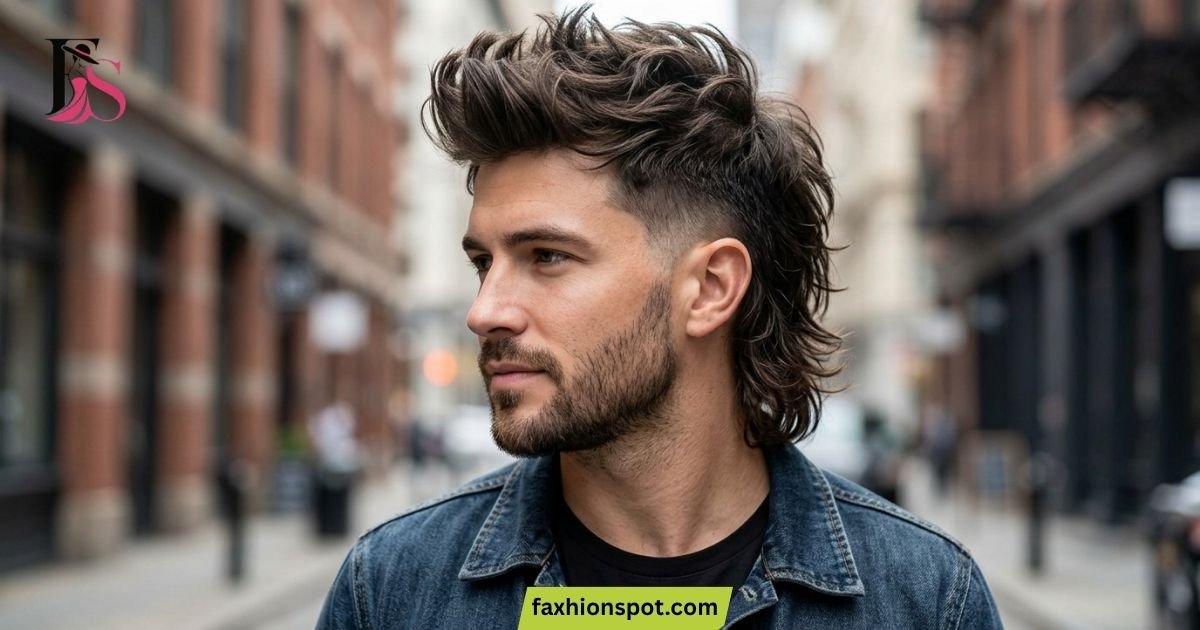
Looking for a bold hairstyle that combines modern texture with a classic mullet shape? The faux hawk mullet haircut blends a raised center, shorter sides, and longer hair at the back to create a stylish, edgy appearance.
From low fades and burst fades to messy layers and spiky finishes, there are plenty of ways to customize this haircut. In this guide, you’ll discover 29 stylish variations, practical styling techniques, recommended hair products, maintenance tips, and advice to help you choose the right cut for your face shape and lifestyle.
What Makes a Faux Hawk Mullet Haircut Different?
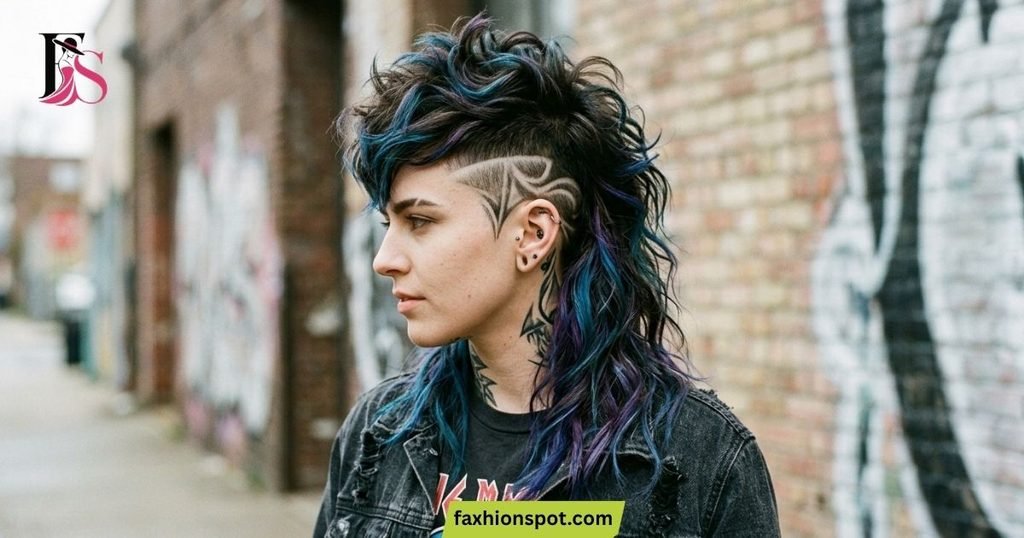
A faux hawk mullet combines the defining features of two popular men’s hairstyles. The faux hawk creates height and texture through the center of the head, while the mullet keeps the hair longer at the back. Shorter sides connect these elements and create a balanced silhouette.
Unlike a traditional mohawk, this style does not require completely shaved sides. You can choose a low taper, mid fade, high fade, or burst fade depending on your preferred level of contrast.
The main features include:
- Textured center: Adds height, movement, and definition.
- Short sides: Create contrast and emphasize the top.
- Longer back: Preserves the signature mullet appearance.
- Customizable finish: Can look clean, messy, curly, spiky, or natural.
- Flexible styling: Works for casual outfits, social events, and modern everyday looks.
The key is to balance the center section with the longer back. A skilled barber can adjust the length, layers, and fade to suit your hair texture and personal style.
29 Best Faux Hawk Mullet Haircut Styles
These 29 variations offer ideas for different hair lengths, textures, and grooming preferences. Use the descriptions to identify a style that suits your daily routine and explain your preferred shape to your barber.
1. Classic Faux Hawk Mullet
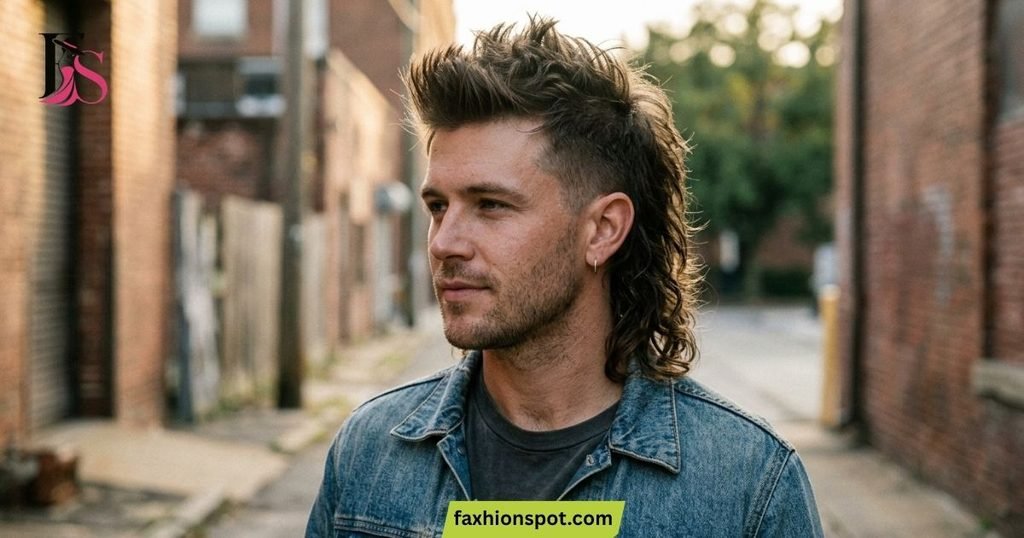
The classic style features a moderately raised center, neatly trimmed sides, and a longer back. Its balanced proportions create a recognizable silhouette without looking overly dramatic.
Ask your barber for textured layers through the top and enough length at the nape to maintain the mullet shape. A small amount of matte clay helps create natural definition.
2. Low Fade Faux Hawk Mullet
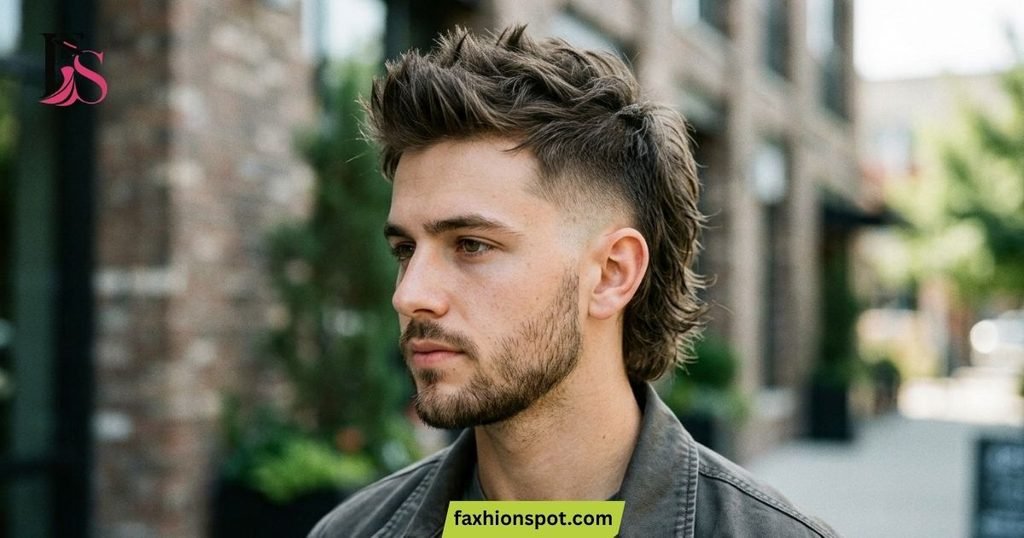
A low fade keeps the shortest hair near the ears and neckline. This creates a subtle transition that leaves more fullness around the sides while highlighting the textured center.
It is a good option for men who want a modern haircut that remains relatively understated. Style the top with a lightweight paste for a neat but flexible finish.
3. Mid Fade Faux Hawk Mullet
The mid fade begins higher on the sides, creating stronger contrast between the top and the shorter hair. It works particularly well with textured layers and a slightly longer back.
Use a matte styling product to separate individual strands and add definition. This variation is ideal for men who want a sharper appearance without choosing an extremely high fade.
4. High Fade Faux Hawk Mullet
A high fade removes more bulk from the upper sides, making the center section stand out. The contrast gives the haircut a bold, modern appearance.
Keep the top long enough to create visible height and preserve the back length to maintain the mullet silhouette. This variation suits men who enjoy high-contrast hairstyles.
5. Skin Fade Faux Hawk Mullet
A skin fade gradually blends the hair down to bare skin. Combined with a textured center and longer back, it creates a clean, dramatic finish.
Because the sides are cut very short, regrowth becomes noticeable relatively quickly. Regular barber appointments help maintain the sharp transition and overall shape.
6. Taper Fade Faux Hawk Mullet
A taper fade focuses on gradually shortening the hair around the temples and neckline. It preserves more natural fullness on the sides than many full fades.
This makes it suitable for men who want a clean, professional-looking finish without sacrificing too much hair. The top can be styled upward or slightly backward.
7. Textured Faux Hawk Mullet
Textured layers create separation and movement through the center. Instead of forming a solid ridge, the hair features individual pieces that can be lifted or directed into different positions.
This option works well for straight, wavy, and thick hair. Apply a small amount of matte clay to dry hair and shape the strands with your fingertips.
8. Messy Faux Hawk Mullet
The messy variation emphasizes relaxed texture rather than perfectly arranged spikes. The top looks slightly tousled, while the longer back adds movement.
It is ideal for men who prefer a casual, effortless appearance. Work a lightweight styling paste through the hair and use your fingers to create an uneven, natural finish.
9. Curly Faux Hawk Mullet
Natural curls give the center section extra volume and character. Keeping the top and back longer allows the curls to form a connected shape, while shorter sides create definition.
Use curl cream to enhance curl definition and reduce frizz. Ask your barber to account for shrinkage, since curly hair can appear significantly shorter when dry.
10. Wavy Faux Hawk Mullet
Wavy hair creates a softer, flowing version of this hairstyle. The center can be lifted slightly, while the longer back follows the natural movement of the waves.
A lightweight sea salt spray can add texture and separation. If your hair tends to become dry, use a moisturizing conditioner to maintain softness.
11. Short Faux Hawk Mullet
A short variation keeps the center compact and the back relatively subtle. It is a practical choice for men who want an edgy hairstyle without committing to long hair.
Ask for a short textured top, tidy sides, and a slightly extended nape. A small amount of matte clay is usually enough to create the desired shape.
12. Long Faux Hawk Mullet
Longer layers create a more noticeable central ridge and a flowing back section. This variation makes a stronger statement and offers more opportunities for different styling techniques.
Use conditioner regularly and trim the ends when needed to maintain the shape. Ask your barber to remove excess bulk without sacrificing the length that defines the mullet.
13. Burst Fade Faux Hawk Mullet
A burst fade curves around the ears, leaving the surrounding hair shorter while preserving length toward the back. This curved shape complements the natural structure of a mullet.
It works especially well with curly, wavy, and textured hair. Keep the center defined to emphasize the contrast between the top and sides.
14. Drop Fade Faux Hawk Mullet
A drop fade follows the contour of the head and dips behind the ears. This creates a curved transition that can blend naturally into the longer rear section.
Pair it with a textured top for a bold finish or a softer center for a more understated look. The fade placement helps emphasize the shape of the haircut from the side.
15. Razor Textured Faux Hawk Mullet
Razor texturing creates separated ends and a piecey finish. It can help thick hair feel lighter while adding movement to the center and back.
Ask your barber whether razor cutting suits your hair type and condition. A lightweight styling paste can highlight the layers without making them appear stiff.
16. Spiky Faux Hawk Mullet
The spiky version features clearly defined strands that rise along the center. Shorter sides make the spikes more noticeable, while the longer back completes the shape.
Use a firm-hold paste or clay and shape small sections between your fingers. Apply the product gradually to prevent the hair from becoming heavy or clumped together.
17. Modern Faux Hawk Mullet
This variation combines controlled height, soft texture, and carefully blended sides. Rather than relying on dramatic spikes, it focuses on proportion and natural movement.
It is a versatile choice for men who want a fashionable haircut that can work for everyday activities and social occasions. A flexible styling paste provides enough control without making the hair look rigid.
18. Undercut Faux Hawk Mullet
An undercut creates a noticeable separation between the longer top and the closely trimmed sides. This contrast makes the center section stand out and gives the back a more dramatic appearance.
It suits men who prefer alternative or fashion-forward hairstyles. Keep in mind that a disconnected undercut may require extra shaping as it grows out.
19. Shaggy Faux Hawk Mullet
The shaggy variation uses uneven layers and soft texture to create a relaxed, rock-inspired appearance. The center has some lift, while the back features feathered movement.
This option works especially well with wavy hair. Use a lightweight styling cream to maintain separation while allowing the layers to move naturally.
20. Thick Hair Faux Hawk Mullet
Thick hair provides natural volume, making it easier to build a pronounced center section. Strategic layering removes excess weight and prevents the sides from looking too bulky.
Ask your barber to retain enough density through the top and back. Matte clay or styling paste can help control the shape without flattening the hair.
21. Thin Hair Faux Hawk Mullet
Fine hair benefits from a shorter, lighter center that does not collapse under its own weight. Subtle layers can create the appearance of fullness without removing too much density.
Use a volumizing spray before blow-drying and finish with a small amount of lightweight paste. Avoid heavy products that can weigh down the hair and make the scalp more visible.
22. Fringe Faux Hawk Mullet
A fringe introduces forward movement to the front while the center retains some height. This creates a youthful appearance that combines a textured fringe with the longer back.
Ask your barber for a soft, textured fringe that blends into the top. Adjusting its length can help frame the forehead and complement different face shapes.
23. Mohawk Inspired Faux Hawk Mullet
This variation brings the central ridge closer to a traditional mohawk, with more height and stronger contrast along the sides. The longer back preserves the mullet influence.
It is a good choice for men who want an adventurous style without necessarily shaving the sides completely. Styling clay or a stronger-hold product helps maintain the raised center.
24. Slicked Back Faux Hawk Mullet
The slicked-back variation directs the top backward and slightly toward the center. This creates a smoother silhouette with less emphasis on sharp spikes.
Use a flexible styling paste for a natural finish or a small amount of pomade for added shine. Preserve some lift through the center so the hairstyle does not become a conventional slick-back.
25. Fluffy Faux Hawk Mullet
The fluffy variation emphasizes airy volume, soft layers, and natural movement. It works particularly well with medium-length straight or wavy hair.
Blow-dry the roots upward using your fingers, then apply a small amount of lightweight styling paste. Avoid heavy products that make the top fall flat.
26. Athletic Faux Hawk Mullet
An athletic variation keeps the sides neat and the top short enough to style quickly. The back remains slightly longer to retain the recognizable mullet shape.
This option suits active men who want a practical haircut with a modern edge. Choose a taper or low fade for a clean finish that requires relatively little daily styling.
27. Mullet Faux Hawk with Beard
Pairing this hairstyle with a beard creates a stronger frame around the face. Short stubble or a neatly shaped beard can balance the height of the top and complement the longer back.
Ask your barber to blend the sideburn area into the beard where appropriate. Keep the cheek and neckline edges tidy for a more intentional appearance.
28. Asian Style Faux Hawk Mullet
Straight, dense hair can create a crisp central ridge with plenty of definition. Layering helps reduce excess weight, while a taper or burst fade adds a modern touch.
Ask your barber to consider your hair’s natural growth direction and thickness. A lightweight texturizing product can provide lift without making straight hair feel stiff.
29. French Crop Faux Hawk Mullet
The French crop variation combines a short, textured fringe with a lifted center and longer rear section. It creates an interesting mix of forward movement and upward texture.
Keep the fringe relatively compact and blend the crown into the back. This is a useful option for men who want a distinctive style without excessive height at the front.
How to Style a Faux Hawk Mullet Haircut
Good styling begins with understanding your natural hair texture. You can create a defined shape with a few basic tools and the right products rather than using a complicated routine.
Follow these steps:
- Start with clean hair. Wash with a suitable shampoo and gently towel-dry until your hair is damp.
- Apply a pre-styling product. Use texture spray or a lightweight volumizing product if your hair needs extra lift.
- Blow-dry the center. Direct the front and top upward and inward with your fingers or a vent brush.
- Shape the back. Guide the longer rear layers backward or slightly outward to emphasize the mullet silhouette.
- Apply a finishing product. Rub a small amount of clay or paste between your palms and work it through the center.
- Refine the texture. Separate a few strands with your fingertips and avoid using too much product.
For curly hair, use a diffuser on a low or moderate heat setting. For fine hair, focus on lifting the roots rather than applying heavy products to the ends.
Best Hair Products for a Faux Hawk Mullet Haircut
The right product depends on your hair density, texture, and preferred finish. Matte products generally provide a natural appearance, while creams and pomades offer different levels of flexibility, softness, and shine.
| Product | Best for | Finish |
| Matte clay | Thick or short textured hair | Natural and matte |
| Texture spray | Separation and volume | Light and airy |
| Styling paste | Flexible everyday styling | Natural to slightly shiny |
| Sea salt spray | Enhancing waves | Beachy and textured |
| Curl cream | Defining curls and reducing frizz | Soft and moisturized |
Matte Clay
Matte clay provides definition and helps the central section hold its shape without noticeable shine. Begin with a small amount and add more only when necessary.
Texture Spray
Texture spray adds separation and lift, especially to fine or straight hair. Apply it before blow-drying when the product instructions recommend doing so.
Styling Paste
Styling paste offers flexible control for messy, spiky, and slicked-back variations. It is a useful everyday option because it allows you to reshape the hair without making it excessively stiff.
Sea Salt Spray
Sea salt spray enhances natural waves and creates a relaxed, textured appearance. If your hair becomes dry easily, balance its use with a suitable conditioner.
Curl Cream
Curl cream helps define natural curls, improve softness, and control frizz. Apply it evenly to damp hair and allow the curls to dry naturally or use a diffuser.
Click Here To Read Another Topic
Maintenance Tips
Maintaining the shape helps keep the haircut balanced as the sides, top, and back grow at different rates.
- Refresh the fade: Short fades may need trimming every two to three weeks to maintain a sharp finish.
- Reshape the full cut: Schedule a shaping appointment approximately every four to six weeks, depending on your growth rate.
- Protect hair health: Use conditioner and avoid excessive heat or harsh styling routines.
- Choose suitable products: Fine hair usually needs lightweight products, while thick hair may benefit from stronger hold.
- Bring reference photos: Show your barber front, side, and rear views so the intended shape is clear.
- Preserve the back length: Explain how much hair you want to retain at the nape before the cut begins.
- Avoid over-styling: Too much product can weigh down the center and make the finish look greasy or rigid.
For the best results, ask your barber to balance the width of the center section, the fade height, and the length of the back. These details determine how the finished style looks from different angles.
FAQs: Faux Hawk Mullet Haircut
Is a Faux Hawk Mullet Haircut suitable for all hair types?
It can be adapted for straight, wavy, curly, thick, and fine hair, but the best variation depends on your natural density, growth patterns, and styling preferences.
What is the difference between a Faux Hawk Mullet and a Mohawk Mullet?
A faux hawk generally keeps some hair on the sides and uses a blended fade or taper, while a traditional mohawk often features more dramatically shaved sides and a narrower central strip.
How often should I trim a Faux Hawk Mullet Haircut?
Refresh short fades every two to three weeks for a sharp finish, and consider reshaping the full haircut every four to six weeks.
Does a Faux Hawk Mullet require daily styling?
Not always. Textured and curly versions may need only a little product, while taller spikes and longer styles generally require more daily attention.
Is the Faux Hawk Mullet still trendy in 2026?
Yes, it remains a relevant choice in modern men’s grooming, especially for men who like textured tops, fades, and mullet-inspired length.
Conclusion
The faux hawk mullet combines the height and texture of a faux hawk with the longer back of a mullet, creating a distinctive hairstyle that can be adapted to different hair types and lifestyles.
From classic tapers and low fades to curly layers, fluffy texture, and dramatic burst fades, there is a variation for almost every personal preference.
Before your next barber appointment, choose a reference photo, decide how much length to keep at the back, and explain how much height you want through the center.