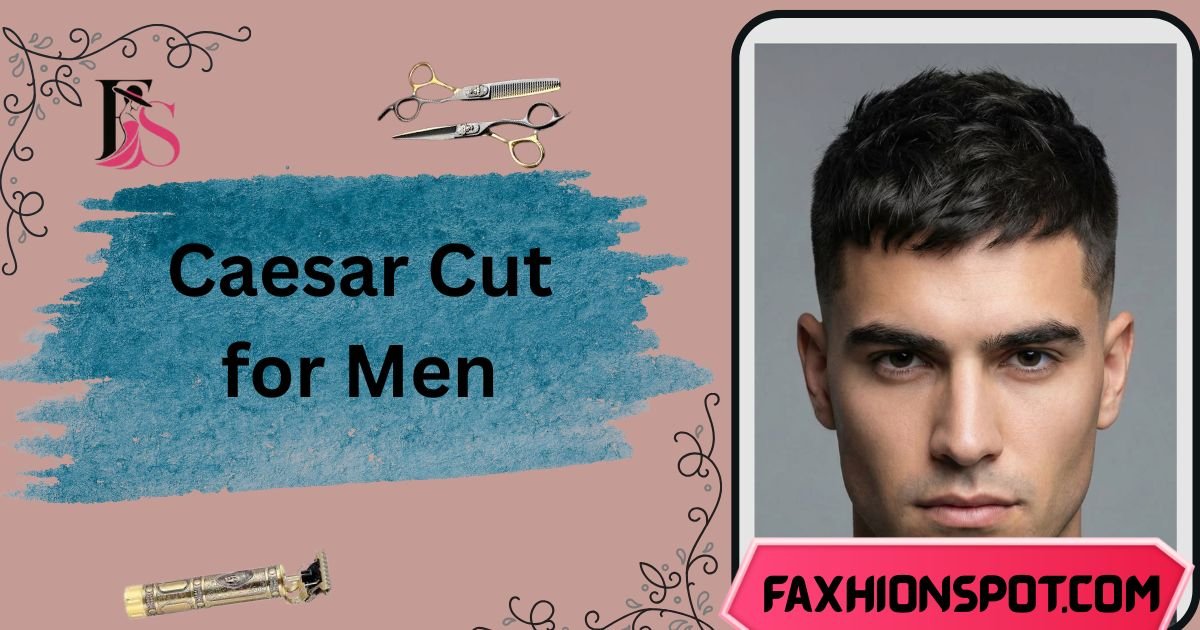
Short, sharp, and ridiculously easy to maintain — the Caesar cut for men has quietly stayed at the top of every barbershop’s most-requested list for decades. It doesn’t chase trends, yet it never looks outdated.
That’s the real magic of this haircut: it works on straight hair, curly hair, thinning hairlines, and thick manes alike. If you’re tired of styles that need fifteen minutes and three products every morning, the Caesar cut for men is worth a serious look.
Popular Caesar Cut for Men
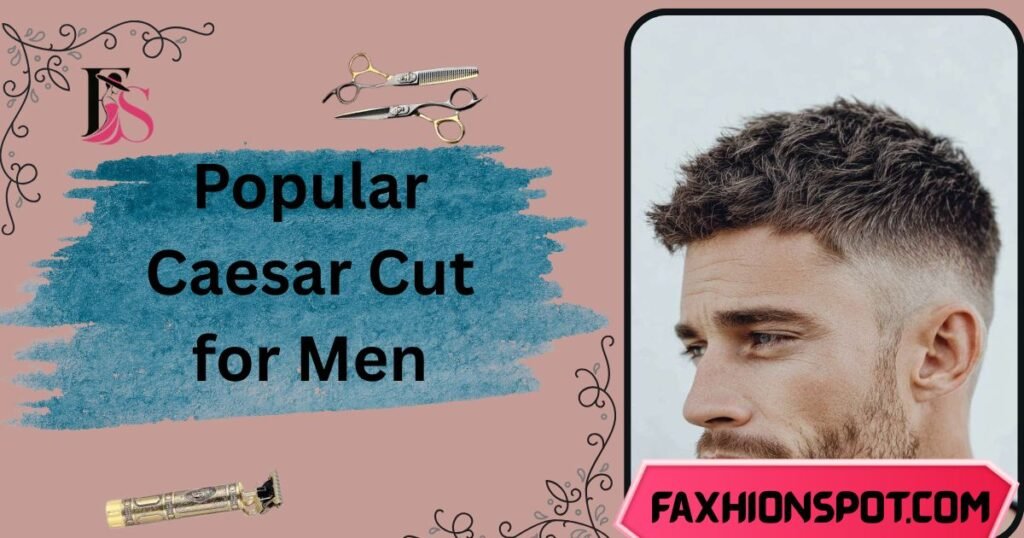
Barbers today rarely stick to one version of the Caesar cut for men. They blend it with fades, waves, texture, and even curls to create a look that feels personal rather than copy-pasted. Here’s a quick side-by-side before we break down each style in detail.
| Style | Best For | Maintenance |
| Classic Caesar Cut | Straight or wavy hair | Every 3–4 weeks |
| Modern Caesar with Drop Fade | Bold, trend-focused looks | Every 2–3 weeks |
| Buzz Cut Caesar | Busy, low-fuss lifestyles | Every 2 weeks |
| Curly Caesar with Line Up | Curly or coily hair | Every 3 weeks |
| High Fade Caesar | Sharp, high-contrast style | Every 2 weeks |
These are just a handful of the ways this haircut can be customized. Whether you prefer a bold high-contrast fade or a soft, low-key taper, there’s a Caesar cut for men style that fits your routine. Let’s go through all 21 modern variations of the Caesar cut for men, one style at a time.
Classic Caesar Cut
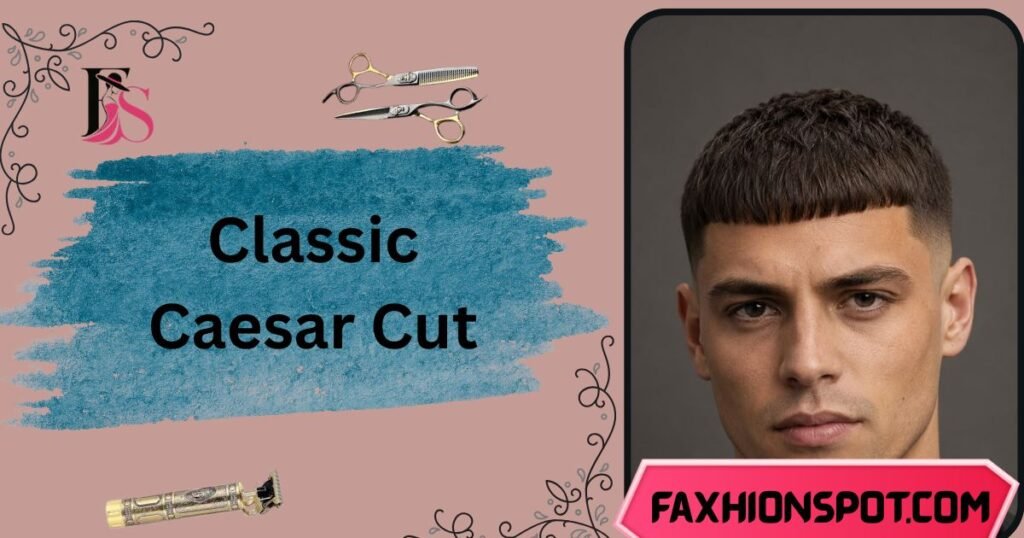
The classic Caesar cut is where it all begins. Hair sits at an even, short length on top with a straight fringe brushed forward over the forehead, while the sides stay neatly trimmed and tapered. It’s a simple, no-fuss look that suits nearly every face shape and hair texture, which is exactly why it has never gone out of style.
Modern Caesar with Drop Fade
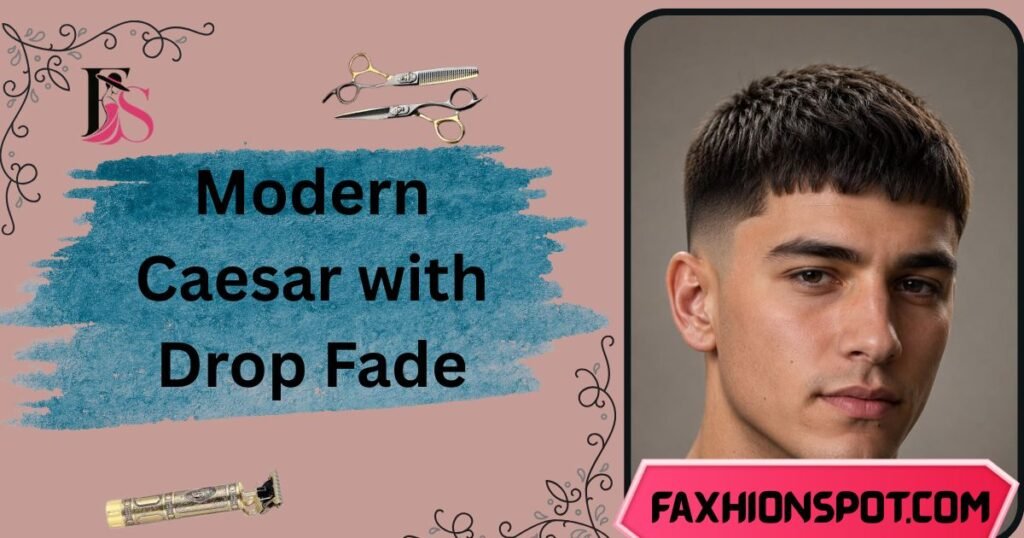
This version takes the traditional shape and adds a fade that curves down behind the ear for a bolder finish. The contrast between the textured top and the dropped fade gives the cut more shape and definition. It’s a favorite among men who want a Caesar cut for men that still feels fresh and current.
Caesar with Long Fringe
Here, the front is left a little longer so the fringe sits closer to the brow. The extra length adds movement and gives you more room to style it forward, back, or slightly to the side. It works especially well on oval and oblong face shapes that can carry a bit of extra volume up top. Among longer Caesar cut for men options, this one offers the most styling flexibility.
Buzzed Caesar with Clean Fringe
This is one of the sharpest, most low-maintenance versions of the Caesar cut for men. The top is buzzed very short with a number 2 or 3 guard, while a neat straight fringe stays visible at the front. The sides are faded clean for a fresh, polished finish that barely needs any daily styling.
Short Afro Caesar Cut
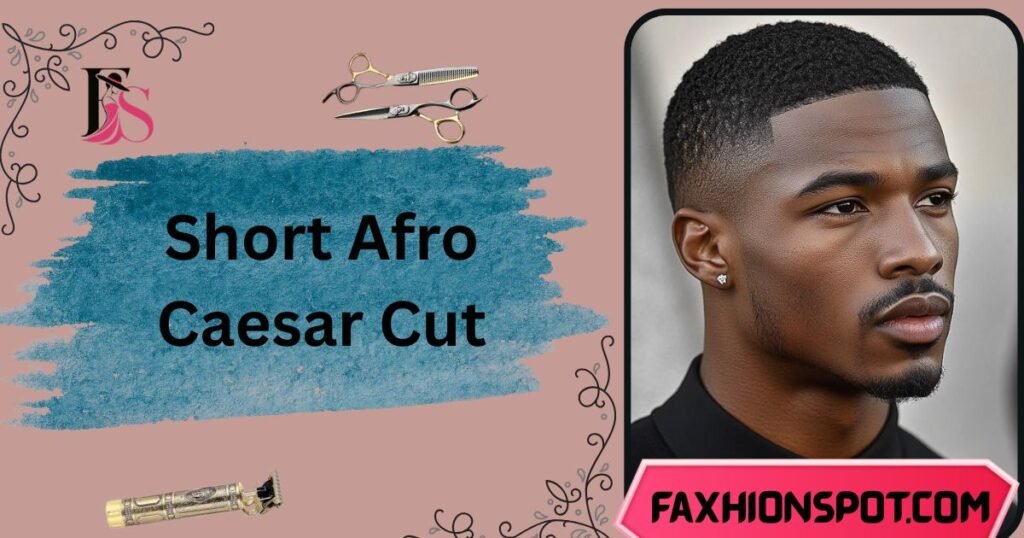
Designed for natural, coily hair, this style keeps the top compact while preserving the signature forward fringe. It’s a clean, structured way to wear an afro without losing the defined shape that makes a Caesar cut recognizable. Sides are typically faded or tapered for extra contrast.
Textured Top, Short Sides
Point-cutting and light texturizing give this version movement and a slightly messy, natural finish. Paired with short, tapered sides, it strikes a nice balance between polished and relaxed. A small amount of matte paste is usually all it needs, making this an easy, everyday Caesar cut for men’s choice.
Caesar with Side-Swept Twist
Instead of a straight-forward fringe, the top is brushed slightly to one side for a subtle twist on the traditional shape. It keeps the clean lines of a classic Caesar cut for men while adding a touch of personality and asymmetry.
Razor Cut Caesar
A razor is used instead of scissors to create softer, feathered edges along the fringe and top. The result is a slightly more textured, less blunt finish than the classic version, ideal for men with fine or straight hair who want extra dimension in their Caesar cut.
Rounded Hairline Caesar Cut
Rather than a hard, straight edge, the fringe follows a soft, rounded line across the forehead. This tweak softens the overall look and works particularly well for men with strong or angular facial features.
Buzz Cut Caesar
This is the Caesar cut for men stripped down to its simplest form. Everything — top, sides, and back — is kept extremely short, with just enough length left at the front to preserve the fringe. As far as low-effort options go, this buzz cut Caesar is practically maintenance-free and grows out cleanly.
High Fade Caesar
For maximum contrast, the sides are faded all the way up close to the top, leaving a sharp, high-impact line against the textured crown. This version reads as more modern and edgy compared to a traditional taper.
Caesar and 360 Waves
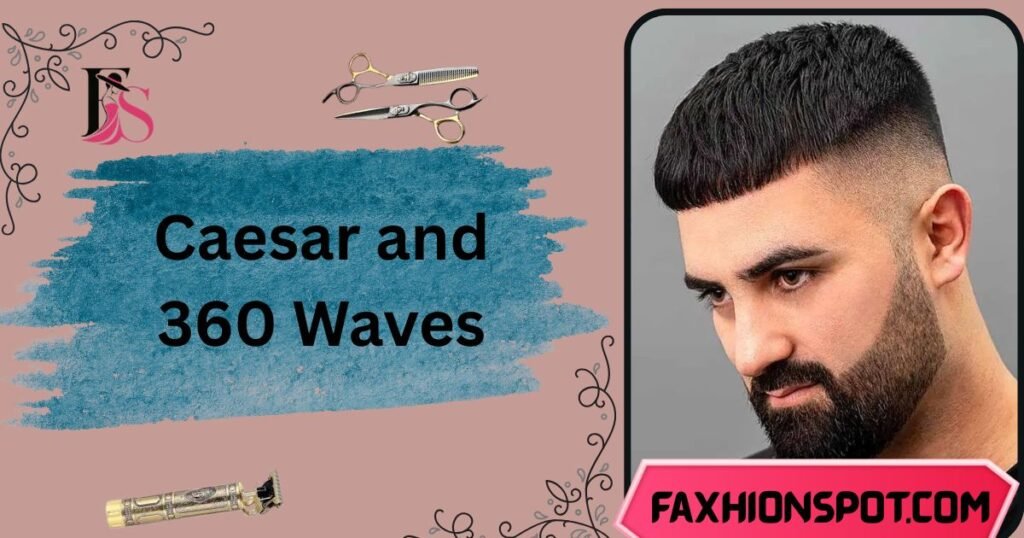
Built specifically for textured and curly hair, this style combines the classic short fringe with deep, defined waves on top. Regular brushing and a durag at night help keep the wave pattern crisp between trims on this textured Caesar cut for men look.
Caesar with Faded Temples
Only the temple areas are faded, while the rest of the sides stay slightly longer and tapered. It’s a subtler way to add shape without going full high fade, and it grows out more gracefully than a skin fade.
Spiky Fauxhawk Caesar
This variation adds a bit of height and spike through the center of the top, blending Caesar proportions with fauxhawk styling. A strong-hold paste or wax is essential to keep the spikes standing throughout the day, making this one of the boldest Caesar cut for men picks on this list.
Caesar with Faded Sides
A more universal take, this style pairs the classic short top and forward fringe with a simple, even fade on the sides. It’s one of the most requested versions of the Caesar cut for men because it works in nearly any professional or casual setting.
Long Top Mid Fade Caesar
Extra length is left on top — usually two to three inches — while the sides fade to a mid-length taper. This gives you more styling flexibility, from a slicked-forward fringe to a slightly tousled, textured finish.
Mid Fade Caesar
Sitting between a low and high fade, the mid fade Caesar offers a balanced transition from skin to top. It’s sharp enough to look intentional but soft enough to avoid looking overdone, making it one of the most versatile Caesar cuts for men.
Curly Caesar with Line Up
Natural curls are left on top and shaped with a sharp line-up along the hairline and temples. The crisp edge contrasts beautifully with the loose curl pattern, giving the cut a clean yet naturally textured finish.
Choppy Fringe Caesar
Instead of a blunt, straight edge, the fringe is cut with a choppy, uneven finish for extra texture and movement. This version borrows a little from the French crop while still keeping the shorter, more uniform silhouette that defines every Caesar cut for men style.
Straight and Faded Caesar
This combines a completely straight, blunt fringe with a clean faded side for maximum contrast between soft and sharp lines. It’s a striking, high-definition version of the Caesar cut for men that photographs particularly well.
Short Caesar Cut
The short Caesar strips the style back to its most practical form, keeping the top compact and the sides tight. Best for busy schedules, this version always looks tidy with almost no styling effort required, proving that a simple Caesar cut for men can still look sharp.
What is Caesar Cut
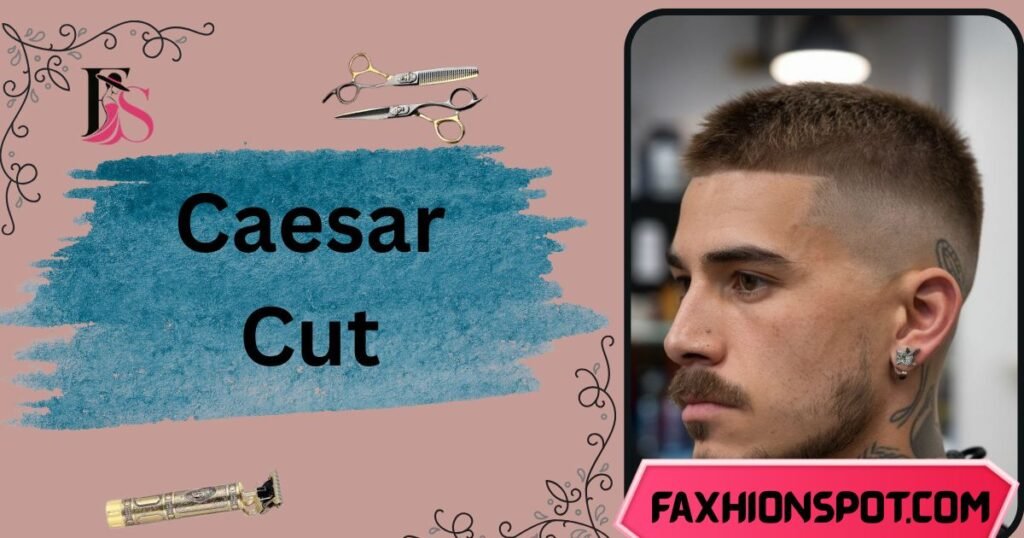
So, what exactly is a Caesar cut? At its core, the Caesar cut for men is a short hairstyle defined by two things: a straight, horizontal fringe brushed forward over the forehead, and short, evenly cropped hair on the sides and back. Traditionally, the top and sides were blended to roughly the same length, giving the whole head a uniform, clean shape.
A few things set it apart from similar short cuts:
- The fringe is the signature feature. A crew cut has none, and a buzz cut skips it entirely.
- The sides stay short and tidy, whether that means a blunt trim, a taper, or a modern fade.
- It works across nearly every hair type — straight, wavy, curly, and coily hair can all be shaped into a Caesar.
- It’s genuinely low-maintenance, often needing nothing more than a light matte product or no product at all.
Compared to a French crop, the Caesar keeps its fringe shorter, straighter, and more uniform, while the French crop tends to be choppier and longer at the front. Both are close cousins, but the Caesar cut for men is the cleaner, more structured option of the two.
The Evolution of Caesar Cut
The Caesar cut for men takes its name from Julius Caesar, the Roman general and statesman. According to popular history, Caesar wore his hair combed forward in short bangs partly to disguise a receding hairline — a styling trick that still works for men today.
The cut resurfaced in a big way during the 1990s and early 2000s, becoming closely associated with celebrities like George Clooney and rappers such as Eminem. That era cemented the Caesar cut for men as a symbol of clean, confident, no-nonsense style rather than just an ancient Roman throwback.
In the years since, barbers have continually reworked the original shape:
- The 1990s revival paired the classic fringe with simple tapered sides.
- The 2000s introduced sharper tapers and slightly longer tops.
- The 2010s and beyond brought fades — low, mid, high, and skin — into the mix.
- Today’s versions blend texture, waves, curls, and even fauxhawk elements while keeping the forward fringe intact.
What hasn’t changed is the core identity of the cut. Whether it’s buzzed, faded, or left with extra length, a true Caesar cut for men always keeps that short, forward-brushed fringe as its anchor.
Conclusion
The Caesar cut for men has survived thousands of years of changing trends for one simple reason — it just works. It’s sharp without trying too hard, low-maintenance without looking careless, and flexible enough to suit almost any face shape, hair type, or lifestyle.
From the buzzed and faded versions to curly, wavy, and textured takes, there’s a variation of the Caesar cut for men to match nearly every personal style. If you’ve been searching for a Caesar cut for men style that balances effort and impact, this list is a solid place to start.