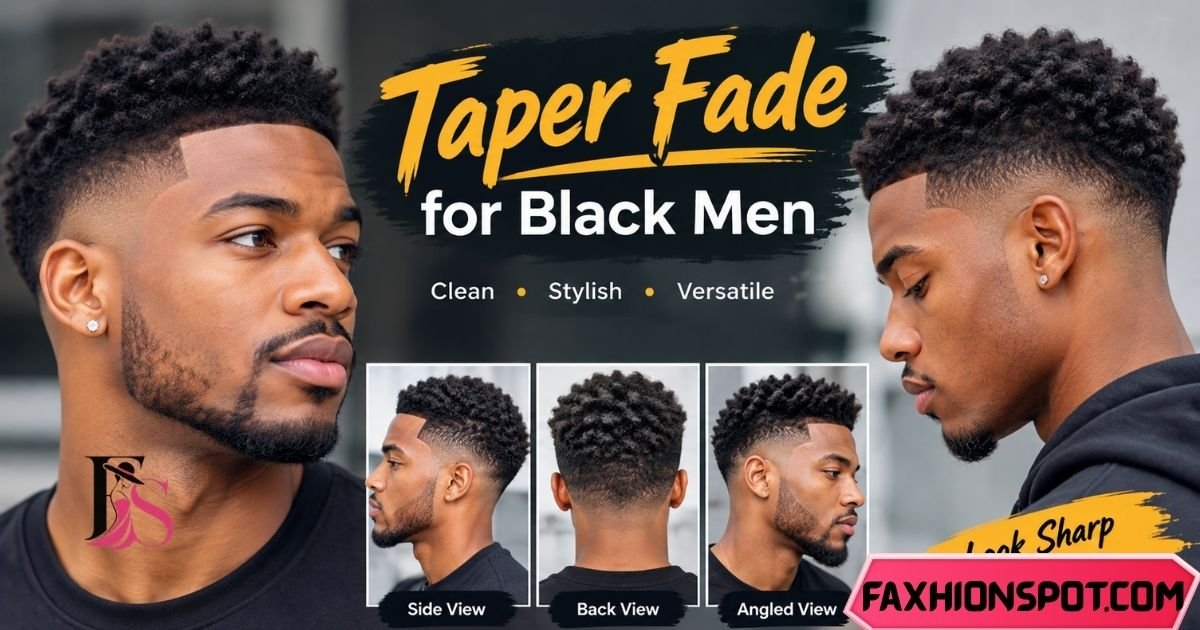
A clean taper is one of the most versatile ways for Black men to shape natural hair while keeping the sides, temples, and neckline neat.
The biggest advantage is flexibility. You can keep plenty of length on top while using a controlled blend around the perimeter to create a sharper silhouette.
Whether you want a professional haircut or a more expressive street-style look, the right taper depends on your hair texture, face shape, lifestyle, and preferred level of maintenance.
What Is a Taper Fade for Black Men?
A taper fade gradually shortens the hair around selected areas such as the temples, sideburns, behind the ears, and neckline. Unlike a full fade, it generally leaves more of the natural hair intact on the sides and back.
That makes it particularly useful for textured hair. The natural density and curl pattern remain visible while the perimeter receives a clean, graduated finish. A sharp line-up can then define the forehead and complete the haircut.
The height of the taper changes the overall appearance:
| Style | Fade position | Overall look |
| Low taper | Near ears and neckline | Subtle and professional |
| Mid taper | Around the middle of the sides | Balanced and versatile |
| High taper | Higher around temples | Bold and noticeable |
| Temple fade | Focused around temples | Sharp and modern |
| Drop taper | Curves lower behind the ear | Contoured and distinctive |
25 Best Taper Fade Haircuts for Black Men in 2026
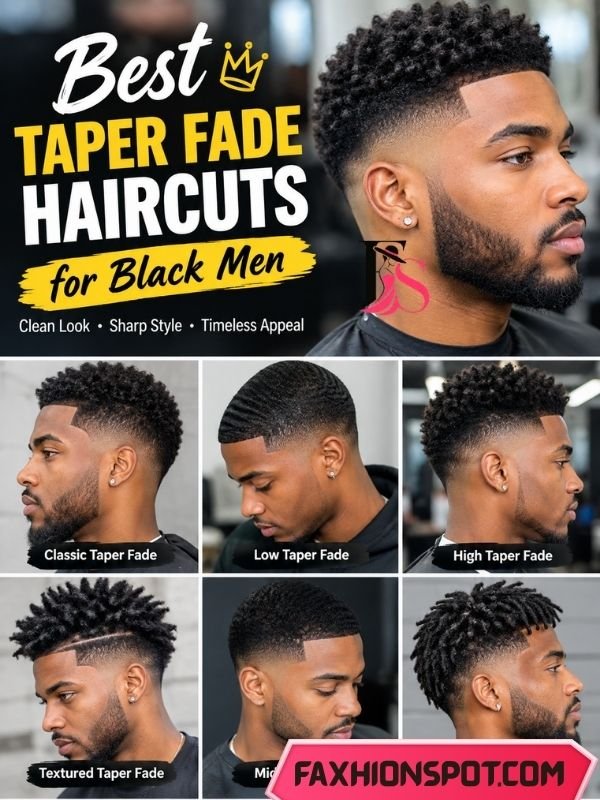
1. Low Taper Fade
The low taper is the safest starting point if you want a clean haircut without sacrificing much length. The blend stays close to the ears and neckline, allowing waves, curls, coils, or an afro to remain the focus.
2. High Taper Fade
A high taper creates more contrast because the shortened area begins higher around the temples. It works especially well with longer coils, textured tops, waves, twists, and braids.
3. Temple Fade (Temp Fade)
A temp fade concentrates the blend around the temples. It is ideal when you want a crisp outline without heavily reducing the hair around the back of the head.
4. Afro Taper Fade
An afro taper combines a rounded natural top with neatly tapered edges. It preserves volume while giving the haircut a cleaner shape and more defined profile.
5. Curly Taper Fade
For naturally curly hair, keep enough length on top to show the curl pattern. A light curl cream can enhance definition without making the hair look heavy.
6. Taper Fade with Beard
Connecting the sideburn area into a beard creates a seamless transition from haircut to facial hair. Ask your barber to blend the beard rather than creating a hard visual break.
7. Drop Taper Fade
A drop taper follows the natural curve of the head and dips lower behind the ears. This creates a more sculpted appearance and can complement fuller hairstyles.
8. Taper Fade with Braids
Braids and cornrows pair naturally with a clean perimeter. A tapered neckline and temples can make intricate braided styles appear more structured.
9. Quiff with Taper Fade
A textured quiff adds height at the front while the taper keeps the sides controlled. It is a good option for men who want a contemporary silhouette.
10. 360 Waves with a Taper
Waves look especially sharp when the edges are freshly tapered. Keep your brushing routine consistent and avoid applying excessive product near the hairline.
11. Taper with Sponge Coils
Sponge coils add texture and movement to short natural hair. The taper creates contrast around the perimeter without taking away the character of the curls.
12. Taper with Twists
Two-strand twists, mini twists, or short rope twists can be paired with a clean taper. This combination gives you texture on top and definition around the edges.
13. Taper with Locs
A tapered neckline and temples can make locs look more intentional. The best height depends on the thickness and length of your locs.
14. Taper with Line-Up
A line-up squares or sharpens the front hairline and temples. It is one of the easiest ways to make a simple haircut look freshly finished.
15. Taper with Hard Part
A shaved or clipped part creates a strong visual division. Keep the rest of the haircut relatively simple so the part remains the focal point.
16. Taper with Short Afro
A short afro provides natural volume, while the taper cleans up the perimeter. This is a low-fuss style that still has plenty of personality.
17. Taper with Buzz Cut
A short buzz cut and taper combination is easy to style and emphasizes the shape of the head. Add a clean edge-up for a sharper finish.
18. Taper with High Top
The high top brings a classic shape into a modern setting. A controlled taper around the temples and neckline prevents the overall style from looking bulky.
19. Taper with Freeform Coils
Freeform coils offer a relaxed appearance. A subtle taper gives the hairstyle structure without making the natural texture look overly controlled.
20. Taper with Skin Detail
A very close finish at the shortest point creates additional contrast. This option needs more frequent touch-ups because new growth becomes visible quickly.
21. Taper with Dyed Tips
Color on the ends can make curls, coils, or an afro stand out. Keep the taper relatively understated if you want the color to remain the main feature.
22. Taper with Caesar Cut
A short Caesar combines a forward-facing textured top with clean tapered edges. It is practical for men who prefer a short haircut.
23. Taper with Textured Crop
A textured crop uses controlled length and movement on top. The taper keeps the sides tidy while allowing the top to remain natural.
24. Taper with Beard Fade
Matching the haircut and beard creates a continuous frame around the face. This is especially effective when the beard is medium or full.
25. Classic Tapered Natural Hair
Sometimes the best option is the simplest. Keep your natural texture on top, clean the temples and neckline, and use a subtle edge-up for a polished finish.
Taper Fade Ideas by Hair Texture
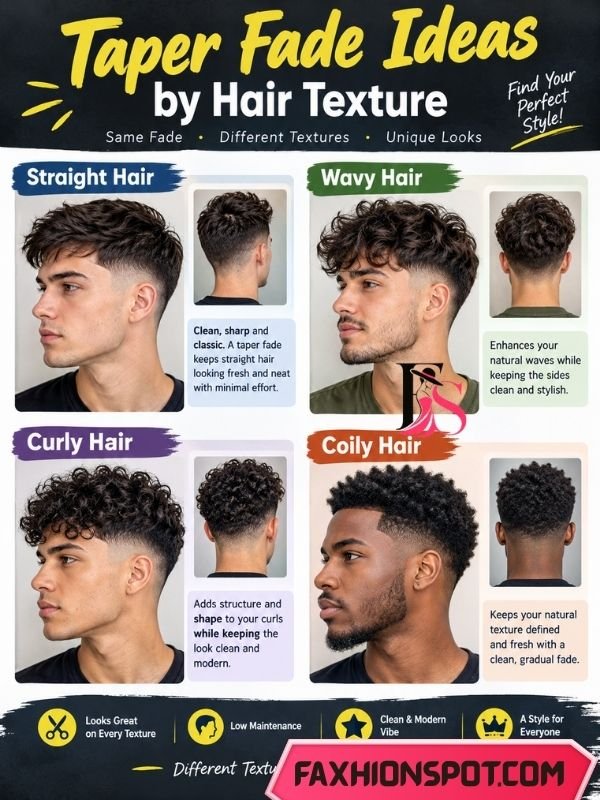
Hair texture should influence both the taper height and the amount of length you leave on top. Current hairstyle guides commonly organize styles around coils, curls, waves, afros, locs, twists, and braids rather than treating every texture the same.
Best Fade Types for Different Hair Textures
| Hair texture or style | Recommended taper | Why it works |
| 3C curls | Low or mid | Keeps curl definition |
| 4A coils | Low or mid | Preserves natural volume |
| 4B coils | Low or mid | Creates clean contrast |
| 4C coils | Low taper | Maintains density and shape |
| Waves | Low taper | Frames the wave pattern |
| Afro | Low or mid | Controls the perimeter |
| Twists | Low or drop | Keeps the top dominant |
| Locs | Low or temple | Cleans the edges |
| Braids | Low or high | Defines the braided silhouette |
The key is not simply choosing a fade based on curl classification. Density, shrinkage, hairline shape, and the hairstyle you plan to wear matter too.
Which Taper Fade Fits Your Face Shape?
Oval: Almost any taper works. Choose the height according to your preferred level of contrast.
Round: A higher taper with additional height on top can create a longer-looking silhouette.
Square: A structured low or mid taper can emphasize naturally strong facial angles.
Oblong: Keep some fullness around the sides and avoid excessive height on top.
Heart-shaped: A moderate taper with textured volume can help balance a narrower chin.
Your barber should also consider your natural hairline, temple shape, and head profile before choosing the exact blend.
How to Ask Your Barber for a Taper Fade
Do not simply say, “Give me a taper.” That leaves too much room for interpretation. Explain the height, shortest point, top length, hairline, and neckline you want.
A useful barber request is:
“Keep the top at its current length. I want a low taper around the temples and neckline, a natural blend, and a clean line-up. Keep the fade from going too high.”
If you want more contrast, specify a high taper. If you prefer a softer finish, ask for a low taper with no aggressive skin removal.
Bringing a reference photo is also helpful because barbers may interpret terms such as “high taper” differently.
Pro Tips from U.S. Barbers
- Show a front and side reference photo.
- Tell the barber exactly how high you want the blend.
- Explain whether you want a skin finish or visible hair at the shortest point.
- Mention how much length you want to keep on top.
- Ask for a natural or sharp neckline.
- Discuss your beard before the haircut starts.
- Tell the barber about previous irritation or sensitivity around the hairline.
How to Maintain a Taper Fade
A taper looks best when the haircut and the hair itself are both maintained. Current guides commonly recommend refreshing the cut approximately every two to three weeks, although growth rate and desired sharpness vary.
1. Visit the Barber Regularly
For a consistently crisp appearance, schedule a cleanup every two to three weeks. You can wait longer if you prefer a softer, grown-out appearance.
2. Use Quality Hair Products
Choose products according to your texture. Curl creams and moisturizing products work well for dry coils and curls, while lighter styling products may suit waves or shorter cuts.
Cantu’s Moisturizing Curl Activator Cream, for example, is designed to moisturize and define curls and coils.
As I Am DoubleButter Cream is another option for dry textured hair; the manufacturer describes it as a moisturizing styling cream designed to improve softness, manageability, and moisture retention.
3. Protect Your Hair at Night
A satin or silk durag, bonnet, or pillowcase can reduce friction while you sleep. This is especially useful for waves, curls, and other styles where maintaining definition matters.
4. Adjust Your Routine by Season
Cold, dry weather can increase the need for moisture, while hot and humid conditions may require lighter products. Avoid automatically using more product when your hair feels dry; focus on a consistent cleansing and moisturizing routine.
How Much Does a Taper Fade Cost in the United States?
Prices vary substantially by city, barber experience, shop type, and add-ons. A current 2026 U.S. price index based on published barbershop menus reports a typical $25–$50 range for fades and tapers, with a median around $40.
Other current U.S. menu samples show fade services ranging from about $30 to $75, particularly when premium shops or detailed services are involved.
| Service level | Approximate price |
| Basic neighborhood barber | $25–$40 |
| Experienced barber | $40–$60 |
| Premium urban shop | $60–$75+ |
| Haircut + beard | Often higher |
| Designs or detailed work | Usually extra |
Always confirm the final price before the service, particularly if you want a beard blend, razor line-up, design, or other add-on.
Best Hair Products for Black Men’s Taper Fades
Product choice should support the hair rather than simply making the haircut look shiny. For textured hair, moisture, curl definition, manageability, and controlled hold are usually more useful than heavy buildup.
Recommended Products
Cantu Moisturizing Curl Activator Cream: Useful for curls and coils that need moisture and definition.
As I Am DoubleButter Cream: A richer option for dry natural hair that needs additional softness and moisture retention.
Light styling pomade: Useful for controlled shine, short hairstyles, and defining a line-up without saturating the hair.
Satin durag or bonnet: Helps reduce overnight friction and can protect defined styles.
Lightweight leave-in conditioner: A practical option for maintaining moisture between wash days.
Celebrity-Inspired Taper Fade Haircuts
Celebrity grooming trends often demonstrate how adaptable the style can be. Instead of copying a celebrity haircut exactly, use the reference to identify the elements you like: taper height, top length, curls, beard shape, or line-up.
Modern Style Inspirations
- Short textured top + low taper: Clean and understated.
- Curls + temple taper: Contemporary and youthful.
- Afro + tapered neckline: Classic with a modern edge.
- Braids + high taper: High contrast and fashion-forward.
- Waves + low taper: Sharp without removing too much hair.
- Locs + temple taper: Keeps long hair visually organized.
Click Here To Read Another Topic
Common Taper Fade Mistakes
The most common problem is asking for a style without explaining how much hair should remain. A photo can prevent a mismatch between your expectations and the barber’s interpretation.
Do Not Make These Errors
- Choosing the wrong height: A high taper can remove more visual weight than expected.
- Ignoring your face shape: The haircut should complement your proportions.
- Overdoing the line-up: Extremely sharp edging may not suit every hairline.
- Using too much product: Heavy buildup can make textured hair look dull or greasy.
- Waiting too long between cuts: A precise taper eventually loses its shape.
- Copying someone else’s haircut exactly: Hair density, head shape, and texture are different.
- Ignoring the neckline: A messy neckline can make an otherwise excellent haircut look unfinished.
Conclusion
The best taper is not necessarily the highest, sharpest, or most dramatic option. It is the version that works with your natural texture, face shape, hairline, lifestyle, and preferred maintenance schedule.
Low, high, temple, drop, afro, curly, braided, and beard combinations all offer different visual effects.