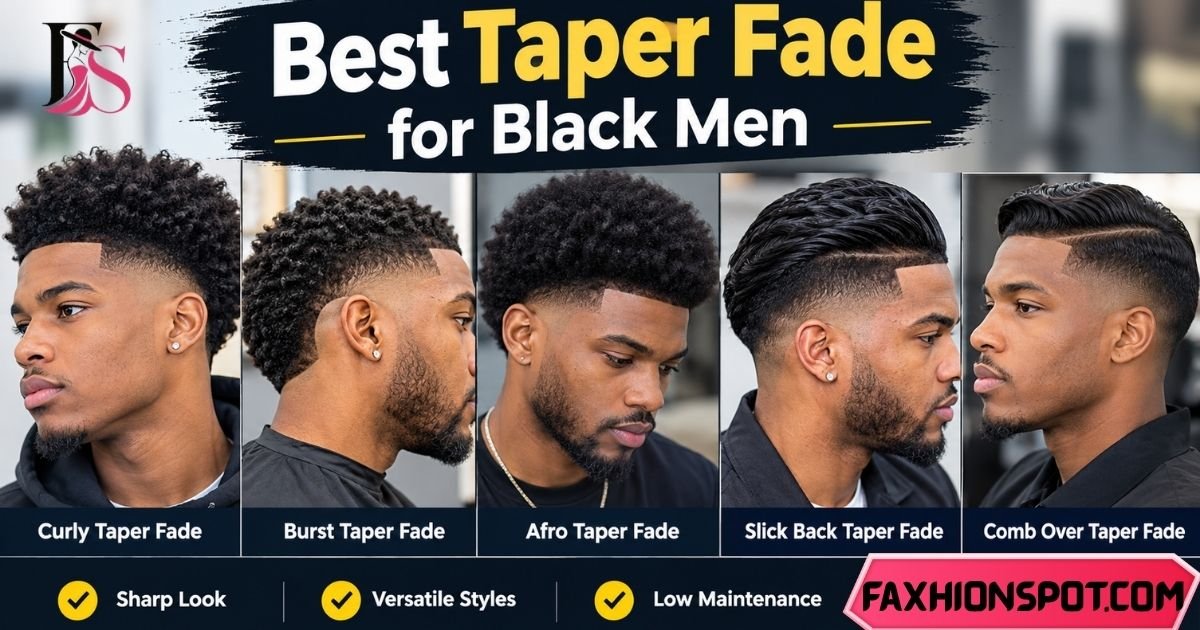
The best high taper fade for Black men combines sharp barbering with the natural texture that makes each haircut unique.
In 2026, the style continues to evolve through curls, coils, waves, afros, slick backs, comb overs, and modern burst variations.
The key is not simply how short the sides are. It is where the taper begins, how smoothly it blends, and how well it complements the hair on top.
Trending High Taper Fade Looks for Black Men
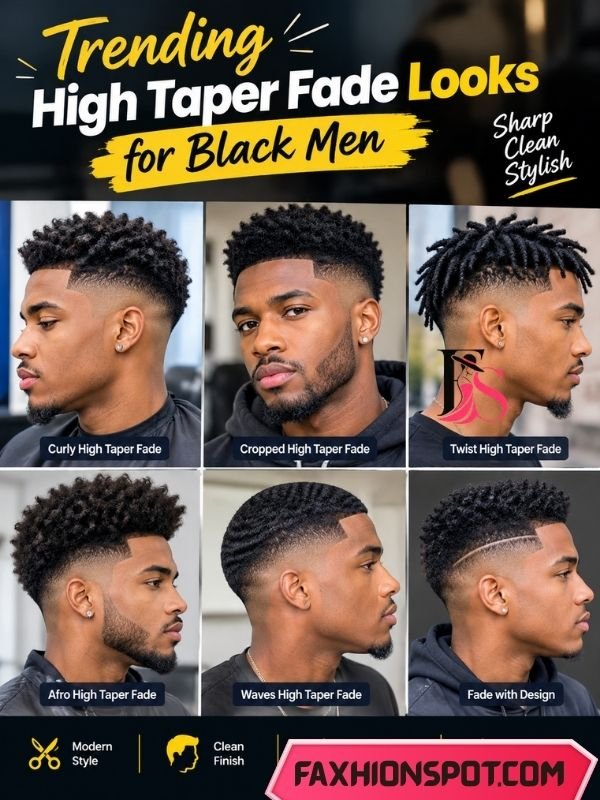
Modern barbers are pairing high tapers with almost every popular Black men’s hairstyle. Curls, waves, coils, afros, locs, and textured tops all create different results even when the taper itself is similar.
The biggest trend in 2026 is customization. Instead of requesting only a haircut name, clients are increasingly specifying the fade height, top length, hairline, neckline, and desired finish. That approach can make communication with your barber much easier.
Curly Taper Fade
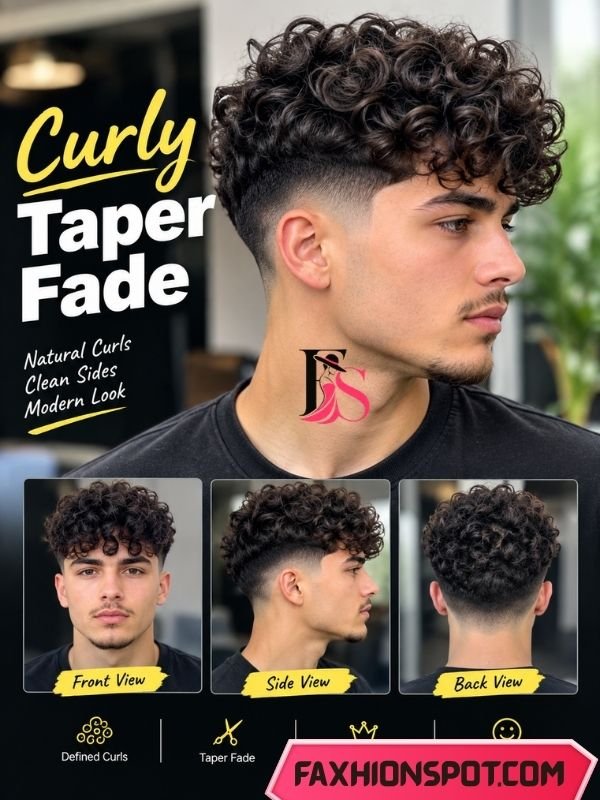
A curly taper fade lets natural curls become the main feature while the temples and neckline receive a clean, controlled taper. It works particularly well when the curls have enough length to create definition and movement.
For a sharper finish, ask your barber for a clean line-up around the forehead and temples. A curl cream or lightweight leave-in product can help reduce dryness and improve curl definition.
Best for: Naturally curly, coily, and tightly textured hair.
Style tip: Keep the top moderately long so the curls remain visible instead of being cut too close.
Burst Taper Fade
The burst taper fade creates a rounded fade around the ear while keeping more hair toward the back and top. It gives a distinctive silhouette and works especially well with textured tops, mohawks, curls, and short natural styles.
This version is a strong choice for men who want something more noticeable than a traditional taper without removing too much length from the entire side.
Best for: Curly tops, mohawks, textured crops, and creative looks.
Style tip: Ask for a symmetrical burst around both ears and keep the neckline clean.
Afro Taper Fade
An afro taper fade combines natural volume with controlled sides. The contrast between the fuller top and tapered temples creates a balanced, masculine shape without taking away the character of an afro.
The top can be rounded, squared, short, or allowed to grow naturally. Your barber can also add a line-up for extra definition.
Best for: Short to medium afros and dense coily hair.
Style tip: Tell your barber how much natural volume you want to preserve before the clippers touch the sides.
Slick Back Taper Fade
The slick back variation gives the haircut a more sophisticated appearance. Longer hair is brushed or styled backward while the tapered sides provide contrast.
This look can be achieved with naturally longer hair or by growing the top over several weeks. A medium-hold styling product usually provides enough control without making textured hair appear stiff.
Best for: Medium-length hair and men who want a polished appearance.
Style tip: Maintain moisture underneath the styling product to prevent dryness.
Comb Over Taper Fade
A comb over taper fade gives natural texture a more structured direction. The top is parted or brushed to one side while the taper keeps the temples and neckline neat.
It can look professional enough for an office while still feeling modern. A subtle hard part can make the haircut more defined, although it is optional.
Best for: Short to medium textured hair.
Style tip: Keep the part natural unless you specifically want a shaved hard part.
Messy Taper Fade
The messy version takes a relaxed approach. Instead of creating a perfectly shaped top, the hair is allowed to retain movement and texture.
For Black hair, this can mean emphasizing coils, curls, sponge texture, or a naturally uneven top. The clean taper provides enough structure to prevent the overall style from looking unkempt.
Best for: Men who prefer low-effort styling.
Style tip: Use a small amount of curl cream or texture product rather than overloading the hair.
Quiff Taper Fade
A quiff taper fade adds height at the front while keeping the sides controlled. Although quiffs are often associated with straight or wavy hair, textured hair can create a fuller and more distinctive version.
The top needs sufficient length to lift upward and slightly backward. Your barber should shape the front without making it too thin.
Best for: Medium-length curls, coils, waves, and textured hair.
Style tip: Blow-drying or controlled brushing can help create additional height.
Skin Taper Fade
A skin taper fade brings the shortest section down to bare skin around selected areas, creating maximum contrast. It is one of the cleanest choices and can make a line-up appear especially crisp.
However, skin-level cutting requires more frequent maintenance because regrowth becomes noticeable quickly. Current barber guides commonly distinguish the height of the taper from its closeness, meaning “high” and “skin” describe two different aspects of the cut.
Best for: Men who like crisp, high-contrast grooming.
Style tip: If you experience irritation or bumps, discuss a guarded finish with your barber.
Drop Taper Fade
A drop taper follows the shape of the head and drops lower toward the back. This creates a curved silhouette that can complement the natural shape of the skull.
It is particularly useful when you want a high-looking taper around the temples without making the back appear excessively short.
Best for: Curly, coily, wavy, and textured hairstyles.
Style tip: Ask your barber to show you the intended neckline shape before finishing the cut.
What is High Taper Fade Haircuts for Black Men?
A high taper fade is a haircut where the shortest blended section begins relatively high around the temples and sides while more length remains on top. Unlike a full high fade, a taper traditionally concentrates the shortening around specific areas such as the temples and neckline, allowing more side and top weight to remain.
That distinction is important. A client asking for a “high taper” may not want the entire side of the head reduced dramatically. Barber terminology can also vary, so showing a reference photo is often the safest way to communicate the desired result.
High Taper vs. High Fade
| Feature | High Taper | High Fade |
| Fade position | High around temples/neckline | High across the sides |
| Hair on sides | More weight remains | More hair is removed |
| Top | Usually preserved | Usually preserved |
| Overall effect | Clean and versatile | Bold and dramatic |
| Texture options | Curls, waves, afro, twists, locs | Curls, crops, waves, short tops |
| Maintenance | Moderate to high | Moderate to high |
The right option depends on how much contrast you want. A taper can preserve more of your natural shape, while a high fade produces a stronger transition.
Why It Works So Well With Black Hair
Black men’s hair includes a wide range of textures, from waves and loose curls to tight coils. A well-executed taper frames that texture instead of hiding it.
The haircut also provides flexibility. The same tapered foundation can support:
- 360 waves
- Sponge curls
- Short coils
- Natural afro texture
- Twists
- Locs
- Braids
- Textured crops
- Slicked-back styles
- Curly tops
Several current style guides specifically highlight curls, waves, coils, afros, twists, and locs as strong pairings for tapered cuts.
How to Ask Your Barber for the Cut
Instead of saying only, “Give me a high taper,” describe the important details.
Use this simple checklist:
- Taper height: Explain how high you want the taper around the temple.
- Shortest finish: Choose skin, shadow, or a guard length.
- Top length: Tell your barber whether you want curls, waves, an afro, or another style.
- Line-up: Decide whether you want a sharp or natural hairline.
- Neckline: Ask for a matching taper, natural finish, or defined shape.
- Beard: Tell the barber whether the taper should connect with your beard.
Most importantly, bring a photo showing the front, side, and back if possible. Current barber-focused guides repeatedly recommend photos because terminology can differ from one shop to another.
Choosing the Right Taper for Your Face Shape
A haircut should work with your head and face proportions.
Round face: Extra height on top can visually lengthen the face. A structured top with a clean taper is often effective.
Oval face: Most taper variations work well because the proportions are naturally balanced.
Square face: A strong line-up and textured top can emphasize the naturally defined jawline.
Long face: Avoid excessive height if you do not want to make the face appear longer.
Heart-shaped face: Keeping moderate volume on top can help balance a narrower chin.
Remember that face shape is only one factor. Hair density, curl pattern, growth direction, and personal style can matter just as much.
Maintenance Tips
A fresh taper looks best when the details are maintained between full haircuts. How quickly it needs attention depends on hair growth and how sharp you want the edges.
A practical routine includes:
- Refreshing the line-up when the edges become blurry.
- Moisturizing textured hair regularly.
- Using a curl product when definition is desired.
- Brushing waves consistently if you wear them.
- Protecting curls and coils at night.
- Avoiding excessive heat and harsh products.
- Keeping the neckline clean.
- Scheduling regular barber visits.
Some current guides suggest roughly two- to three-week cycles for maintaining crisp fades, although individual growth rates vary.
The Evolution of High Taper Fade Haircuts for Black Men
The modern high taper is not a completely new invention. It developed from a long tradition of Black barbering in which clean edges, shaped natural hair, fades, and creative designs became important parts of personal style.
During the 1980s and 1990s, sharper fades and highly defined hairstyles became strongly associated with contemporary men’s grooming and urban fashion. Later, the rise of social media allowed barbers to share detailed transformations with audiences around the world.
Today’s version is more customizable than ever. Instead of one standard appearance, clients can combine the taper with waves, curls, afros, twists, locs, braids, and longer textured styles. Modern barbering also makes it possible to customize the fade’s height, finish, line-up, and neckline.
Current hairstyle resources show the same trend: the haircut is increasingly organized around hair texture and personal styling goals, rather than one universal template.
That flexibility explains why the style remains popular in 2026. A young man can wear a short curly taper, while someone with longer locs can use the same basic concept around the temples and neckline.
Click Here To Read Another Topic
Quick Comparison of Popular Styles
| Style | Main Feature | Maintenance | Best For |
| Curly taper | Defined natural curls | Medium | Curly/coily hair |
| Burst taper | Rounded ear fade | Medium | Creative textures |
| Afro taper | Full natural top | Medium | Dense coils |
| Slick back | Brushed-back top | Medium | Longer hair |
| Comb over | Side-directed top | Medium | Structured looks |
| Messy taper | Relaxed texture | Low-Medium | Casual styling |
| Quiff taper | Height at front | Medium | Medium-length hair |
| Skin taper | Bare-skin finish | High | Crisp contrast |
| Drop taper | Curved back transition | Medium | Textured tops |
Conclusion
The best high taper fade for Black men is ultimately the one that works with your natural texture, face shape, lifestyle, and preferred amount of maintenance.
In 2026, there is no need to settle for a one-size-fits-all haircut. Curly tops, afros, waves, slick backs, comb overs, quiffs, burst tapers, and skin finishes all offer different ways to personalize the same clean foundation.