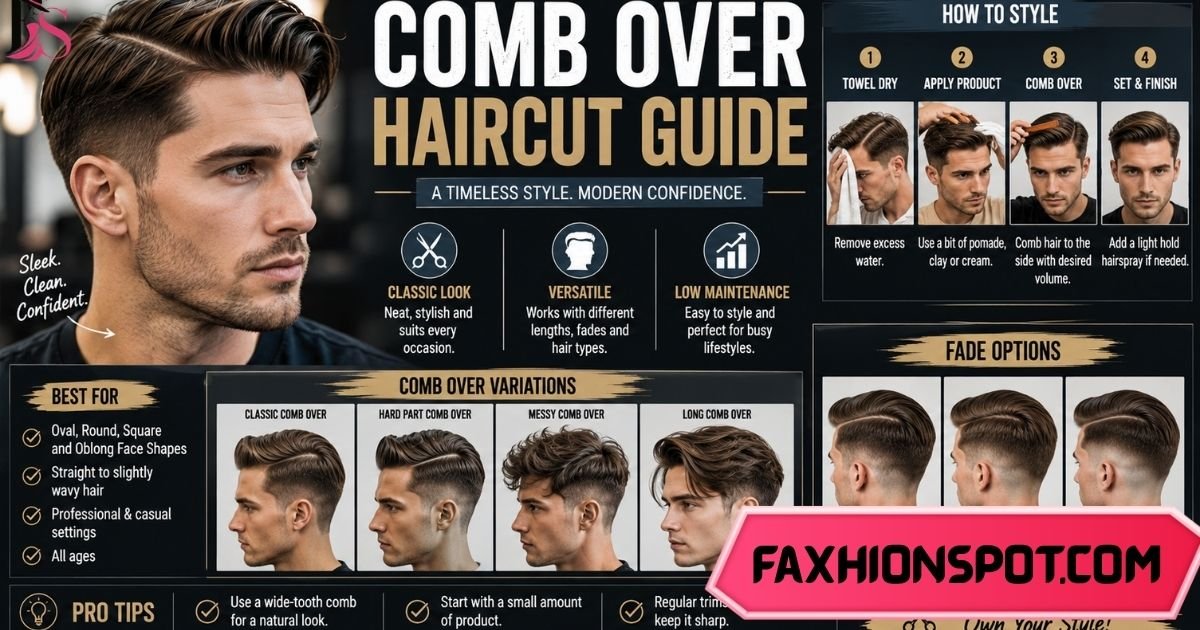
If you want a haircut that looks sharp at the office and still turns heads on a night out, the comb over is hard to beat. It has been a go-to men’s hairstyle for decades, and in 2026 it’s more versatile than ever.
Barbers now pair the classic comb over with skin fades, tapers, undercuts, and textured tops, so there’s a version for every face shape, hair type, and lifestyle.
This guide breaks down the most popular comb over hairstyles, explains what a comb over actually is, walks you through styling it at home, and looks at how the cut has evolved over the years.
Popular Men’s Comb Over Hairstyles
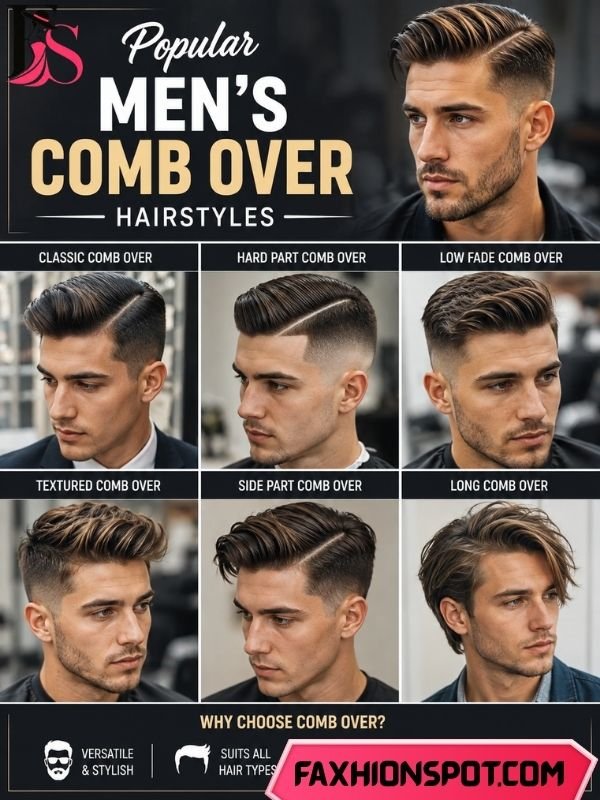
The comb over isn’t one single haircut — it’s a family of styles that share the same basic idea: hair on top is grown longer, parted to one side, and combed across the head. What changes from style to style is the fade, the taper, the texture, and the length. Below are the comb over hairstyles men are asking their barbers for right now.
Mid Fade Comb Over
The mid fade comb over blends the sides at ear level, striking a balance between a low-key look and a bold one. It suits nearly every hair type and keeps enough length on top for movement and shine.
Taper Comb Over Fade
This version tapers the sides gradually instead of shaving to the skin, giving a softer transition. It’s a favorite for men who want a fade without looking too severe for a workplace setting.
Modern Comb Over
The modern comb over swaps out the old-school pomade finish for a matte texture and a more natural, undone part. It works especially well on wavy or thick hair.
Textured Comb Over
Instead of a slicked, glassy finish, the textured comb over uses a clay or paste product to create separation and movement. It’s a relaxed, low-maintenance take on the classic.
Comb Over Fade
The comb over fade is the most requested variation in most barbershops today. It pairs the traditional side-swept top with closely faded sides, creating sharp contrast that flatters almost any face shape.
Long Comb Over
For men who want maximum styling flexibility, the long comb over keeps significant length on top. It’s ideal for formal occasions and also does a great job of covering a thinning crown or bald spot.
Short Comb Over
The short comb over is the easiest version to maintain day to day. Sides are trimmed close and the top is kept short enough that it needs little product or daily styling effort.
Comb Over Taper Fade
This combines a subtle taper with a fade for a cleaner, more gradual blend between the long top and the short sides. It reads as polished without looking overly dramatic.
Comb Over Undercut
The comb over undercut features a hard, high-contrast line between the long top and the closely shaved sides. It’s a bolder, more fashion-forward spin on the traditional comb over haircut.
Tapered Comb Over
A tapered comb over keeps the sides gradually shorter toward the neckline without the sharp lines of a fade. It’s a subtle, professional-friendly option.
High Volume Comb Over with Mid Skin Fade
This style leans into thickness on top, using a blow-dry and light product to build height and volume, then finishes with a mid skin fade for contrast.
Handsome Low Taper Comb Over
The low taper comb over keeps fading minimal and close to the hairline, which makes it a subtle, versatile choice for conservative workplaces.
Comb Over with Medium Fade
A medium fade sits between low and high, giving noticeable contrast without being as bold as a high or skin fade. It’s a well-rounded, everyday-friendly comb over.
Combed Over Fringe with Taper Fade
Here the fringe is left slightly longer and swept forward before being combed to the side, then paired with a tapered fade for a youthful, on-trend finish.
Professional Comb Over with Beard
Pairing a neat comb over with a well-groomed beard creates a polished, masculine look that works equally well in the boardroom or on a night out.
Long Comb Over with Tapered Sides
This variation keeps generous length on top while tapering the sides gradually, offering versatility for those who like to switch up their part or styling direction.
Classy Comb Over
The classy comb over sticks close to the traditional formula: neatly parted, combed flat, and finished with a shine-enhancing pomade for a timeless, formal look.
Cool Comb Over with Mid Fade
A slightly more relaxed take on the mid fade comb over, this version uses looser styling and a matte product for an easygoing, everyday vibe.
Hard Comb Over with Fade
Adding a hard part — a thin shaved line separating the top from the fade — gives this comb over an extra edge and a distinct, barbershop-fresh look.
Drop Fade Comb Over
The drop fade curves downward behind the ear instead of staying level, adding a rounded, contemporary shape that pairs nicely with a swept-over top.
Military Comb Over Fade
Sharper and more conservative, this style keeps the sides very short and the top trimmed to a manageable length, making it a practical choice for structured environments.
Low Taper Comb Over
Similar to the low taper fade but softer, this style gently shortens the sides without heavy contrast, keeping things understated.
Short Comb Over with Low Drop Fade
Combining short length on top with a subtle drop fade, this cut is clean, low-maintenance, and works well for rounder face shapes.
Long Comb Over Fade
This pairs a longer top — enough for a natural wave or sweep — with a fade on the sides for maximum contrast and styling versatility.
Edgy High Comb Over Fade with Hard Part
A high fade combined with a hard part creates one of the boldest comb over variations on this list, best suited to men who want a statement haircut.
Short Comb Over Taper Fade
This wraps up the list with a low-maintenance option: short hair on top, a light taper fade on the sides, and minimal daily styling required.
| Style | Best For | Maintenance Level |
| Mid Fade Comb Over | Most face shapes and hair types | Medium |
| Taper Comb Over Fade | Office and formal settings | Low-Medium |
| Textured Comb Over | Wavy or thick hair | Low |
| Comb Over Undercut | Bold, fashion-forward looks | Medium-High |
| Long Comb Over | Covering thinning hair or bald spots | High |
| Short Comb Over | Busy schedules, easy upkeep | Low |
| Comb Over with Beard | Professional and casual dual-use | Medium |
| Drop Fade Comb Over | Rounder face shapes | Medium |
What Is Comb Over?
A comb over haircut is a men’s hairstyle where the hair on top of the head is grown longer, parted to one side, and combed laterally across the scalp. The sides and back are typically kept shorter — often tapered or faded — which creates contrast between the length on top and the closeness underneath.
Historically, the term “comb over” was associated with men who used longer strands of hair to cover a bald or thinning patch. That older meaning still exists, but today the comb over has been reclaimed as a fashionable, deliberate style choice rather than a way to hide hair loss. Modern comb overs are worn by men with full heads of hair just as often as by those managing a receding hairline.
What makes the comb over so enduring is its flexibility. It works with straight, wavy, thick, and even curly hair. It suits oval, square, and round face shapes. And because the fade or taper on the sides can be adjusted from subtle to dramatic, the same basic haircut can look completely different depending on how it’s finished.
How To Style A Comb Over
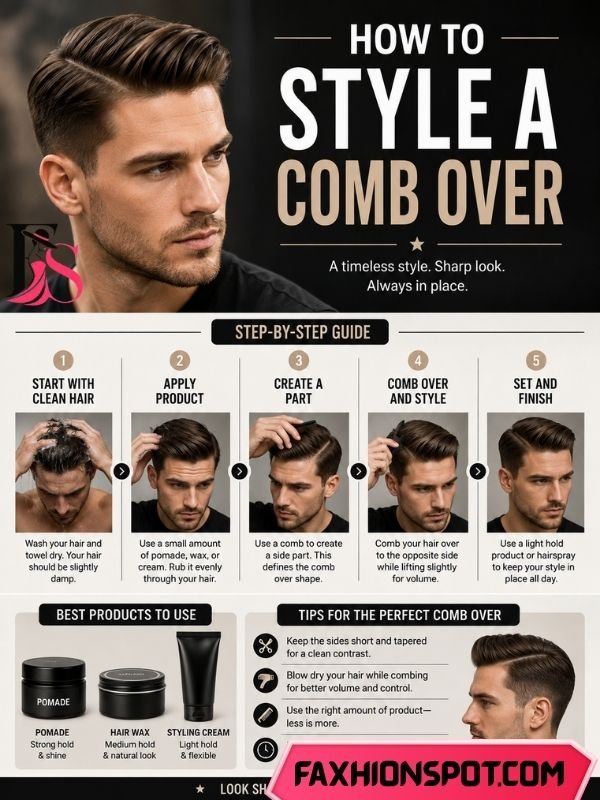
Styling a comb over is simpler than it looks once you understand the basic steps. The key is starting with the right foundation — clean, dry hair — and using the correct amount of product for your hair type.
Here’s an easy way to do it:
- Start with damp or dry hair. If you just washed your hair, towel dry it and let it air dry partway, or blow-dry it before styling. Styling on soaking wet hair makes it harder to control.
- Find your natural part. Use a comb to draw a clean line where you want your part, keeping it close to your natural growth pattern for the most believable result.
- Apply product to your palms. A pea-sized amount of pomade, cream, or paste is usually enough. Rub it evenly between your hands before applying.
- Comb the hair forward first. This helps distribute product evenly through the roots and sets up the direction you’ll be styling into.
- Comb over to the side. Starting at the part, comb the hair across the head in one smooth motion. Work in sections if your hair is thick.
- Blow-dry for extra hold. A quick blast of warm air while combing helps the style set and last longer through the day, especially if you have thick or wavy hair.
- Finish with a light-hold spray if needed. This locks the style in place without making it look stiff or overly shiny.
A few practice runs in front of the mirror and you’ll have this down in under five minutes each morning.
The Evolution of the Comb Over Hairstyle
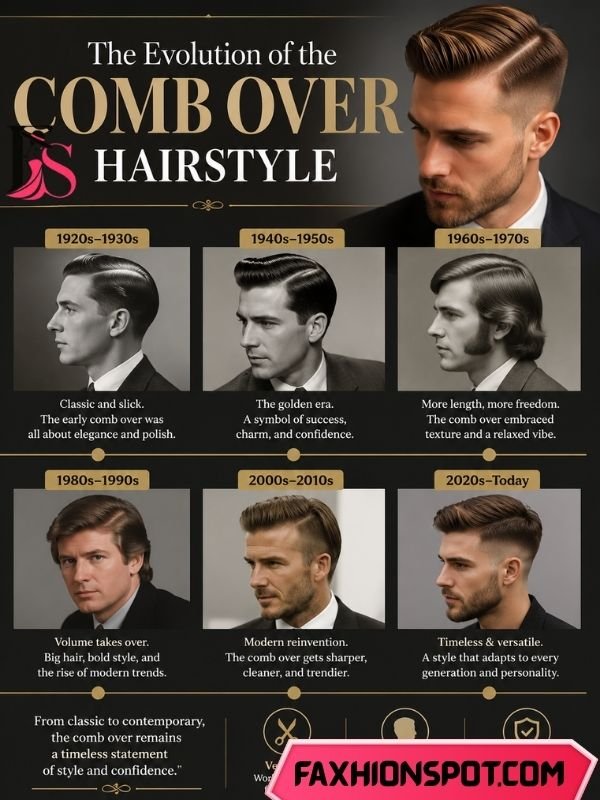
The comb over has one of the longest histories of any men’s hairstyle. Its roots trace back to the early 20th century, when men would grow the hair on one side longer and sweep it across the head — often as a practical way to disguise thinning hair or a receding hairline. By the 1920s and 1930s, this side-swept, pomade-heavy look had also become associated with formal, buttoned-up fashion.
The mid-20th century saw the comb over adopted by businessmen and public figures as a symbol of neatness and professionalism. Slicked with heavy pomade and combed with a hard, defined part, it became a staple of office culture through the 1950s and 1960s.
By the late 20th century, the comb over had picked up a less flattering reputation, largely thanks to exaggerated versions used to conceal significant hair loss — including one particularly famous example that has since become something of a cultural punchline. For a while, the style fell out of fashion with younger men.
That changed in the 2010s. Barbers began pairing the classic comb over with skin fades, undercuts, and hard parts, giving the haircut a fresh, modern identity that had little in common with its dated stereotype. High-fashion runways and celebrity stylists helped push the revival further, and textured, matte finishes replaced the old glassy pomade look for a more natural, everyday-wearable style.
Today’s comb over is defined by variety. It moves easily between a low fade for the office, a high fade for a night out, or a textured, undone finish for a casual weekend look — proof that a century-old haircut can still feel completely current.
Click Here To Read Another Topic
Our Thoughts on the Comb Over Haircut
The comb over earns its long-running popularity because it genuinely works across so many situations. It’s one of the few haircuts that can look equally at home in a corporate meeting and at a wedding reception, simply by adjusting the fade, the part, and the finishing product.
We also appreciate how forgiving it is. Men with fine hair can add volume through a blow-dry and the right product; men with thick or curly hair can lean into a textured, matte finish instead of fighting for a slick look. And for men dealing with a receding hairline, a well-cut comb over with the right fade can genuinely minimize how noticeable it is, without looking like an obvious cover-up.
If there’s one thing to keep in mind, it’s maintenance. A comb over with a skin fade or taper fade needs a trim every two to four weeks to keep the contrast sharp. If you want something lower-maintenance, a short comb over or a soft taper will hold its shape longer between barber visits.
Final Thoughts
The comb over haircut has survived nearly a century of changing trends for a good reason — it adapts. Whether you want a mid fade comb over for everyday wear, a bold comb over undercut to stand out, or a classic, low-maintenance short comb over, there’s a version of this haircut built for your hair type, your face shape, and your lifestyle.
Bring a photo of your favorite style from this guide to your next barber appointment, mention the fade level you want, and be honest about how much daily styling time you’re willing to put in. Get those details right, and the comb over will reward you with one of the most versatile, timeless haircuts a man can wear.
Frequently Asked Questions
Is the comb over still in style in 2026?
Yes, the comb over remains one of the most requested men’s haircuts, especially when paired with a modern fade or taper.
What hair type works best with a comb over?
Straight and wavy hair holds a comb over most easily, but thick and curly hair can work well with a textured, matte finish.
How often do I need a haircut to maintain a comb over fade?
Every two to four weeks, since fades grow out and lose their sharp contrast quickly.
Can a comb over help with a receding hairline?
Yes, a longer top combed to the side can soften the appearance of a receding hairline when cut correctly.
1 thought on “Comb Over Haircut Guide: Styles That Actually Work”