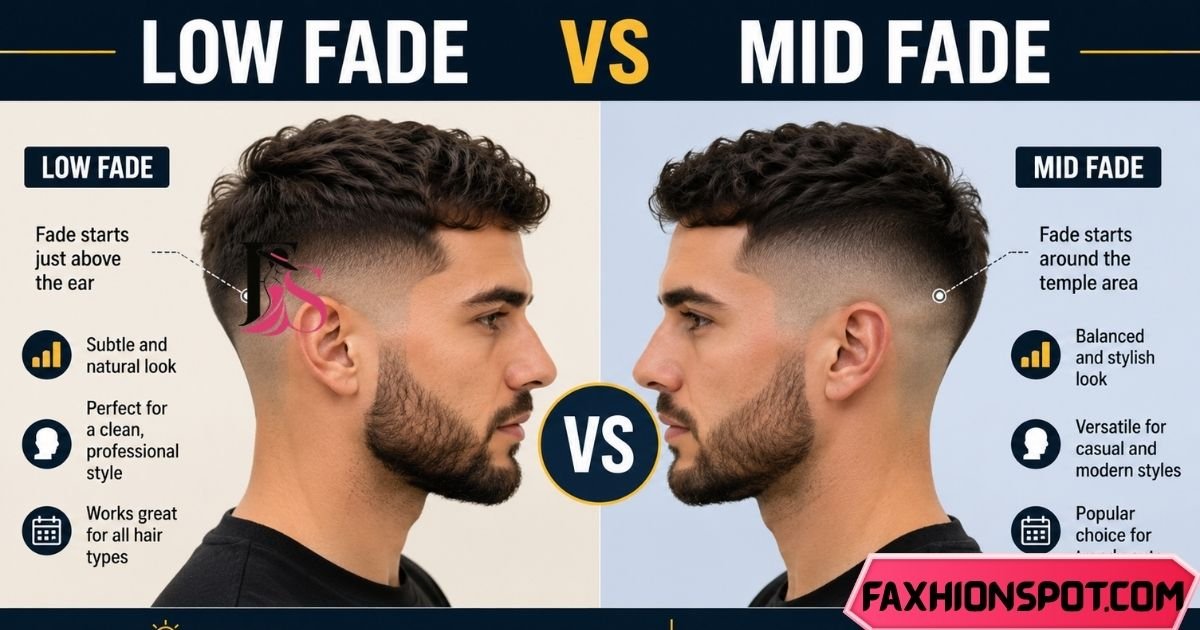
Choosing between a low fade vs mid fade may seem like a small decision, but the placement of your fade can completely change how your face, hair, and overall haircut look.
The answer depends on several factors, including your face shape, hair type, hairstyle, beard, personal style, and willingness to maintain the haircut regularly.
A low fade usually creates a softer and more classic appearance, while a mid fade offers stronger definition and a more modern look.
This guide breaks down everything you need to know before your next barber appointment.
What Is a Low Fade?
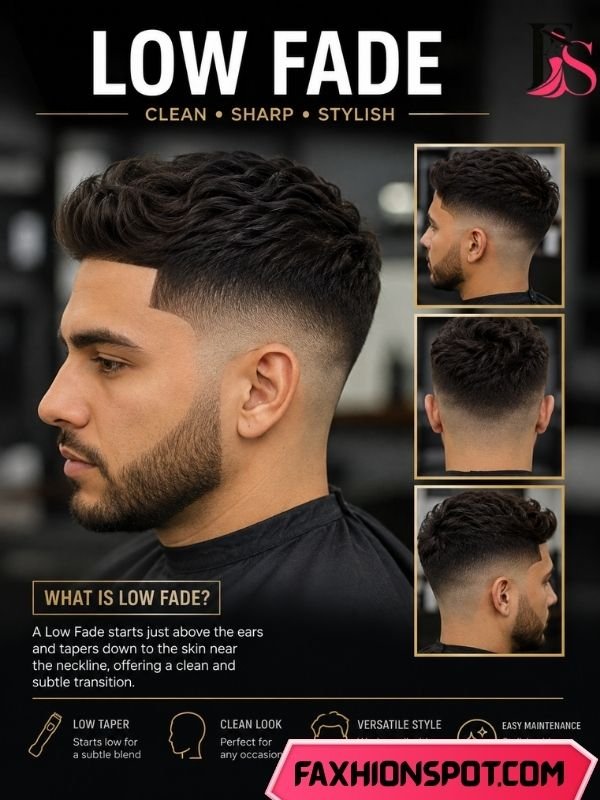
A low fade is a fade haircut that begins low on the sides of the head, usually around the ears and natural hairline. The hair gradually transitions from very short near the bottom into longer hair as it moves upward.
Because the fade stays relatively low, more hair remains on the upper sides of the head. This creates a softer transition and gives the haircut a more natural appearance.
Key characteristics of a low fade
A typical low fade offers:
- A subtle transition between hair lengths
- More hair left around the upper sides
- A clean but understated appearance
- Less dramatic contrast
- A professional and versatile style
The exact look can vary depending on how short the barber takes the bottom section. For example, you can choose a low skin fade, a low taper-style fade, or a softer low fade using longer clipper lengths.
Who should choose a low fade?
A low fade is an excellent choice if you want a haircut that looks sharp without appearing overly aggressive.
It can be particularly suitable for:
- Professional or conservative environments
- Longer and narrower face shapes
- People trying a fade for the first time
- Medium or long hairstyles
- Men who prefer a classic appearance
- Anyone who wants a smoother grow-out period
One of the biggest advantages of this style is versatility. A low fade can work with short, medium, curly, straight, textured, or longer hair.
What Is a Mid Fade?
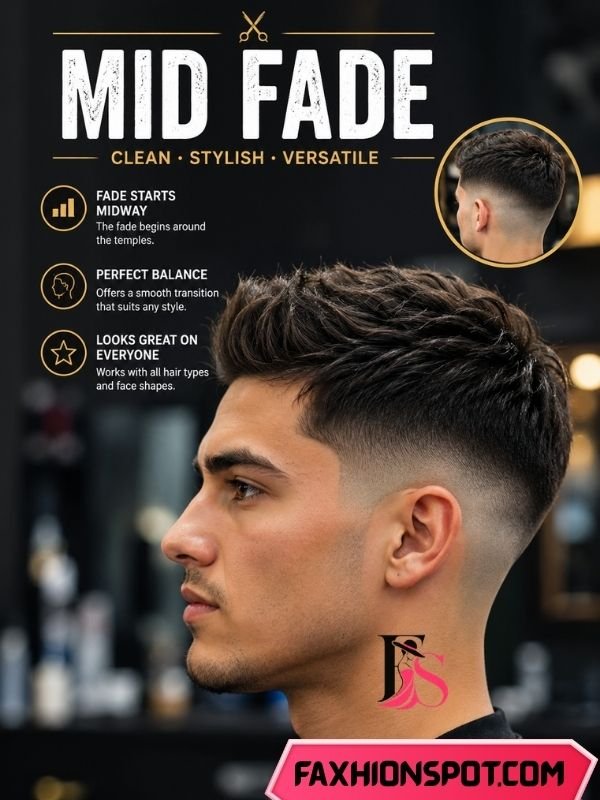
A mid fade starts higher than a low fade, usually around the middle of the sides of the head or near the temple area. It removes more hair from the sides and creates a clearer contrast between the top and bottom sections.
The result is more noticeable than a low fade but generally less dramatic than a high fade.
Key characteristics of a mid fade
A mid fade typically provides:
- More visible contrast
- A sharper overall silhouette
- Less bulk around the sides
- A balanced modern appearance
- Stronger emphasis on the hairstyle on top
Because it sits higher on the head, the mid fade can make the top section of your haircut stand out more.
Who should choose a mid fade?
A mid fade is a strong option for people who want their haircut to look fresh, modern, and more defined.
It often works well for:
- Rounder faces
- Thick or dense hair
- Textured hairstyles
- Curly hairstyles
- Quiffs and pompadours
- Modern short hairstyles
The mid fade is often considered a middle-ground option. It offers more impact than a subtle low fade without going as extreme as a high fade.
Low Fade vs Mid Fade: Side-by-Side Comparison
The easiest way to understand the difference is to compare both styles directly.
| Feature | Low Fade | Mid Fade |
| Fade starting point | Close to the ears and neckline | Around the middle sides or temples |
| Overall appearance | Subtle and classic | Modern and noticeable |
| Contrast | Low to moderate | Moderate to strong |
| Side hair volume | More volume remains | More volume is removed |
| Best for | Understated and professional styles | Sharper and contemporary styles |
| Grow-out appearance | Usually softer | Can lose definition faster |
| Maintenance | Moderate | Moderate to high |
| Face effect | Preserves more visual width | Creates more structure |
| Popular hairstyles | Side part, slick back, longer top | Quiff, crop, textured styles |
| First-time fade choice | Very safe option | Good for a stronger transformation |
The biggest difference: fade height
The main difference is not the blending technique itself. It is where the fade begins.
A low fade keeps the shortest area close to the bottom of the haircut. A mid fade moves that transition upward, exposing more of the sides and creating greater visual contrast.
Even a small change in placement can significantly affect your overall appearance.
Low fade vs mid fade: the visual effect
Think of the low fade as a more natural frame around your face.
The mid fade creates a stronger frame and removes more visual weight from the sides.
That is why the right choice should not be based only on what looks good in a photo. Your own face proportions, hair density, and hairstyle matter.
Which Fade Suits Your Face Shape?
Face shape can be helpful when choosing between these two styles, but it should not be treated as an absolute rule.
Your hairline, head shape, beard, hair density, and styling preferences also matter. Still, face shape provides a useful starting point.
Round face
A mid fade is often a strong choice for round faces.
Removing more volume from the sides can create a cleaner and more structured appearance. When paired with some height or texture on top, it may create the illusion of a longer face.
Good combinations include:
- Mid fade with a quiff
- Mid fade with textured hair
- Mid fade with a pompadour
- Mid fade with a curly top
Avoid creating excessive width on the sides if your goal is to make the face appear more balanced.
Oval face
An oval face is generally flexible, so both options can work well.
Choose a low fade if you prefer:
- A softer appearance
- A classic haircut
- Longer hair on top
Choose a mid fade if you want:
- More contrast
- A sharper silhouette
- A modern style
For oval faces, personal style often matters more than strict face-shape rules.
Square face
Square faces usually have strong jawlines and angular features. Both styles can work, but the final effect is different.
A low fade can keep the overall look balanced and slightly softer.
A mid fade can emphasize the strong structure of the face and create a sharper appearance.
If you want a clean, classic style, choose the low option. If you want your facial structure to stand out more, consider the mid option.
Long or oblong face
A low fade is often the safer choice for longer face shapes.
Because it keeps more visual weight on the sides, it can help prevent the face from appearing even longer.
A very high fade combined with significant height on top can exaggerate facial length. A mid fade can still work, but keeping the hairstyle on top controlled is usually important.
Heart-shaped face
Both styles can work, depending on hair density and the hairstyle.
A low fade often provides a softer transition and keeps more balance around the sides. A mid fade can work if the top hairstyle is not overly wide or exaggerated.
Texture and proportion should guide the final decision.
Diamond face
Diamond-shaped faces often feature prominent cheekbones and a narrower forehead or jawline.
A low fade can preserve more side coverage and create balance. A mid fade can also work well when paired with a hairstyle that adds controlled volume to the top.
Quick face-shape guide
| Face Shape | Better Starting Choice | Why |
| Round | Mid Fade | Adds structure and reduces side bulk |
| Oval | Either | Balanced proportions work with both |
| Square | Either | Depends on whether you want softness or sharpness |
| Long/Oblong | Low Fade | Preserves more visual width |
| Heart | Low or Mid | Depends on hairstyle and proportions |
| Diamond | Low or Mid | Texture and top volume influence the result |
Remember: these are guidelines, not strict rules. A skilled barber should adjust the fade placement to your individual head shape and hairline.
Which One Is Easier to Maintain?
Both hairstyles require regular barber visits if you want the fade to remain sharp.
However, a low fade is usually easier to grow out naturally.
Low fade maintenance
A low fade tends to look softer as the hair grows because the shortest area stays close to the ears and neckline.
Depending on your hair growth rate, you may need a cleanup approximately every few weeks to maintain a crisp appearance.
The style is ideal for people who want:
- A cleaner grow-out
- Less obvious regrowth
- A more relaxed maintenance schedule
Mid fade maintenance
A mid fade has more visible contrast, which means the haircut can lose its sharp appearance sooner as the sides grow.
If you like a fresh, precise fade, regular touch-ups may be necessary.
The good news is that maintenance depends heavily on your preferred level of sharpness. You do not need to visit the barber every time a small amount of growth appears.
Which is lower maintenance?
For most people, the low fade is slightly easier to maintain visually.
The mid fade can require more frequent cleanup because its placement makes regrowth more noticeable.
Which One Looks Better With Your Haircut?
The best fade depends heavily on the haircut you combine it with.
Low fade with a textured crop
A low fade and textured crop create a balanced appearance. The sides remain subtle while the texture on top becomes the main focus.
This combination works well for everyday styling.
Low fade with a side part
This is one of the most classic combinations.
The low fade keeps the haircut professional and polished without creating too much contrast.
Low fade with a slick back
Longer hair on top paired with a subtle fade can create a sophisticated appearance.
The low fade works especially well when you want the transition to remain natural.
Low fade with curly hair
Curly hair often benefits from keeping some weight around the sides.
A low fade can clean up the edges while allowing the natural texture to remain the center of attention.
Mid fade with a textured crop
This is a popular modern combination.
The higher fade removes bulk from the sides and creates stronger contrast with the textured top.
Mid fade with a quiff
A quiff and mid fade can create a sharp, structured appearance.
The cleaner sides help direct attention upward toward the volume and styling on top.
Mid fade with thick hair
Thick hair can sometimes appear bulky around the sides.
A mid fade removes more of that weight and can make the overall haircut feel lighter and more controlled.
Mid fade with curly hair
A mid fade can work extremely well with curls when you want to create a defined shape.
The contrast between shorter sides and textured curls can make the hairstyle stand out.
Best hairstyle combinations at a glance
Low fade works especially well with:
- Side parts
- Comb overs
- Slick backs
- Longer hairstyles
- Curly tops
- French crops
- Classic cuts
Mid fade works especially well with:
- Quiffs
- Pompadours
- Textured crops
- Curly hairstyles
- Thick hair
- Modern short hairstyles
- Hard-part-inspired looks
Low Fade vs Mid Fade: Which Should You Choose?
If you are still unsure, simplify the decision.
Choose a low fade if you want:
- A subtle and classic appearance.
- A more professional-looking haircut.
- More hair left around the sides.
- A softer grow-out process.
- A versatile first fade.
Choose a mid fade if you want:
- A sharper and more modern appearance.
- More contrast between the sides and top.
- Less bulk around the sides.
- Greater emphasis on your hairstyle.
- A stronger overall transformation.
The best choice for most people
If you want a safe and versatile option, start with the low fade.
If you already know that you enjoy sharp, modern hairstyles, the mid fade may be the better choice.
The ideal fade is not necessarily the trendiest one. It is the one that complements your proportions and fits your daily lifestyle.
Click Here To Read Another Topic
What should you tell your barber?
Instead of simply saying, “Give me a low fade,” explain what you want the haircut to achieve.
For example:
- “I want to keep some width around the sides.”
- “I want my face to look more structured.”
- “I don’t want the fade too high.”
- “I want a clean look that grows out naturally.”
- “I want more contrast between the top and sides.”
You can also bring reference photos, but remember that the exact same haircut may look different depending on hair texture, density, hairline, and head shape.
Frequently Asked Questions
Is a low fade better than a mid fade?
Neither is universally better. A low fade is subtler and more classic, while a mid fade creates stronger contrast and a more modern look.
Does a mid fade make your face look slimmer?
It can create a slimmer visual effect by removing more bulk from the sides, especially when paired with controlled height on top.
Which fade is best for a round face?
A mid fade is often a good starting option because it can reduce visual width and add more structure to the haircut.
Which fade is best for a long face?
A low fade is usually safer because it preserves more side weight and can help maintain balanced proportions.
Is a low fade more professional?
Generally, yes. Its subtle transition and classic appearance often make it suitable for professional and formal environments.
Does a mid fade require more maintenance?
Usually, yes. Because the contrast is more noticeable, many people prefer more frequent touch-ups to keep the fade looking sharp.
Can I get a low fade with curly hair?
Yes. A low fade works well with curly hair and can clean up the sides without removing too much natural volume.
Final Thoughts
The low fade vs mid fade decision comes down to one important question: how much contrast do you want around your face?
A low fade is ideal if you prefer a subtle, clean, classic look that grows out naturally and works in almost any setting. It keeps more hair around the sides and can be an excellent option for longer hairstyles or people who want a softer appearance.