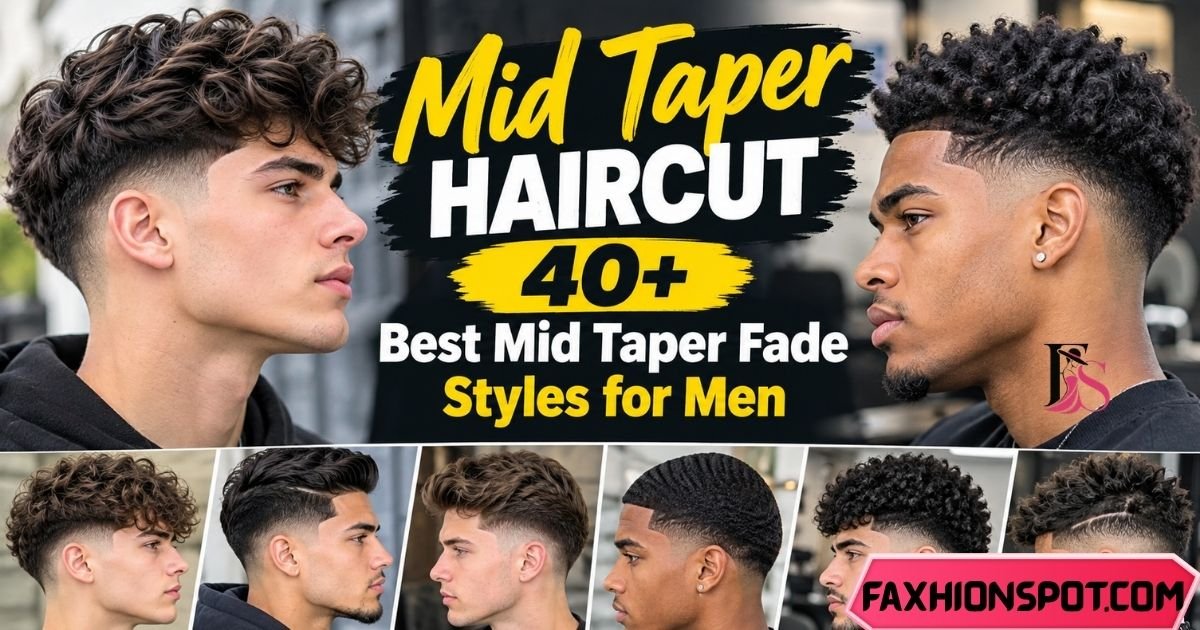
A mid taper haircut is one of the easiest men’s hairstyles to customize in 2026. It gives you a clean transition around the temples, sideburns, and neckline without forcing the entire side of the head into an aggressive fade.
That balance makes it suitable for office styles, casual looks, textured cuts, curls, afros, locs, braids, and modern mullets.
The biggest advantage is flexibility. You can keep the top short and practical, leave it longer for a quiff or middle part, or use natural texture to create a completely different appearance. The taper can also be adjusted according to your face shape, hair density, and preferred level of contrast.
This guide explains exactly what the cut is, how it compares with other fades, what it looks like from every angle, and more than 40 ways to wear it in 2026.
What Is a Mid Taper Fade and Who Should Get One?
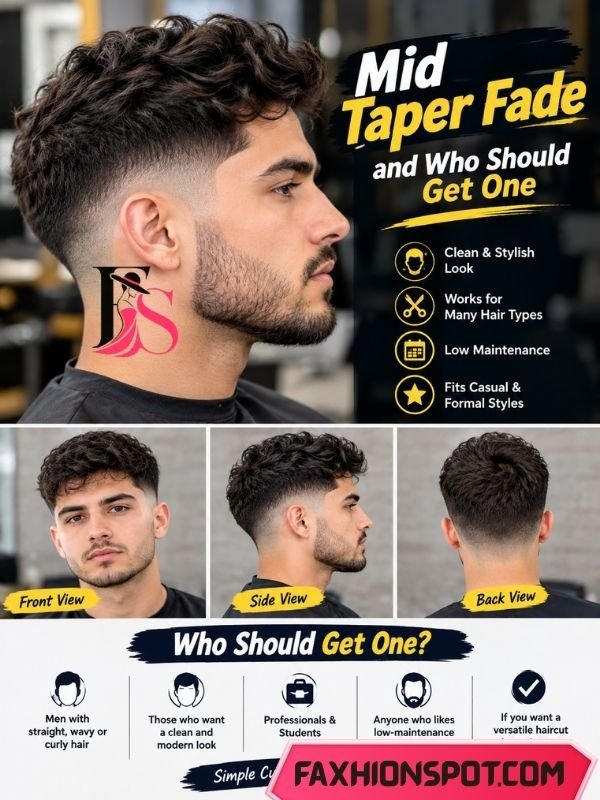
A mid taper haircut gradually reduces hair around the middle portion of the sides and then continues toward the sideburns and neckline. The transition is blended rather than creating a hard shelf between long and short hair.
It is a strong choice for men who want noticeable cleanup without the extreme contrast of a high fade. It also works across a broad range of textures, including straight, wavy, curly, and tightly coiled hair.
Choose this style if you want:
- A balanced fade placement
- Clean temples and sideburns
- A neat neckline
- Plenty of length on top
- Easy customization
- A style that works casually or professionally
What is a mid-taper?
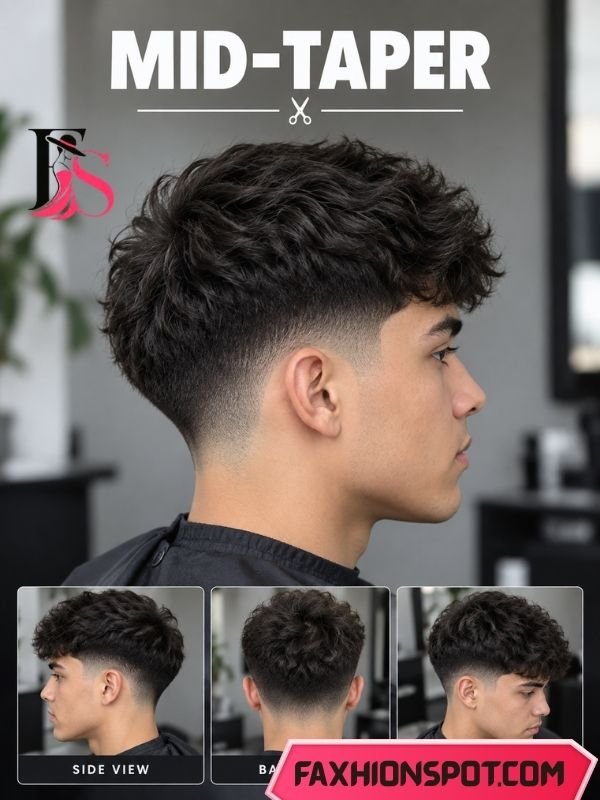
A mid taper is a tapering technique where the reduction in length begins around the middle area of the sides rather than directly around the ears or very high near the crown.
The barber gradually moves through different lengths to create a smooth transition. The exact height can be adjusted depending on head shape, hair density, and the look you want.
Mid Taper vs Medium Taper
The terms can overlap, but they do not always mean exactly the same thing.
“Mid taper” usually describes where the taper begins, while “medium taper” can simply describe the overall length or degree of taper. Always show your barber a reference photo if terminology varies between shops.
Where the Mid Taper Sits on the Fade Spectrum
Think of taper placement as a scale:
| Style | Starting Position | Overall Effect |
| Low taper | Close to ears | Subtle |
| Mid taper | Middle of sides | Balanced |
| High taper | Higher toward temples/crown | Bold |
| Skin fade | Can occur at different heights | Maximum contrast |
A mid placement sits between low and high, making it a versatile middle ground.
Key Characteristics of a Mid Taper Fade
The defining features include:
- A gradual reduction in length
- Moderate side contrast
- Clean temple and sideburn areas
- A blended neckline
- More hair retained above the taper
- Flexible styling on top
The result can be subtle or dramatic depending on how short the barber takes the bottom of the blend.
Mid Taper vs. Mid Fade: Are They Different?
Yes, technically they can be different.
A taper generally focuses on specific areas such as the temples, sideburns, and neckline. A traditional mid fade usually extends the fading effect farther across the sides of the head.
However, barbers and clients often use the terms interchangeably. The safest approach is to explain exactly where you want the blend and how short you want the lowest point.
What Does a Mid Taper Look Like?
A mid taper haircut is easiest to understand by looking at the entire head rather than only the side profile.
The top remains relatively full while the sides become progressively shorter. The transition is designed to look smooth instead of abrupt.
The Visual Signature of a Mid Taper Fade
The visual signature is balance. There is enough contrast to make the haircut look fresh, but the sides do not necessarily become dramatically bare.
This makes it easy to combine with classic cuts, modern texture, natural curls, and longer hairstyles.
Front View: What You See First
From the front, the hairstyle is mostly defined by the top.
Depending on your chosen style, you may see a comb over, textured crop, fringe, quiff, curls, middle part, or slick back. The taper subtly cleans the areas around the temples.
Side Profile: The Fade Gradient
The side view shows the taper most clearly.
Hair gradually becomes shorter as it moves downward. A skilled barber creates a seamless transition without obvious lines or uneven patches.
Back View: Neckline Treatment
The back can be finished in several ways, including a tapered neckline, natural neckline, rounded finish, or squared edge.
Your choice should complement the shape of your head and the amount of length you keep on top.
360° Summary: All-Around Coverage
From every angle, the goal is consistency.
The top carries the personality of the haircut while the sides and neckline provide structure. A successful cut should look intentional from the front, side, and back.
Mid Taper Fade vs. Other Fades: What’s the Difference?
Understanding the alternatives makes it much easier to explain your preferred cut to a barber.
Mid Taper Fade vs Low Taper Fade
A low taper begins closer to the ears and usually creates a softer transition. A mid taper starts higher, producing more visible contrast.
Choose low if you want a conservative appearance. Choose mid if you want more definition without going all the way to a high fade.
Mid Taper Fade vs High Taper Fade
A high taper begins higher on the sides and creates a stronger change between the top and sides.
The mid version is more balanced and usually easier to adapt to different hairstyles and face shapes.
Mid Taper vs Mid Fade: Same Thing?
Not exactly.
A mid fade generally affects a larger section of the sides, while a mid taper can concentrate the transition around the perimeter. The terminology varies between barbers, so describe the desired placement instead of relying only on the name.
Mid Taper Fade vs Skin Fade / Bald Fade
A skin or bald fade takes the shortest section down to bare skin.
A mid taper does not have to expose the scalp. You can request a shadow finish or a very tight blend if you want less contrast.
Mid Taper Fade vs Drop Fade
A drop fade curves downward behind the ear and follows the natural shape of the head.
This creates a more sculpted silhouette. A standard mid taper generally follows a more consistent horizontal placement.
Mid Taper Fade vs Burst Fade
A burst fade forms a curved, semicircular blend around the ear.
It is especially popular with mohawks, faux hawks, mullets, and other statement hairstyles. A standard mid taper is more restrained.
40+ Best Mid Taper Fade Styles for Men in 2026
The biggest strength of a mid taper haircut is that it works as a foundation for many different tops. Your hair length, texture, styling habits, and personality can completely change the final result.
Classic & Professional Mid Taper Fade
1. Mid Taper Fade Comb Over
A comb over adds a polished, timeless finish. Keep the top long enough to sweep naturally and ask for a smooth taper around the sides.
2. Mid Taper Fade Side Part
A defined side part gives the haircut a professional appearance. It works especially well with straight or slightly wavy hair.
3. Mid Taper Fade French Crop
The French crop combines a short textured top with a forward fringe. The clean sides make the textured top stand out.
4. Mid Taper Fade Textured Crop
A textured crop is ideal if you want movement without spending too much time styling. Ask your barber to create separation through the top.
5. Mid Taper Fade Short Hair
Short hair keeps the style practical and low-maintenance. A compact top with clean tapered sides creates a sharp everyday look.
Voluminous & Lifted Mid Taper Fades
6. Mid Taper Fade Buzz Cut
A buzz cut with a taper is simple, masculine, and easy to maintain. Keep the taper clean around the temples and neckline.
7. Mid Taper Fade Quiff
The quiff adds height through the front while the taper controls the sides. It is a good choice for men who want a more noticeable silhouette.
8. Mid Taper Fade Pompadour
A pompadour keeps considerable volume on top and creates a strong contrast with the tapered sides. It works best when you are comfortable using styling products.
9. Mid Taper Fade Blowout
A blowout pushes the hair upward and outward for a fuller appearance. It works particularly well with thick or naturally voluminous hair.
10. Mid Taper Fade Fluffy Hair
Fluffy hair can look intentionally styled when the sides are controlled. Leave enough length on top for natural volume and movement.
Textured & Forward-Styled Mid Taper Fades
11. Mid Taper Fade Fringe
A fringe brings attention toward the forehead and can be adjusted to suit your face shape. Keep it blunt, textured, or slightly messy.
12. Mid Taper Fade with Textured Fringe
Adding texture prevents the fringe from appearing flat. This is a modern option for straight, thick, or slightly wavy hair.
13. Mid Taper Fade Middle Part
A middle part gives the haircut a relaxed, contemporary appearance. Leave enough length on top for the hair to fall naturally on both sides.
14. Mid Taper Fade Spiky Hair
Short spikes create a youthful, energetic look. Matte styling products usually provide better texture than overly shiny gels.
Curly & Wavy Mid Taper Fades
15. Mid Taper Fade Curly Hair
Curly hair looks especially strong when the natural curl pattern is preserved. The taper removes excess weight around the perimeter while leaving the curls full.
16. Mid Taper Fade Wavy Hair
Waves create natural movement across the top. Ask your barber to maintain enough length so the wave pattern remains visible.
17. Mid Taper Fade Perm
A perm can add consistent waves or curls to straighter hair. Keep the taper clean but avoid cutting the top too short if you want maximum texture.
Mid Taper Fades for Black Men / Afro-Textured Hair
18. Mid Taper Fade Black Male
For Black men, the style can be paired with curls, waves, afros, twists, locs, and braids. The taper provides a clean frame around the natural texture.
19. Mid Taper Fade Afro
An afro combined with tapered sides creates a strong contrast between volume and clean edges. The amount of taper can be adjusted to keep the silhouette rounded or sharper.
20. Low Afro with Mid Taper Fade
A compact afro offers a controlled alternative to a larger rounded shape. Keep the perimeter crisp for a polished result.
21. Afro Hawk with Mid Taper
The afro hawk directs volume toward the center of the head. A taper on the sides emphasizes the central shape without removing too much texture.
22. Mid Taper Fade with Dreads
Locs and tapered sides create a strong combination of length and structure. The neckline and temple areas can be kept exceptionally clean.
23. Dreadlock Bun with Mid Taper Fade
Pulling longer locs into a bun exposes the tapered sides and creates a more refined silhouette.
24. Sponge Twist with Mid Taper Fade
Sponge twists provide texture and definition while the taper keeps the edges controlled. This works well for naturally coily hair.
25. Box Braids with Mid Taper Fade
Box braids can be combined with tapered sides for a clean, modern contrast. The braid length can vary according to personal preference.
26. Twisted Curls with Mid Fade
Twisted curls add definition and separation. Keep the taper neat around the sides to make the texture stand out.
Slicked & Refined Mid Taper Fades
27. Mid Taper Fade Slick Back
A slick back requires enough top length to move the hair backward. Use a lightweight styling cream for a softer finish or pomade for stronger control.
28. Mid Taper Fade with Beard
Pairing a tapered haircut with a beard creates continuity around the face. Ask your barber to blend the sideburn area naturally into the beard.
Asian & Straight Hair Mid Taper Fades
29. Mid Taper Fade Asian
Straight Asian hair often provides a clean canvas for textured crops, middle parts, fringes, and lifted styles. The taper controls the sides without sacrificing top length.
30. Mid Taper Fade Straight Hair
Straight hair makes the transition easy to see, so blending quality matters. A textured top can add movement and prevent a flat appearance.
Long Hair & Modern Mullet Mid Taper Fades
31. Mid Taper Fade Long Hair
Longer hair on top creates a dramatic contrast with the clean perimeter. This works well with slick backs, curtains, flow styles, and loose texture.
32. Mid Taper Fade Mullet
A mullet keeps length toward the back while the taper cleans the sides. It is a good choice for men who want something more expressive.
33. Man Bun with Mid Taper Fade
A man bun exposes the tapered sides and creates a distinctive profile. It is especially effective when the top and back have enough length for a secure bun.
Edgy & Custom Mid Taper Fades
34. Mid Taper Fade Edgar
The Edgar adds a distinctive straight or textured front with closely controlled sides. It works best when the fringe and hairline are shaped precisely.
35. Mid Taper Fade with Line Design
A razor line can make a simple haircut more personalized. Keep the design subtle if you need a style that works in professional settings.
36. Mid Taper Drop Fade
Combining mid placement with a dropped shape changes the silhouette behind the ear. It provides more contour than a traditional taper.
Blonde & Colored Mid Taper Fades
37. Mid Taper Fade Blonde
Blonde hair can make the contrast between different lengths appear softer. Texture on top helps prevent the overall style from looking flat.
38. Mid Taper Fade Blonde Hair
Whether naturally blonde or color-treated, blonde hair works with crops, quiffs, fringe, and messy styles. Keep the sides carefully blended.
Medium & Balanced Length Mid Taper Fades
39. Medium Mid Taper
Medium-length hair gives you more styling options while keeping the sides controlled. Try a loose side part, textured flow, or relaxed quiff.
40. Mid Taper Fade Low Cut
A low-cut top provides a practical version of the style. It is especially useful if you prefer minimal daily styling.
Bonus Styles
41. Curly Mid Taper
Let the curls remain the focus while the taper creates a clean perimeter. A curl-enhancing cream can improve definition without making the hair stiff.
42. Short Hair with Mid Fade
A short top combined with a clean mid-level fade is easy to maintain and works well for active lifestyles.
Which Face Shape Suits a Mid Taper Best? (Complete Guide)
One of the reasons the mid taper haircut remains popular is its ability to be adjusted for different facial proportions. The trick is not simply choosing the cut; it is controlling the amount of height, width, and side volume.
Mid Taper for Oval Face
Oval faces are highly adaptable. Almost any top length works, including crops, quiffs, middle parts, and textured styles.
Mid Taper for Round Face
Add some height on top and keep excessive side bulk under control. A textured quiff or lifted crop can make the face appear longer.
Mid Taper for Square Face
A square jaw already provides strong structure. A clean taper can emphasize that shape while a textured top softens the overall appearance.
Mid Taper for Heart-Shaped Face
Keep some weight around the sides and avoid making the top excessively tall. A textured fringe or medium-length top can create better balance.
Mid Taper for Diamond Face
Diamond faces often benefit from controlled width around the forehead and jaw. A textured top with moderate side volume can work particularly well.
Mid Taper for Oblong/Long Face
Avoid excessive height because it can make the face appear longer. Consider keeping more natural length on the sides and choosing a flatter top.
Mid Taper for Triangle Face
A little extra volume toward the upper sides can help balance a wider jaw. Textured medium-length styles are useful options.
Mid Taper for Different Hair Types: Curly, Wavy, Straight & More
Hair texture changes how the taper looks and how much maintenance it requires.
Mid Taper for Straight Hair
Straight hair makes the blend highly visible. Texture, layers, or a side part can add dimension to the top.
Mid Taper for Wavy Hair
Wavy hair naturally creates movement. Keep enough length to show the wave pattern rather than cutting the top excessively short.
Mid Taper for Curly Hair
Curly hair benefits from a taper because the sides can be controlled while the curls remain prominent on top.
Mid Taper for Natural/Coily Hair (Type 4)
For coily hair, the taper can frame natural texture, sponge twists, curls, afros, locs, and braids. A sharp lineup can add extra definition.
Mid Taper for Thick Hair
Thick hair may need debulking or texturizing on top. The taper removes some weight from the perimeter while maintaining fullness where you want it.
Mid Taper for Fine/Thin Hair
For fine hair, avoid removing too much density from the top. A textured crop, short quiff, or slightly messy finish can create the appearance of greater fullness.
How to Ask Your Barber for a Mid Taper
Getting the terminology right is useful, but a photo is often even more effective.
Tell your barber:
- “I want a mid taper around the temples and sides.”
- “Keep the top ___ inches long.”
- “I want the blend to finish at the neckline.”
- “Take it to skin, shadow, or leave some length at the bottom.”
- “Keep the top textured, slicked back, curly, or parted.”
- “Keep the neckline natural, rounded, or squared.”
- Show a front and side reference photo.
The more specific you are about the top, neckline, and shortest point, the easier it is for your barber to reproduce the look.
Click Here To Read Another Topic
The Golden Rule of Barber Communication
Do not rely on the haircut name alone.
Two barbers may interpret “mid taper” differently. Your reference photo, desired top length, taper height, neckline finish, and preferred amount of scalp exposure give your barber much more useful information.
Frequently Asked Questions
Is a mid taper good for men?
Yes. It is versatile, balanced, and can be adapted to many face shapes, hair textures, and personal styles.
How long does a mid taper last?
Most men refresh the cut roughly every two to four weeks, depending on how sharp they want the edges and how quickly their hair grows.
Is a mid taper the same as a mid fade?
Not always. A taper usually focuses more on the perimeter, while a mid fade can extend farther across the sides.
Is a mid taper low maintenance?
It can be. Shorter tops require very little styling, while longer or textured tops require more daily attention.
What should I tell my barber?
Describe the taper height, top length, desired texture, neckline, and shortest point, then show a reference photo.
Conclusion
A mid taper haircut gives men a practical combination of clean edges, balanced contrast, and styling freedom. It can look professional with a comb over or side part, relaxed with textured hair, expressive with a mullet or line design, or natural with curls, an afro, locs, and braids.
The best version is not necessarily the trendiest one. It is the version that matches your face shape, hair texture, daily routine, and preferred amount of maintenance.
Before your next appointment, choose your top style first, decide how much contrast you want around the sides, and show your barber a clear reference photo. With those details established, the taper becomes a flexible foundation that can be personalized to almost any men’s hairstyle in 2026.
1 thought on “Mid Taper Haircut: 40+ Best Mid Taper Fade Styles for Men (2026)”