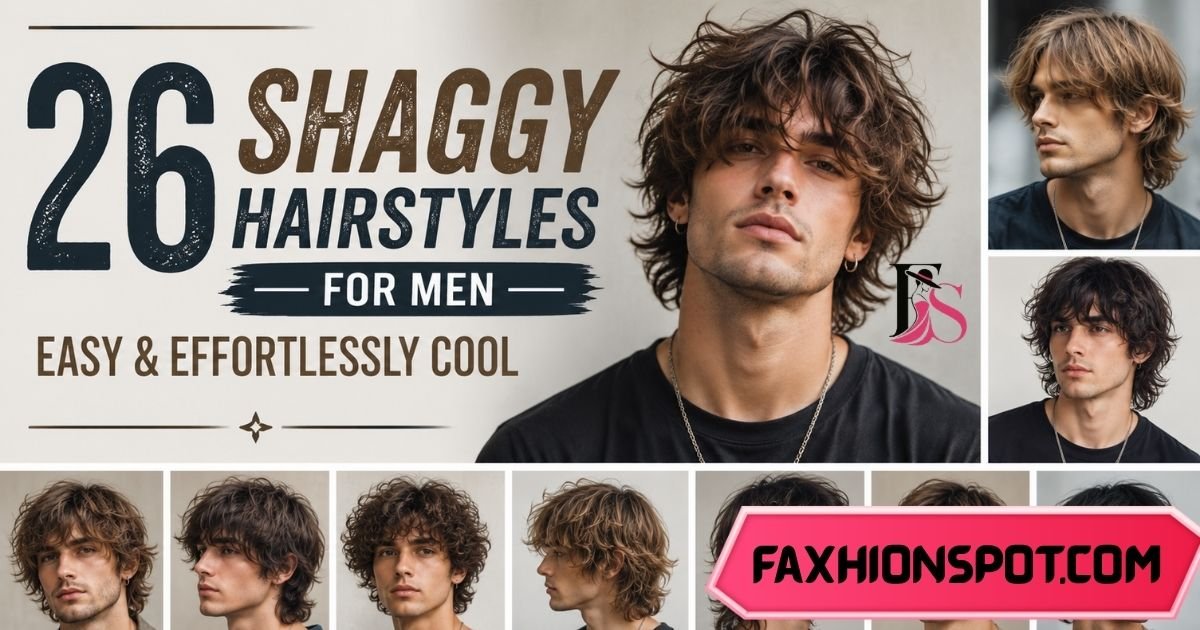
Shaggy hairstyles for men have a relaxed attitude that makes them stand out without looking overly styled. Built around layers, texture, movement, and a slightly messy finish, the shag can work with short, medium, or long hair. It also adapts surprisingly well to straight, wavy, and curly textures.
The modern version is more flexible than the classic 1970s cut. You can pair it with a fringe, beard, fade, taper, mullet, or natural waves. The result can be clean enough for everyday wear while still keeping that effortless, rebellious character.
If you want a haircut that looks better with a little imperfection, these 26 ideas are worth showing your barber.
Stylish Shaggy Haircuts For Men
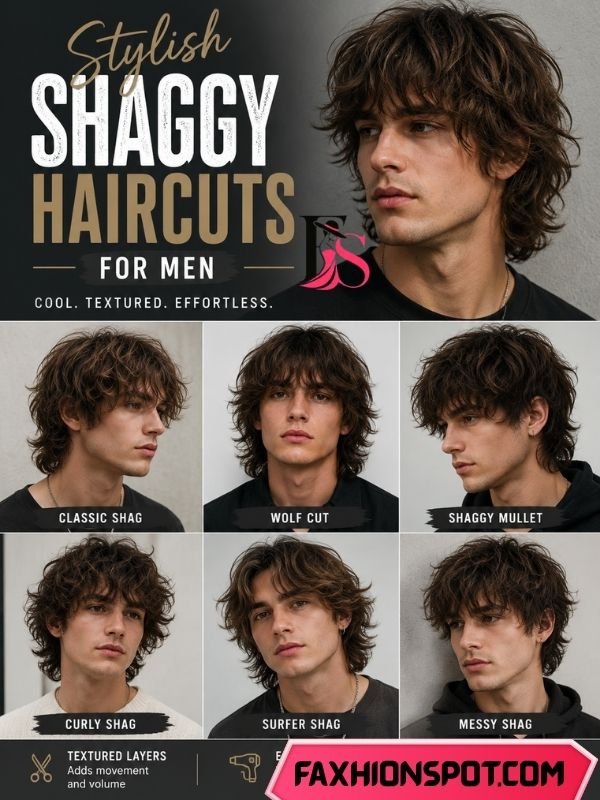
The appeal of shaggy hair comes from its layered shape and deliberately undone finish. Modern cuts often use lighter layers and textured ends to create movement instead of simply making the hair look messy.
Long Shaggy Hairstyle
Long layers create plenty of movement from the crown toward the neckline. This version is ideal for men who enjoy flowing hair and a relaxed, rock-inspired appearance.
Short Shaggy Haircut
A short shag keeps the characteristic texture without requiring much length. Choppy layers around the crown and a soft fringe can make short hair look fuller and more dynamic.
Classic Shaggy Hair
The classic version takes inspiration from the original retro shag, with shorter layers near the top gradually becoming longer toward the sides and back. It has a naturally casual silhouette.
Textured Shaggy Haircut
Texture is the star of this variation. Point-cut ends, layered sections, and natural separation give the hair a piecey appearance that works particularly well with medium-density hair.
Shaggy Mullet
The shaggy mullet combines the layered character of a shag with extra length at the back. Unlike a sharply defined mullet, the transition is softer, creating a more wearable modern finish.
Layered Shaggy Hairstyle
Multiple layers add body while removing unwanted weight. This is particularly useful for thick hair because strategic layering can prevent the style from becoming bulky.
Medium Shaggy Hairstyle
Medium-length hair is arguably one of the easiest lengths for this haircut. There is enough hair for visible layers and movement without the maintenance associated with very long locks.
Shaggy Hair with Beard
A beard adds contrast to the loose shape of the haircut. Keep the beard neatly trimmed if you want the overall appearance to feel intentional rather than completely unkempt.
Shaggy Hair with Fringe
A fringe helps define the face and is one of the recognizable elements often associated with a shag. A wispy or textured fringe looks especially natural with layered hair.
Modern Shaggy Fade Haircut
A fade introduces sharper structure around the sides while leaving textured length on top. This creates a useful contrast between clean edges and relaxed volume.
Shaggy Mod Cut
The mod-inspired version is cleaner and more controlled than a heavily messy shag. Think rounded layers, a noticeable fringe, and a polished retro influence.
Edgy Short Shaggy Hair with Faded Sides
For a contemporary look, combine a short textured top with faded sides. The contrast makes the haircut feel sharper while the layers preserve its relaxed personality.
Tousled Shag
The tousled shag is designed to look naturally lived-in. Instead of combing every strand into place, use your fingers to separate the layers and allow some pieces to fall independently.
A small amount of lightweight mousse, sea-salt spray, or matte styling cream can enhance definition without making the hair stiff.
The goal is not to create random mess. The best result looks deliberately undone.
Long 70s Shaggy Style
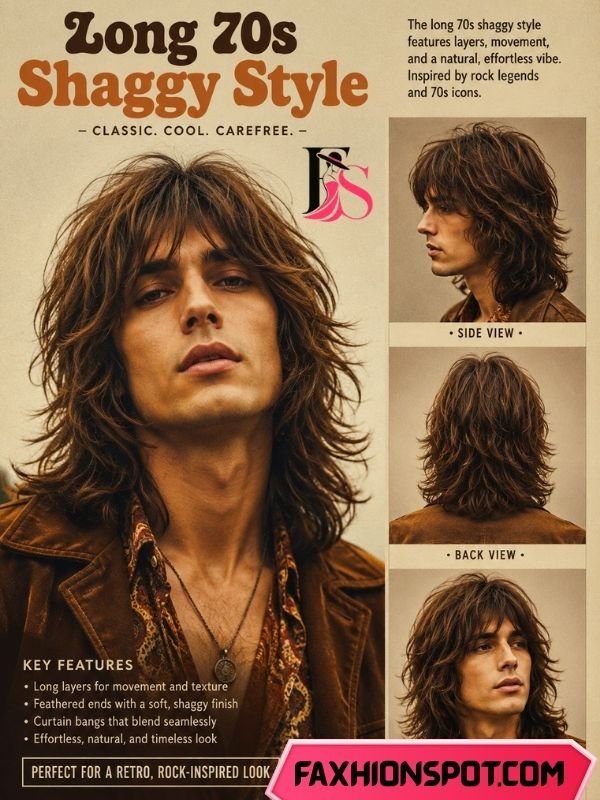
The 1970s shag remains one of the biggest influences behind today’s layered cuts. The original style became closely associated with musicians, actors, and pop culture, while modern versions generally use softer blending and more adaptable proportions.
The classic 70s shape typically uses shorter layers around the crown, feathered sections near the face, and longer hair toward the neck. David Cassidy’s famous hairstyle is one well-known example of the era’s men’s shag.
Curly Shaggy Hairstyle
Curly hair naturally provides the volume and movement this haircut needs. Layers can help prevent curls from forming a heavy, boxy shape while allowing the natural pattern to remain visible.
Shaggy Flow
The shaggy flow lets longer hair fall naturally backward and around the sides. It is a good option for men who want a relaxed style without a highly defined fringe.
Thick Shag with Long Fringe
Thick hair can support dramatic layers and a longer fringe. Removing some internal weight helps the haircut move instead of appearing overly dense.
Long Textured Shaggy Hair with Short Sides
This variation keeps length through the top and back while trimming the sides shorter. It gives long hair a more structured outline without losing its flowing texture.
Short Shaggy Curls
Short curls become much more interesting when combined with uneven layers. A curl-enhancing cream can define the shape while keeping the finish soft.
Parted, Long Shaggy Hair
A middle or slightly off-center part creates symmetry while the layers provide movement around the face. This version works particularly well with naturally straight or wavy long hair.
Fully Shaggy Style with Low Fade
A low fade gives the haircut a cleaner lower perimeter while leaving plenty of layered texture above it. It is a practical choice for men who want a modern barber-shop finish.
Long Mullet Shag
The long mullet shag exaggerates the length at the back while maintaining short, choppy layers around the crown. It is bolder than a traditional shag but softer than an extreme mullet.
Shaggy Surfer Haircut
Surfer-inspired hair is all about natural movement and an easygoing finish. Medium-to-long wavy hair looks particularly convincing when the layers are allowed to fall freely.
Textured, Wavy Shaggy Style
Wavy hair is almost perfectly suited to layered cuts because its natural bends create separation between strands. A light styling product can enhance the waves without flattening them.
Short Shaggy Hair with Taper Fade Sides
A taper fade gives short shaggy hair a cleaner outline around the ears and neckline. It is a strong option if you like texture but need something relatively neat for work or school.
Messy, Medium Shag
The medium messy shag is perhaps the easiest everyday option. Keep enough length for movement, then use your fingers to create loose separation rather than brushing the hair completely flat.
Shaggy Haircuts for Straight Hair
Straight hair can sometimes lack natural volume, but layers can create the illusion of movement. Ask your barber for textured ends and crown layers rather than simply removing large amounts of length.
Quick Comparison: Which Shag Works Best?
| Style | Best Hair Type | Overall Vibe | Maintenance |
| Long Shag | Wavy, thick | Rock-inspired | Medium |
| Short Shag | Straight, wavy | Casual | Low |
| Curly Shag | Curly | Natural, full | Medium |
| Shaggy Mullet | Most textures | Edgy | Medium |
| Shaggy Fade | Straight, wavy | Modern | Medium |
| Surfer Shag | Wavy | Relaxed | Low |
| Long 70s Shag | Thick, wavy | Retro | Medium |
| Tapered Shag | Straight, wavy | Clean and textured | Low-Medium |
What Is A Shag Haircut For Men?
A shag haircut is a layered hairstyle with shorter sections around the crown, textured ends, and longer pieces toward the sides or back. The exact proportions can change depending on hair length, density, texture, and the desired finish.
Unlike a traditional one-length haircut, the shag relies on layers to create movement. It can remove excess bulk from thick hair, create body in certain medium-density textures, and emphasize natural waves or curls.
The haircut is also highly customizable. A barber can combine it with:
- A taper or fade
- Curtain or textured fringe
- A mullet shape
- A beard
- Short or long sides
- Natural curls
- Wavy layers
- A middle part
One important consideration is hair density. Very heavily layered cuts may make low-density hair appear thinner at the ends, so the layering should be customized rather than copied exactly from a photograph.
How To Style Men’s Shaggy Hair
The easiest styling routine is usually the one that works with your natural texture instead of fighting it.
1. Start With Damp Hair
After washing, gently towel-dry your hair. Avoid aggressively rubbing it because this can increase frizz, especially in wavy or curly hair.
2. Choose a Lightweight Product
Use a small amount of mousse, sea-salt spray, styling cream, or matte paste depending on your texture.
For fine or straight hair, mousse can add body. For waves, sea-salt spray can emphasize separation. Curly hair usually benefits from a curl cream or lightweight leave-in product.
3. Use Your Fingers
Work the product through the layers with your fingers. Avoid making every strand perfectly uniform. The haircut looks best when individual pieces have room to move.
4. Air-Dry or Diffuse
Air-drying creates the most natural finish. If you need more volume, use a diffuser on low heat, particularly when working with waves or curls.
5. Finish Lightly
If the hair needs extra control, use a small amount of matte paste or cream on the ends. Heavy waxes and gels can make the layers look stiff.
What To Tell Your Barber
Bring a reference photo and explain how much length you want to keep. You can ask for:
- Layered texture through the crown
- Movement around the sides
- Soft or textured fringe
- Feathered or choppy ends
- A longer neckline
- A taper or fade if desired
A professional cut matters because the layering needs to work with your specific hair texture and face shape.
Click Here To Read Another Topic
The Evolution of the Men’s Shaggy Hairstyles
The shag emerged from the counterculture and rock-and-roll aesthetics of the late 1960s and became especially recognizable during the 1970s. Its defining characteristics included layered lengths, feathered sections, volume, and a deliberately relaxed appearance.
During the following decades, the style repeatedly returned in different forms. Its loose structure made it easy to reinterpret, from longer rock-inspired cuts to grunge-influenced styles.
Today’s versions are less rigidly tied to the original shape. Barbers and stylists can combine the layered silhouette with fades, tapers, textured fringes, curls, and mullet-inspired proportions.
That flexibility explains why the shag continues to appear in modern hairstyle trends. Contemporary versions focus less on recreating a historical haircut perfectly and more on adapting its texture and movement to individual hair.
In 2026, the shaggy mullet and modern layered shag are particularly visible variations, with styling commonly centered on light texture, natural movement, and deliberately imperfect finishes.
Frequently Asked Questions
Is a shag haircut good for men?
Yes. Its layered structure can be adapted to short, medium, and long hair and works with straight, wavy, and curly textures.
Is shaggy hair low maintenance?
It can be. A well-cut shag often needs less precise styling because the layers are designed to create movement naturally.
What hair type is best for a shag?
Wavy and curly hair naturally emphasize the texture, but straight and thick hair can also work beautifully with customized layering.
Can men with thin hair get a shag?
Yes, but excessive layering can make the ends look sparse, so a barber should adjust the cut to preserve density.
Is a shag the same as a wolf cut?
They are related, but a wolf cut generally has a more dramatic contrast between crown volume and length, while a traditional shag can have a softer, more balanced shape.
How often should you trim a shag?
A light trim every 6–10 weeks can help maintain the shape, although longer versions can be allowed to grow out more naturally.
Does a shag work with a beard?
Absolutely. A neatly maintained beard provides structure against the relaxed layers and can make the overall appearance more balanced.
Can I style a shag without heat?
Yes. Air-drying with a lightweight styling product is often enough, particularly for naturally wavy or curly hair.
Conclusion
The best shaggy hairstyles for men are not about making your hair look careless. They are about creating a haircut where texture, layers, and movement do most of the styling work.
If you want an easygoing haircut with personality, bring your favorite reference photo to a skilled barber and ask for a version tailored to your hair density, texture, and preferred length. The right cut should feel effortless—and look intentionally cool.