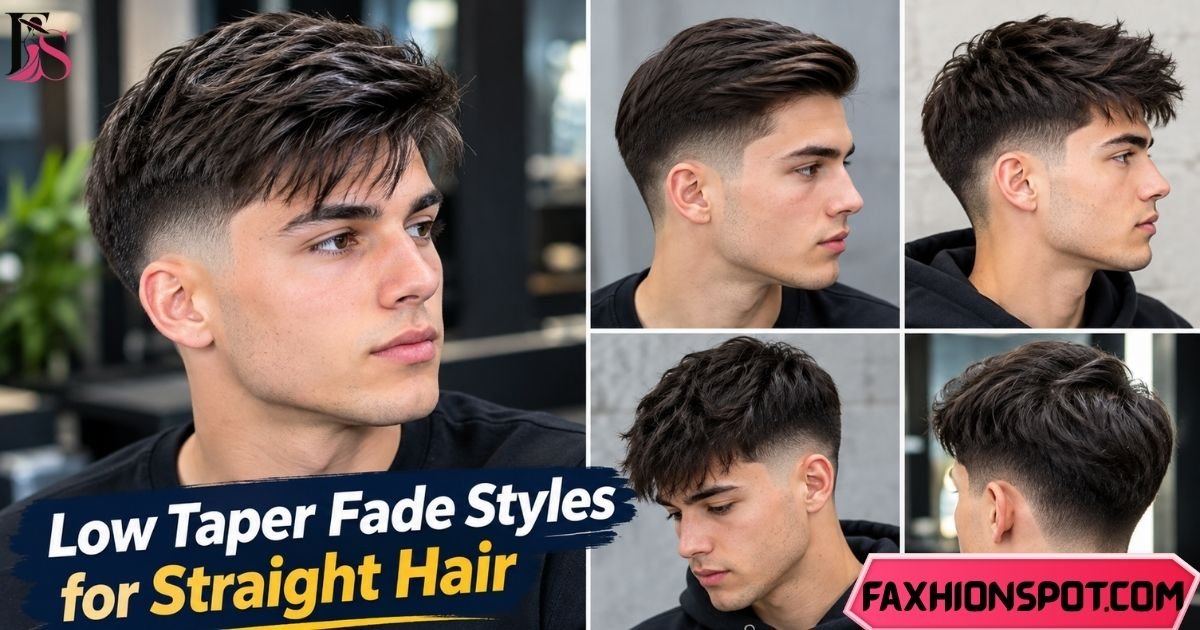
If you want a haircut that looks clean without being overly aggressive, Low Taper Fade Styles for Straight Hair are worth considering.
Straight strands naturally show the precision of a taper, while the low placement keeps the overall haircut balanced and wearable.
The biggest advantage is versatility. You can pair the taper with a side part, textured crop, fringe, slick back, middle part, buzz cut, or longer top.
What Is a Low Taper Fade?
A low taper fade gradually reduces hair around the lower sideburns, ears, and neckline while preserving more length higher on the sides. Unlike a mid or high fade, the transition stays low, creating a softer and less dramatic appearance.
For straight hair, the taper can look especially crisp because the strands generally lie flat and reveal the transition between lengths. The barber typically blends several lengths together instead of creating one obvious line.
A low taper can also be customized. You can keep the sides relatively full, take them shorter, or choose a closer finish around the neckline. The top remains the main styling area.
This flexibility is one reason Low Taper Fade Styles for Straight Hair can work across different ages and personal styles. The haircut itself is relatively subtle; the top determines whether the finished result looks classic, modern, relaxed, or bold.
Low Taper vs. Low Fade
| Feature | Low Taper | Low Fade |
| Placement | Very low around ears and neckline | Usually extends farther around the sides |
| Overall look | Subtle and natural | More noticeable contrast |
| Side fullness | More hair preserved | More hair removed |
| Maintenance | Generally moderate | Often requires more frequent refreshing |
| Best for | Conservative, versatile styles | Stronger fade contrast |
Why It Works So Well on Straight Hair
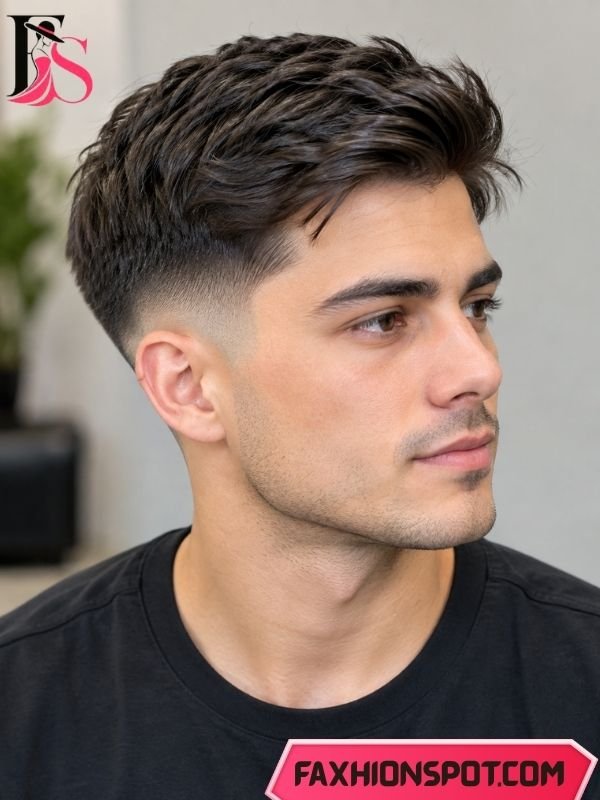
Straight hair gives a low taper a clean foundation. Because the strands do not have a strong curl pattern, the transition from longer hair to shorter sides is easy to see.
That does not mean every straight-haired man should get the exact same cut. Hair thickness, growth direction, natural volume, and top length all influence the final shape. Current style guides repeatedly point out that the top is just as important as the taper itself.
Another advantage is styling flexibility. Straight hair can usually be directed backward, forward, upward, or toward either side without requiring extensive manipulation.
For men with thick hair, reducing weight around the sides can make the haircut feel lighter. For fine hair, however, taking the sides excessively short may make the top appear thinner by comparison.
This is why Low Taper Fade Styles for Straight Hair should be selected according to your actual hair characteristics rather than simply copying a photograph.
The Best Styles to Try
There is no single version that suits everyone. These Low Taper Fade Styles for Straight Hair cover short, medium, long, professional, textured, and contemporary looks.
Classic Low Taper Fade
The classic version keeps the top relatively neat while the sides and neckline receive a subtle taper. It is an excellent starting point if you want a clean haircut without making the fade the main attraction.
Keep the top around a short-to-medium length and use a small amount of styling cream or matte paste. The result is simple, polished, and easy to maintain.
Side Part Low Taper
A side part adds structure to straight hair and creates an immediately polished appearance. The part can be natural or defined, depending on how formal you want the haircut to look.
This is one of the most practical Low Taper Fade Styles for Straight Hair for office environments, interviews, weddings, and business-casual settings.
Ask your barber to preserve enough length on top to create a natural part rather than cutting the top too short.
Slick Back Low Taper
The slick back uses longer straight hair on top and directs it toward the back. The low taper keeps the sides controlled while allowing the top to provide length and character.
A lightweight pomade can create a polished finish, while a matte styling product produces a more contemporary result.
Avoid using too much product. Straight hair can become visibly greasy when overloaded.
Textured Crop with Low Taper
A textured crop adds movement to straight hair that might otherwise sit flat. The top is cut with texture, while a short fringe can be pushed forward toward the forehead.
Matte clay or texture paste works particularly well because it adds separation without making the hair look wet.
Among Low Taper Fade Styles for Straight Hair, this option is especially useful for men who want a modern haircut that does not require a complicated styling routine.
Low Taper Fringe
A fringe brings the front section forward instead of exposing the forehead completely. It can be blunt, slightly uneven, soft, or textured.
Straight hair makes the fringe shape particularly noticeable, so communicate the desired length clearly to your barber.
A textured fringe is generally easier to wear casually because small imperfections look intentional rather than distracting.
Buzz Cut with Low Taper
For maximum simplicity, combine a short buzzed top with a low taper around the edges.
This option requires very little daily styling. You can simply wash, dry, and go.
It is particularly useful if you exercise regularly, dislike spending time on your hair, or prefer a minimalist appearance.
Messy Straight Hair Taper
Straight hair can sometimes look too neat because it naturally falls into predictable directions. A messy version introduces texture and separation on top.
Use your fingers instead of a comb and apply a small amount of matte clay. Twist or lift individual sections until you achieve controlled movement.
The goal is not genuinely unkempt hair. It is a deliberately relaxed shape with clean tapered edges.
Pompadour Low Taper
The pompadour places significant emphasis on height at the front. Straight hair can provide a smooth base for creating this classic silhouette.
A blow dryer and round brush can help create lift before applying a moderate-hold styling product.
This is one of the more noticeable Low Taper Fade Styles for Straight Hair, so it works best when the rest of your grooming is equally controlled.
Middle Part with Low Taper
A middle part creates two flowing sections that frame the face. It works particularly well when the top has enough length to fall naturally on both sides.
The taper provides contrast underneath without taking away the movement of the longer top.
For a relaxed appearance, use a lightweight texture product and let the hair follow its natural direction instead of forcing an extremely precise part.
Long Straight Hair with Low Taper
Longer straight hair can still benefit from a low taper. In this case, the barber focuses mainly on cleaning the area around the ears, temples, and neckline while preserving length.
This approach is ideal if you want the visual impact of long hair but dislike an overly bulky outline.
Long-top Low Taper Fade Styles for Straight Hair can also be worn as a middle part, slick back, flow, or loose layered style.
Matching the Style to Your Hair Type
Not all straight hair behaves the same way. The word “straight” describes the strand pattern, but thickness and density can vary considerably.
| Hair Type | Recommended Approach | Product Choice |
| Fine straight hair | Keep some side fullness and add controlled texture | Lightweight paste |
| Medium straight hair | Most styles work well | Matte clay or cream |
| Thick straight hair | Remove excess weight through layering | Matte clay or styling cream |
| Very straight, flat hair | Add root lift and texture | Sea salt spray or mousse |
| Long straight hair | Keep the taper low and preserve length | Lightweight cream |
Fine hair needs special attention. A very aggressive taper can create too much contrast between the sides and top. Ask your barber to preserve enough surrounding density.
Thick hair offers more styling options, but removing some weight can prevent the top from becoming bulky.
The most successful Low Taper Fade Styles for Straight Hair balance the taper with the natural density of the hair rather than relying only on clipper length.
Face Shape Considerations
Your face shape can help determine which top style creates the most balanced silhouette.
Oval: Almost any top style can work, including side parts, slick backs, crops, and middle parts.
Round: Extra height or textured volume can visually lengthen the face. A textured crop or controlled pompadour may work well.
Square: Structured styles such as slick backs, side parts, and pompadours can complement strong facial angles.
Oblong: Avoid excessive height if you already have a long facial shape. A fringe or moderate-volume style can create better visual balance.
Heart: A softer fringe or middle part can help distribute attention around the forehead and jaw.
Diamond: Keeping some side fullness while controlling the lower edges can prevent the face from appearing overly narrow at the sides.
These are guidelines, not strict rules. Your hairline, forehead, jaw width, and personal preference matter too. Face-shape guidance from current hairstyle resources similarly recommends adjusting the top rather than assuming the taper itself must change dramatically.
Talking to Your Barber
A photograph is useful, but clear verbal instructions can prevent misunderstandings.
Instead of saying only “Give me a low taper,” explain four things:
- How much length you want on top.
- How subtle or tight you want the taper.
- Whether you want a natural or defined neckline.
- How you normally style the top.
A useful request could be:
“Keep the top medium length for a side part, leave some weight on the sides, and give me a low taper around the ears and neckline. Keep the blend soft and natural.”
If you want a crop, say so. If you want a slick back, mention how much length you need.
For Low Taper Fade Styles for Straight Hair, telling the barber how you normally wear your hair is often more useful than simply naming a trend.
How to Style It at Home
Most versions can be styled in a few simple steps.
- Wash your hair and towel-dry it.
- Apply a small amount of lightweight styling product.
- Direct the hair according to your chosen style.
- Use a blow dryer if you need volume or stronger shape.
- Finish with a small amount of matte product if extra hold is necessary.
For a side part, use a comb while blow-drying. For a messy crop, use your fingers. For a slick back, direct the hair backward from the forehead.
Straight hair can become flat when too much heavy product is applied. Start with a small amount and add more only if necessary.
The styling method should support the haircut rather than hide it. Good Low Taper Fade Styles for Straight Hair usually need less product than complicated high-volume hairstyles. Current guides also commonly recommend lightweight products and short styling routines for straight textures.
Mistakes Worth Avoiding
Even a good haircut can look wrong if the proportions are off.
Taking the taper too high: This can turn a subtle low taper into something much closer to a conventional fade.
Removing too much side weight: This can make fine straight hair look thinner.
Ignoring the top: The taper cannot compensate for a poorly shaped top.
Using excessive product: Heavy pomade can flatten straight hair and create an oily appearance.
Choosing a style that fights your natural growth pattern: Work with your hair instead of forcing it into an uncomfortable direction.
Waiting too long between trims: Once the neckline and sideburns lose definition, the haircut can look less intentional.
Showing only one photograph: Bring a reference image, but also explain what you like about it. Your hair density and head shape may require adjustments.
A good barber should adapt the cut rather than duplicate someone else’s haircut exactly.
Conclusion
Low Taper Fade Styles for Straight Hair offer a strong combination of clean edges, flexible top styling, and a relatively understated silhouette. The taper can support everything from a professional side part to a textured crop, messy top, buzz cut, pompadour, middle part, or longer flow.
The most important decision is not simply choosing a taper. It is choosing the right relationship between the taper, top length, hair density, face shape, and daily styling routine.
If you prefer low maintenance, choose a short crop or buzz cut. If you want a professional finish, consider a side part or slick back. For a more contemporary appearance, try texture, fringe, or a middle part.
Ultimately, Low Taper Fade Styles for Straight Hair work best when the haircut follows your natural texture instead of fighting it.
Frequently Asked Questions
Is a low taper fade good for straight hair?
Yes. Straight hair clearly shows the gradual blend, making a low taper clean and precise when properly cut.
What is the easiest style to maintain?
A buzz cut, short crop, or classic short taper usually requires the least daily styling.
Can thin straight hair pull off a low taper?
Yes. Keep enough side and top density to avoid excessive contrast, and use lightweight texture products.
What works best for the office?
A side part, classic taper, or controlled slick back generally creates a polished professional appearance.
How often do you need a trim?
Many men refresh a low taper about every three to four weeks, although growth speed and the desired level of sharpness vary.