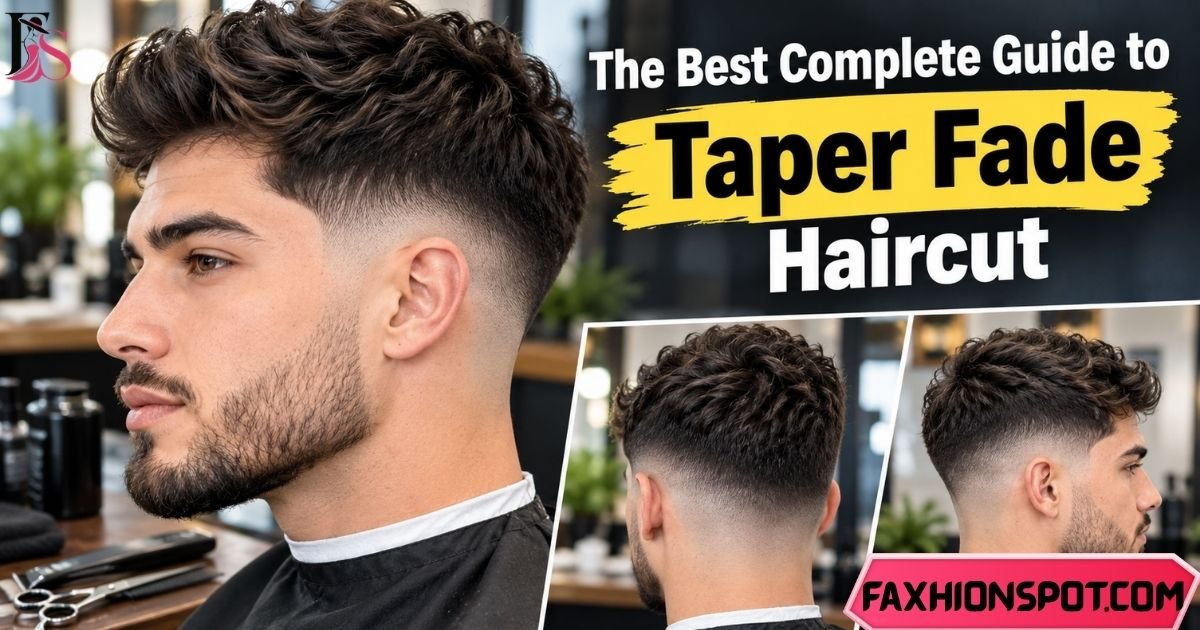
A clean haircut does more than change your appearance. It can frame your face, highlight your hair texture, and make everyday styling easier.
The taper fade haircut remains popular because it offers a controlled blend around the edges while leaving plenty of freedom on top. Depending on the height and finish, it can look subtle enough for school or an office and sharp enough for a modern street-style look.
This complete guide explains what the cut means, how it differs from a regular fade and low fade, which version works with different face shapes and hair types, what to tell your barber, and how to keep the result looking fresh.
What Is a Taper Fade?
A taper fade is a haircut in which the hair gradually becomes shorter toward selected edges, usually around the temples, sideburns, and neckline. The transition is blended rather than left as a visible step. Unlike a full fade, a classic taper usually preserves more of the hair on the sides.
The most important detail is placement. Low, mid, and high describe how far the transition travels upward. The shortest point can also vary, from a visible shadow to very short stubble or bare skin. Current barber guides commonly treat height and shortest finish as separate choices, which makes it easier to communicate the result you want.
What Is a Taper Fade Haircut?
In everyday barbershop language, the phrase can describe a range of blended cuts. The common idea is controlled graduation from longer hair into shorter hair near the edges. It can be paired with a crop, quiff, slick back, comb over, curls, waves, afro texture, crew cut, or longer textured top.
One reason the style stays popular is flexibility. You can keep significant weight on the sides for a classic appearance or create more contrast with a shorter taper. Your barber can also adjust the blend around the natural shape of your head, hairline, and sideburns.
Taper Fade vs Fade vs Low Fade
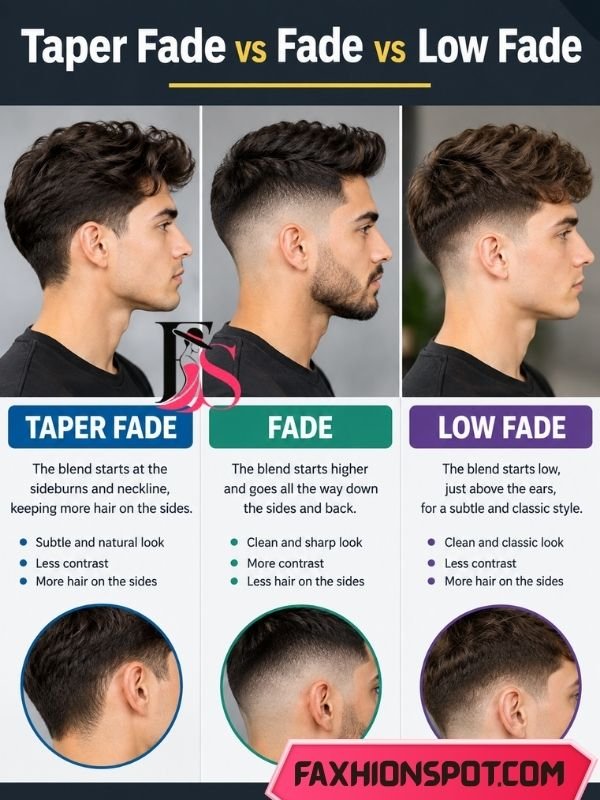
The easiest way to understand these terms is to look at two things: where the blend sits and how much of the side is changed.
| Cut | Main area blended | Overall effect | Typical upkeep |
| Taper | Temples, sideburns, neckline | Subtle and clean | About 3–5 weeks |
| Low fade | Lower sides and back | More visible contrast | About 3–4 weeks |
| Mid fade | Around temple level | Balanced contrast | About 2–3 weeks |
| High fade | Higher on the sides | Strong contrast | About 2–3 weeks |
| Skin fade | Any fade height to bare skin | Very sharp | Often 1–3 weeks |
These time ranges are practical estimates, not fixed rules. Hair growth rate, density, styling, and how crisp you want the haircut to look all affect the schedule. Current haircut guides similarly distinguish taper placement from the broader area affected by a fade.
Fade (Skin Fade):
A fade blends a larger area of the sides and back, creating a visible gradient. A skin fade takes the shortest part all the way down to bare skin. “Skin” describes the endpoint, while low, mid, or high describes the position of the transition.
Because the scalp becomes visible at the bottom, a skin fade usually creates stronger contrast than a longer shadow finish. It can look especially sharp with short crops, textured tops, curls, and clean lineups.
Low Fade:
A low fade keeps the blend close to the lower sides, usually around the ears and lower back of the head. It removes less visual weight than a mid or high fade and can create a softer transition.
A low fade is useful when you want the sides cleaned up without making the haircut dominate your overall look. It can also be a practical choice for conservative workplaces or schools, depending on their grooming rules.
Types of Taper Fade Haircuts
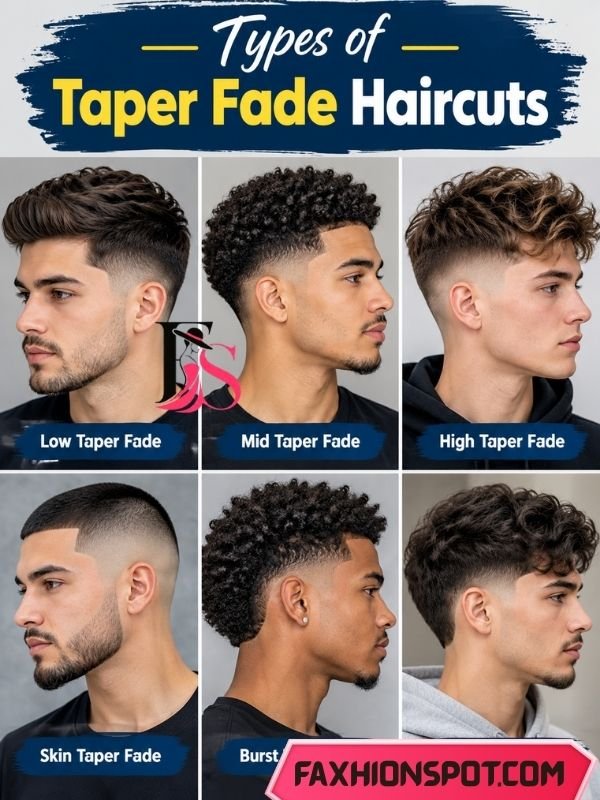
The main types are defined by placement and finish. Choosing the right one depends on your desired contrast, face shape, hair texture, and how frequently you want to visit the barber. Current guides generally divide the basic versions into low, mid, high, and skin variations.
Low Taper Fade
A low taper keeps the blend close to the natural edges. Most of the side panel stays fuller, while the temples, sideburns, and neckline become progressively shorter.
This is often the easiest starting point for someone trying the style for the first time. It works well with classic tops, textured crops, waves, curls, and longer hairstyles. It also tends to grow out softly because the shortest area is concentrated around the perimeter.
Mid Taper Fade
A mid taper moves the transition higher, giving the haircut more definition while still retaining some side weight. It sits between a conservative low taper and a more noticeable high taper.
This version pairs well with textured hair, quiffs, messy tops, side parts, and short curls. If you want visible structure without removing too much from the sides, a mid placement can provide a balanced result.
High Taper Fade
A high taper places the transition farther up the sides. It creates more contrast and can make the top appear more prominent.
High tapers can work particularly well with styles that already have height or strong texture. Because the blend is more noticeable, regrowth may become visible sooner, so regular touch-ups can help maintain the original shape.
Skin / Bald Taper Fade
A skin or bald taper takes the shortest portion down to the scalp around the selected areas. It gives the perimeter a crisp appearance while allowing the rest of the sides to remain fuller than a conventional full skin fade.
If you have sensitive skin or a history of irritation from very close shaving, tell your barber before choosing a bald finish. A shadow or very short guard can provide a similar clean effect with less exposure.
Best Taper Fade for Face Shapes
Face shape should guide the overall balance rather than act as a strict rule. The goal is to choose a taper height and top style that complement your natural proportions.
| Face shape | Useful approach | Why |
| Round | Mid or higher taper with some top height | Adds visual length |
| Oval | Low, mid, or high | Most styles can work |
| Square | Low or mid with controlled volume | Preserves strong proportions |
| Oblong | Lower taper with side fullness | Avoids adding unnecessary length |
| Diamond | Low or mid with textured volume | Balances cheekbones and jaw |
| Heart | Low or mid with fuller sides | Helps balance a narrower chin |
For a round face, some vertical height on top can make the face appear longer. For an oblong face, keeping more fullness through the sides can create balance. Oval faces generally allow the most flexibility.
Best Taper Fade for Hair Types
Straight hair makes the blend easy to see and works with side parts, slick backs, crops, quiffs, and textured finishes. A low or mid taper can add shape without taking away too much density.
Wavy hair benefits from a taper because the clean perimeter contrasts with natural movement on top. Keeping enough length allows the wave pattern to remain visible.
Curly hair can pair especially well with a taper. The controlled edges frame the curls while preserving volume above. A barber should work with the curl pattern rather than forcing the sides excessively short.
Coily and afro-textured hair can also be shaped with a taper around the temples and neckline. The result can be paired with a short afro, sponge curls, twists, coils, or other natural styles. Moisture, shrinkage, and density should be considered when deciding the amount of length to leave.
Popular Styles to Try
There is no single way to wear this haircut. Popular combinations include:
- The cut with textured crop
- The cut with a side part
- The cut with a quiff
- The cut with slick-back hair
- A tapered cut with a curly top
- Taper fade with waves
- Taper fade with a crew cut
- Taper fade with an afro
- Taper fade with a messy fringe
- Taper fade with a beard blend
The top matters as much as the sides. A strong reference photo should show the front, side, and back so your barber can understand the complete silhouette.
How to Ask Your Barber for a Taper Fade
Do not simply say, “Give me a taper fade,” if you have a specific result in mind. Barbers may interpret the term differently, especially when customers use taper and fade interchangeably.
A clear request should include:
- Low, mid, or high placement
- Shadow, short guard, or skin finish
- Desired length on top
- Whether the sides should stay full
- Temple and sideburn shape
- Neckline shape
- Beard connection, if needed
- A reference photo from multiple angles
A useful script is: “I want a low taper around the temples and neckline. Keep most of the side length, leave enough on top for texture, and blend the edges naturally. I do not want the taper taken too high.”
If you want a skin finish, say so directly. If you want a softer shadow, say that instead. Reference photos are especially useful because guard numbers alone do not describe how a haircut will look on your head.
How Long Does a Taper Fade Last?
Most people can expect the haircut to look noticeably fresh for roughly three to five weeks, although the exact timing varies. A very short or skin finish may need a cleanup sooner because even small amounts of new growth change the contrast.
Your hair growth rate, texture, taper height, neckline shape, and personal preference all matter. Someone who wants a perfectly crisp outline may book more often than someone who prefers a natural grow-out. Several current barber guides place ordinary taper maintenance around the three-to-five-week range.
Taper Fade Maintenance Tips
Keeping the cut looking good is not complicated, but consistency helps.
- Schedule a trim before the edges become heavily grown out.
- Wash and condition according to your hair type.
- Use a small amount of styling product instead of overloading the top.
- Keep the neckline and sideburn area clean.
- Protect curly and coily hair from excessive dryness.
- Avoid cutting the taper yourself unless you understand blending techniques.
- Show your barber the previous cut if you want the same shape again.
If the top is growing well but the edges look untidy, ask whether the shop offers an edge and neckline cleanup between full appointments.
Is a Taper Fade Good for Office or School?
A taper can be a practical choice for many professional or academic settings because it can be kept neat without creating an extreme contrast. A low taper with a natural finish is generally more understated than a high, skin-level fade.
However, school and workplace grooming policies differ. Check the rules if your environment has specific requirements. You can also ask your barber for a conservative taper that keeps the sides fuller and the neckline tidy.
Click Here To Read Another Topic
Common Taper Fade Mistakes to Avoid
The most common problem is choosing the haircut from a photo without considering your own hair texture or head shape. A style that looks perfect on straight, dense hair may need different proportions on curls or fine hair.
Other mistakes include:
- Asking for a vague “fade” when you actually want a taper
- Choosing a taper that is too high for your preferred look
- Removing too much side weight
- Ignoring the neckline shape
- Using only one front-facing reference photo
- Forgetting to explain how you normally style your hair
- Waiting too long for a cleanup when you want a crisp finish
Communication is usually the easiest fix. Before the clippers start, confirm the height, shortest point, top length, and neckline.
Conclusion
A taper fade is a versatile haircut because it combines clean edge work with freedom on top. Low, mid, high, and skin versions can produce very different results, so the best choice depends on your face shape, hair texture, desired contrast, and maintenance routine.
The key is to communicate the placement and finish clearly. Bring useful reference photos, explain how you style your hair, and tell your barber how much side weight you want to keep. With those details settled, you can get a haircut that looks intentional on day one and grows out naturally afterward.
Frequently Asked Questions
What is a taper fade?
A taper fade gradually shortens hair around areas such as the temples, sideburns, and neckline while keeping more length through the sides and top.
Is taper fade better than fade?
Neither is universally better; a taper keeps more side weight, while a fade creates a broader and more visible gradient.
Does taper fade suit curly hair?
Yes, a taper can frame curls neatly while preserving volume and texture on top.
How often should I get a taper fade?
Many people refresh it every three to five weeks, while very short or skin finishes may need earlier touch-ups.
Is taper fade good for students?
Yes, a low or conservative taper can be neat and understated, but students should follow their school’s grooming policy.