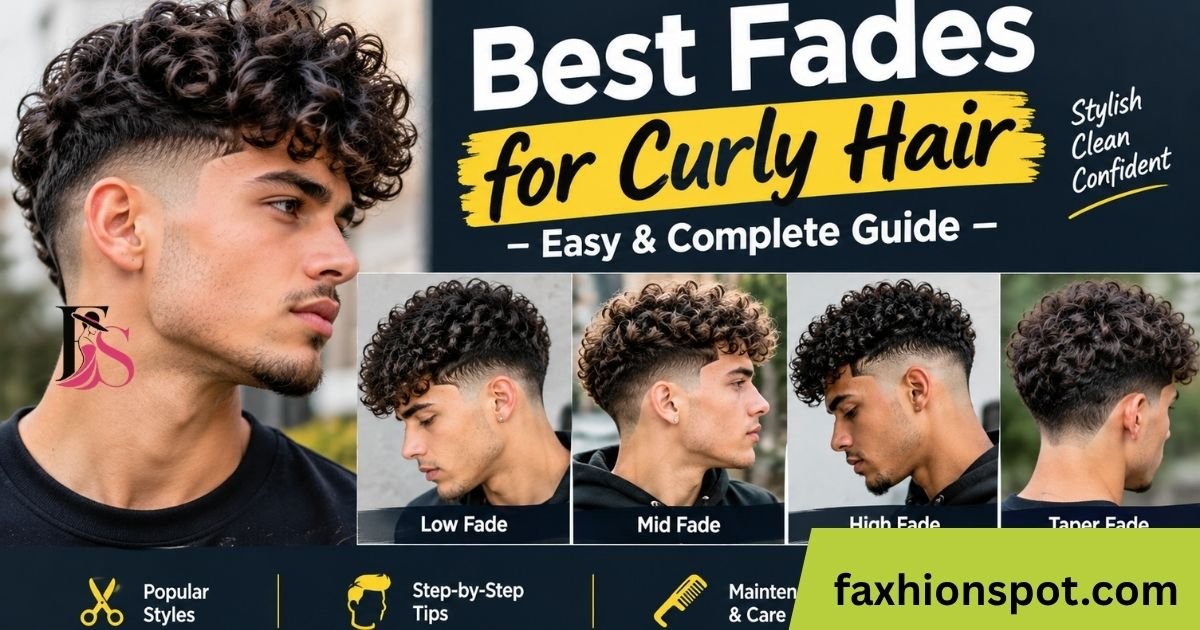
If you want clean sides without losing the texture that makes your curls stand out, fades for curly hair are an easy place to start. The right fade removes excess bulk around the ears and neckline while leaving enough length on top for your natural curl pattern to show.
With fades for curly hair, the key is choosing the fade height according to your curl type, density, face shape, and daily routine. A low fade creates more contrast, while a low taper keeps more of the natural shape around the sides. Modern barber guides also emphasize working with shrinkage, curl direction, and moisture instead of treating curly hair like straight hair.
This guide breaks down fades for curly hair, including low fades, low tapers, 3C and coily textures, styling choices, barber instructions, and simple maintenance.
Why a Fade Works Well for Curly Hair
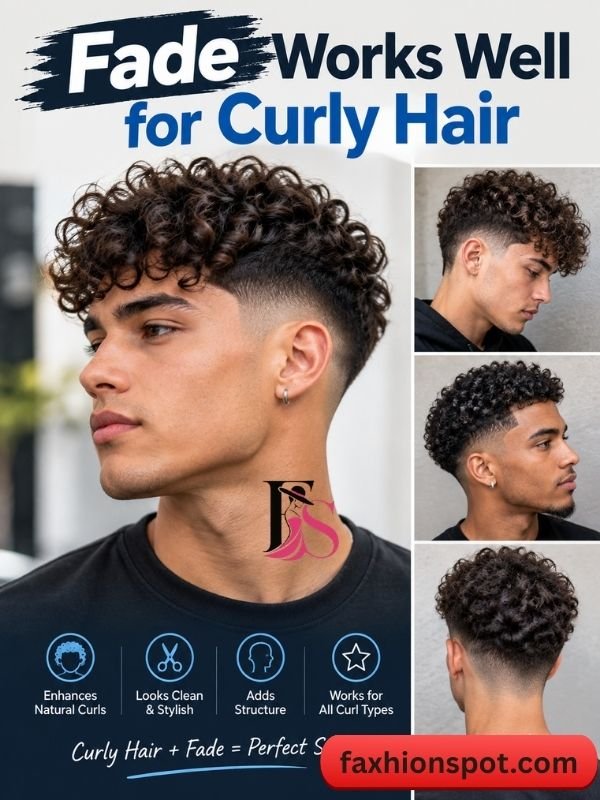
Fades for curly hair work because they create a clean perimeter while allowing the top to keep its natural movement. Curly and coily textures can create extra width around the sides, so reducing that bulk can make the overall shape look more balanced.
A fade also gives curls a clear visual focus. That balance is one reason fades for curly hair remain easy to customize. Instead of cutting the entire head short, the barber gradually reduces the sides and back. This leaves the crown fuller and makes the curl pattern more noticeable.
There is another practical benefit: a well-planned fade can make a curly haircut easier to manage. You can keep the top natural, use a small amount of curl cream or leave-in conditioner, and spend less time controlling the sides.
Hair type still matters. With fades for curly hair, texture can change the apparent height and width of the finished cut. Type 2 hair is generally wavy, Type 3 is curly, and Type 4 is coily, with A through C describing increasingly tight patterns. Curl density, strand thickness, porosity, and shrinkage can also change how the same haircut looks.
What Is a Low Fade for Curly Hair?
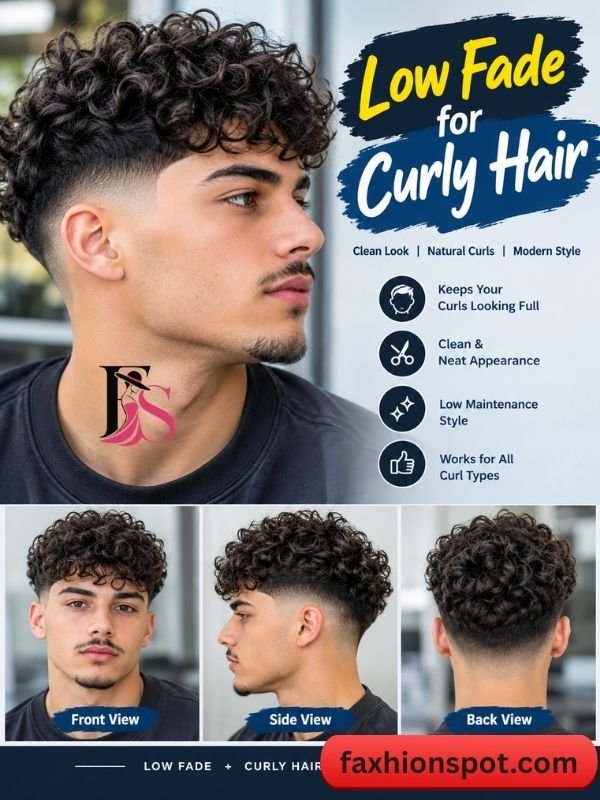
A low fade gradually shortens the hair near the lower sides and neckline, with the blend beginning close to the ears. The fade can finish very short or near the skin, depending on the desired contrast.
For fades for curly hair, the low fade is useful when you want a clearly visible fade but still want plenty of curl volume above it. It generally keeps the fading zone lower than a mid or high fade.
Why choose a low fade?
For many men, fades for curly hair are easiest to personalize by changing only the fade height.
- It creates a clean outline around the ears.
- It keeps substantial curl volume on top.
- It can reduce unwanted side bulk.
- It works with short, medium, and longer curly tops.
- It can be customized from a soft shadow finish to a sharper skin finish.
The most important detail is the transition. This matters especially with fades for curly hair because curls can visually soften a clipper blend. If the fade rises too high, it can remove more of the visual balance created by the curls.
What Is a Low Taper Fade for Curly Hair?
A low taper concentrates the shortening around the temples, sideburns, and neckline rather than fading a large section of the sides. More density remains above the ears.
That makes fades for curly hair especially flexible when you want a natural-looking haircut rather than a strong skin-to-curl contrast. The top and upper sides can retain more texture, while the perimeter stays neat.
A low taper can suit loose waves, 3A curls, 3B curls, 3C curls, and many coily textures when the technique is adjusted for shrinkage and density. Recent curly-hair guides repeatedly highlight the low taper as a versatile option because it preserves more natural texture.
Low Fade vs Low Taper – Simple Difference
For fades for curly hair, the easiest way to understand the difference is to look at how much hair is removed from the sides.
| Feature | Low Fade | Low Taper |
| Main area shortened | Lower sides and back | Temples, sideburns, neckline |
| Overall contrast | More noticeable | Softer |
| Curl volume | High | Very high |
| Look | Clean and defined | Natural and subtle |
| Best for | Visible fade lovers | Beginners and low-maintenance styles |
| Grow-out appearance | Can show contrast sooner | Usually blends into the shape more gradually |
Neither option is universally better. The choice depends on how much contrast you want and how much natural side volume you want to preserve. That is the central decision when comparing fades for curly hair.
Best Low Fade Styles for Curly Hair
Here are practical fades for curly hair that can be adjusted for different lengths and curl patterns.
1. Classic Low Fade With Natural Curls
Among fades for curly hair, this version keeps the haircut simple and versatile.
Keep the top at a medium length and let the curls form naturally. The low fade cleans the sides while the crown remains textured.
This is a strong everyday option for people who want definition without a complicated styling routine.
2. Low Skin Fade With Short Curls
A skin-level finish creates stronger contrast against a short curly top. It looks especially sharp when the hairline and neckline are kept clean.
Ask for a low skin fade rather than allowing the fade to rise too far toward the crown.
3. Low Fade With Curly Fringe
Leave extra length at the front and allow the curls to fall toward the forehead. The fade keeps the sides controlled while the fringe adds movement.
This version works well when you like a softer, youthful silhouette.
4. Low Fade With Curly Crop
A short textured top gives you a quick styling routine. Use a small amount of curl cream or lightweight styling product, then let the curls settle naturally.
5. Low Fade With Curly Quiff
Keep the top longer and build controlled height at the front. The low fade gives the shape structure without removing the personality of the curls.
6. Low Fade With Beard
Connecting or visually balancing the fade with facial hair can create a stronger overall frame. Tell your barber whether you want the sideburn transition connected or separated.
Best Low Taper Fade Styles for Curly Hair
For softer fades for curly hair, the low taper is one of the most adaptable choices.
1. Classic Low Taper With Natural Curls
For everyday fades for curly hair, this is a dependable starting point.
Leave the crown at roughly 2 to 4 inches, depending on your curl pattern and desired volume. Taper only the lower perimeter so the curls remain the main feature.
2. Low Taper With Curly Fringe
Keep the front longer and textured while cleaning the temples and neckline. It is simple, modern, and easy to refresh.
3. Low Taper With Short Curly Crop
A shorter crop reduces styling time. It is useful if you want your curls visible but do not want a long top.
4. Low Taper With Defined Ringlets
For 3A to 3B curls, preserve enough length for the ringlets to form. Apply product to damp hair and scrunch rather than aggressively brushing.
5. Low Taper With Tight Coils
A carefully shaped taper can frame dense coils without removing too much volume from the upper sides. This is a useful approach for people who want clean edges while keeping their natural texture.
6. Low Taper With Line-Up
A line-up adds a sharper geometric detail around the forehead and temples. It should complement, not overpower, the natural curl shape.
Low Taper for 3C / Coily Hair:
For fades for curly hair, 3C and coily textures need special attention to shrinkage and density. A curl can appear significantly shorter after drying, so the barber should judge the top in its natural state before removing too much length.
A low taper is often useful because it preserves more of the side and crown density than a higher fade. One recent guide recommends adapting guard choice and top length for 3C curls while keeping the taper concentrated around the lower perimeter.
For coily hair, moisture and gentle handling are important. A leave-in conditioner, curl cream, or lightweight gel can help maintain definition, while excessive thinning can make some curly textures look frizzy or uneven.
Choosing the Best Fade by Hair Type
The best fades for curly hair depend on the pattern you naturally have rather than the haircut name alone.
| Hair type | Suggested approach | Top length idea |
| 2A–2C waves | Soft low fade or low taper | Short to medium |
| 3A curls | Low fade or classic taper | Medium |
| 3B curls | Low fade or low taper | Medium |
| 3C curls | Low taper or controlled low fade | Medium to longer |
| 4A coils | Low taper or low fade | Short to medium |
| 4B–4C coils | Low taper with careful shaping | Short to medium |
These are starting points, not strict rules. Curl density, face shape, hairline, and personal styling preference can change the best result. Current hair guides also stress that curl pattern should be considered alongside density and moisture needs.
Best Fade for Daily Life
If your priority is convenience, fades for curly hair should match how often you are willing to visit the barber.
For a busy schedule, a low taper is often practical because the transition is concentrated around the edges and leaves more of the natural shape intact. A low fade gives a cleaner contrast but may make regrowth more obvious as the short area lengthens.
Choose a style based on your routine. These fades for curly hair can then be adjusted to your preferred top length:
- Minimal styling: Short curly crop with low taper.
- Natural volume: Low taper with medium curls.
- Sharper appearance: Low fade with defined top.
- Office-friendly look: Classic low fade or subtle taper.
- Maximum curl definition: Medium-length top with a low taper.
How to Tell Your Barber:
When requesting fades for curly hair, avoid saying only, “Give me a fade.” That leaves too many details open.
Instead, tell your barber:
- “I want a low fade” or “I want a low taper.”
- “Keep the top at this approximate length.”
- “Preserve my natural curl pattern.”
- “Start the blend low around the ears.”
- “Do not remove too much weight from the upper sides.”
- “Check the shape after my curls are dry.”
You can also mention whether you want a skin finish, shadow fade, natural neckline, line-up, or beard connection.
Avoid:
- Asking for a high fade when you actually want substantial side volume.
- Giving only the words “make it clean.”
- Letting the barber remove excessive bulk without discussing your curl pattern.
- Copying a straight-hair reference without adapting it to your curls.
- Ignoring shrinkage when choosing the top length.
Tip:
For fades for curly hair, describe the result you want rather than relying only on a haircut name. Two people can ask for a low fade and receive very different cuts because their curl density, top length, and head shape are different.
Show a picture to make it clear.
For fades for curly hair, a photo is one of the easiest ways to communicate the desired shape. Bring a front view and, if possible, side and back references.
Use pictures that resemble your curl pattern and approximate hair length. A reference showing straight hair may not translate accurately to tight curls because shrinkage and curl direction change the silhouette.
Maintenance Tips:
Good fades for curly hair still need basic maintenance to stay defined.
1. Refresh the perimeter
A fade or taper usually looks sharpest when the ears, neckline, and temple area are clean. The exact refresh schedule depends on how quickly your hair grows and how precise you want the edges.
2. Keep curls hydrated
Curly and coily textures can be prone to dryness. Use a conditioner and choose a lightweight leave-in or curl product that suits your hair.
3. Avoid over-brushing
Repeated dry brushing can disrupt curl definition and increase frizz. Use fingers, a wide-tooth comb, or a curl-friendly method when necessary.
4. Style while damp
Applying curl cream or gel to damp hair can help distribute product evenly. Scrunch gently and allow the curls to air-dry or use a diffuser on an appropriate setting.
5. Sleep carefully
A satin or silk-style pillowcase or hair covering can reduce friction. Avoid compressing the curls excessively if volume and definition are your goals.
6. Revisit your barber before the shape disappears
A short perimeter can lose its crisp appearance before the top needs cutting. A small cleanup can extend the useful life of the haircut without removing much curl length.
Final Summary:
The best fades for curly hair are the ones that work with your natural pattern instead of fighting it. A low fade gives a more visible transition and clean contrast, while a low taper preserves more of the natural side shape and often feels easier to grow out.
For loose curls, ringlets, 3C curls, or coily textures, the most important factors are fade height, top length, density, shrinkage, and moisture. Tell your barber exactly how much curl you want to preserve, bring a useful reference photo, and avoid excessive thinning.
If you want a clean but natural everyday haircut, start by comparing a low fade with a low taper and choose the version that fits your styling routine.
Frequently Asked Questions
Is a low fade good for curly hair?
Yes. For fades for curly hair, a low fade can clean the sides while leaving enough length on top for natural curls and volume to remain visible.
Is low taper better for beginners?
For fades for curly hair, a low taper can be easier for beginners because it keeps more natural length around the sides and creates a softer transition, but the right choice depends on the desired look.
Does low taper work on 3C hair?
Yes. For fades for curly hair, a low taper can work well on 3C hair when the barber accounts for shrinkage, density, and the natural curl pattern.
Which grows out better?
For fades for curly hair, a low taper often gives a softer grow-out because less of the side area is dramatically shortened, while a low fade can show the contrast between short and longer sections sooner.
1 thought on “Best Fades for Curly Hair – Easy & Complete Guide”