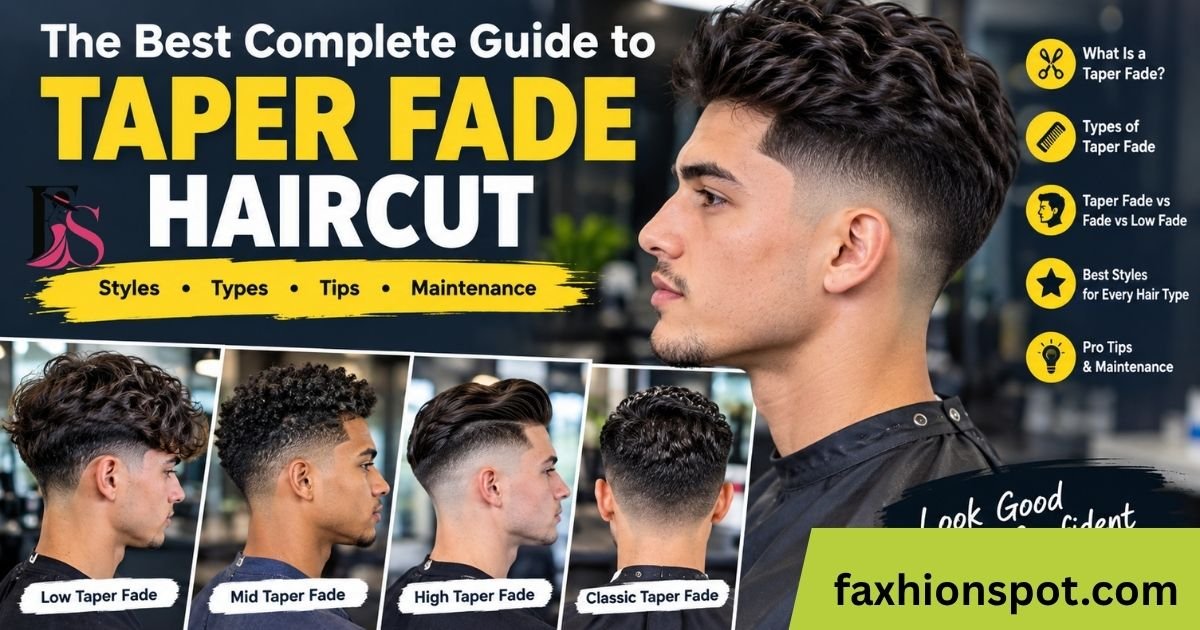
A taper fade haircut is one of the most flexible men’s hairstyles because it keeps the top and much of the side length while creating a clean transition around the temples, sideburns, and neckline. That balance makes it easy to wear with straight, wavy, curly, or coily hair.
The key is choosing the right taper height, shortest finish, and top style. Whether you want a subtle haircut for school, a polished look for the office, or a sharper modern style, understanding the different options helps you explain exactly what you want.
This complete guide covers the major types, face shapes, hair textures, popular combinations, barber terminology, maintenance, and common mistakes to avoid.
What Is a Taper Fade?
A taper fade haircut gradually reduces hair length around selected areas, usually the temples, sideburns, and neckline. The hair becomes shorter as it approaches the edges while the upper sides and top retain more length.
Unlike a full fade that removes significant weight across the sides, a taper concentrates the blending around the edges. This creates a cleaner outline without dramatically changing the overall shape of the hairstyle.
The result can be subtle or dramatic depending on the height and shortest length. You can also combine the taper with a textured crop, quiff, slick back, side part, curls, waves, buzz cut, or longer top.
What Is a Taper Fade Haircut?
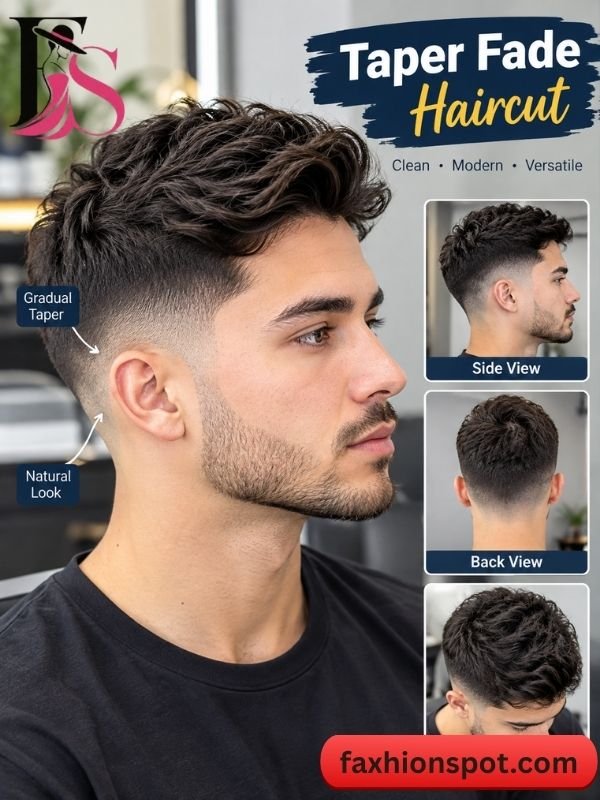
A taper fade haircut combines the gradual reduction of a taper with the seamless blending associated with a fade. The transition should look smooth rather than showing obvious steps between clipper lengths.
The most important areas are:
- Temples: The hair gradually becomes shorter around the temple area.
- Sideburns: The sideburns are cleaned and blended into the surrounding hair.
- Neckline: The back neckline is tapered to create a neat finish.
- Sides: Depending on the chosen variation, more or less side weight is preserved.
- Top: The top can remain long, medium, short, textured, curly, or styled.
One important point is that a taper does not automatically mean a completely shaved finish. The lowest section can finish at a guard length, shadow, very short clipper length, or skin depending on the requested style.
Taper Fade vs Fade vs Low Fade
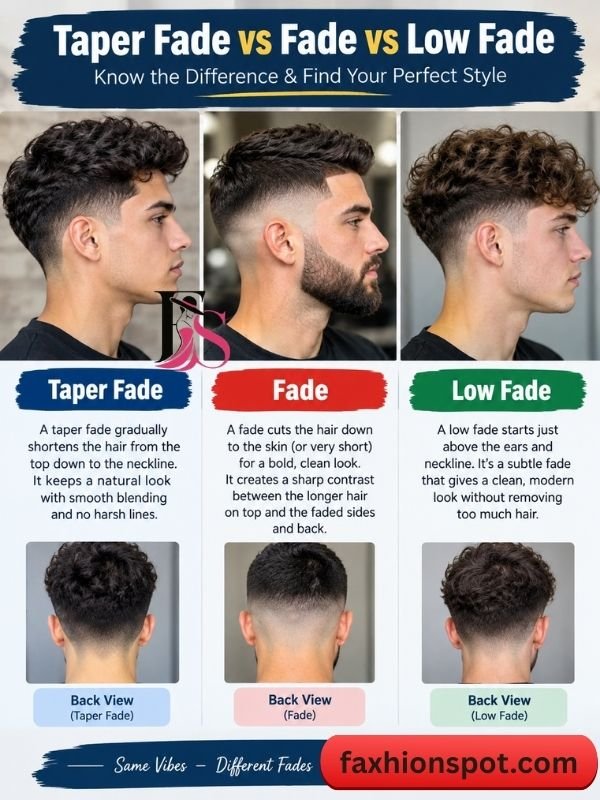
Although these terms are often used interchangeably, they can produce noticeably different results.
| Style | Main Area Blended | Side Weight | Overall Appearance |
| Taper fade haircut | Temples, sideburns and neckline | More | Clean and versatile |
| Full fade | Larger portion of sides and back | Less | Stronger contrast |
| Low fade | Lower sides and around ears | Moderate | Subtle but defined |
| Mid fade | Around the temple area | Moderate to low | Balanced contrast |
| High fade | Higher on the sides | Low | Bold and sharp |
The biggest difference is how much of the side is blended. A taper generally preserves more of the natural shape, while a full fade creates a more noticeable transition across the sides.
Fade (Skin Fade):
A skin fade takes the shortest portion down to the scalp or very close to bare skin. The transition then moves from that extremely short area into longer hair.
Skin refers to the shortest finish, not necessarily the height of the fade. Therefore, you can have a low skin fade, mid skin fade, or high skin fade.
This is useful to understand when speaking with a barber because saying “low” and saying “skin” communicate two different things.
Low Fade:
A low fade begins close to the ears and lower sides of the head. It removes less side weight than a mid or high fade and usually creates a softer appearance.
A low taper fade haircut is even more localized because the shortest blending is concentrated around the edges rather than extending broadly across the sides.
It is particularly useful for people who want a neat appearance without an aggressive change in their silhouette.
Types of Taper Fade Haircuts
The main variations are based primarily on where the taper is positioned and how short the finish becomes.
The three foundational choices are low, mid, and high. A skin or bald finish can then be added when you want the shortest portion taken closer to the scalp.
Low Taper Fade
A low taper fade haircut keeps the blend close to the ears, temples, sideburns, and neckline. Most of the sides remain fuller, which gives the hairstyle a natural appearance.
It works especially well with:
- Side parts
- Curly tops
- Textured crops
- Waves
- Longer hairstyles
- Short quiffs
- Classic cuts
Because it preserves more hair around the sides, the low variation is a useful starting point for someone getting a taper for the first time.
Mid Taper Fade
A mid taper fade haircut places the transition higher than a low taper while still keeping more side weight than many full fades.
It creates a balanced middle ground. You get more visible contrast without completely removing the natural shape of the sides.
This option works particularly well with textured, straight, wavy, and curly hairstyles. It can also be paired with a beard for a connected appearance around the temples.
High Taper Fade
A high taper fade haircut pushes the transition higher toward the upper temple area. Because more hair is removed around the sides, the difference between the top and sides becomes more noticeable.
It can complement:
- Short textured tops
- Quiffs
- Spiky styles
- Curly tops
- Modern crops
- Longer tops with strong contrast
A high taper generally creates a more attention-grabbing appearance than a low version.
Skin / Bald Taper Fade
A skin or bald taper uses an extremely short finish at the lowest portion of the blend. The hair can transition from the scalp into progressively longer lengths.
The important distinction is that “skin” describes the bottom finish. It does not necessarily tell you whether the taper is low, mid, or high.
For example, you could ask for a low skin taper, mid skin taper, or high skin taper depending on where you want the transition.
Best Taper Fade for Face Shapes
Face shape can help you decide how much height and side volume to keep, although hair texture and personal preference matter too.
| Face Shape | Useful Approach |
| Oval | Most taper variations can work |
| Round | More height on top can create balance |
| Square | Clean, structured tapers complement strong features |
| Oblong | Avoid excessive height; retain some side volume |
| Diamond | Moderate side fullness can balance cheekbones |
| Heart | A balanced top and sides can soften proportions |
For a round face, adding controlled height on top can make the face appear longer. For an oblong face, excessive height may emphasize length, so a moderate top with some side weight can be more balanced.
Remember that these are styling guidelines rather than strict rules. Your natural hair growth, density, and preferred look are equally important.
Best Taper Fade for Hair Types
A taper fade haircut works across many hair textures because the transition can be adjusted to the natural behavior of the hair.
Straight hair: Straight hair makes clean blending highly visible. A side part, slick back, crop, or textured top can work well.
Wavy hair: A taper provides structure around the edges while allowing the natural wave pattern to remain the focus.
Curly hair: Keeping curls longer on top creates a strong contrast with the clean temple and neckline area.
Coily hair: A precise taper can frame natural texture while maintaining definition around the edges.
Thick hair: Removing controlled weight around the sides can make thick hair easier to shape without making the top look thin.
Fine hair: Keeping appropriate length on top can create the appearance of greater density.
The best result comes from working with your natural texture instead of fighting it.
Popular Taper Fade Styles
Once you understand the basic taper, you can combine it with almost any top hairstyle.
Some popular combinations include:
- Taper with textured crop: Short, messy texture creates a modern finish.
- Taper with curly top: Natural curls remain prominent while the edges stay controlled.
- Taper with side part: A classic option that works well for professional settings.
- Taper with slick back: Longer top hair creates a polished appearance.
- Taper with quiff: Height at the front adds visual interest.
- Taper with buzz cut: A short top keeps the overall style simple.
- Taper with waves: Clean edges frame the wave pattern.
- Taper with fringe: A forward fringe gives the haircut a youthful appearance.
- Taper with mullet: The clean temples contrast with a longer back.
- Taper with beard: The sideburn area can be blended into facial hair.
The top style often determines whether the final haircut looks classic, athletic, relaxed, or fashion-forward.
How to Ask Your Barber for a Taper Fade
The easiest way to avoid confusion is to describe the haircut using several specific details instead of simply saying “give me a taper.”
A clear request can include:
- Taper height: Tell the barber whether you want low, mid, or high.
- Shortest finish: Say whether you want a guard, shadow, zero, or skin finish.
- Top length: Explain how much length you want to keep.
- Side weight: Tell the barber whether you want the sides fuller or tighter.
- Neckline: Mention whether you prefer a natural or sharper neckline.
- Reference photo: Show a front, side, or back photo whenever possible.
For example, you could say:
“I want a low taper around the temples and neckline, keep the sides fairly full, leave the top longer, and blend everything naturally. I don’t want the sides taken too high.”
If you want a skin finish, say that clearly rather than assuming the word “fade” automatically means skin.
How Long Does a Taper Fade Last?
A taper usually grows out more gradually than a very tight full fade because more hair is retained around the sides.
Many people refresh their cut roughly every 2 to 4 weeks, depending on hair growth, desired sharpness, and how short the taper is. Some can stretch it longer when they prefer a softer grow-out.
A very short or skin finish may require more frequent touch-ups because new growth becomes noticeable sooner.
Your maintenance schedule should therefore depend on how crisp you want the edges rather than following one fixed timetable.
Taper Fade Maintenance Tips
Keeping the haircut looking fresh is easier when you maintain the areas that define the style.
Wash appropriately: Use a shampoo routine that suits your scalp and hair texture.
Condition regularly: Conditioner can help maintain softness, especially for curly, wavy, or coily hair.
Control the neckline: New growth around the neckline can make the haircut appear less defined.
Protect the top: Use styling products that match your hair texture rather than applying too much product.
Book regular trims: A professional refresh restores the blend and removes uneven growth.
Use a reference photo: When returning to the barber, show the previous look if you want a similar result.
Avoid aggressively cutting the taper yourself unless you know how to blend different lengths. Small mistakes around the temple or neckline can become very visible.
Is a Taper Fade Good for Office or School?
Yes. A conservative taper can be appropriate for many office and school environments because it can look neat without creating an extremely dramatic contrast.
For a professional or school-friendly version, consider:
- Low taper
- Moderate side length
- Natural neckline
- Clean sideburns
- Controlled top styling
- Minimal shaved designs
A high or skin finish can still look clean, but workplace and school grooming rules vary. If there are specific dress or appearance policies, check them before choosing a more noticeable variation.
Common Taper Fade Mistakes to Avoid
Even a good haircut can turn out differently from what you expected if the request is unclear.
1. Asking for only “a fade”
The word fade covers many different looks. Specify the height and shortest finish.
2. Not showing a reference
Photos can communicate proportions more clearly than haircut terminology.
3. Choosing the wrong height
A high transition removes more side weight. If you prefer a fuller silhouette, a low option may be more appropriate.
4. Ignoring your hair texture
A style that looks excellent on straight hair may need different proportions for tight curls or thick coily hair.
5. Going too short immediately
If you are uncertain, start with a conservative taper. You can always go shorter at a later appointment.
6. Forgetting the top
The taper is only part of the haircut. Explain how you want the top cut and styled.
7. Waiting too long between trims
If you want extremely crisp edges, extended gaps between appointments can make the taper lose its definition.
Conclusion
A taper fade haircut offers a strong combination of clean edges, natural side weight, and styling flexibility. Its biggest advantage is that you can customize the placement, shortest finish, top length, and overall contrast to suit your preferences.
Low, mid, high, and skin variations create different visual effects, while hair texture and face shape help determine the proportions that work best for you. A good reference photo and a clear conversation with your barber can make the final result much more predictable.
If you want a subtle everyday haircut, start with a low taper. If you prefer more contrast, consider a mid or high version. The right choice is ultimately the one that matches your hair, routine, workplace or school environment, and personal style.
Frequently Asked Questions
What is a taper fade?
A taper fade haircut gradually shortens hair around the temples, sideburns, and neckline while generally keeping more length on the top and sides.
Is taper fade better than fade?
Neither is universally better; a taper preserves more side weight, while a fuller fade creates a more noticeable transition across the sides.
Does taper fade suit curly hair?
Yes. A taper can frame curly hair neatly while allowing the natural curl pattern and volume to remain prominent on top.
How often should I get a taper fade?
Most people refresh a taper about every 2 to 4 weeks, although the ideal schedule depends on hair growth and how sharp you want the edges.
Is taper fade good for students?
Yes. A low or moderate taper can provide a clean, school-friendly appearance while avoiding an overly dramatic change.
1 thought on “The Best Complete Guide to Taper Fade Haircut”