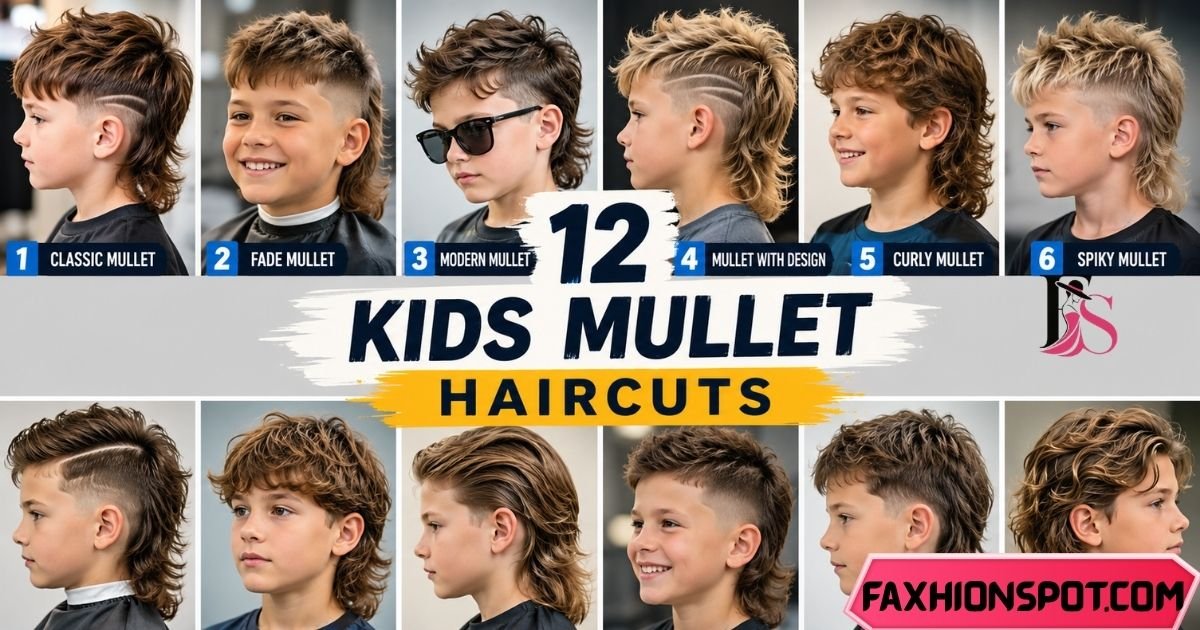
Looking for a haircut that feels cool, playful, and a little different? The mullet is having a major comeback in 2026, and children are wearing it in more creative ways than ever. Today’s versions are not simply copied from the classic 1980s look.
For parents, the appeal is practical. A well-shaped cut can look neat around the face while leaving personality and movement at the back. For kids, it is a chance to choose something that feels unique without requiring complicated styling every morning.
From a subtle tapered version to a bold burst fade, there is a style for almost every hair texture and personality. Here are 12 ideas worth showing your child and barber before the next haircut.
Popular Kids Mullet Haircuts
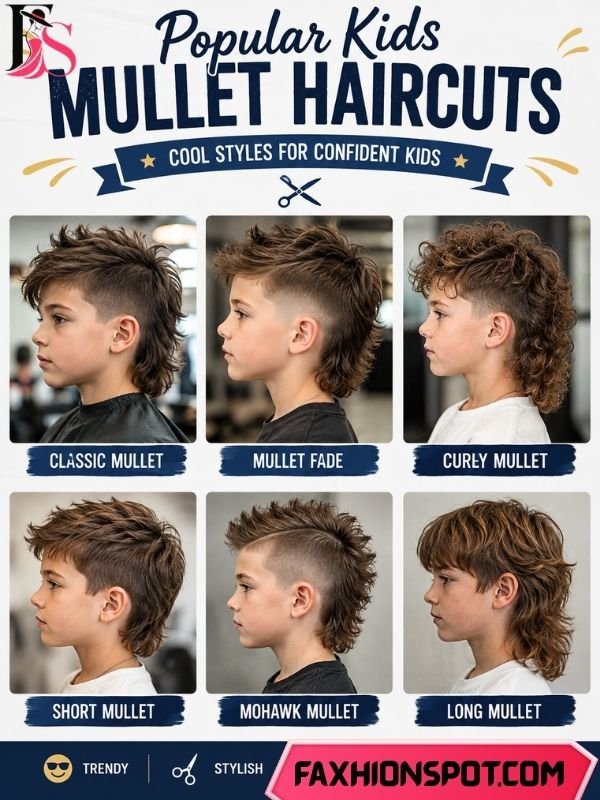
Before choosing a style, think about your child’s hair texture, age, daily routine, and school requirements. Straight hair may suit clean fades and sharp layers, while curls and waves can make shaggy versions look naturally fuller.
| Style | Best For | Maintenance | Overall Look |
| Kids Mullet Fade | Straight or wavy hair | Medium | Clean and modern |
| Boys Mullet Haircut | Most hair types | Low | Classic and playful |
| Burst Fade Mullet | Thick or textured hair | Medium | Bold and sporty |
| Cool Mullet Styles | Style-conscious kids | Medium | Trendy |
| Shag Mullet | Wavy or fine hair | Low | Relaxed and textured |
| Tapered Mullet | Younger children | Low | Soft and neat |
| Undercut Mullet | Thick hair | Medium | Edgy and dramatic |
| Modern Shaggy Mullet | Wavy or curly hair | Low-Medium | Natural and carefree |
Kids Mullet Fade
The fade version is one of the easiest ways to give the classic shape a modern update. The sides gradually become shorter around the ears and temples while the back keeps noticeable length.
A low fade is usually a good starting point for younger children because it creates contrast without looking excessively dramatic. A mid fade can provide a sharper appearance for older boys who want more definition.
The top can be textured with scissors rather than cut completely flat. This helps the transition between the short sides and longer back feel natural.
Best for: Straight, wavy, or moderately thick hair.
Ask your barber for: A low or mid fade with textured length on top and a controlled longer back.
Boys Mullet Haircut
The traditional boys mullet haircut keeps the basic formula simple: shorter hair around the front and sides with additional length toward the back.
The modern interpretation is softer than many older versions. Instead of creating a dramatic disconnect, the barber can blend the layers so the haircut grows out more naturally.
This is also a sensible option for a child getting a mullet for the first time. The length can be adjusted gradually, allowing parents and children to decide how bold they want the finished style to be.
Best for: Nearly any hair texture.
Why it works: It is recognizable, easy to personalize, and relatively simple to maintain.
Burst Fade Mullet Kids
The burst fade creates a curved fade around the ear rather than following a traditional straight fade pattern. The result is a rounded transition that makes the longer back stand out.
It is particularly eye-catching on thick, curly, or textured hair because the contrast between the clean sides and fuller back becomes more noticeable.
For a sporty child, this can be an excellent choice. It has a lively appearance without requiring a complicated styling routine.
Style tip: Keep the back moderately long rather than excessively long if your child has school or activity restrictions.
Cool Mullet Styles for Boys
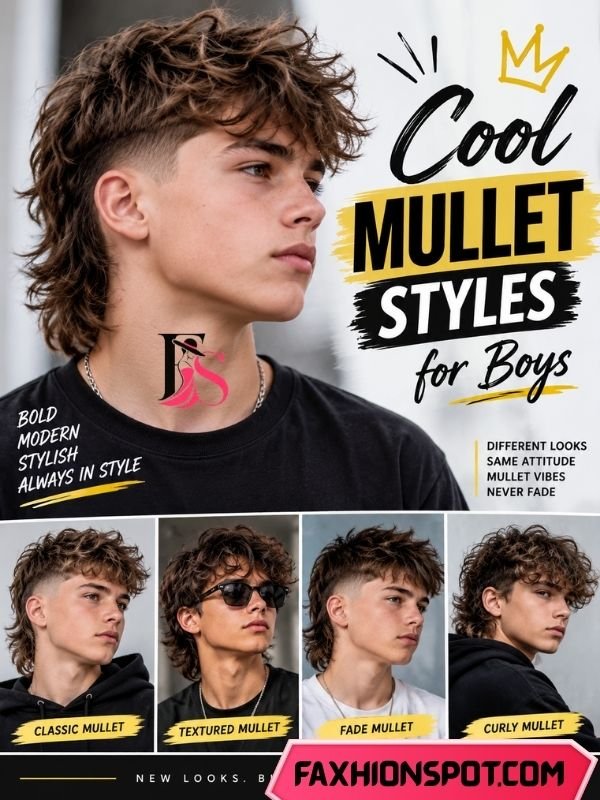
Not every cool style needs to be extreme. Some of the most wearable options use subtle length differences, natural texture, and a clean neckline.
A textured crop on top can be paired with a longer back for a contemporary finish. Another option is to let natural waves provide the movement instead of using heavy styling products.
For children who play sports, a shorter version can provide the same personality while being easier to manage.
Popular ideas include:
- Textured top with a soft back
- Curly mullet with natural volume
- Short sporty mullet
- Low-fade mullet
- Wavy surfer-inspired version
- Lightly disconnected mullet
The best choice is the one your child feels comfortable wearing every day.
Trendy Kids Mullet Ideas
Current trends are moving toward natural texture rather than overly stiff styling. Softer layers, low tapers, gentle fades, and slightly messy finishes are especially easy to adapt for children.
Older kids may also want small creative details, such as a shaved line, textured fringe, or subtle color. Younger children usually look better with simpler shapes that complement their natural hair.
When choosing a trendy option, remember that trends change quickly. A flexible haircut that can grow out well may be a better long-term choice than an extremely precise design.
Stylish Mullet Haircut Kids
A stylish version balances personality with structure. The front should remain tidy while the top and back provide movement.
For straight hair, layered ends can prevent the back from looking too heavy. For wavy hair, the natural movement can become the main feature of the cut. Curly hair can be shaped with carefully placed layers to maintain volume without creating unnecessary bulk.
A good barber should also consider the child’s head shape and natural hair growth pattern. The goal is not simply to copy a photograph but to adapt the style to the individual.
Fun Mullet Haircut Kids
A fun haircut should feel like something the child actually chose. Bright personalities often suit playful texture, curls, uneven layers, or a slightly longer tail.
Younger children may enjoy a soft version that still looks neat from the front. Older boys might prefer stronger contrast between the sides and back.
The most important thing is comfort. If the style requires constant brushing, blow-drying, or product application, it may become frustrating for an active child.
Good rule: Keep the morning routine simple enough that your child can manage it independently.
Unique Mullet Styles for Kids
One reason this haircut remains popular is its flexibility. Two children can have the same basic shape while looking completely different.
For a unique finish, consider combining the cut with:
- Natural curls
- Choppy layers
- A textured fringe
- A low taper
- A burst fade
- A subtle shaved design
- Extra volume at the crown
- A softer neckline
Unique does not have to mean complicated. Sometimes a small adjustment to the length or texture makes the entire haircut feel personal.
Shag Mullet Kids
The shag mullet combines the longer-back shape with layered, deliberately messy texture. It is softer and more relaxed than a highly structured fade.
This option works particularly well with wavy hair because natural movement creates volume without much effort. Fine hair can also benefit from layers because they can make the hairstyle appear fuller.
The key is avoiding excessive thinning. Too much texturizing can make fine hair look sparse, while thick hair may need controlled layering to prevent unwanted weight.
Best for: Wavy, fine, or naturally textured hair.
Tapered Mullet Kids
A tapered version is one of the most parent-friendly options because it creates a softer transition around the ears and neckline.
Unlike a very short skin fade, a taper leaves some hair in these areas. That makes the overall appearance less severe and can help the style grow out gracefully.
It is especially suitable for younger children or schools with conservative grooming expectations.
You can also ask the barber to keep the back shorter during the first cut. If your child enjoys the style, more length can be added gradually during future appointments.
Undercut Mullet Kids
The undercut creates stronger separation between the upper hair and the shorter sides. This makes the back and top appear fuller and more dramatic.
It is a good choice for children with thick hair because removing bulk from underneath can make the remaining length easier to manage.
However, this is a bolder option. Parents should check school policies before choosing a highly disconnected design.
For styling, a small amount of lightweight cream or texturizing product may be enough. Heavy wax is usually unnecessary for everyday children’s hair.
Modern Shaggy Mullet Kids
The modern shaggy version sits between a traditional mullet and a contemporary shag. It uses multiple layers to create movement throughout the crown, sides, and back.
It is ideal for children who prefer a relaxed appearance rather than a sharply defined fade.
This style can also be forgiving as it grows. Instead of looking obviously overgrown after a few weeks, the layers can maintain a casual shape.
For naturally wavy hair, simply allowing the hair to air-dry may be all the styling required.
What is a Kids’ Mullet Cut?
A kids’ mullet cut is a hairstyle that generally keeps the front and sides shorter while leaving additional length at the back. Modern versions can include fades, tapers, shags, curls, layers, or textured tops.
The important thing to understand is that there is no single “correct” mullet. The proportions can be changed according to age, hair type, personality, and lifestyle.
For example:
- Younger child: A short taper with a modestly longer back.
- Active child: A shorter top and back that require little styling.
- Curly-haired child: Layered sides and back that allow curls to move naturally.
- Older child: A stronger fade, burst fade, or disconnected shape.
- School-conscious child: A subtle version with controlled length.
A reference photograph is helpful, but explain what your child likes about the picture. Perhaps they like the fade, the length, the texture, or the overall shape. This gives the barber more useful information than simply saying, “I want this exact haircut.”
Hair texture also matters. Straight hair tends to show the shape clearly, while waves and curls create extra volume and movement. Thick hair may require additional layering, whereas fine hair usually benefits from preserving as much density as possible.
Click Here To Read Another Topic
The Evolution of Kids’ Mullet Cut
The mullet has a long history, but its modern popularity comes from its ability to combine an old-school silhouette with contemporary barbering.
Older versions were often associated with dramatic length at the back and comparatively simple cutting techniques. Modern barbers have more ways to customize the shape, including fades, tapers, scissors, texturizing, and carefully blended layers.
The current children’s versions are generally softer and more wearable. Recent hairstyle guides repeatedly highlight fades, tapers, shaggy layers, natural texture, and different versions for straight, wavy, and curly hair.
The resurgence also reflects a broader shift toward expressive children’s hairstyles. Parents increasingly want cuts that are practical enough for school and activities while still allowing children to show personality.
How to Choose the Right Style
Before making an appointment, consider these five factors:
1. Hair texture
Look at how your child’s hair naturally behaves after washing. Straight, wavy, and curly hair will produce different results.
2. Maintenance
If mornings are rushed, choose a taper or softer layered style that needs minimal styling.
3. School rules
Some schools have specific expectations about hair length, shaved designs, or extreme cuts.
4. Activity level
Children who play sports may prefer shorter sides and a controlled back.
5. Personal preference
The best hairstyle is one your child actually enjoys wearing.
How Often Should It Be Trimmed?
A clean fade generally needs more frequent maintenance than a soft shag or taper. Many children can go several weeks between full haircuts, depending on how quickly their hair grows and how precise they want the shape to remain.
A simple trim around the ears and neckline can sometimes refresh the appearance without completely changing the back length.
Frequently Asked Questions
Are mullets suitable for young boys?
Yes. A softer taper or shorter version can make the style appropriate for younger children.
What hair type works best?
There is no single best texture. Straight, wavy, curly, and thick hair can all work when the shape is adapted correctly.
Is a burst fade hard to maintain?
It requires more frequent side maintenance than a shaggy or tapered version because the fade loses definition as it grows.
Can a child wear a mullet to school?
Usually, but school grooming policies vary. Check the rules before choosing a dramatic fade or shaved design.
How do I explain the haircut to a barber?
Bring a clear reference photo and describe the desired length, fade or taper, texture, and how much length you want to keep at the back.
Is a shaggy version low maintenance?
Generally, yes. Its layered, natural appearance means it does not need to look perfectly styled every morning.
Are mullets good for curly hair?
Absolutely. Layers can help curls form naturally while preventing the back from becoming too heavy.
Conclusion
The modern mullet gives children plenty of room to express their personality while still offering practical options for everyday life. From a clean fade and sporty burst fade to a soft taper, shag, or curly layered finish, there is no shortage of ways to customize the shape.
Whether your child wants something subtle or a style that gets noticed, these 12 ideas provide a strong starting point for the next barbershop visit. The best haircut is ultimately one that makes your child feel confident, comfortable, and happy when they look in the mirror.
2 thoughts on “12 Kids Mullet Haircuts Your Child Will Love 2026”