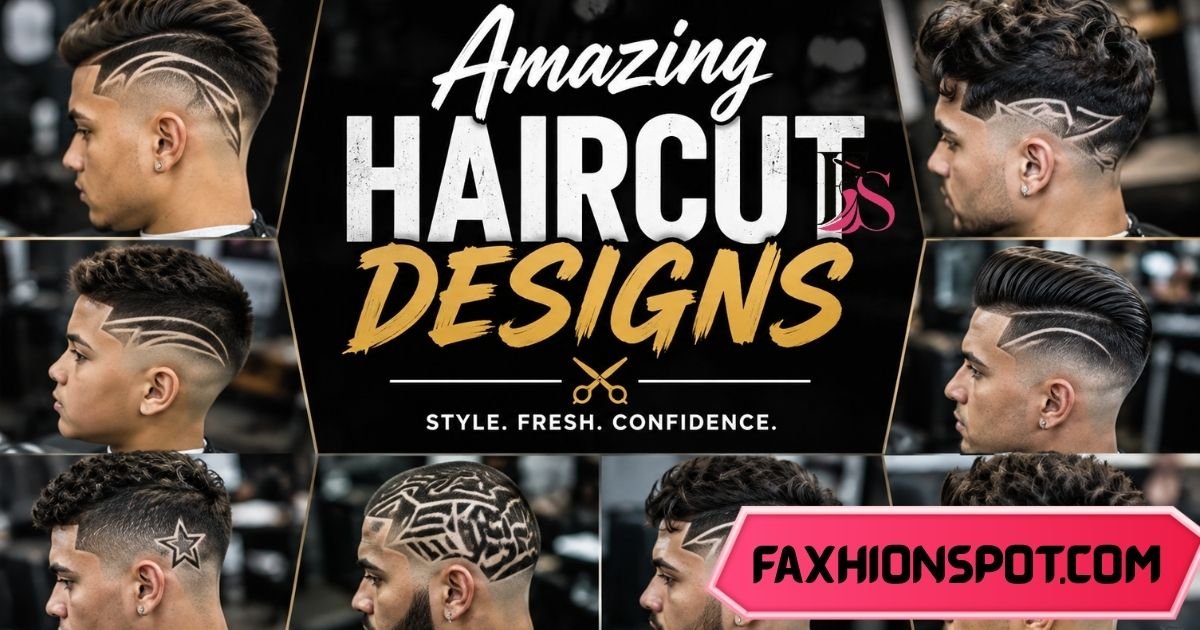
A great haircut can change more than your appearance—it can become part of your personal style. In 2026, haircut designs are moving beyond simple shaved lines and becoming more creative, personalized, and adaptable.
The best haircut designs work with the shape of your head, hair texture, lifestyle, and preferred level of maintenance. Some are subtle enough for school or work, while others are bold statement looks made to stand out.
This guide explores some of the most appealing haircut designs for 2026, explains what makes each one different, and offers practical advice for keeping your style sharp after leaving the barbershop.
Creative & Trendy Haircut Designs
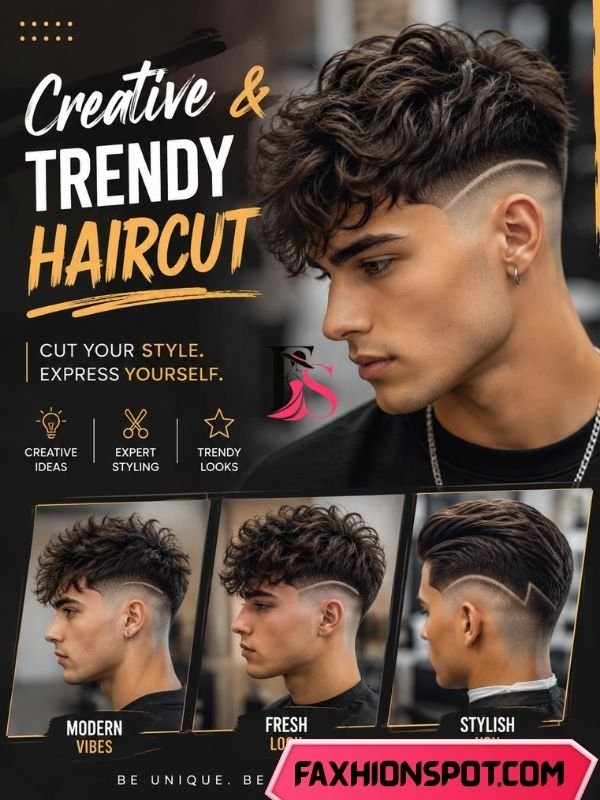
Modern haircut designs give traditional cuts an artistic upgrade. A single razor line can make a fade look sharper, while a curved pattern or geometric detail can completely change the personality of a short haircut.
Current barbering trends favor customization. Rather than copying a style exactly, many barbers recommend adjusting the design to suit the client’s hairline, density, face shape, and natural growth pattern. That approach also makes the finished look easier to maintain.
Low Fade with Line Design
A low fade with a line design is one of the easiest haircut designs to wear if you want something stylish without going extremely bold.
The fade begins close to the ears and gradually blends into the longer hair above. A clean razor line can then be added above or behind the temple.
This style works especially well with short crops, curls, waves, or a neatly styled top. The low placement keeps the overall appearance balanced, while the shaved detail provides a modern edge.
Best for: Straight, wavy, curly, and coily hair.
Ask your barber for: A low fade with a single clean razor line following the natural shape of the head.
High Fade with Freestyle Pattern
If you want haircut designs that attract attention, a high fade with a freestyle pattern is a strong choice.
The high fade removes more hair from the sides, creating a larger canvas for creative razor work. Your barber can create curves, waves, arcs, lightning-inspired shapes, or abstract patterns.
Freestyle designs are particularly appealing because there is no requirement to follow a standard shape. The barber can create a pattern based on your hairline and head shape.
The key is finding an experienced barber who can maintain symmetry and clean transitions.
Textured Crop with Razor Detail
A textured crop combines a short, layered top with a faded or tapered side. Adding a small razor detail makes these haircut designs look more distinctive without becoming excessive.
The textured top creates movement and separation, while the razor detail provides contrast. Modern textured crops often use a slightly broken or piecey fringe rather than a completely blunt front.
A matte styling product can enhance the texture without making the hair appear overly shiny.
Style tip: Ask your barber to consider your crown growth pattern before deciding on the final crop length.
Buzz Cut with Geometric Design
A buzz cut is already clean and low maintenance, but geometric haircut designs can turn this simple style into a statement.
Triangles, diamonds, parallel lines, squares, and angled patterns are popular choices. Because the hair is short, the design becomes the main visual feature.
This style is particularly effective when the barber uses precise clipper or razor work. A sharp line-up around the forehead and temples can further strengthen the finished appearance.
Best for: People who prefer short hair and minimal daily styling.
Taper Fade with Hard Part
A taper fade with a hard part blends classic grooming with contemporary detailing. The taper keeps the transition around the temples and neckline relatively controlled, while the hard part creates a clearly defined shaved separation.
Among modern haircut designs, this is one of the more polished choices. It can work with a comb-over, side part, quiff, slick back, or short textured top.
A hard part is normally created with a trimmer or razor and requires regular touch-ups because the shaved channel becomes less visible as the hair grows.
Faux Hawk with Side Lines
The faux hawk already has a rebellious shape, and adding side lines makes the haircut even more expressive.
The center section remains longer and is styled upward or toward the middle, while the sides are faded. One or two razor lines can emphasize the separation.
This combination is ideal for people who want the energy of a mohawk without committing to fully shaved sides.
For a softer appearance, choose a taper or low fade. For stronger contrast, a high fade or skin fade can be used.
Crew Cut with Curved Design
A crew cut is traditionally associated with simplicity, but curved haircut designs can make it feel much more contemporary.
Instead of a straight razor stripe, the barber can create a smooth arc around the temple or side of the fade. The result is cleaner and more understated than a large graphic pattern.
Curved designs are also useful when you want your haircut to follow the natural contours of your head rather than creating sharp geometric angles.
Best for: Professional environments, athletic lifestyles, and people who want a subtle creative detail.
Pompadour with Undercut
The pompadour brings volume and classic styling to modern haircut designs.
An undercut creates a dramatic contrast between the longer hair on top and the shorter sides. A hard part or subtle razor detail can make the separation even clearer.
For a contemporary version, avoid making the top excessively glossy. Matte or low-shine products generally create a more relaxed finish.
The pompadour requires more styling time than a buzz cut or crew cut, so it is best suited to people who enjoy spending a few minutes on their hair each morning.
Caesar Cut with X Design
The Caesar cut is recognizable by its short length and forward fringe. Adding an X-shaped razor design gives this traditional style a modern, graphic element.
This is one of the bolder haircut designs, especially when the X is positioned inside a skin fade.
The design should be carefully placed so it does not interfere with the natural hairline. Bringing a reference picture to your barber can make it easier to communicate the desired size and position.
Mohawk Fade with Lightning Bolt
Few haircut designs are as energetic as a mohawk fade combined with a lightning-bolt pattern.
The longer center strip creates height and character, while the fade removes bulk from the sides. A lightning bolt can then be shaved into one side for an unmistakably creative finish.
This style is especially popular for people who enjoy expressive grooming and are comfortable with frequent maintenance.
For a less dramatic version, keep the central strip shorter and use a low or mid fade.
Quick Comparison of the Best Designs
| Style | Overall Look | Maintenance | Best For |
| Low Fade + Line | Clean and modern | Medium | Everyday wear |
| High Fade + Freestyle | Bold and artistic | High | Creative personalities |
| Textured Crop + Razor | Casual and trendy | Medium | Textured hair |
| Buzz Cut + Geometric | Sharp and minimal | Medium | Low styling needs |
| Taper + Hard Part | Polished and defined | Medium | Professional looks |
| Faux Hawk + Lines | Edgy and youthful | High | Statement styles |
| Crew Cut + Curve | Subtle and refined | Low-Medium | Classic style |
| Pompadour + Undercut | Retro-modern | High | Volume lovers |
| Caesar + X | Graphic and bold | Medium | Short-hair fans |
| Mohawk + Lightning Bolt | Dramatic and expressive | High | Adventurous styles |
How to Maintain Your Haircut Designs?
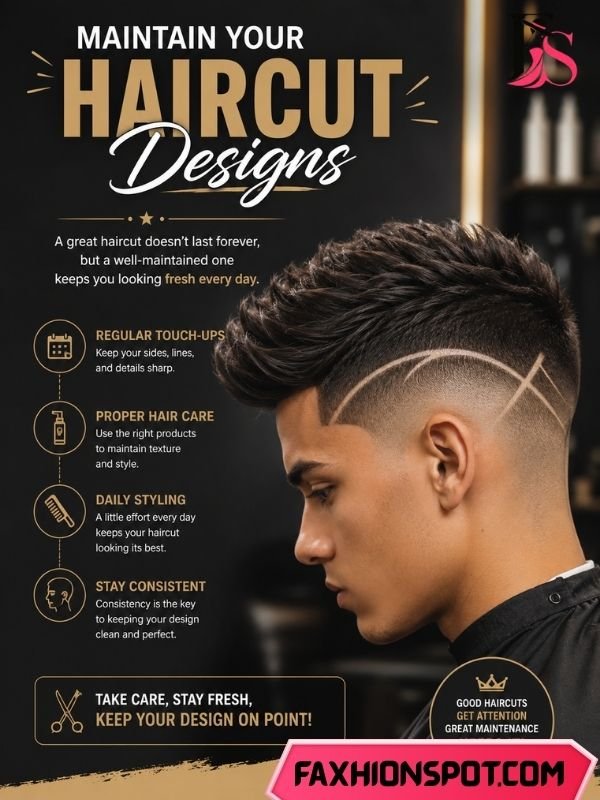
Good haircut designs look their best when the surrounding haircut is properly maintained. Even an excellent razor pattern can lose its impact when the fade becomes uneven or the neckline grows out.
Here are practical maintenance steps to follow.
1. Schedule Regular Barber Visits
Short fades and razor details usually require more frequent appointments than longer hairstyles. A general refresh every two to four weeks can help, while extremely sharp line-ups or hard parts may need attention sooner.
Some current barbering guides recommend refreshing sharp line-ups every one to two weeks, depending on how quickly the hair grows.
2. Keep the Design Clean
Do not try to recreate complicated haircut designs yourself unless you have professional barbering experience.
A small mistake can change the symmetry of a pattern or push the hairline farther back than intended. For precision work, let a professional handle the razor details.
3. Wash According to Your Hair Type
Your shampoo routine should match your scalp and hair texture. Overwashing can leave some hair types dry, while insufficient cleansing can create buildup.
Use a suitable conditioner when needed, especially if the longer hair on top feels dry.
4. Choose the Right Styling Product
Different haircut designs pair with different finishes.
- Use matte clay for textured crops.
- Try pomade for classic pompadours.
- Use light styling cream for relaxed looks.
- Choose stronger hold when creating volume.
- Avoid excessive product if you want the fade and design to remain the focal point.
5. Protect the Hair and Scalp
Sun exposure, heat styling, and harsh products can affect the condition of your hair and scalp. Keep heat tools at moderate temperatures and avoid applying unnecessary chemicals to freshly shaved skin.
6. Communicate With Your Barber
One of the most important maintenance steps is explaining what you want before the cut begins.
Show your barber a reference photo and discuss:
- Fade height.
- Design location.
- Line thickness.
- Top length.
- Desired level of contrast.
- How often you are willing to return for touch-ups.
Reference images are repeatedly recommended by barbering guides because terms such as “high fade” or “sharp line” can mean different things to different clients.
The Evolution of Haircut Designs
The history of haircut designs reflects the broader evolution of barbering. Traditional short hairstyles focused mainly on clean shapes, practical length, and controlled grooming. Over time, improved clippers, trimmers, razors, and barbering techniques made it easier to introduce detailed patterns.
Fade haircuts became an important foundation for modern design work because the gradual reduction of hair creates a natural contrast between different lengths. Contemporary fades include low, mid, high, and taper variations, giving barbers multiple areas in which to place creative details.
Today’s haircut designs are also more personalized. Instead of simply choosing a popular haircut, clients can combine several elements:
- Fade or taper.
- Textured or smooth top.
- Hard part.
- Razor line.
- Geometric pattern.
- Curved detail.
- Freestyle artwork.
- Customized hairline.
This shift has made barbering more artistic. Modern line designs can be subtle enough to look professional or bold enough to function almost like temporary artwork.
Another noticeable 2026 trend is the movement toward softer, more natural fades. While dramatic high fades remain popular, some current guides report growing interest in low tapers and blended transitions.
That does not mean bold designs are disappearing. Instead, the contrast between a soft fade and a precise razor detail can make the design feel even more intentional.
Choosing a Design for Your Face Shape
Your face shape can influence how haircut designs look.
Round face: Higher fades and added height can create a longer visual profile.
Oval face: Most fade heights and top styles can work well because of the balanced proportions.
Square face: Short sides and structured designs can emphasize naturally strong features.
Long face: A lower fade and moderate top height can help maintain visual balance.
Heart-shaped face: Avoid excessive height if it makes the forehead appear wider; a balanced taper can be more flattering.
These are guidelines rather than strict rules. Your hair density, hairline, and personal preference are equally important.
Choosing a Design for Your Hair Type
Straight hair often shows razor patterns very clearly. Wavy hair can create a softer transition between the design and the surrounding fade.
Curly and coily textures can also look excellent with line-ups and geometric details because the contrast between the natural texture and precise shaved lines creates visual interest.
The most important factor is working with the hair you actually have rather than trying to force a style that requires a completely different texture.
Click Here To Read Another Topic
How to Ask Your Barber for the Perfect Design
The easiest way to get great haircut designs is to communicate specific details.
Instead of saying, “Give me something cool,” explain exactly what you want.
For example:
“I want a low taper with one curved razor line above the temple. Keep the top textured and don’t make the line too thick.”
Or:
“I want a mid fade with a geometric design on the left side. Keep the pattern subtle and make sure it follows my natural head shape.”
A reference photo can then clarify the final look.
Remember that a skilled barber may modify the design slightly to suit your hairline or head shape. That adjustment can actually produce a better result than copying a photograph exactly.
Frequently Asked Questions
Are haircut designs still popular in 2026?
Yes. Modern fades, tapers, razor lines, geometric patterns, and customized details remain popular choices for men seeking personalized styles.
How long do shaved haircut designs last?
Most sharp designs gradually become less defined as the hair grows and may need a refresh within one to three weeks.
Which haircut design is easiest to maintain?
A crew cut, buzz cut, or low fade with a simple single line generally requires less styling than complex freestyle patterns.
Are haircut designs suitable for professional workplaces?
Yes. Subtle lines, curved details, and restrained taper designs can look polished while still adding personality.
Can haircut designs work with curly hair?
Absolutely. Curly and coily hair can provide strong contrast against clean razor lines and faded sides.
Should I bring a photo to my barber?
Yes. A reference photo makes it easier to communicate the exact fade height, design placement, line thickness, and overall shape you want.
How often should I get a fade touched up?
A practical schedule is around every two to four weeks, although sharp line-ups and detailed designs may need more frequent touch-ups.
Can I cut a design into my hair at home?
Simple lines may look easy, but detailed haircut designs require precision. Professional barbering is safer when symmetry and clean razor work matter.
Conclusion
The best haircut designs in 2026 combine creativity with practical barbering. Whether you prefer a subtle low fade with one razor line, a textured crop with a small detail, or an expressive mohawk with a lightning bolt, there is plenty of room to personalize your look.
Before your next appointment, collect a few reference photos, decide how much maintenance you are comfortable with, and discuss the design with your barber. With the right combination of cut, contrast, and detail, your next style can feel both current and uniquely yours.