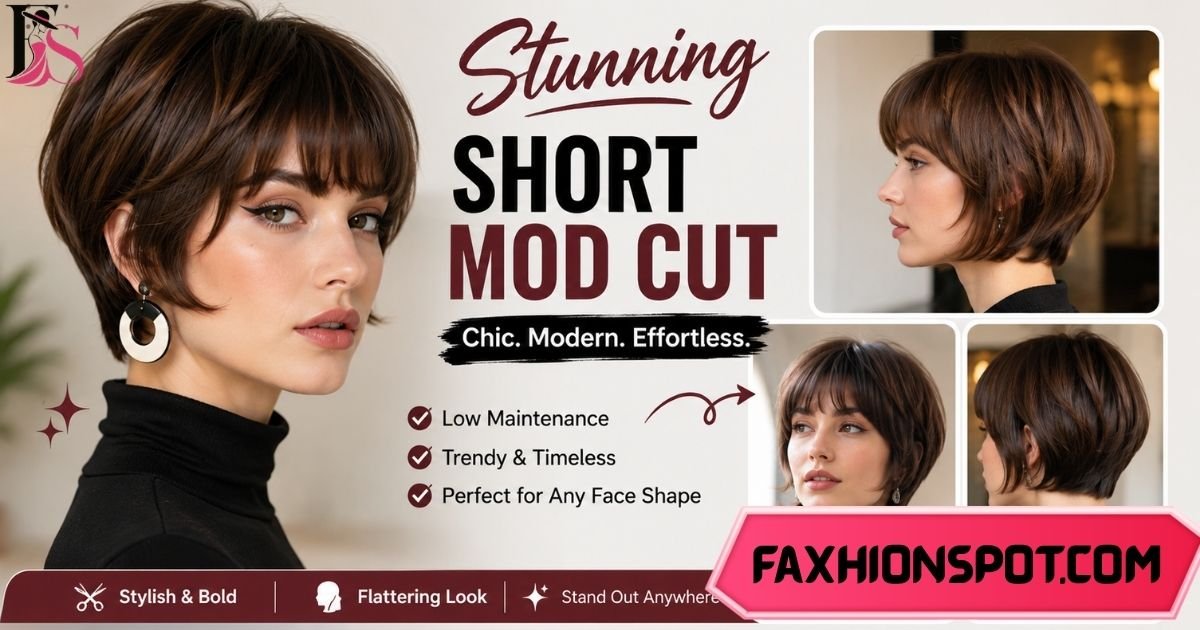
A Short Mod Cut is one of those hairstyles that manages to look retro, youthful, stylish, and surprisingly modern at the same time. Inspired by the British Mod movement of the 1960s, this haircut is recognized for its defined fringe, layered shape, controlled volume, and effortless movement.
If you want a haircut with personality without going extremely short, these mod-inspired styles are worth exploring.
Top Short Mod Cut
The Short Mod Cut has evolved considerably from its original 1960s form. Classic versions generally feature scissor-cut sides, a noticeable fringe, and a rounded silhouette, while newer interpretations introduce more texture and movement. Current hairstyle guides commonly describe the style as a medium or short-to-medium haircut built around a defined fringe and layered structure.
Here are some of the most appealing variations to consider.
| Style | Best Feature | Ideal Hair Type | Overall Vibe |
| Short Mod Cut | Clean shape | Straight, fine | Smart |
| Textured Mod | Choppy layers | Medium, thick | Casual |
| Curly Mod Cut | Natural curls | Curly | Playful |
| Wavy Mod Cut | Natural movement | Wavy | Relaxed |
| Mod Mullet | Longer back | Thick, wavy | Edgy |
| Shaggy Mod | Heavy layers | Wavy, thick | Rock-inspired |
| Long Mod Cut | Extra length | Straight, wavy | Fashionable |
| 90s Mod Cut | Retro texture | Straight, thick | Nostalgic |
| Modern Mod Cut | Updated structure | Most types | Contemporary |
| Messy Mod Cut | Lived-in texture | Wavy, thick | Effortless |
| Layered Mod Cut | Movement | Medium, thick | Versatile |
Short Mod Cut
The classic Short Mod Cut keeps the recognizable mod shape while reducing the overall length. The top remains long enough to create a defined fringe, while the sides and back are controlled for a cleaner appearance.
This is an excellent choice if you want the personality of a mod hairstyle without committing to a longer haircut. A slightly uneven fringe can make the look feel more contemporary.
For fine hair, avoid removing too much weight from the top. Keeping enough density can make the haircut appear fuller. A lightweight styling cream is usually enough to guide the fringe and maintain natural movement.
Textured Mod
The textured mod is perfect for anyone who dislikes overly polished hairstyles. Instead of making every strand sit perfectly, the stylist creates point-cut or razor-textured layers that produce separation and movement.
This variation works particularly well with medium or thick hair because the layers help control bulk. The result is a relaxed hairstyle that still has a recognizable shape.
A small amount of matte clay can define individual pieces without making the hair look greasy. For an even lighter finish, texture powder can add lift around the roots.
Curly Mod Cut
Curly hair can give the mod shape a completely different personality. Rather than fighting the natural curl pattern, the haircut can use the curls to create volume around the crown and movement through the fringe.
The key is preserving enough length for the curls to form properly. Excessive thinning can sometimes make curly hair unpredictable, so communicate your natural curl pattern clearly with your stylist.
A curl-enhancing cream can help maintain definition while keeping the finish soft. This variation feels expressive, youthful, and naturally full of character.
Wavy Mod Cut
The wavy version is arguably one of the easiest variations to style because natural waves already provide the movement the haircut needs.
Ask for layered texture that follows the direction of your waves rather than forcing the hair into a rigid shape. A soft fringe can sit across the forehead or fall slightly to one side.
Sea salt spray can enhance natural texture, while a lightweight cream can reduce frizz. Letting the hair air-dry often produces a more relaxed result than excessive blow-drying.
Mod Mullet
The mod mullet combines the structured front of a mod haircut with a noticeably longer back. It has an alternative, fashion-forward personality and works especially well for people who want something less conventional.
The transition between the shorter front and longer back should still feel intentional. Choppy layers can prevent the style from looking too heavy.
This version is particularly effective on thick or naturally wavy hair. If you prefer a softer appearance, ask your stylist to feather the longer sections instead of creating an extremely sharp contrast.
Shaggy Mod
The shaggy mod brings together two popular ideas: the controlled silhouette of a mod haircut and the loose, layered texture of a shag.
Heavy layering creates movement around the crown, sides, and back. The fringe remains important because it helps preserve the mod identity while the surrounding layers make the haircut feel more relaxed.
This style suits people who prefer a rock-inspired appearance. It also works beautifully with natural waves because the texture gives the layers additional dimension.
Long Mod Cut
The long mod cut is for anyone who loves the mod aesthetic but does not want to sacrifice length. The sides and back remain noticeably longer, while the fringe and layered top preserve the characteristic shape.
It is a particularly good option for people transitioning from a shorter haircut. Instead of allowing the hair to grow without structure, a stylist can maintain intentional layers throughout the process.
Longer mod styles need more attention to shape. Regular trims can remove damaged ends while keeping the overall length intact.
90s Mod Cut
The 90s interpretation gives the classic silhouette a softer, nostalgic appearance. Think fuller layers, a relaxed fringe, slightly longer sides, and less emphasis on perfectly polished styling.
The look can be worn with straight hair or enhanced with natural waves. Finger styling is often preferable because it preserves the casual movement associated with the era.
A small amount of styling cream can add definition without creating a hard finish. The goal is controlled texture rather than excessive product.
Modern Mod Cut
The modern version takes the defining characteristics of the traditional style and makes them easier to wear today. It often features a cleaner outline, softer layers, and a lighter fringe.
Some contemporary versions also incorporate subtle tapering or other modern barbering techniques, although purists may argue that heavy clipper fading moves the haircut away from its traditional scissor-cut identity.
The modern approach is especially useful if you want a hairstyle that can transition between casual and formal settings. Keep the finish natural rather than overly slick for the most current appearance.
Messy Mod Cut
A messy mod cut is deliberately imperfect. The fringe may sit unevenly, individual layers can separate, and the overall shape has a lived-in quality.
This style is ideal for people who want a haircut that does not require extensive morning styling. It looks particularly convincing when natural texture is already present.
After washing, apply a small amount of matte product to damp or nearly dry hair. Use your fingers to separate the layers, then allow the hair to settle naturally.
Modern barber education also highlights messy, razor-textured mod shapes as a way to create movement while retaining a strong underlying silhouette.
Layered Mod Cut
The layered mod cut uses strategically placed layers to create volume and movement without losing the recognizable fringe.
Layer placement matters. Too few layers can make thick hair feel bulky, while excessive layering can make fine hair appear thinner. Your stylist should adjust the technique according to density and texture.
This is one of the most adaptable versions because the layers can be customized around the face. Shorter layers can create more energy, while longer layers produce a softer result.
Dramatic Finish
If subtlety is not your thing, give the mod shape a dramatic finish. A bold fringe, exaggerated layers, longer sideburns, strong texture, or a noticeably extended back can transform the haircut into a statement style.
The secret is keeping one major feature dominant. For example, if the fringe is extremely bold, keep the rest of the haircut relatively controlled. If the back is long and dramatic, soften the front.
A dramatic finish works especially well for fashion shoots, music-inspired looks, and people who enjoy alternative hairstyles.
How to Maintain a Mod Haircut?
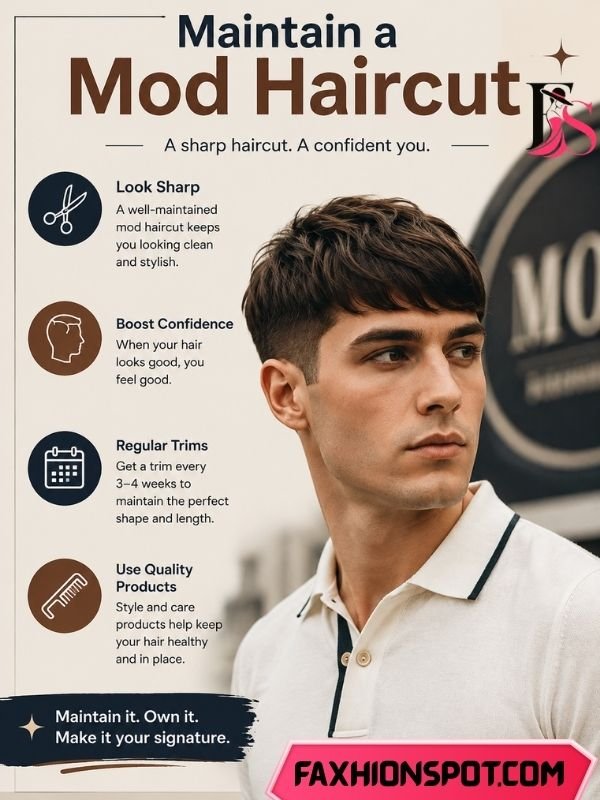
Maintaining a Short Mod Cut is relatively straightforward, but the exact routine depends on length, texture, and how polished you want the final result to look.
The most important part is keeping the shape under control. A mod haircut relies on its fringe, layers, and overall proportions. Once these grow unevenly, the style can quickly lose its definition.
1. Schedule Regular Trims
Shorter variations generally need more frequent maintenance than longer versions. A trim every few weeks can keep the fringe and perimeter looking intentional.
Longer versions can usually be allowed more time between appointments, especially if a slightly messy finish is part of the design.
2. Choose Products According to Texture
Do not automatically reach for the strongest styling product.
Consider:
- Fine hair: lightweight mousse, texture spray, or powder
- Thick hair: matte clay or styling cream
- Wavy hair: sea salt spray or lightweight cream
- Curly hair: curl cream or leave-in conditioner
- Dry hair: moisturizing styling products
The right product should support the haircut rather than overpower it.
3. Style the Fringe Carefully
The fringe is often the visual focal point of a Short Mod Cut. Blow-dry it forward if you want a traditional appearance, or guide it slightly sideways for a softer modern finish.
Avoid applying too much product directly to the fringe. Heavy buildup can make it look flat and greasy.
4. Embrace Natural Movement

One reason this haircut remains popular is that it can look better with some movement. Current styling guides increasingly emphasize natural texture, finger styling, layered shape, and flexible products rather than rigid finishes.
After applying product, use your fingers to separate the layers. Avoid repeatedly combing the hair once the desired shape has formed.
5. Do Not Overwash
Washing frequency depends on your scalp and hair type, but excessive washing can leave some hair types dry and difficult to style.
Use a suitable shampoo and conditioner, and concentrate conditioner on the mid-lengths and ends when appropriate.
6. Protect the Hair From Excessive Heat
Frequent high-heat styling can contribute to dryness and breakage. If you use a blow dryer, keep the temperature moderate and avoid holding the dryer too close to the hair.
For naturally wavy or curly versions, air-drying can often preserve texture better than aggressive heat styling.
7. Tell Your Barber Exactly What You Want
A photo is often the easiest way to communicate the desired shape. Also explain:
- How short you want the sides
- Where you want the fringe to sit
- Whether you want visible layers
- How much length you want at the back
- Whether you prefer texture or a smooth finish
- How much daily styling you are willing to do
This prevents the common problem of asking for a general “mod” and receiving a version that does not match your expectations.
Click Here To Read Another Topic
Who Does This Haircut Suit Best?
A Short Mod Cut can be adapted to many face shapes and hair textures, but proportions matter.
Oval faces can generally handle a wide range of fringe and layering choices. Square faces can look particularly strong with textured movement that softens the overall outline. Rounder faces may benefit from controlled volume on top and a slightly more structured fringe.
For straight hair, almost any mod variation can work. Wavy hair naturally supports textured and messy versions, while curls can create a distinctive, fuller interpretation.
The most important consideration is not following a fixed rule. Your stylist should adjust the length, fringe, and layers to your natural hair behavior and facial proportions.
Frequently Asked Questions
Is a Short Mod Cut easy to style?
Yes. Most versions need only a small amount of styling cream, matte clay, or texture product and can be shaped with your fingers.
Is a Short Mod Cut suitable for curly hair?
Absolutely. The layers can be adjusted to work with the natural curl pattern while keeping the recognizable fringe and rounded structure.
What makes a mod haircut different from a regular haircut?
Its defining combination of fringe, deliberate proportions, layered movement, and traditionally scissor-cut structure gives it its distinctive identity.
Can a mod haircut work with thin hair?
Yes. Keeping appropriate weight and using lightweight volumizing products can make thinner hair appear fuller without excessive layering.
How often should I trim a mod haircut?
A shorter version may benefit from a trim every few weeks, while longer or intentionally messy variations can usually go longer between appointments.
Conclusion
The Short Mod Cut has survived for decades because it offers something many modern hairstyles lack: personality without sacrificing versatility.
Its roots in 1960s British fashion give it a distinctive identity, while today’s textured layers, relaxed styling, and personalized proportions make it much easier to adapt.