A low fade haircut is one of the easiest ways for men to make their hairstyle look cleaner without going too extreme.
The fade starts low around the ears and neckline, leaving more fullness on the sides than a mid or high fade.
Trending Low Fade Haircut For Men
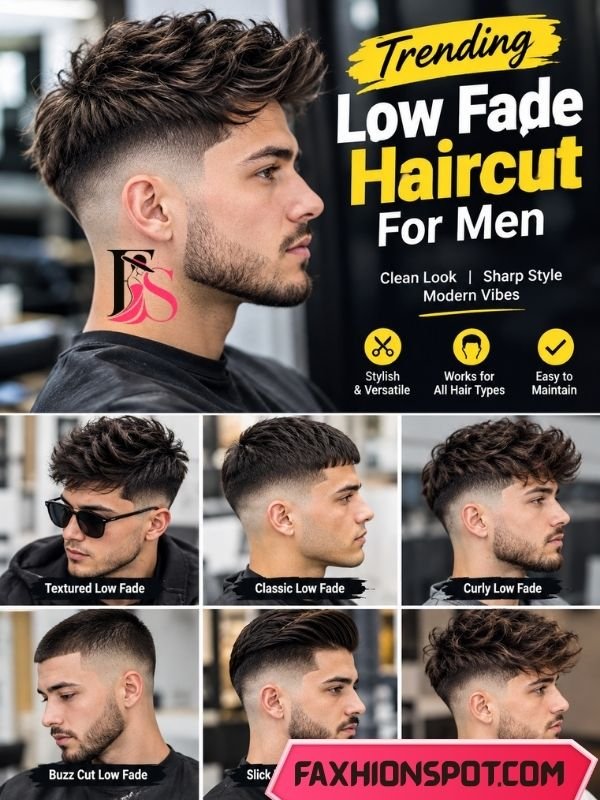
The popularity of the low fade haircut comes from its balance. It creates a polished outline around the lower sides and back while allowing you to keep personality and length on top.
Current hairstyle guides also highlight its adaptability to different face shapes, hair types, and styling preferences.
Classic Low Fade
The classic version is clean, understated, and incredibly versatile. The hair gradually becomes shorter around the ears and neckline while the top remains long enough to style.
Choose this option if you want a timeless haircut that works equally well with a side part, textured top, slick back, or natural finish. It is also an excellent starting point if this is your first fade.
Low Fade with Curly Hair
Curly hair and a low fade haircut make a strong combination because the clean sides allow the curls on top to become the focal point.
Keep enough length to show your natural curl pattern rather than cutting the top too short. A curl cream or lightweight styling product can help define the texture without making it look stiff.
Low Fade with Straight Hair
Straight hair gives you plenty of styling choices. You can wear it messy, swept back, parted to one side, or forward into a textured crop.
The fade removes excess bulk around the lower sides while keeping the top flexible. For a modern finish, ask your barber for some texture rather than a completely uniform top.
Low Fade with Wavy Hair
Wavy hair adds natural movement and dimension to a low fade haircut. Instead of fighting your waves, let them create the texture.
A medium-length top usually gives the best result because it provides enough weight for the waves to form naturally. A matte cream or light styling paste can enhance definition without creating excessive shine.
Low Taper Fade
A low taper is a softer alternative to a traditional fade. The transition is concentrated around the temples and neckline while more hair remains on the sides.
This option is ideal if you want a clean appearance without a dramatic contrast. It has also become a popular choice for men who prefer subtle, natural-looking grooming.
Low Skin Fade
The low skin fade takes the fade all the way down to bare skin at the lowest point. Because the fade remains low, you get the sharpness of a skin fade without removing as much hair higher on the sides.
It creates strong contrast and looks particularly crisp with short crops, textured tops, curls, and facial hair. Remember that skin fades generally require more frequent touch-ups to maintain their clean appearance.
Low Drop Fade
A low drop fade follows the natural shape of the head and drops lower toward the back. This creates a curved, customized appearance rather than a straight fade line.
It works especially well with textured hairstyles because the curved fade can emphasize the shape of the haircut. Ask your barber to keep the drop subtle if you want a more conservative result.
Buzz Cut with Low Fade
Want something simple? Combine a short buzz cut with a low fade haircut.
The buzz cut keeps maintenance easy, while the fade gives the otherwise uniform style more definition around the edges. It is a practical choice for men who prefer short hair but still want a modern barbershop finish.
Pompadour with Low Fade
A pompadour adds volume and height on top, while the low fade keeps the lower sides controlled.
This combination creates a classic-meets-modern appearance. Use a blow dryer to build volume, then finish with a pomade or styling cream. Men with longer or oval face shapes should be careful about adding too much height, as excessive volume can make the face appear longer.
Fringe with Low Fade
A fringe is a smart choice if you want to bring some of the hair forward toward the forehead.
Try a textured fringe for a relaxed, youthful look or a cleaner straight fringe for a more structured style. This combination can also help visually balance a higher forehead.
Faux Hawk with Low Fade
The faux hawk creates a strip of height and texture through the center of the top. Pairing it with a low fade haircut keeps the sides controlled without making the haircut excessively aggressive.
Use a matte clay or texturizing product to create separation. The result is energetic and contemporary without requiring the extreme commitment of a traditional mohawk.
Undercut with Low Fade
An undercut creates a noticeable separation between the longer hair on top and shorter sides. Adding a low fade softens that transition around the lower perimeter.
It works especially well with medium or long hair on top. Try wearing the top slicked back for a polished look or loosely textured for a casual finish.
Comb Over with Low Fade
The comb over remains one of the most dependable choices for men who want something polished.
A low fade haircut keeps the sides neat while the longer top is directed across the head. A natural side part looks modern and understated, while a defined hard part creates more contrast.
For everyday styling, choose a matte product. For a formal occasion, a small amount of pomade can provide extra control and shine.
Spiky Hair with Low Fade
Spiky hair brings texture and attitude to a traditionally clean fade. The key is avoiding stiff, overly uniform spikes.
Ask your barber to add texture to the top and use a small amount of matte clay or wax. Twist small sections with your fingers rather than creating perfectly identical spikes.
Afro Low Fade
A low fade can beautifully frame natural coils while preserving volume and texture on top.
Keep the upper section shaped according to your natural curl pattern. The fade can be subtle around the ears or sharper around the neckline depending on your preferred level of contrast. Regular edge maintenance helps keep the style defined.
Low Fade with Beard
Pairing facial hair with a low fade haircut creates a connected, balanced grooming look.
Your barber can blend the sideburn area into the beard so the transition looks intentional. A short beard works well for a clean appearance, while a fuller beard creates more visual weight around the lower face.
Low Fade with Design (Hard Part/Lines)
If you want something more distinctive, add a hard part, shaved line, or simple geometric design.
Keep the design minimal if you want the haircut to remain suitable for professional environments. More elaborate patterns can work for a fashion-forward or streetwear-inspired look.
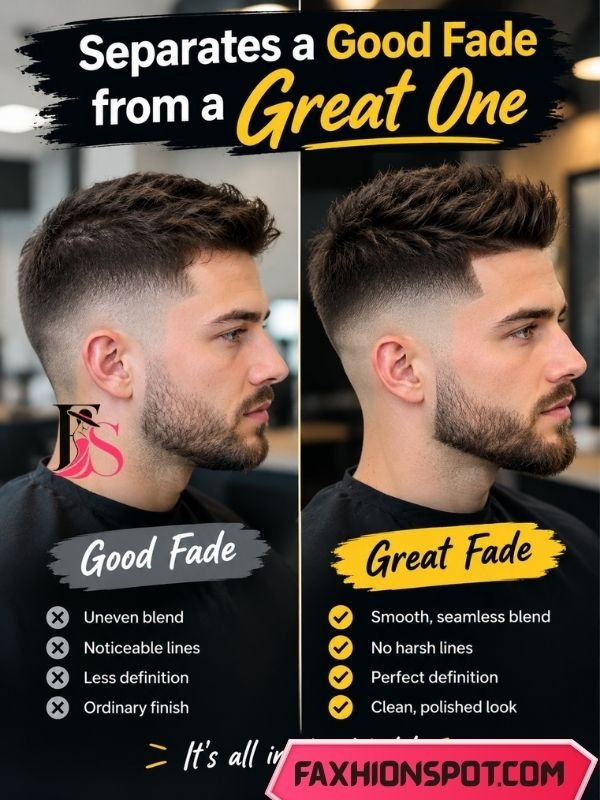
Here’s What Separates a Good Fade from a Great One?
The difference is usually not how short the fade is. It is the blend, proportions, shape, and finishing details.
A skilled barber considers your head shape, hair density, natural growth patterns, hairline, and the amount of length you want to retain. The transition should look smooth rather than showing obvious steps between clipper lengths.
A great fade should also complement the top.
For example:
| Hair on Top | Recommended Fade Pairing | Overall Effect |
| Short crop | Low skin fade | Crisp and modern |
| Curly | Low fade | Defined and balanced |
| Wavy | Low taper/fade | Natural and textured |
| Long | Low fade | Strong contrast |
| Buzz cut | Low fade | Simple and clean |
| Pompadour | Low fade | Classic and bold |
| Fringe | Low fade | Youthful and relaxed |
| Afro/coils | Low fade | Defined and structured |
Maintenance matters too. A low fade haircut generally grows out more naturally than a higher fade because more length remains above the lower blend. However, the sharpest appearance usually requires regular barber visits. Some professional barber guides estimate that a fresh fade can begin looking noticeably grown out after roughly two to three weeks.
To keep your haircut looking its best:
- Shampoo according to your hair type rather than over-washing.
- Use conditioner when your hair needs additional moisture.
- Choose styling products that match your texture.
- Keep the neckline and sideburns tidy.
- Schedule trims before the fade becomes visibly overgrown.
- Avoid excessive product buildup.
How to Ask Your Barber for the Right Low Fade Haircut?
Simply saying “give me a low fade” may not communicate exactly what you want.
The best approach is to explain where you want the fade to start, how short you want the bottom, and how much length you want on top.
Try this basic request:
“I want a low fade that starts just above my ears and stays low around the neckline. Keep the top around [your preferred length] and blend everything smoothly.”
Then specify the finish.
For example:
- Want subtle? Ask for a low taper or shadow fade.
- Want sharper? Ask for a low skin fade.
- Want texture? Ask your barber to point-cut or texture the top.
- Want a clean part? Request a defined side part or hard part.
- Want facial hair? Ask for the fade to transition naturally into your beard.
A reference photo is even better. Current barber guides repeatedly recommend showing your barber a picture because the terms “low fade,” “low taper,” and “skin fade” can be interpreted differently.
Low Fade vs. Mid Fade vs. High Fade
| Fade Type | Starting Point | Appearance |
| Low Fade | Near the ears and neckline | Subtle |
| Mid Fade | Around the temples | Balanced |
| High Fade | Higher on the sides | Bold |
If you are unsure, the low option is generally the safest starting point because it leaves more hair around the sides and does not dramatically alter the overall silhouette.
Click Here To Read Another Topic
The Evolution of Low Fade Haircut
The fade itself has deep roots in traditional barbering and military-inspired short hairstyles, but modern men’s grooming has transformed it into a much broader category.
The biggest change is versatility. Earlier versions were commonly associated with short, structured hairstyles. Today, the fade can support curls, waves, longer tops, textured crops, pompadours, fringes, afros, and creative designs.
The modern low fade haircut also reflects a shift toward more controlled and understated grooming. Instead of removing large amounts of hair from the temples and upper sides, the low placement preserves fullness and creates a softer transition.
That makes it appealing to men who want a haircut that looks fashionable without feeling overly dramatic.
Today’s barbering techniques also allow much greater personalization. The same low fade can look completely different depending on the clipper length, hair texture, top style, neckline shape, beard connection, and styling method.
Conclusion
The best low fade haircut is the one that works with your hair texture, face shape, lifestyle, and personal style.
That is why this fade remains so popular: it can be subtle and professional or sharp and fashion-forward without changing the entire shape of your hairstyle.
From a classic low fade and curly top to a buzz cut, pompadour, fringe, afro, beard combination, or creative design, there is plenty of room to personalize the look.