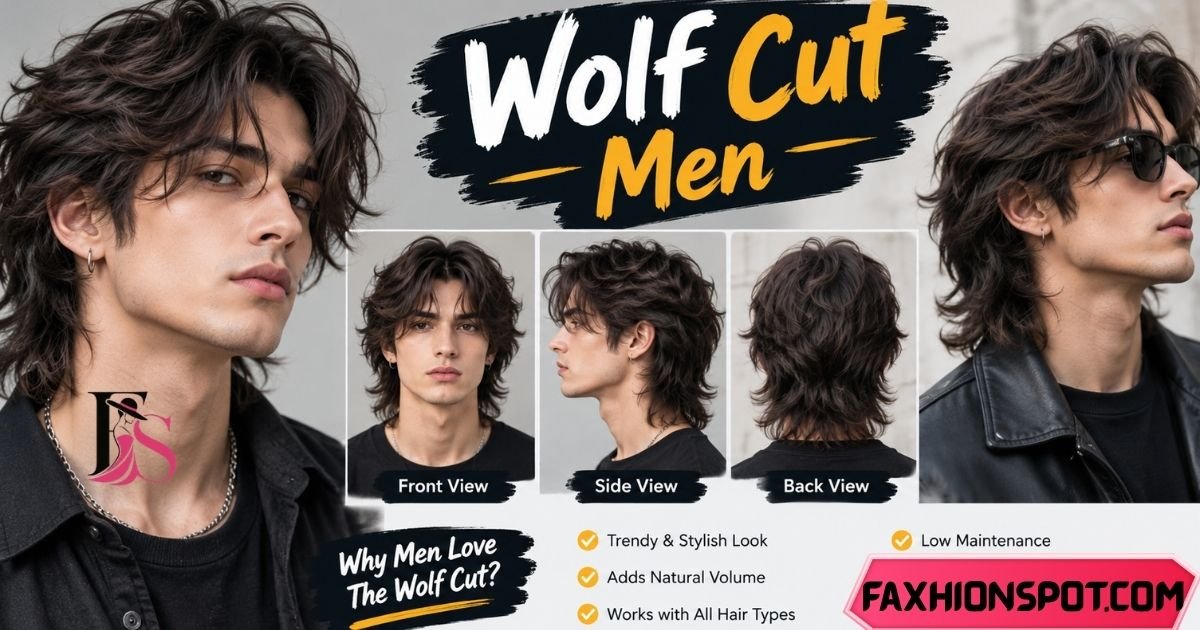
The wolf cut men trend is still one of the most recognizable modern hairstyles in 2026.
It sits somewhere between a shag haircut and a modern mullet, combining heavy layers, crown volume, face-framing pieces, and a deliberately messy finish.
Unlike a traditional mullet, it usually creates a softer transition between the top, sides, and back.
Current 2026 hairstyle guides continue to emphasize texture, movement, natural hair patterns, and customizable lengths rather than one fixed version of the cut.
Wolf Cut Men Hairstyles Core & Classic Variations
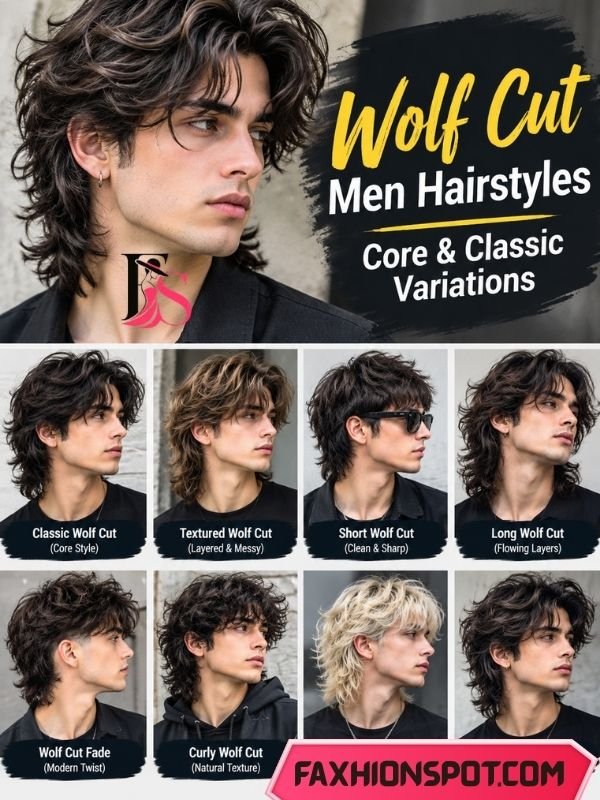
There is no single way to wear this haircut. Your hair length, thickness, texture, face shape, and personal style can completely change the final silhouette.
The table below gives you a quick overview before choosing a specific variation.
| Style | Best Hair Type | Overall Vibe | Maintenance |
| Classic Wolf Cut | Straight/Wavy | Balanced and edgy | Medium |
| Short Wolf Cut | Straight/Thick | Clean and modern | Low-Medium |
| Long Wolf Cut | Wavy/Thick | Dramatic and relaxed | Medium |
| Layered Wolf Cut | Most types | Voluminous | Medium |
| Korean Wolf Cut | Straight/Wavy | Soft and stylish | Medium |
| No-Mullet Wolf Cut | Straight/Fine | Subtle | Low |
| Wavy Wolf Cut | Wavy | Natural and effortless | Low |
| Curly Wolf Cut | Curly | Bold and voluminous | Medium |
| Curtain Bangs | Straight/Wavy | Face-framing | Medium |
| Shaggy Wolf Cut | Thick/Wavy | Messy and rebellious | Low-Medium |
| Textured Wolf Cut | Most types | Choppy and rugged | Medium |
| Feathered Wolf Cut | Straight/Wavy | Soft and flowing | Medium |
| Soft Wolf Cut | Fine/Medium | Understated | Low |
| Undercut Version | Thick | High contrast | Medium |
| Pixie Wolf Cut | Short Hair | Sharp and experimental | Medium |
| Wolf Cut Mullet | Thick/Wavy | Dramatic | High |
Classic Wolf Cut
The classic version combines a layered crown with longer sides and a slightly extended back. It is the easiest starting point if you want the signature shape without going extremely dramatic.
Ask your barber for heavy layers on top, textured ends, face-framing pieces, and moderate length at the back. The goal is movement rather than a perfectly polished finish.
Short Wolf Cut
A short wolf cut keeps the recognizable layered structure while reducing the overall length. It is particularly useful for men who like the trend but do not want hair reaching the neck.
The shorter silhouette can feel cleaner and more practical for work or everyday styling. Texture on top keeps it from looking like an ordinary short haircut.
Long Wolf Cut
The long version creates a stronger shag-inspired appearance. Longer layers flow around the ears and neck, giving the hairstyle more movement and drama.
It works especially well with naturally wavy or thick hair. L’Oréal Paris also highlights shoulder-grazing versions as an option for men who prefer additional length and relaxed curtain bangs.
Layered Wolf Cut
Layers are the foundation of the entire style. A layered version focuses heavily on graduation and separation so the hair does not sit as one heavy block.
The top creates volume, while longer sections maintain movement through the sides and back. Texturizing shears or razor work can help remove excess bulk while preserving length.
Korean Wolf Cut
The Korean version generally has a softer, more refined silhouette. Instead of making the back extremely dramatic, it often emphasizes flowing layers, a middle part, and soft face-framing pieces.
This version is particularly appealing if you like K-pop-inspired hairstyles but want something wearable rather than aggressively mullet-like. Korean influences have played a major role in the style’s popularity.
No-Mullet Wolf Cut
Not every version needs an obvious mullet shape. A no-mullet variation keeps the layering and volume but makes the difference between the front and back much less dramatic.
It is an excellent choice for beginners. You get texture and movement without immediately committing to a long, disconnected back.
Wavy Wolf Cut
Natural waves are almost perfect for this haircut because they automatically create movement between the layers.
Instead of straightening the hair, let the wave pattern become part of the design. A small amount of sea-salt spray followed by scrunching can enhance definition without making the hair look overly styled.
Curly Wolf Cut
Curly hair gives the cut a distinctive rounded and voluminous appearance. Strategic layers can remove excessive weight and allow curls to spring naturally.
The key is not to over-layer the hair. A barber experienced with curls should account for shrinkage and the natural curl pattern before deciding how much length to remove.
Wolf Cut with Curtain Bangs
Curtain bangs create a center-parted frame around the forehead and cheekbones. They can make the overall haircut look softer while maintaining the textured back.
This combination is especially useful if you want a fashionable look without making the sides excessively short.
Shaggy Wolf Cut
The shaggy version leans heavily into the haircut’s rebellious side. Choppy layers, wispy ends, and a tousled finish create a relaxed appearance.
It works particularly well for thick or naturally textured hair because the natural volume supports the intentionally messy shape.
Textured Wolf Cut
Texture is what prevents the style from looking flat. Point-cutting, razor work, or texturizing techniques can separate the layers and give the ends a more broken-up appearance.
For daily styling, a lightweight matte paste or texturizing spray can emphasize individual sections without creating a stiff finish.
Feathered Wolf Cut
A feathered version uses softer, flowing layers rather than aggressively choppy ends. The hair gradually moves away from the face and blends into the longer sections.
It is a good choice for men who like the shape of a wolf cut but prefer a smoother and more mature appearance.
Soft Wolf Cut
The soft version tones down the dramatic contrast. The layers remain visible, but the transitions are more blended and the back is less exaggerated.
This can be a smart option for fine or medium-density hair because excessive layering can sometimes make thin hair appear even less dense.
Wolf Cut with Undercut
An undercut creates stronger contrast by keeping the sides and lower sections significantly shorter while leaving volume on top.
This is one of the bolder options. It can make thick hair easier to manage, but it also requires more frequent maintenance to keep the contrast clean.
Pixie Wolf Cut
The pixie-inspired variation takes the layered concept into shorter territory. The crown remains textured while the sides and nape are cropped closer.
It is less conventional than a traditional version and works well for someone who wants an edgy, fashion-forward haircut without long hair.
Wolf Cut Mullet
The wolf cut mullet combines the heavy layers and crown volume of a wolf cut with a more extended back.
The distinction is important: a traditional mullet emphasizes a strong short-front/long-back contrast, while this hybrid generally keeps more texture and layering throughout.
How to Style a Wolf Cut?
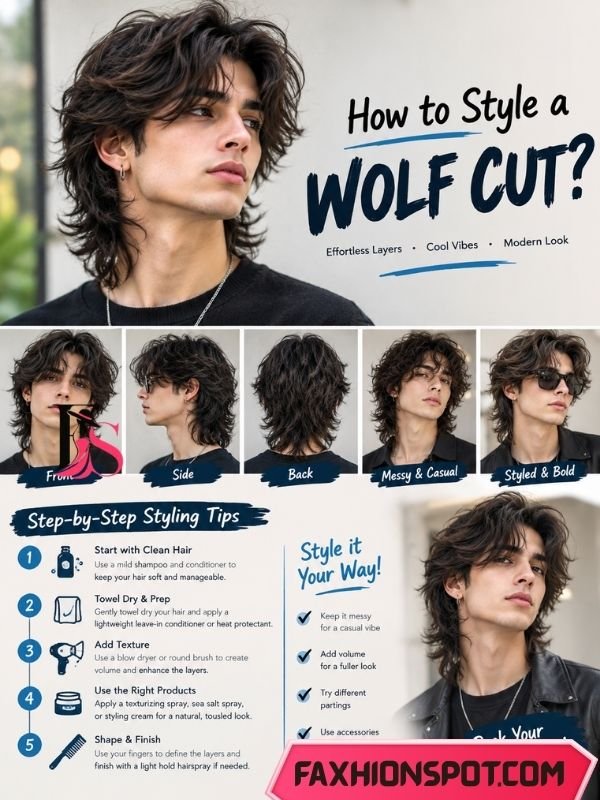
Styling does not need to be complicated. The main objective is to enhance the layers rather than make every strand perfectly controlled.
Simple styling routine
- Start with damp hair.
Gently towel-dry after washing and avoid aggressively rubbing the hair. - Apply a lightweight product.
Use sea-salt spray for waves or a light styling cream for softer hair. - Create crown volume.
Blow-dry the roots upward or use your fingers to lift the crown while drying. - Shape the layers.
Twist or scrunch selected sections to bring out movement. - Finish lightly.
Add a small amount of matte paste to the ends if you want more separation.
For naturally curly hair, curl cream and low-heat diffusing can preserve the curl pattern. For straight hair, rough-drying or a round brush can help create the volume that naturally wavy hair gets more easily.
What to tell your barber
Do not simply say, “Give me a wolf cut.” Show a reference image and explain the specific silhouette you want.
Tell your barber:
- How much length you want at the back
- Whether you want curtain bangs
- How short the sides should be
- Whether you want an undercut or taper
- How much crown volume you prefer
- Whether you want soft or choppy layers
A useful description is: “I want layered volume on top, textured sides, face-framing pieces, and a longer back, but keep the transition as soft as possible.”
How to Maintain a Wolf Cut?
The biggest advantage of this haircut is that it does not need to look perfectly polished. In fact, some natural messiness is part of its appeal.
However, neglecting it completely can make the layers lose their shape.
Maintenance tips
- Trim the shape approximately every 4–8 weeks depending on length.
- Use conditioner regularly, especially with longer hair.
- Avoid excessive heat styling.
- Use lightweight products rather than heavy waxes.
- Refresh the crown with a small amount of texturizing spray.
- Keep the fringe trimmed if it falls into your eyes.
- Ask your barber to preserve the overall layering instead of simply removing length.
Your maintenance schedule will depend on the version you choose. A short undercut needs more frequent cleanup, while a longer shaggy version can grow out more naturally. Current hairstyle guides commonly recommend adjusting trims according to the silhouette and hair type rather than following one universal schedule.
The Evolution of Wolf Cut
The modern wolf cut is not completely new. Its DNA comes from earlier shag and mullet hairstyles, but social media transformed those influences into a recognizable contemporary haircut.
The shag became famous for its layered, feathered movement, while the mullet introduced a stronger difference between the front, sides, and back. The wolf cut brought those ideas together with heavier crown volume and a deliberately undone finish.
Its modern popularity accelerated through Korean fashion, K-pop, celebrities, TikTok, and Instagram. By the early 2020s, it had moved from niche fashion circles into mainstream barbershops.
In 2026, the trend is less about copying one viral photograph and more about customization. Current versions range from subtle office-friendly layers to dramatic mullet hybrids, curly shapes, undercuts, and soft Korean-inspired cuts.
That evolution is important because it explains why the style can look completely different from one person to another.
Wolf Cut Before and After: What Actually Changes?
The most impressive transformations usually come from removing unnecessary weight rather than simply cutting the hair shorter.
Before:
- Hair may look flat or bulky.
- The sides can appear heavy.
- Natural texture may be hidden.
- The face may have little framing.
- The overall silhouette can look undefined.
After:
- Crown layers create visible lift.
- Textured ends add movement.
- Face-framing pieces create definition.
- The back gains a deliberate shape.
- Natural waves or curls become more noticeable.
That is why two people with similar hair lengths can have completely different results. The cutting technique and distribution of weight matter as much as the final length.
Click Here To Read Another Topic
Which Wolf Cut Is Best for You?
Choosing the right version should start with your natural hair rather than the photograph you save online.
| If You Have… | Consider… |
| Straight, thick hair | Classic or textured version |
| Fine hair | Soft or short layered version |
| Wavy hair | Wavy or Korean version |
| Curly hair | Curly layered version |
| Long hair | Long or shaggy version |
| Short hair | Short or pixie version |
| Strong features | Curtain bangs or feathered layers |
| Want maximum contrast | Undercut or mullet hybrid |
| Want subtle styling | No-mullet or soft version |
The best result is usually the version that works with your existing texture. Trying to force completely straight hair into a highly voluminous shape can require more styling, while naturally wavy or curly hair may achieve the look with considerably less effort.
Conclusion
The wolf cut men trend has evolved far beyond a single viral hairstyle. In 2026, it is better understood as a flexible haircut family built around layers, movement, crown volume, and a relaxed finish.
Whether you choose a short version, Korean-inspired style, curly shape, curtain bangs, undercut, soft layers, or full wolf-cut mullet, the most important factor is customization.