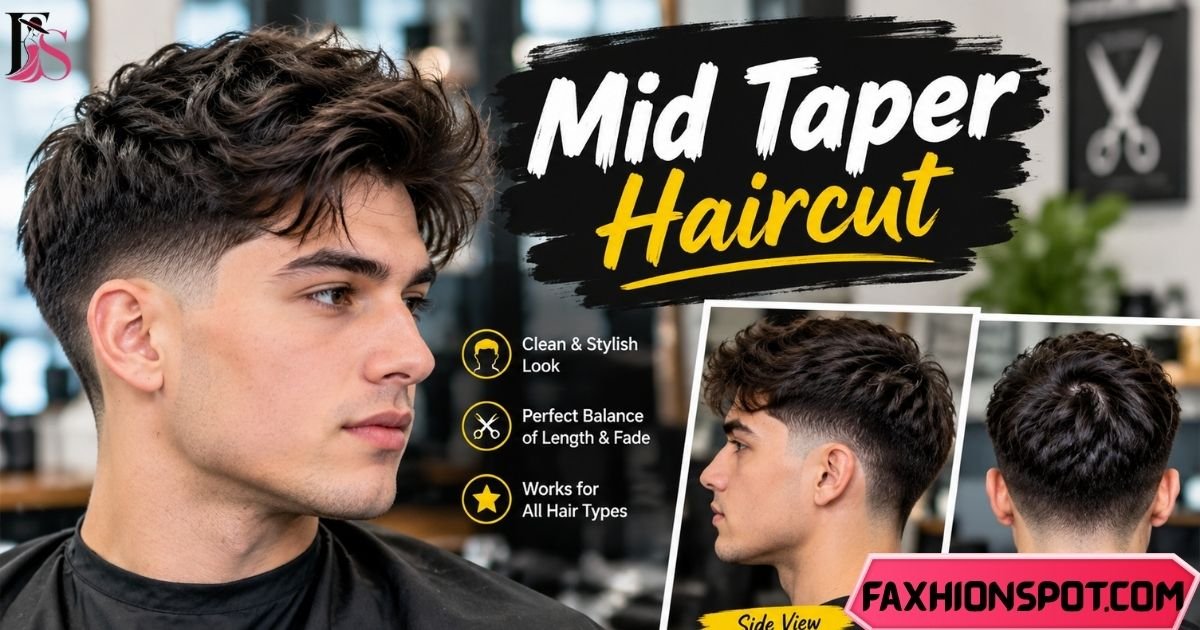
A Mid Taper Haircut gives men a clean, balanced look without removing too much hair from the sides.
It sits between a low and high taper, making it easy to pair with curls, waves, straight hair, crops, quiffs, fades, and longer styles.
Editorial note: A haircut does not have a biography, age, birthplace, nationality, height, weight, salary, or net worth. Adding those fields would create false information, so they are intentionally omitted rather than fabricated.
What Is a Mid Taper Fade and Who Should Get One?
A mid taper fade gradually shortens the hair around the middle temple area, sideburns, and neckline while preserving more length through the main sides and top. The exact height is not universal because head shape and barber technique affect where the transition appears. Current barber guides generally place it above a low taper and below a high taper.
This makes the cut flexible for men who want definition without the exposed-side appearance of a full fade. It can work with short crops, textured hair, curls, waves, afros, twists, locs, and longer tops. The main decision is how much length you want left around the sides and whether the shortest area should stop at a guard length, shadow, or skin.
What is a mid-taper?
A mid-taper is a gradual reduction in hair length beginning around the middle of the temple area and becoming shorter around the sideburns and neckline. The top remains largely separate from the taper, allowing you to choose almost any hairstyle.
Mid Taper vs Medium Taper
“Mid taper” usually describes placement, while “medium taper” can be used casually to describe a moderate amount of shortening. Because terminology varies between barbershops, tell your barber exactly where you want the blend to start.
Where the Mid Taper Sits on the Fade Spectrum
A low taper starts closer to the ears and neckline. A mid taper moves the transition higher toward the temple. A high taper begins higher still, producing stronger separation between the top and sides.
Key Characteristics of a Mid Taper Fade
The key features are controlled graduation, clean sideburns, a tapered neckline, and retained weight through the sides. The shortest point does not automatically have to reach bare skin.
Mid Taper vs. Mid Fade: Are They Different?
Yes, traditionally they are different. A mid taper concentrates the short graduation around the perimeter, while a mid fade removes more hair across the larger side panel. However, barbers often use these terms differently, so a reference photo is the safest way to communicate your goal.
What Does a Mid Taper Look Like?
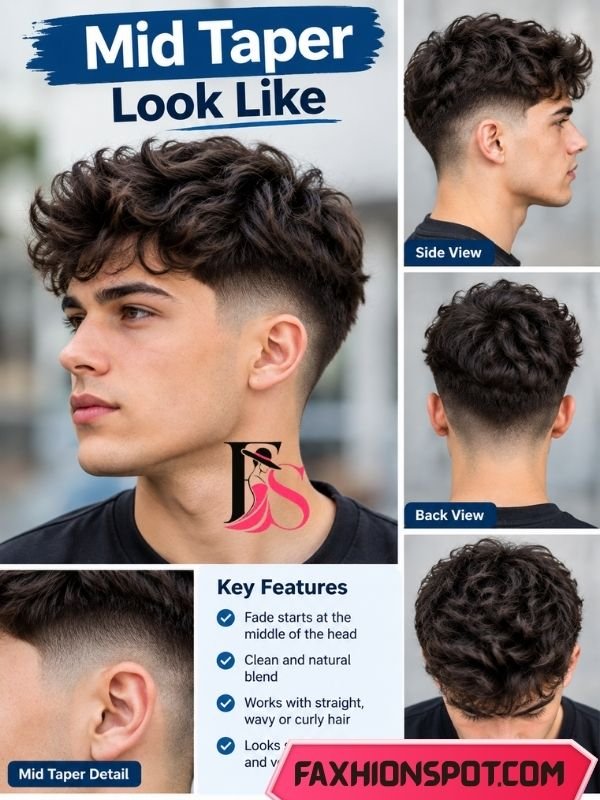
From the front, the haircut keeps most of its personality on top. From the side, the temple area becomes progressively shorter while useful side weight remains. From the back, the neckline is cleaned into a controlled taper rather than ending abruptly.
The result is a balanced silhouette rather than a dramatic skin-fade effect. This is one reason the cut works across professional and casual settings. The exact appearance changes considerably with hair density, texture, top length, and the chosen shortest guard.
The Visual Signature of a Mid Taper Fade
Look for a moderate transition near the temple, clean sideburns, and a gradually narrowed neckline. The side panel should retain more weight than a traditional full mid fade.
Front View: What You See First
The front mainly shows the top hairstyle. A crop, fringe, quiff, curls, or middle part can completely change the character of the same mid taper.
Side Profile: The Fade Gradient
The side profile reveals the taper most clearly. Hair gradually becomes shorter toward the temple and ear while the upper side retains structure.
Back View: Neckline Treatment
The back usually features a tapered neckline. Ask whether you want a natural, rounded, or more defined finish before the barber begins.
360° Summary: All-Around Coverage
Think of the haircut as top style + mid-height perimeter taper. The taper controls the edges while your chosen top creates the main visual shape.
Mid Taper Fade vs. Other Fades: What’s the Difference?
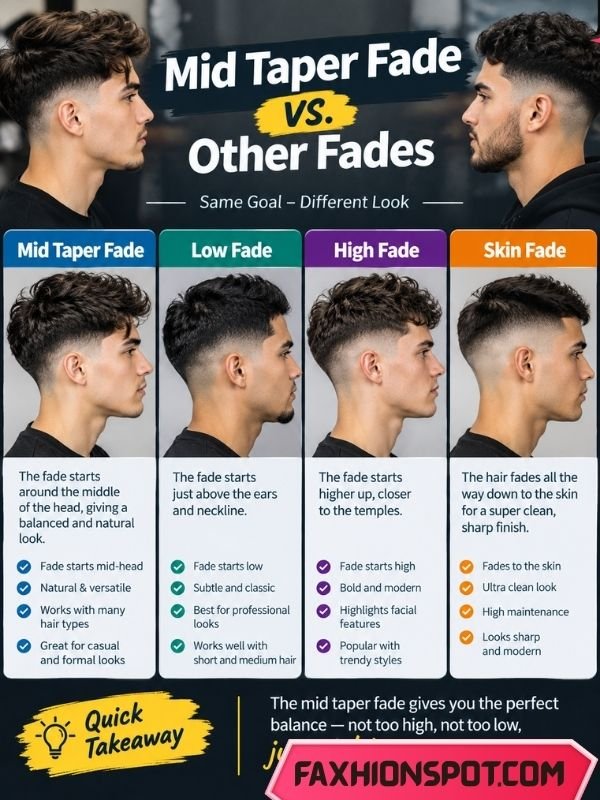
The biggest difference between taper variations is where the shortening begins and how much hair is removed. A low taper leaves more of the upper sides untouched, while a high taper creates stronger contrast. A mid fade generally affects a broader side panel than a mid taper.
Because barbershop terminology is not perfectly standardized, asking for the placement, shortest length, and amount of retained weight is more precise than relying on one haircut name.
Mid Taper Fade vs Low Taper Fade
A low taper stays close to the ear and neckline. A mid taper rises toward the temple, creating more visible definition.
Mid Taper Fade vs High Taper Fade
A high taper begins higher on the sides and produces stronger contrast. A mid taper retains more side weight and creates a more moderate transition.
Mid Taper vs Mid Fade: Same Thing?
Not necessarily. A mid fade generally removes hair across a larger area, while a mid taper keeps more of the side panel intact.
Mid Taper Fade vs Skin Fade / Bald Fade
A skin or bald fade reaches bare skin at its shortest point. A mid taper can remain at a very short clipper length instead, giving a softer grow-out.
Mid Taper Fade vs Drop Fade
A drop fade follows the shape of the head and drops lower behind the ear. A standard mid taper focuses more on the temple, sideburn, and neckline areas.
Mid Taper Fade vs Burst Fade
A burst fade curves around the ear and leaves more length toward the back. A mid taper is less concentrated around that circular ear shape.
40+ Best Mid Taper Fade Styles for Men in 2026
The Mid Taper Haircut is best viewed as a foundation rather than one fixed hairstyle. You can change the top while keeping the same taper structure. Current haircut guides also emphasize that the top and taper should be treated as separate decisions.
Classic & Professional Mid Taper Fade
These styles work well when you want a polished haircut that remains easy to maintain.
1. Mid Taper Fade Comb Over
Keep the top long enough to sweep neatly to one side. A clean part adds structure.
2. Mid Taper Fade Side Part
A defined side part gives the haircut a traditional barbershop appearance with a modern taper.
3. Mid Taper Fade French Crop
Pair the taper with a short textured top and compact forward fringe.
4. Mid Taper Fade Textured Crop
Choppy texture on top creates movement without requiring significant length.
5. Mid Taper Fade Short Hair
A short top keeps styling simple while the taper supplies definition around the edges.
Voluminous & Lifted Mid Taper Fades
6. Mid Taper Fade Buzz Cut
A buzzed top creates an extremely low-maintenance combination with clean tapered edges.
7. Mid Taper Fade Quiff
Leave extra length at the front and lift it with a blow dryer and lightweight styling product.
8. Mid Taper Fade Pompadour
The pompadour uses greater top volume and works particularly well when the sides remain controlled.
9. Mid Taper Fade Blowout
A blowout creates outward volume while the taper keeps the temples and neckline organized.
10. Mid Taper Fade Fluffy Hair
Longer, airy layers create a softer appearance while the taper prevents the sides from becoming overly bulky.
Textured & Forward-Styled Mid Taper Fades
11. Mid Taper Fade Fringe
A forward fringe adds visual weight around the forehead and works well with a neat taper.
12. Mid Taper Fade with Textured Fringe
Use uneven texture through the fringe for a relaxed, contemporary finish.
13. Mid Taper Fade Middle Part
A center part works especially well when the top has enough length to fall naturally on both sides.
14. Mid Taper Fade Spiky Hair
Short spikes add height and texture without changing the taper placement.
Curly & Wavy Mid Taper Fades
15. Mid Taper Fade Curly Hair
Keep the curls prominent on top and use the taper to clean the perimeter.
16. Mid Taper Fade Wavy Hair
Natural waves can be enhanced with light cream while the sides remain controlled.
17. Mid Taper Fade Perm
A perm adds consistent curl or wave to straight hair while the taper keeps the outline sharp.
Mid Taper Fades for Black Men / Afro-Textured Hair
18. Mid Taper Fade Black Male
The style works particularly well with dense textured hair because the taper creates a clear edge around the natural volume.
19. Mid Taper Fade Afro
Keep the afro shape full while tapering the temples and neckline for definition.
20. Low Afro with Mid Taper Fade
A shorter afro combined with a mid taper creates a compact, structured silhouette.
21. Afro Hawk with Mid Taper
Keep greater height along the center and taper the surrounding perimeter.
22. Mid Taper Fade with Dreads
Locs can remain long on top while the taper cleans the temples and neckline.
23. Dreadlock Bun with Mid Taper Fade
Tie longer locs into a bun for a practical style with a clean perimeter.
24. Sponge Twist with Mid Taper Fade
Defined sponge twists contrast naturally with the shorter tapered sides.
25. Box Braids with Mid Taper Fade
Braids can be paired with a neat taper around the temples and neckline.
26. Twisted Curls with Mid Fade
Twisted texture provides definition while the shorter sides sharpen the overall outline.
Slicked & Refined Mid Taper Fades
27. Mid Taper Fade Slick Back
Use enough top length to brush the hair backward. A matte product gives a modern finish.
28. Mid Taper Fade with Beard
A beard can connect visually with the sideburn area. Ask the barber to blend the transition rather than creating an abrupt line.
Asian & Straight Hair Mid Taper Fades
29. Mid Taper Fade Asian
Straight, dense hair can support textured crops, curtains, side parts, and longer tops over a mid taper.
30. Mid Taper Fade Straight Hair
Straight hair makes the taper easy to see, so precise blending and clean transitions matter.
Long Hair & Modern Mullet Mid Taper Fades
31. Mid Taper Fade Long Hair
Keep substantial length on top and use the taper to make the perimeter look cleaner.
32. Mid Taper Fade Mullet
A mid taper can provide cleaner temples while the back retains the defining length of a mullet.
33. Man Bun with Mid Taper Fade
Long hair can be secured into a bun while the taper controls the shorter perimeter.
Edgy & Custom Mid Taper Fades
34. Mid Taper Fade Edgar
The Edgar’s blunt front can create strong contrast with a clean mid taper.
35. Mid Taper Fade with Line Design
A shaved line adds a custom detail, but it requires more frequent touch-ups.
36. Mid Taper Drop Fade
This hybrid combines a mid-height taper concept with a lower, head-following drop shape. Tell your barber exactly how low you want the back to fall.
Blonde & Colored Mid Taper Fades
37. Mid Taper Fade Blonde
Blonde hair can make the transition appear softer, particularly when the shortest area is not taken completely to skin.
38. Mid Taper Fade Blonde Hair
Pair blonde color with a textured crop, fringe, curls, or a longer top for contrast.
Medium & Balanced Length Mid Taper Fades
39. Medium Mid Taper
Medium-length hair gives the taper enough top weight to create a balanced silhouette.
40. Mid Taper Fade Low Cut
A low-cut top keeps the style practical while the taper supplies a sharper outline.
Bonus Styles
41. Curly Mid Taper
Natural curls remain the focal point while the taper controls the edges.
42. Short Hair with Mid Fade
A short top and mid-height fade create a compact, defined haircut. If you specifically want a taper rather than a full fade, tell your barber to preserve side weight.
Which Face Shape Suits a Mid Taper Best? (Complete Guide)
A mid taper can be adapted to almost any face shape, but the top length and volume matter as much as taper height. A useful approach is to balance the overall silhouette rather than choosing a taper solely from a face-shape chart.
For longer faces, some side weight can help create visual balance. For rounder faces, controlled height on top can add length to the overall silhouette. These are styling principles, not strict rules.
Mid Taper for Oval Face
Oval faces are versatile. Most mid taper variations can work, from crops to longer textured tops.
Mid Taper for Round Face
Add moderate height through the top and avoid excessive roundness on the sides.
Mid Taper for Square Face
A textured crop, quiff, or short top can complement the naturally angular appearance.
Mid Taper for Heart-Shaped Face
Keep some side weight and avoid making the upper hairstyle excessively narrow.
Mid Taper for Diamond Face
A textured or layered top can soften strong cheekbone definition.
Mid Taper for Oblong/Long Face
Retain reasonable side volume and avoid excessive height if you want a more balanced silhouette.
Mid Taper for Triangle Face
A fuller top can help balance a wider jawline.
Mid Taper for Different Hair Types: Curly, Wavy, Straight & More
Hair texture changes how the taper looks because curls, waves, density, and straight strands create different amounts of natural volume. The same clipper work can therefore look softer on curls and more visibly structured on straight hair.
Fine hair may benefit from leaving more length around the sides, while dense or coarse hair can often handle stronger removal. For textured hair, the barber should work with the natural growth pattern rather than forcing every section into the same visual shape.
Mid Taper for Straight Hair
Straight hair shows the transition clearly. Texture, a side part, crop, or fringe can prevent the top from looking flat.
Mid Taper for Wavy Hair
Let the natural wave create movement. A lightweight styling cream can enhance definition without weighing the hair down.
Mid Taper for Curly Hair
Keep enough length for the curl pattern to form properly. The taper can clean the temples and neckline while preserving the curl volume.
Mid Taper for Natural/Coily Hair (Type 4)
A mid taper works with afros, coils, twists, and sponge styles. The barber should respect the natural density and shrinkage.
Mid Taper for Thick Hair
A taper can remove bulk around the perimeter while preserving a fuller top.
Mid Taper for Fine/Thin Hair
Avoid removing too much side weight. A slightly longer taper and textured top can create a fuller-looking silhouette.
Click Here To Read Another Topic
How to Ask Your Barber for a Mid Taper
The safest approach is to describe three things: placement, shortest length, and top length. “Give me a mid taper” can mean different things between barbershops, particularly because taper and fade terminology overlaps.
You can say: “I want a mid taper around the temples and sideburns, with a clean tapered neckline. Keep the side weight rather than giving me a full mid fade. Leave about [your preferred length] on top, and use this photo as the reference.” Then specify whether you want a skin, shadow, #0.5, #1, or longer finish.
The Golden Rule of Barber Communication
Show a reference photo and explain what you want kept—not only what you want removed. Tell your barber the desired taper height, top length, neckline shape, shortest guard, and whether you want the sides to retain weight. This reduces the chance of receiving a full mid fade when you actually want a mid taper.
FAQs
Is a mid taper good for men?
Yes. A mid taper is versatile and can be adapted to straight, wavy, curly, coily, short, medium, and long hairstyles.
How long does a mid taper haircut last?
A taper generally grows out more gradually than a very short skin fade. Your refresh schedule depends on hair growth, desired sharpness, and how short the perimeter was cut.
Is a mid taper the same as a mid fade?
No. A mid taper normally concentrates the shortening around the perimeter, while a mid fade affects a broader area of the sides and back. However, barbershop terminology varies.
What should I tell my barber for a mid taper?
Say where you want the taper to start, how short you want the edges, how much side weight you want to keep, and how long you want the top. A reference photo is highly useful.
Can you get a mid taper with curly hair?
Yes. Curly hair pairs well with a mid taper because the haircut can preserve the natural curl volume while cleaning the temples, sideburns, and neckline.
Conclusion
A Mid Taper Haircut offers a practical balance between a subtle low taper and a stronger high taper. Its main advantage is flexibility: you can pair the perimeter with a crop, quiff, curls, waves, afro, locs, middle part, mullet, or longer top.
The most important detail is communication because “mid taper” and “mid fade” can mean different things from one barbershop to another. For the most predictable result, show a reference photo and clearly state the taper height, shortest length, neckline finish, and amount of side weight you want to keep.
1 thought on “Mid Taper Haircut: 40+ Best Mid Taper Fade Styles for Men (2026)”