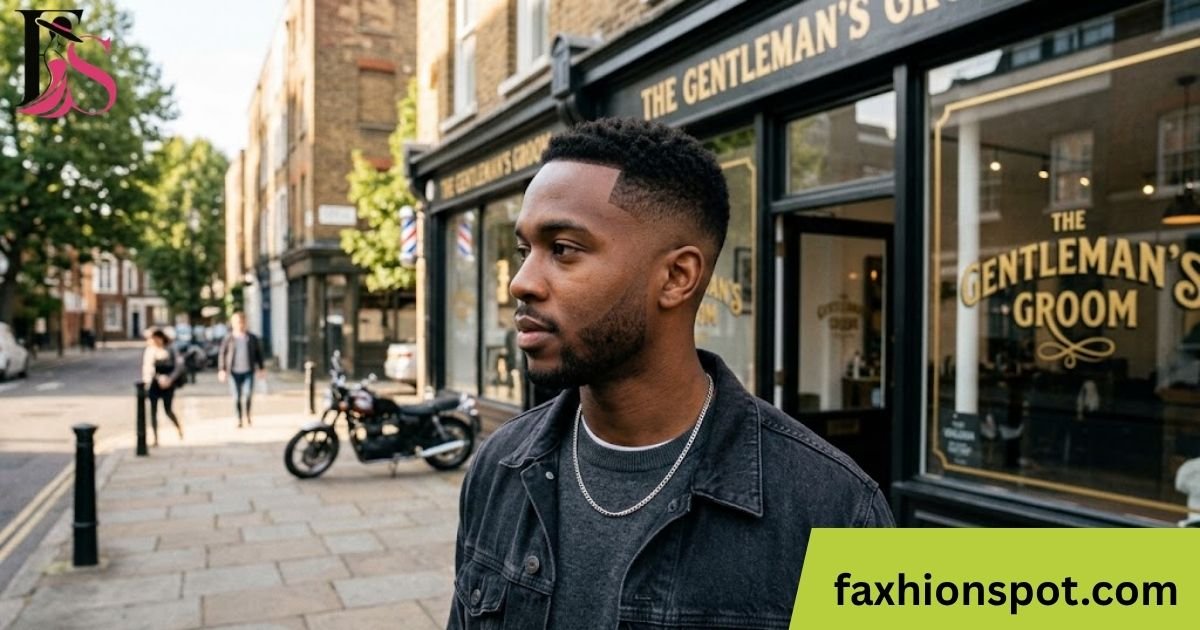
A low taper fade is one of the most versatile men’s haircuts because it cleans up the edges without dramatically changing the shape of the hair.
The blend stays close to the sideburns and neckline, while the sides and top can remain fuller for texture, volume, curls, waves, or classic styling.
The style works for casual outfits, professional workplaces, weddings, interviews, and modern streetwear. It can also be adapted to straight, wavy, curly, and coily hair.
All Posts on Low Taper Fade
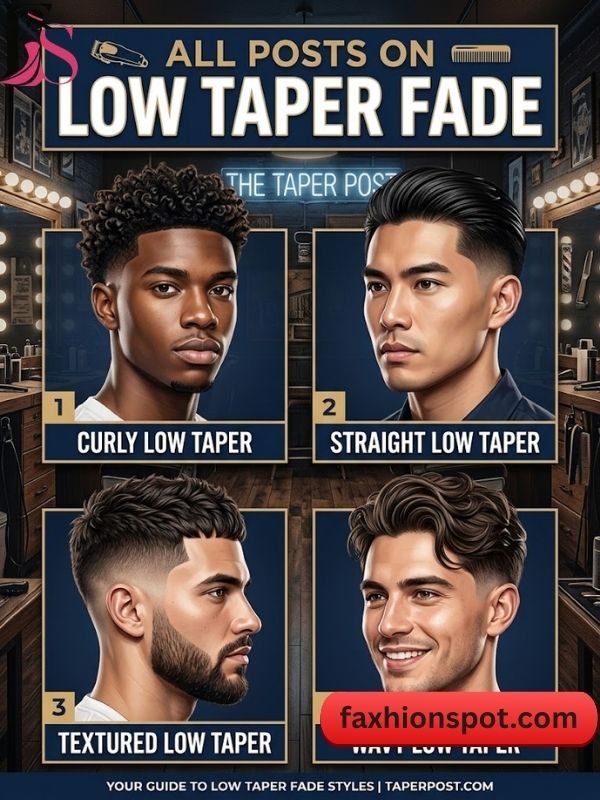
If you are exploring different versions of the style, the right variation depends on your hair texture, top length, face shape, lifestyle, and the level of maintenance you prefer.
Common Low Taper Fade Mistakes and How to Avoid Them
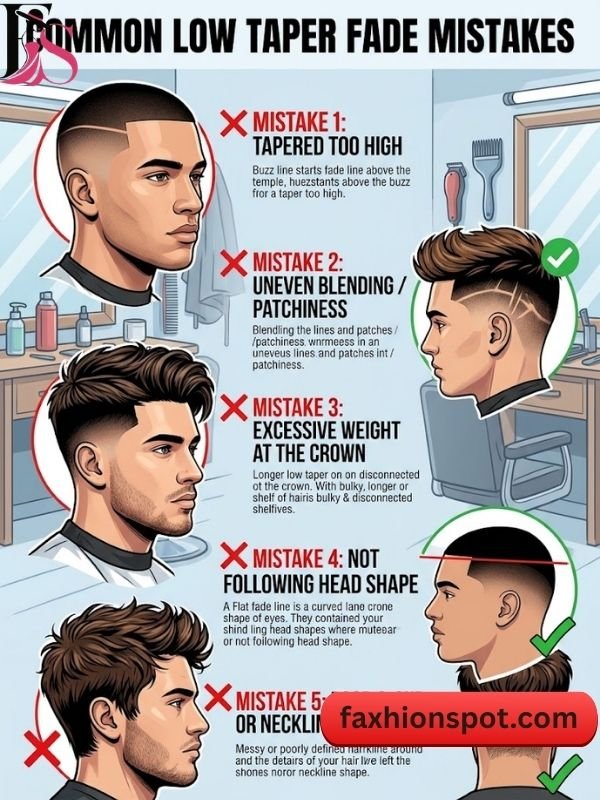
One of the biggest mistakes is asking for a vague “fade” without explaining where you want the blend to begin. Another is showing a photograph without discussing the differences between your hair density, hairline, and head shape.
Other common problems include taking the taper too high, removing too much weight from the sides, choosing an unsuitable neckline, or asking for a skin finish when your scalp is prone to irritation.
The solution is simple: show your barber a front, side, and back reference and explain how much length you want to preserve.
Low Taper Fade for Interviews: A Professional Haircut That Makes a Great First Impression
For an interview, subtlety usually works better than extreme contrast. A neat low taper paired with a side part, textured crop, short quiff, or controlled natural top can create a polished appearance without looking overly styled.
Keep the neckline clean, avoid excessive hair product, and make sure the haircut is freshly maintained. Current professional grooming guides commonly position the low taper as a conservative choice because it keeps more side weight than higher fades.
Low Taper Fade with Beard for Black Men: Best Styles and Grooming Tips
A taper can work especially well with waves, curls, twists, braids, textured tops, and fuller facial hair. The barber can gradually clean the sideburn area so the haircut and beard look connected rather than separated.
For a polished result, coordinate the beard length with the hair. A very sharp lineup can create strong definition, while a softer natural edge gives a more relaxed appearance. Regular moisturizing is also important when the scalp and beard area become dry.
Low Taper Fade Styles for Wavy Hair
Wavy hair gives this haircut natural movement without requiring heavy styling. Popular options include a textured wavy top, messy fringe, side part, middle part, fluffy top, or longer natural flow.
The important detail is preserving enough length to show the wave pattern. Taking the taper too high can remove the visual weight that makes wavy hair attractive.
Low Taper Fade for Summer: Stay Cool and Look Sharp
Summer is a good time for a shorter textured top because it reduces styling time and feels lighter in warm weather. A compact taper around the ears and neckline keeps the perimeter clean without requiring a completely short haircut.
Use lightweight styling products, wash sweat and buildup from the scalp regularly, and avoid applying excessive heavy pomade in hot weather.
Low Taper Fade Styles for Straight Hair: Best Haircuts for Men
Straight hair makes blending quality especially visible because the hair does not naturally hide uneven transitions. A skilled barber can pair the taper with a side part, textured crop, fringe, slick back, comb over, or classic short top.
For fine straight hair, avoid excessive weight removal. Keeping some fullness on top can make the hairstyle appear thicker.
Low Taper Fade with Buzz Cut: Best Styles, Guard Sizes & Barber Tips
A buzz cut creates a simple, masculine foundation for a clean taper. Guard selection should depend on how much contrast you want between the top and sides.
A conservative approach might keep the top at a #2 or #3 while the taper gradually becomes shorter around the sideburns and neckline. If you want more contrast, your barber can use a shorter base.
Low Taper vs Drop Fade: Which One Looks Better on You?
The main difference is the shape and location of the blend. A low taper concentrates the shortening around the sideburns and neckline, while a drop fade creates a more continuous fade that drops lower behind the ear.
| Feature | Low Taper | Drop Fade |
| Blend location | Sideburns and neckline | Around the head with a curved drop |
| Side weight | More preserved | More removed |
| Overall appearance | Subtle and versatile | More defined and dramatic |
| Professional use | Excellent | Depends on workplace |
| Grow-out | Usually forgiving | More visible |
Choose the taper if you want understated grooming. Choose a drop fade if you prefer stronger shape and contrast.
Low Taper Fade for Wedding: The Best Groom Hairstyles to Try
For weddings, the haircut should complement the suit rather than compete with it. A clean side part, textured quiff, slick back, or natural wavy top can all work.
Schedule the haircut several days before the wedding if you prefer a slightly softer, natural-looking finish. If you want maximum sharpness, book closer to the event but avoid experimenting with a completely new style on the wedding day.
Low Taper Fade with Faux Hawk: The Bold Yet Clean Look Worth Trying
A faux hawk creates height and direction through the center of the hair while the taper keeps the perimeter controlled. This makes the style bold without becoming as extreme as a traditional mohawk.
Use a matte clay or lightweight styling paste for texture. Blow-dry the top upward and slightly toward the center, then finish with a small amount of product.
Low Taper Fade Without Beard: Styles, Tips and Everything You Need to Know
You do not need facial hair to make this haircut look complete. In fact, a clean-shaven face can make the sideburn and neckline detailing more noticeable.
A textured crop, fringe, side part, messy top, or short quiff works especially well when the beard is absent. Keep the sideburn transition neat so the haircut looks intentional from every angle.
Low Taper Fade for Street Style: The Complete Guide for Men (2026)
Street style gives you more freedom with texture, volume, designs, fringe, curls, waves, and longer tops. The taper can act as a clean frame around a more expressive hairstyle.
Popular combinations include oversized textured tops, loose curls, fluffy hair, middle parts, faux hawks, graphic designs, and natural waves. The key is balancing the stronger top style with a controlled perimeter.
Low Taper Fade Haircut Guide: Classic, Clean & Professional
The defining feature is placement. The transition begins low, usually around the sideburns and above or around the neckline, rather than climbing high toward the temples. This preserves more of the side profile and creates a softer visual change.
A useful way to understand the haircut is to divide it into three zones:
- Top: Your main hairstyle, such as curls, waves, fringe, crop, quiff, or side part.
- Sides: Most of the natural weight remains intact.
- Perimeter: The hair becomes progressively shorter around the sideburns and neckline.
This structure is why the style can look professional without feeling boring. It also gives you freedom to change the top without changing the entire haircut.
Historical Evolution and Cultural Context
Tapering has long been part of men’s barbering because it creates clean edges while allowing the main hairstyle to retain its identity. Modern fades developed into numerous variations based on how high the transition starts and how closely the hair is taken toward the skin.
The low version became particularly popular because it combines traditional grooming with contemporary styling. Social media, professional barbershop culture, sports influences, and youth fashion have helped make subtle tapering a common foundation for many modern men’s hairstyles.
Today’s versions range from conservative office cuts to expressive combinations involving curls, waves, designs, textured fringes, and longer tops.
Key Styles, Cut Anatomy, and Variations
The same foundation can produce very different results depending on what happens above the taper.
| Variation | Top Style | Overall Character |
| Classic | Short and neat | Traditional |
| Textured crop | Choppy texture | Modern |
| Side part | Controlled direction | Professional |
| Fringe | Hair forward | Youthful |
| Wavy top | Natural movement | Relaxed |
| Curly top | Defined curls | Bold |
| Buzz cut | Very short | Minimal |
| Faux hawk | Center height | Edgy |
| Slick back | Backward styling | Refined |
| Middle part | Center separation | Trend-focused |
The haircut is therefore less about one exact top length and more about the relationship between the perimeter, side weight, and top.
Face Shape and Hair Texture Compatibility Matrix
Face shape can help guide the top style, but it should not be treated as an absolute rule. Hair density, growth pattern, lifestyle, and personal preference matter just as much.
| Face Shape | Recommended Approach | What to Consider |
| Oval | Almost any top | Maintain natural proportions |
| Round | Add moderate height | Avoid excessive side bulk |
| Square | Textured or structured top | Strong jaw already provides definition |
| Oblong | Lower volume | Avoid too much vertical height |
| Diamond | Fuller top or fringe | Balance cheekbone width |
| Heart | Medium texture | Avoid overly tight sides |
| Triangle | Fuller upper shape | Preserve some side weight |
Hair texture also changes how the cut behaves.
| Hair Type | Best Approach |
| Straight | Seamless blending and controlled texture |
| Wavy | Preserve length to show movement |
| Curly | Leave sufficient curl volume |
| Coily | Protect the natural pattern and density |
| Fine | Avoid excessive thinning |
| Thick | Remove bulk selectively rather than aggressively |
Step-by-Step Styling and Barber Execution Protocol
A professional barber normally begins by establishing the desired shape before refining the blend.
Step 1: Establish the perimeter
The barber identifies the natural sideburn and neckline areas. This prevents the taper from being placed unnecessarily high.
Step 2: Set the shortest point
The shortest area may be a guarded length, very close clipper finish, or skin-level finish depending on the desired result and scalp tolerance.
Step 3: Build the transition
Several clipper lengths are blended together rather than creating one abrupt step. Half guards and lever adjustments can help remove visible lines.
Step 4: Preserve the side profile
This is crucial. The barber should avoid removing unnecessary weight above the taper.
Step 5: Shape the top
The top is cut or textured according to the chosen style. The final shape should complement the natural growth direction.
Step 6: Finish the edges
The barber refines the sideburns, neckline, and hairline. A natural finish usually grows out more softly than an extremely sharp blocked edge.
Essential Products, Formulations, and Styling Tools
The best product depends on your desired finish rather than the haircut alone.
| Product | Best For | Finish |
| Matte clay | Texture and control | Low shine |
| Styling paste | Flexible everyday styling | Natural |
| Pomade | Slick backs and parts | Medium to high shine |
| Curl cream | Wavy and curly tops | Soft definition |
| Sea salt spray | Texture and volume | Light |
| Lightweight mousse | Fine or wavy hair | Airy volume |
| Hairspray | Final hold | Variable |
For everyday styling, start with a small amount. Adding more product is easier than trying to remove excess product after the hair becomes greasy or heavy.
Professional Barbershop Secrets and Edge Precision
Good blending is less about making every section extremely short and more about creating a smooth visual transition. The best result should look natural from several angles.
A useful professional principle is to remove only the amount of weight required for the intended shape. Over-fading the sides can make the haircut look disconnected from the top.
Pay attention to:
- Sideburn symmetry
- Ear shape
- Natural hairline
- Cowlicks
- Crown direction
- Hair density
- Scalp sensitivity
- Beard connection
- Neckline shape
The barber should also check the haircut under different lighting because harsh overhead light can reveal lines that are difficult to notice during the initial cut.
Common Haircut Mistakes and How to Avoid Them
One common mistake is choosing a reference photograph based solely on appearance without considering hair texture. A hairstyle photographed on thick curly hair may not translate directly to fine straight hair.
Another mistake is assuming that shorter always means cleaner. Removing too much hair can eliminate the fullness that makes the top attractive.
Avoid these problems by:
- Showing multiple reference angles.
- Explaining your preferred shortest length.
- Saying how high you want the taper.
- Discussing the neckline.
- Explaining whether you want a natural or sharp finish.
- Telling the barber how often you can return.
- Asking for a conservative first pass if you are uncertain.
If you have never tried a very short taper, it is safer to remove less initially. Hair can always be shortened further during the appointment.
Seasonal Care and Maintenance Cadences
Your maintenance routine should change with weather and activity.
Spring: Control humidity-related frizz and maintain the top’s shape.
Summer: Wash away sweat and buildup regularly. Lightweight products are often more comfortable in hot weather.
Fall: Dry air can make hair and scalp feel less hydrated, so consider a suitable moisturizing routine.
Winter: Avoid excessively hot water and harsh cleansing if your scalp becomes dry.
For most people, a refresh every two to four weeks is a practical range. The exact schedule depends on how quickly your hair grows and how sharp you want the blend to remain. Current haircut guides commonly recommend approximately two to four weeks, with shorter skin-level finishes often needing earlier maintenance.
Barbershop Communication, Terminology, and Consultation Guide for Low Taper Fade
Clear communication can make a bigger difference than knowing every barbering term.
Instead of simply saying, “Give me a taper,” explain the four things that matter most:
- Where you want the taper to start.
- How short you want the shortest point.
- How much side length you want to preserve.
- What you want on top.
A useful consultation phrase is:
“Keep the taper low around the sideburns and neckline. Preserve the weight above the ears, blend gradually, and keep the top at the length needed for my chosen style.”
Then add your preferred neckline, sideburn shape, and top length.
Guard numbers can provide additional clarity. Common reference lengths include approximately 1.5 mm for a #0.5, 3 mm for a #1, 4.5 mm for a #1.5, and 6 mm for a #2, although exact results vary by clipper and blade system.
Blow-Drying Mechanics, Directional Airflow, and Pre-Styling Chemistry
Blow-drying is not just about making hair dry. Directional airflow can influence volume, texture, and the final shape.
For volume:
- Start with damp hair.
- Apply a small amount of suitable pre-styling product.
- Lift the roots with your fingers or a brush.
- Direct airflow in the direction you want the hair to sit.
- Finish with cooler air when appropriate.
- Add a small amount of finishing product.
For a slick style, direct the airflow backward while controlling the top with a comb. For a textured look, use your fingers instead of creating a perfectly uniform surface.
Wavy and curly hair generally benefits from less manipulation while drying. Scrunching and controlled airflow can help maintain natural definition while reducing unnecessary frizz.
Scalp Health, Follicular Longevity, and Trimming Schedules
A sharp haircut should not come at the expense of scalp comfort. Extremely close clipping can irritate sensitive skin, especially when repeated passes are made over the same area.
If you experience frequent irritation, tell your barber before the cut begins. A guarded finish may be more comfortable than a skin-level finish.
Basic scalp care includes:
- Gentle cleansing appropriate for your hair type.
- Avoiding unnecessary scratching.
- Keeping heavily used styling tools clean.
- Limiting excessive product buildup.
- Allowing irritated skin time to recover.
- Avoiding aggressive shaving over sensitive areas.
A haircut does not determine follicular longevity by itself. Hair growth and density are influenced by many biological factors. Good grooming is mainly about maintaining a healthy scalp environment and avoiding unnecessary irritation.
Barbershop Communication, Terminology, and Consultation Guide for Low Taper Fade
If your barber interprets “low” differently from the reference you have in mind, point to the starting area on your head. Terminology can vary between barbershops and regions.
A photograph is especially useful, but explain what you like about it. You might say, “I like the low starting point and the fullness above the ear, but I want my top longer.”
This is more useful than simply showing an image and saying, “Make it like this.”
Blow-Drying Mechanics, Directional Airflow, and Pre-Styling Chemistry
The top determines how much styling work is required. A short textured crop may need only a small amount of matte paste, while a slick back may require controlled blow-drying and stronger hold.
For fine hair, avoid loading the roots with heavy oils or thick pomades. For coarse or curly hair, a moisturizing styling cream can improve control without flattening natural texture.
The goal is not to use the most products. It is to use the smallest amount that achieves the desired shape.
Scalp Health, Follicular Longevity, and Trimming Schedules
Maintenance should be based on appearance and comfort rather than a rigid calendar. Some people like a freshly detailed haircut every two weeks, while others prefer a softer grow-out that lasts closer to four weeks.
If your edges lose definition quickly, a simple lineup between full cuts may help. If you prefer a natural appearance, allow the perimeter to grow without repeatedly cutting it too aggressively.
The style is especially convenient because its low placement can remain visually acceptable even after the initial sharpness begins to soften.
Click Here To Read Another Topic
Summary and Personal Aesthetic Philosophy
The best haircut is not necessarily the most dramatic one. A successful style should fit your hair, face, workplace, clothing, maintenance habits, and personality.
The low taper fade offers an excellent balance because the perimeter stays clean while the top remains customizable. You can wear it with a professional side part one day and a textured or relaxed style the next.
Before your next barbershop appointment, decide how much side weight you want, how short you want the perimeter, what top style you prefer, and how frequently you are willing to maintain it. Clear communication will usually produce a better result than relying on the haircut name alone.
Frequently Asked Questions
What is a low taper fade?
A low taper fade gradually shortens the hair around the lower sideburns and neckline while preserving more length through the sides and top.
Is a low taper fade good for business professional environments?
Yes. Its subtle placement and clean finish make it one of the more workplace-friendly fade options.
How long does a low taper fade last before needing a trim?
Most people refresh it in about two to four weeks, depending on growth speed and how sharp they want the edges.
What is the difference between a low taper and a low fade?
A low taper usually concentrates the shortening around the sideburns and neckline, while a low fade generally removes more hair across the lower sides and back.
Can I get a low taper with long hair?
Yes. Keeping the top long gives you options such as a middle part, slick back, flow, fringe, waves, or textured layers.
What hair products work best with a low taper fade?
Matte clay and paste work well for texture, pomade suits slick styles, and curl cream or lightweight defining products work well for wavy and curly hair.
Final Takeaway
A great haircut is ultimately about proportion, communication, and maintenance. The low taper fade provides a clean perimeter without forcing you into one specific hairstyle, which explains why it works across so many textures, occasions, and personal aesthetics.
Choose your top style first, decide how subtle or close you want the taper, communicate the details clearly, and use a maintenance schedule that fits your lifestyle. With those decisions in place, you can keep the haircut sharp while still allowing your natural hair to remain the main feature.
1 thought on “Low Taper Fade”