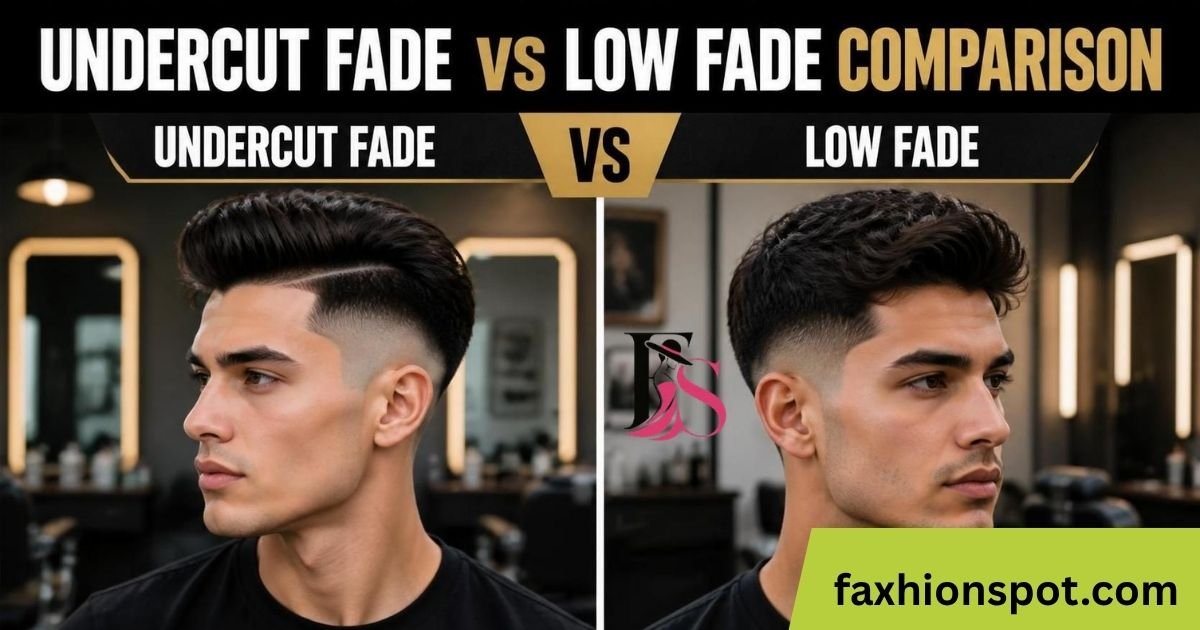
Choosing between an undercut fade and a low fade can be difficult because both haircuts look modern, clean, and stylish.
However, they create different results. One emphasizes a smooth, natural blend, while the other focuses on contrast between longer hair on top and shorter sides.
In this Undercut Fade vs Low Fade Comparison, you will learn how each haircut looks, which face shapes and hair types suit them best, how much maintenance they require, and what to tell your barber.
What Is a Low Fade?
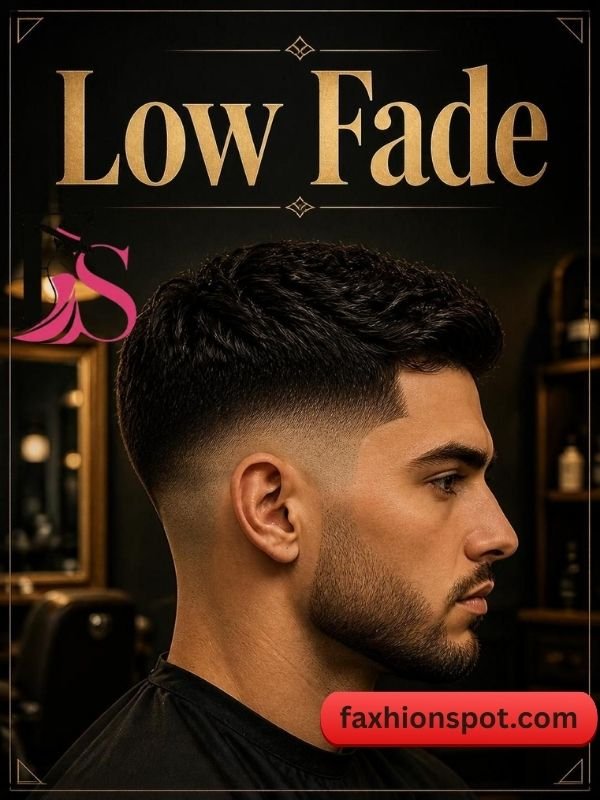
A low fade is a men’s haircut in which the hair gradually becomes shorter around the lower sides and back of the head. The blending usually begins just above the ears and continues toward the neckline, creating a smooth transition between different hair lengths.
Unlike higher fades, this style preserves more hair around the upper sides. This makes it a versatile choice for men who want a fresh appearance without making their haircut look too dramatic.
A low fade can be combined with many hairstyles, including:
- Textured crops and French crops
- Curly and wavy hairstyles
- Side parts and comb-overs
- Quiffs and pompadours
- Buzz cuts and short textured tops
- Longer hair with a slicked-back finish
The barber can also customize the cut with a skin finish, a subtle shadow fade, or a slightly longer clipper guard.
How it looks:
A low fade creates a neat, gradual blend near the ears and neckline. The hair becomes progressively longer as it moves upward, so there is no obvious line separating the sides from the top.
Its main visual characteristics include:
- Soft transition: The different hair lengths blend naturally.
- Clean edges: The sideburns and neckline look sharp and tidy.
- Balanced appearance: The upper sides retain more fullness.
- Versatility: It works with casual, formal, and textured hairstyles.
For example, a low fade with a side part looks professional, while a low fade with curls creates a relaxed, contemporary appearance.
Why do people choose it?
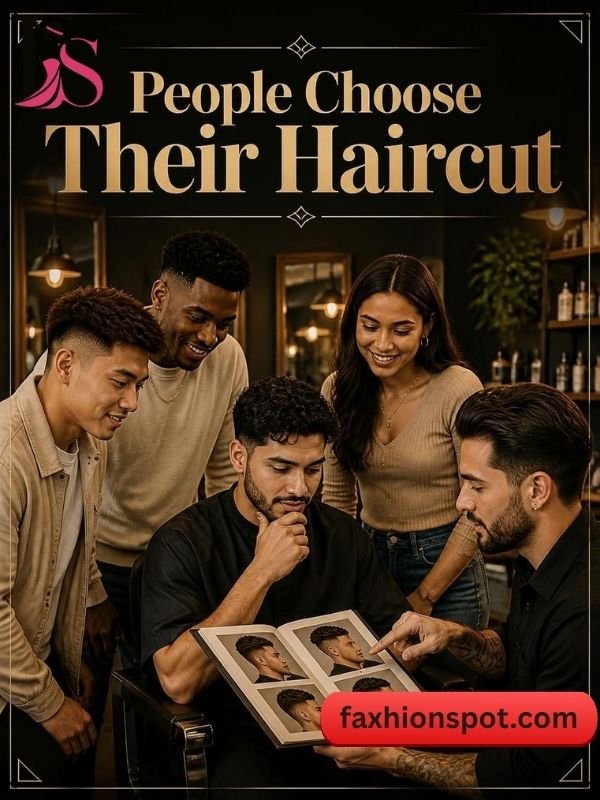
Many men prefer this haircut because it balances style, practicality, and versatility. It provides a polished finish without requiring an extremely short cut across the sides.
The main benefits include:
- Easy styling: The top can be styled in different ways.
- Professional appearance: It suits many workplaces and school settings.
- Flexible maintenance: A softer fade can grow out naturally.
- Face-shape adaptability: The barber can adjust the top and sides to create better proportions.
- Hair-texture compatibility: It works with straight, wavy, curly, and thick hair.
A low fade is particularly suitable for beginners who want to try a fade without choosing a highly contrasting haircut.
What Is an Undercut Fade?
An undercut fade combines the bold contrast of an undercut with the clean, graduated finish of a fade. The sides and back are cut short, while the hair on top remains noticeably longer. The short section gradually blends toward the lower hairline, but the transition into the top stays more defined than in a traditional fade.
The key feature is the separation between the top and sides. Instead of blending every section seamlessly together, the barber preserves a visible difference in length to create a sharper, more distinctive hairstyle.
Popular variations include:
- Disconnected undercut fade: Creates a strong separation between the long top and short sides.
- Slicked-back undercut fade: Keeps the top long enough to comb backward.
- Curly undercut fade: Highlights natural curls while removing bulk from the sides.
- Textured undercut fade: Adds movement through a messy or layered top.
- Side-part undercut fade: Combines a defined part with short, contrasting sides.
This style is a good option for men who enjoy experimenting with different looks and want their hairstyle to stand out. The exact result depends on the fade height, top length, hair texture, and amount of separation requested.
City Barbers NYC
How it looks:
An undercut fade creates a stronger visual contrast than a traditional low fade. The sides appear shorter, while the longer top becomes the main feature of the haircut.
Its defining characteristics include:
- High contrast: The difference between the top and sides is more noticeable.
- Defined structure: The haircut creates a distinct shape around the upper sides.
- Styling flexibility: The top can be slicked back, textured, parted, or worn naturally.
- Modern appearance: The style often looks sharper and more fashion-forward.
For example, an undercut fade with thick, wavy hair creates a textured, voluminous finish. A slicked-back version looks more refined, while a curly version emphasizes natural texture.
One important detail is that an undercut fade is not always completely disconnected. Your barber can blend the lower sides while keeping a clear separation near the top. This creates a balance between a smooth fade and the distinctive undercut shape.
Key Differences (Simple Table)
The biggest difference is how the sides connect to the hair on top. A low fade prioritizes a smooth gradient, while an undercut fade emphasizes contrast and separation.
| Feature | Low Fade | Undercut Fade |
| Main design | Smooth, gradual blend | Short sides with a more defined separation |
| Fade placement | Low, near the ears and neckline | Depends on the chosen undercut design |
| Contrast | Subtle to moderate | Moderate to high |
| Top length | Short, medium, or long | Usually medium or long |
| Overall appearance | Classic and understated | Bold and modern |
| Styling effort | Usually minimal | Often requires more attention to the top |
| Maintenance | Generally easier to grow out | Separation can become less defined as hair grows |
| Best for | Everyday and professional styles | Statement-making and textured styles |
| Suitable hair | Straight, wavy, curly, or thick | Straight, wavy, curly, or thick |
| Styling products | Optional, depending on the top | Often useful for defining the top |
These are general differences rather than strict rules. A low fade can be extremely short at the bottom, and an undercut fade can be customized with a softer or more dramatic transition.
Which haircut is easier to maintain?
A low fade is generally easier to manage because its gradual transition grows out more naturally. An undercut fade can require extra attention to maintain the separation between the top and sides.
Your maintenance routine will depend on hair growth, the shortest clipper length, and how precise you want the haircut to look. A skin-level finish usually needs more frequent touch-ups than a softer, longer fade.
Face Shape Guide:
Your face shape can help determine which haircut will look most balanced. However, the top length and styling direction often matter just as much as the fade itself.
Round Face:
A round face typically has fuller cheeks and similar measurements across the width and length of the face.
- Low fade: Keeps the sides neat without creating excessive contrast.
- Undercut fade: Can add a sharper appearance, especially when paired with controlled height on top.
Best tip: If you want your face to appear longer, consider a textured quiff or a moderately elevated top. Avoid excessive width around the cheeks.
Square Face:
A square face usually features a broad forehead, strong jawline, and angular facial proportions.
- Low fade: Creates a clean, balanced appearance without making the haircut too dramatic.
- Undercut fade: Emphasizes the jawline and creates a stronger, more defined look.
Best tip: Choose a textured top for a relaxed style or a slicked-back top for a more polished finish. Both options can complement a square face.
Oval Face:
An oval face generally has balanced proportions, with the face longer than it is wide and a gently rounded jawline.
- Low fade: Provides a classic, versatile appearance.
- Undercut fade: Highlights the top and creates a more fashion-forward silhouette.
Best tip: Both styles can work well. Choose according to your preferred level of contrast, styling time, and top length.
Heart or Diamond Face:
Heart-shaped faces tend to have a wider forehead and a narrower chin. Diamond-shaped faces generally feature prominent cheekbones with a narrower forehead and jawline.
- Low fade: Keeps the sides controlled and can help preserve balanced proportions.
- Undercut fade: Adds definition and can highlight the cheekbones, particularly when the top is styled carefully.
Best tip: Avoid adding too much height or removing too much side volume if it makes your forehead or cheekbones appear disproportionately wide. A textured fringe or side-swept top can help balance the overall look.
Long/Rectangular Face:
A long or rectangular face has greater length than width, often with a relatively straight outline.
- Low fade: Is a useful choice because it preserves more visual weight along the sides.
- Undercut fade: Can work well, but a very high top may make the face appear even longer.
Best tip: Keep the top at a moderate length and style it forward or sideways instead of creating excessive vertical height.
Face-shape takeaway: Neither haircut is automatically right or wrong for a particular face. Ask your barber to adjust the top length, side volume, and fade placement to suit your proportions.
Hair Type Guide
Your natural hair texture affects how the haircut sits, how much volume it creates, and how much styling it requires.
- Straight hair: Both cuts work well. A low fade creates a clean, classic finish, while an undercut fade makes a slicked-back or side-parted top stand out.
- Wavy hair: A low fade keeps the shape relaxed and natural. An undercut fade highlights waves and adds contrast.
- Curly hair: Both options work well when the barber leaves enough length for the curls to form properly. The undercut fade creates a more dramatic contrast, while the low fade offers a softer finish.
- Thick hair: An undercut fade can remove bulk from the sides and emphasize the top. A low fade also works well when the barber blends the sides without making them look too heavy.
- Fine or thin hair: A low fade can create a neat appearance while preserving a balanced silhouette. An undercut fade may work if the top has enough density or is styled with suitable texture and volume.
If your hair is very thick or curly, explain how you normally wear it before the barber starts cutting. Hair can behave differently when wet and dry, so the top should be shaped according to its natural texture.
Click Here To Read Another Topic
Final Recommendation:
The right choice depends on the appearance you want, your hair type, and the time you are willing to spend on styling.
Choose a low fade if you want:
- A clean, subtle, and versatile haircut.
- A style that works for professional and casual settings.
- A smooth blend that grows out naturally.
- A haircut that does not require much daily styling.
Choose an undercut fade if you want:
- A bold, modern hairstyle with noticeable contrast.
- To emphasize longer hair, curls, or texture on top.
- More dramatic styling options.
- A haircut that makes the top the main feature.
Before your appointment, bring a reference photo and explain how short you want the sides, how much length you want to keep on top, and whether you prefer a smooth blend or a more disconnected finish.
For most men seeking a dependable everyday haircut, a low fade is a practical starting point. If you prefer a more distinctive appearance and enjoy styling your hair, an undercut fade may be the better match.
Frequently Asked Questions
Which is better: a low fade or an undercut fade?
A low fade is better for a subtle, professional look, while an undercut fade suits men who prefer bold contrast and a more distinctive hairstyle.
Is a low fade easier to maintain than an undercut fade?
Generally, yes. A low fade grows out more smoothly, while an undercut fade may need more frequent touch-ups to preserve its defined shape.
Which haircut is best for a round face?
Both can work. An undercut fade with moderate height can make a round face appear longer, while a low fade offers a softer, more balanced finish.
Can I get an undercut fade with curly or thick hair?
Yes. Curly and thick hair can look excellent with an undercut fade because the shorter sides reduce bulk and highlight the texture on top.
Can I combine a low fade with an undercut?
Yes. Ask your barber for a low undercut fade, with the fade starting near the ears and the separation between the top and sides kept as subtle or pronounced as you prefer.
Conclusion
The Undercut Fade vs Low Fade Comparison comes down to contrast, personal style, and maintenance.
A low fade offers a smooth, timeless appearance that suits many face shapes, hair textures, and everyday situations.
An undercut fade creates a stronger visual statement by emphasizing the difference between the longer top and shorter sides.
2 thoughts on “Undercut Fade vs Low Fade Comparison: Which Haircut Is Better?”